Vanuatu selected to host 2027 MSG Prime Minister’s Cup

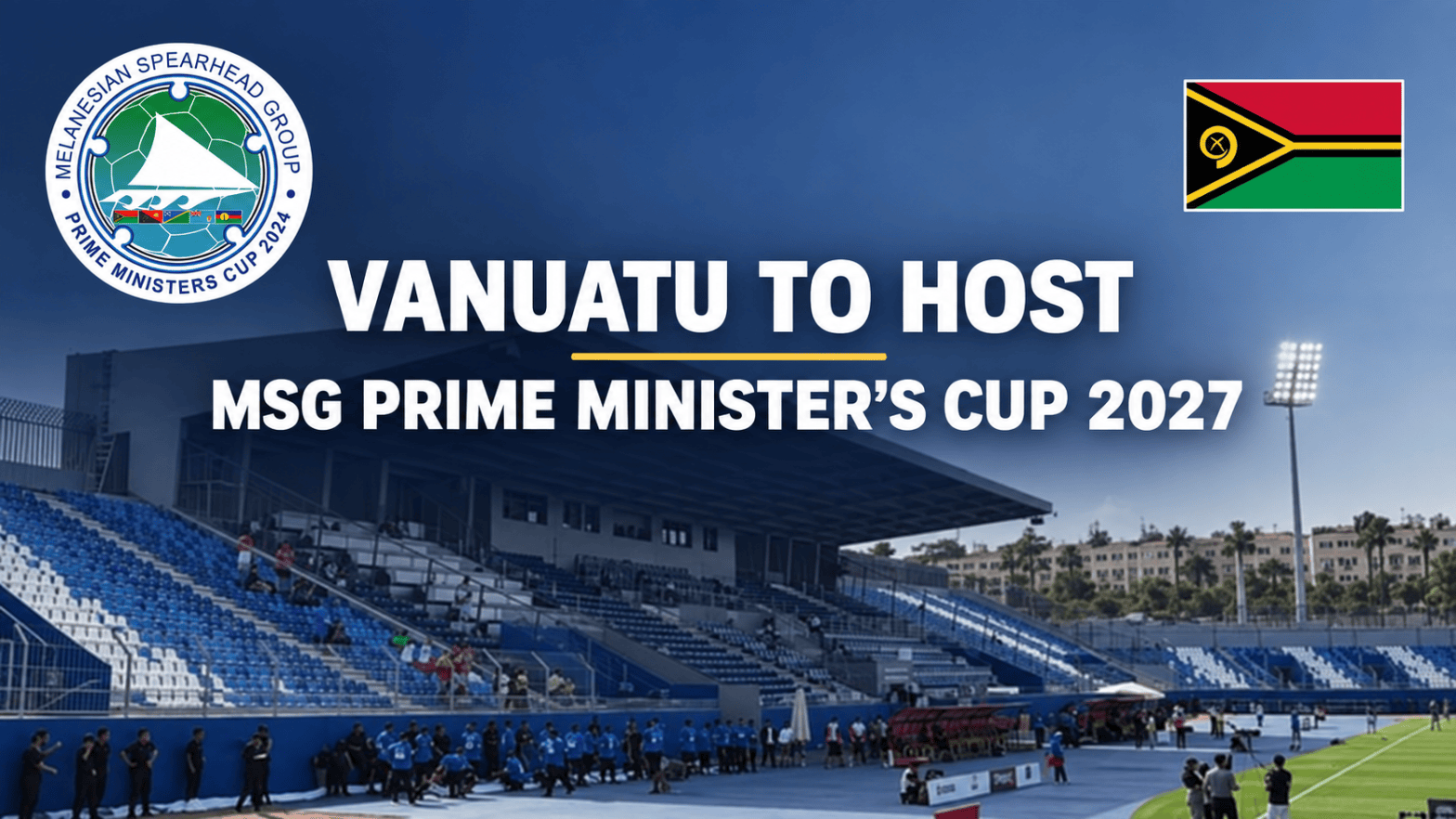
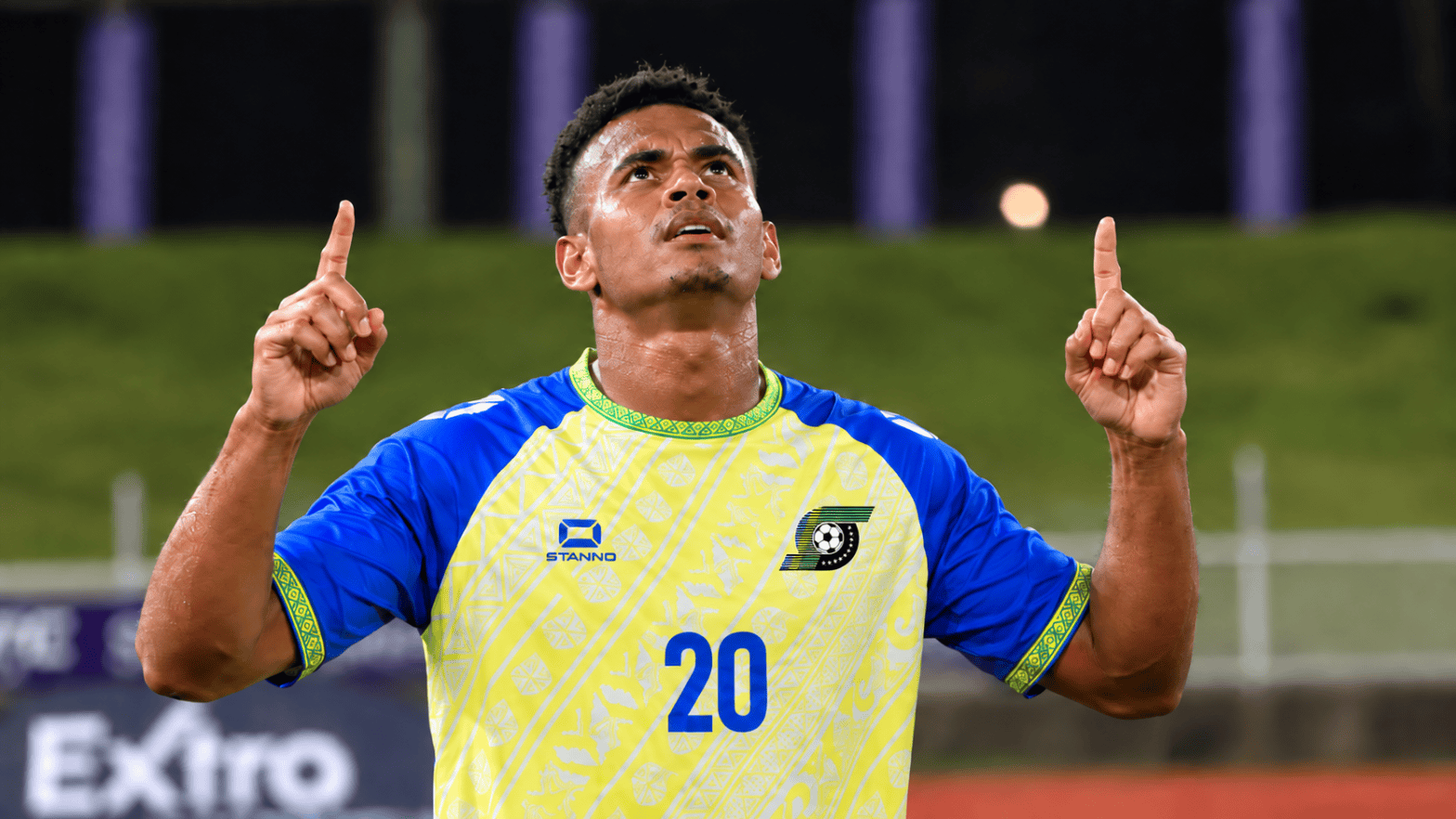
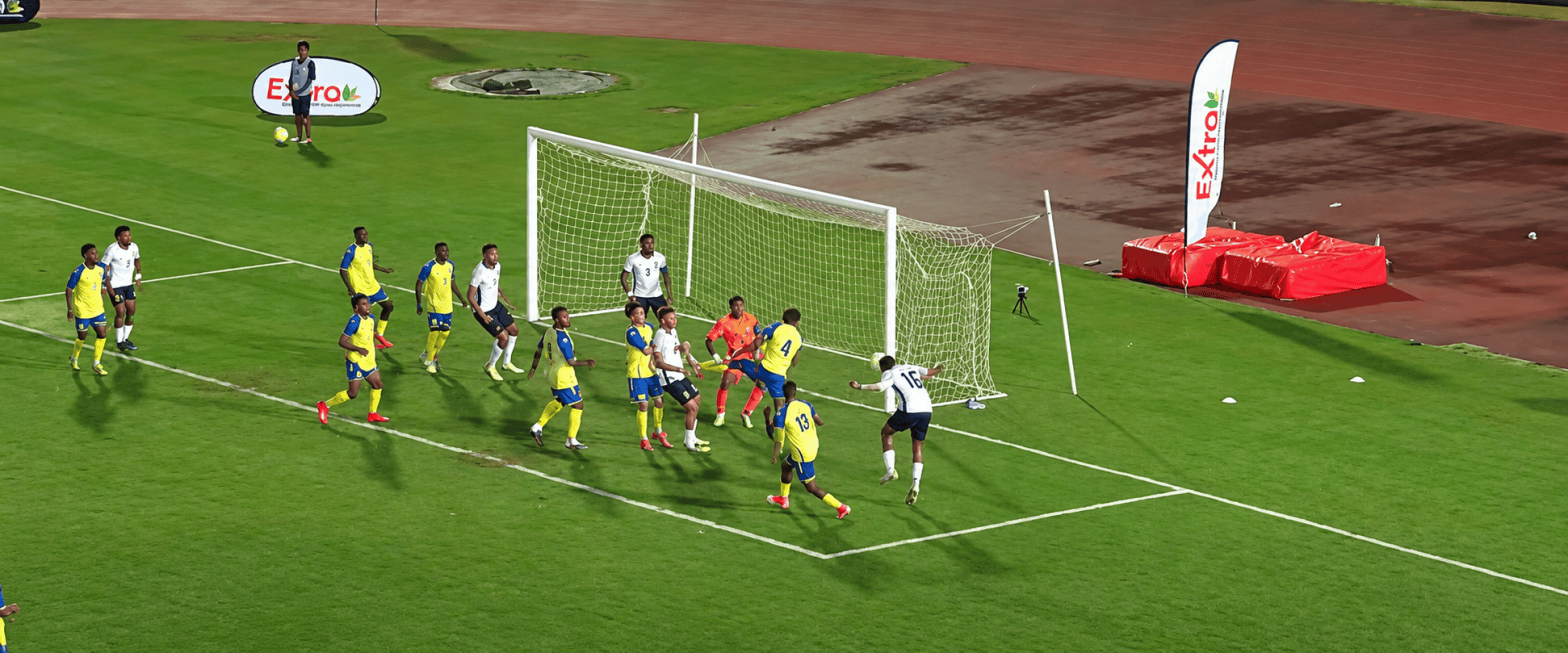
Vanuatu has been selected to host the 2027 MSG Prime Minister’s Cup, bringing one of Melanesian football’s most important international events back to the country.

The decision gives Vanuatu another opportunity to welcome Fiji, Solomon Islands, Papua New Guinea and New Caledonia for a tournament that has become an important platform for regional rivalry, national-team development and the growth of men’s and women’s football.

Vanuatu knows the responsibility of hosting the competition. Port Vila staged the first modern edition of the MSG Prime Minister’s Cup in 2022, when supporters filled Korman Stadium and the tournament helped revive a competition with a long Melanesian history.

The country has also become a major force on the field. Vanuatu are the reigning men’s champions after winning the 2025 title in Port Moresby, overcoming Papua New Guinea on penalties after a dramatic final. That success ended a long wait for a major regional crown and confirmed Vanuatu’s return among the strongest national teams in Melanesia.

Hosting in 2027 will give the country a chance to build on that momentum. It will provide a home stage for the next generation of Vanuatu players, while also allowing local supporters to watch the national team against their closest regional rivals.

The MSG Prime Minister’s Cup is more than a football tournament. It brings together the five Melanesian Spearhead Group members through sport, culture and national identity. Matches between Vanuatu, Fiji, Solomon Islands, Papua New Guinea and New Caledonia often carry a special competitive edge, with players familiar with one another through regional tournaments, club football and international matches.

For Vanuatu Football, the 2027 edition will be a significant organisational test as well as a footballing opportunity. The host nation will be expected to deliver strong facilities, an attractive match programme and a tournament capable of bringing supporters from across the region together.

Vanuatu has already shown that it can host the competition successfully. In 2027, it will have the chance to do it again—this time with the added expectations that come with being the current champions of Melanesia.

Bill Tuiloma earns All Whites recall after Nando Pijnaker injury

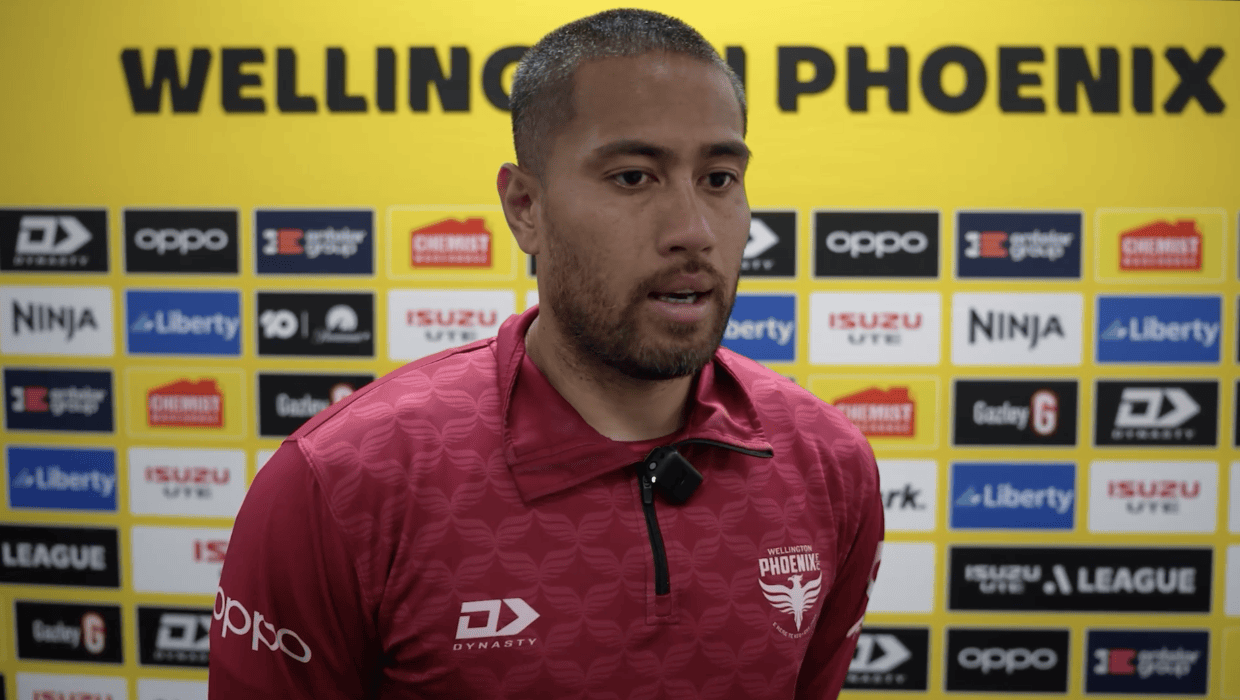
Bill Tuiloma is back with the New Zealand national team, with the experienced defender added to the All Whites squad for the upcoming international window following an injury to Nando Pijnaker.

The 31-year-old Wellington Phoenix centre-back had initially been left out of Darren Bazeley’s first squad since the 2026 FIFA World Cup, but Pijnaker’s withdrawal has opened the door for Tuiloma to return to the international setup.

Tuiloma brings considerable experience to a New Zealand squad that is beginning a new cycle after the World Cup. The defender has accumulated 47 senior international appearances and four goals since making his All Whites debut as an 18-year-old in 2013.

His recall is particularly notable after Tuiloma missed out on selection for New Zealand’s World Cup squad earlier this year. He had remained involved during the build-up to the tournament, including the March international window, but was ultimately not among the players taken to the competition.

Now back in the picture, Tuiloma will have four matches in Asia to potentially strengthen his position within Bazeley’s plans.

The All Whites begin their programme against Palestine in Chongqing on September 24 before facing China PR at the same city four days later. New Zealand then travel to Japan for the 2026 Kirin Cup, where they will meet Panama in Yokohama on October 1 before facing either hosts Japan or Ecuador in the final or third-place play-off on October 5.

Tuiloma will also find familiar faces from Wellington Phoenix in the squad. Midfielder Alex Rufer and goalkeeper Henry Gray, who is seeking his senior international debut, have both been selected for the tour.

The defender returned to New Zealand club football earlier this year when he joined Wellington Phoenix on a two-and-a-half-year deal after more than a decade playing overseas.

Tuiloma left New Zealand as a teenager to join French giants Marseille in 2013 and later became the first New Zealander to appear in Ligue 1. His career subsequently included Strasbourg before a lengthy spell in Major League Soccer with Portland Timbers and Charlotte FC.

His international career has followed a similarly long path. Tuiloma represented New Zealand at youth level, captained the country at the 2015 FIFA U-20 World Cup and has since become one of the most experienced defenders available to the senior side.

The emergence of Tyler Bindon and Finn Surman has changed the competition at centre-back in recent years, while New Zealand have also begun introducing younger defensive options into the senior environment. Tuiloma’s return therefore gives him another opportunity to show that he can still have a role as the All Whites move into their post-World Cup cycle.

For now, his route back into the national team has come through Pijnaker’s unfortunate injury. What Tuiloma does with that opportunity could determine whether the recall becomes more than a temporary return.

PNG stay perfect as Vanuatu edge Fiji on decisive Women’s MSG Cup Matchday 2

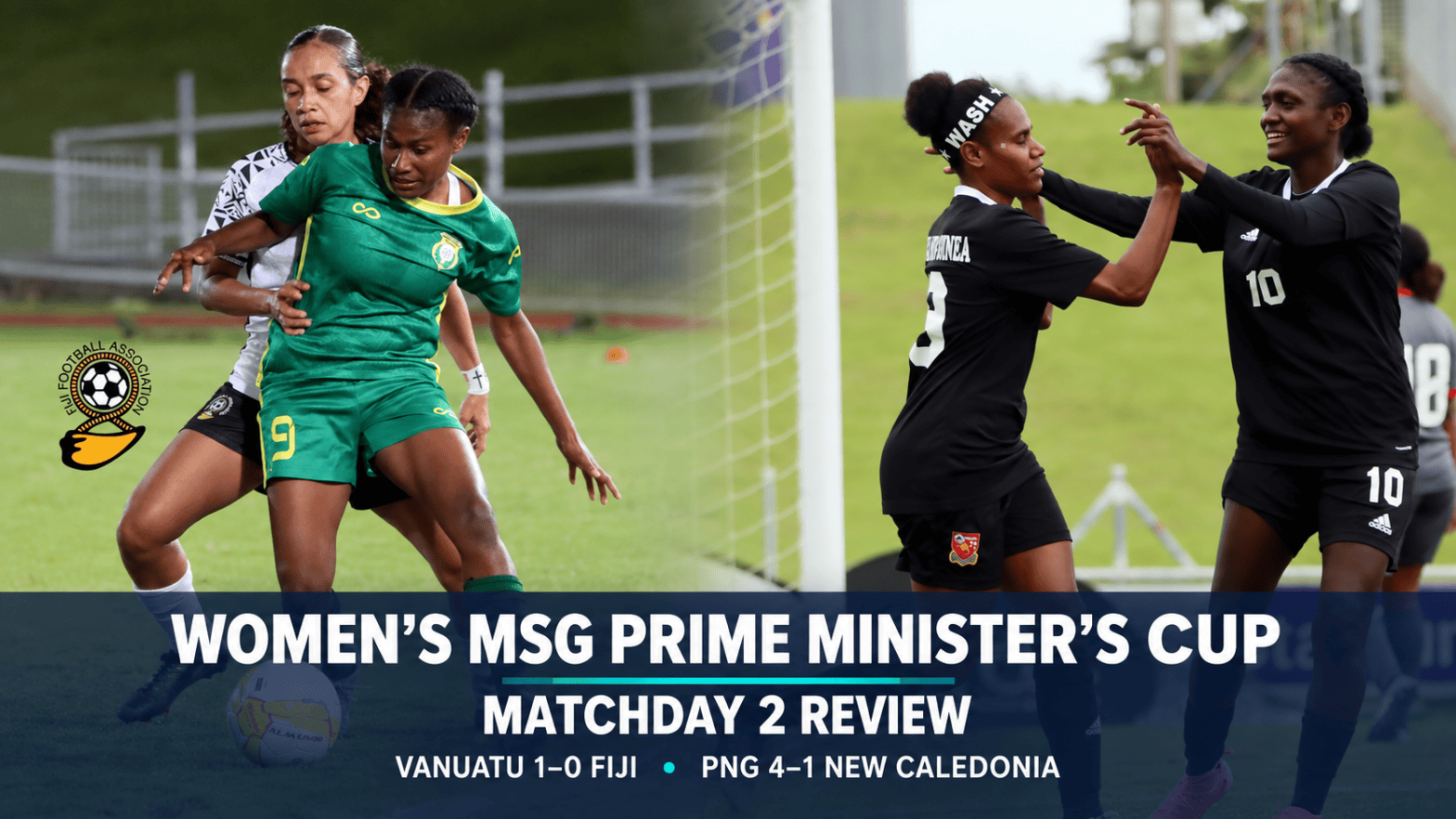
Papua New Guinea underlined their status as favourites for the Women’s MSG Prime Minister’s Cup title with another emphatic victory on Matchday 2, while Vanuatu claimed a crucial win over hosts Fiji to strengthen their own push for the final.

The defending champions defeated New Caledonia 4–1 at HFC Bank Stadium in Suva, making it two wins from two matches. Vanuatu then beat the Fiji Kulas 1–0 in the evening fixture, leaving the hosts still searching for their first points of the tournament.

PNG began strongly against New Caledonia and took the lead in the 12th minute through Keren Kalapai. The goal gave the Bilums control of the match, although New Caledonia remained competitive and limited the deficit to one goal at half-time.

The second half showed the difference in experience and efficiency. PNG captain Ramona Padio doubled the advantage in the 57th minute before Nenny Elipas scored twice, in the 68th and 78th minutes, to turn the result into a convincing 4–0 lead.

New Caledonia did not give up and found a deserved late consolation through Carasesiane Eloane in the 90th minute. It was an important moment for a team making its first appearance in the women’s competition, but PNG’s quality across the match was clear.

After opening the tournament with a 4–0 victory over Fiji, PNG have now scored eight goals in two matches. Their attacking depth, leadership and ability to take control after half-time have made them the team to beat in Suva.

The night match brought a far tighter contest. Fiji and Vanuatu were level at 0–0 at the break, with the Kulas determined to respond after their difficult opening loss to PNG.

Vanuatu found the breakthrough in the 64th minute when Elina Aruvuha scored the only goal of the match. Fiji pushed for an equaliser in the final stages, but Vanuatu defended their lead with discipline to secure an important first victory.

The result gives Vanuatu four points from two matches after their opening draw with Solomon Islands. PNG lead the standings with six points, Vanuatu follow on four, while Solomon Islands have one point from one game. Fiji have now lost both matches, and New Caledonia have work to do after their first outing.

With the top two teams advancing to the final on October 3, Matchday 2 has already given the tournament a clear shape. PNG look formidable, Vanuatu have put themselves in a strong position, and the remaining teams now face little room for error.

All White Jesse Randall shines as Dundee United cruise past St Mirren

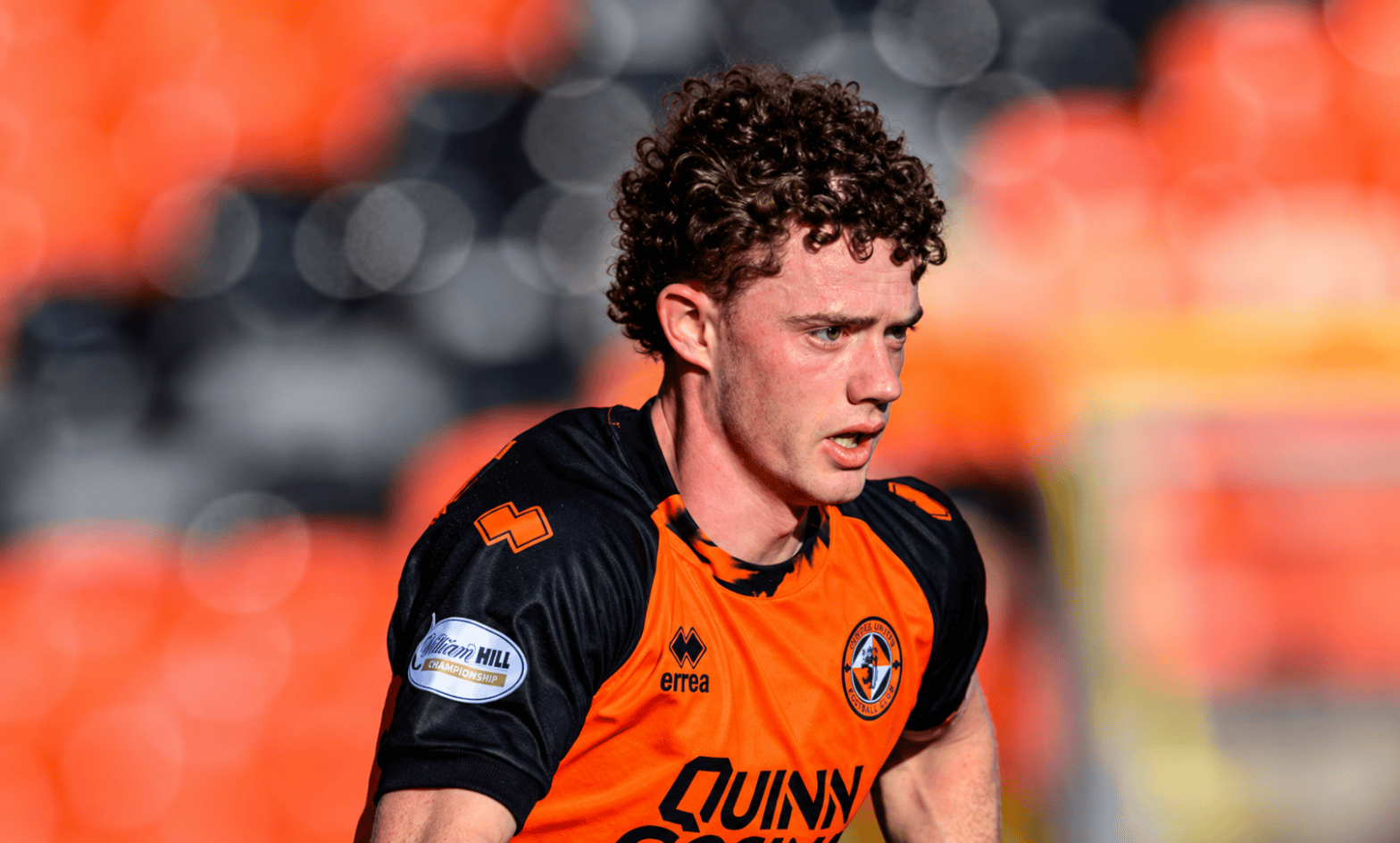
All Whites attacker Jesse Randall delivered one of his strongest performances since arriving in Scotland as Dundee United defeated St Mirren 3–0 away from home in the Scottish Premiership.

Randall opened the scoring after only six minutes in Paisley, finishing a swift Dundee United move with composure. Idjessi Metsoko won possession before Daniel Bennie released the New Zealander behind the St Mirren defence. Randall rounded goalkeeper Jacob Chapman and rolled the ball into an empty net to give the visitors an early lead.

It was a finish that showed exactly why Dundee United moved for the 24-year-old after his impressive spell with Auckland FC: sharp movement, pace in behind and calm decision-making in front of goal.

Dundee United quickly built on the advantage. Lyall Cameron added a second in the 12th minute before Kevin Ciubotaru made it 3–0 just before half-time, completing a dominant first-half display from the visitors.

Randall’s contribution did not end with the opening goal. He played 78 minutes and continued to trouble St Mirren with his runs and direct attacking play. He also created the chance for Ciubotaru’s goal, giving him both a goal and an assist in a convincing team performance.

Dundee United’s own match report highlighted Randall as a dangerous outlet throughout the afternoon, noting that he created further opportunities from wide areas during the second half. The result was a timely response from the side and a significant individual display from the All Whites forward.

For Randall, it is another encouraging step in his first season in the Scottish Premiership. Moving from Auckland FC to a demanding European league is a major transition, but he has already shown that he can make an impact against established Scottish opposition.

His pace and willingness to attack defenders give Dundee United a valuable option in the final third. More importantly for New Zealand, his performances offer encouraging evidence that another All Whites attacker is gaining experience and confidence in a competitive European environment.

Randall has scored goals in Scotland before, but this performance stood out because of its complete nature. He took his goal well, created another, worked hard without the ball and helped Dundee United control an important away match from the start.

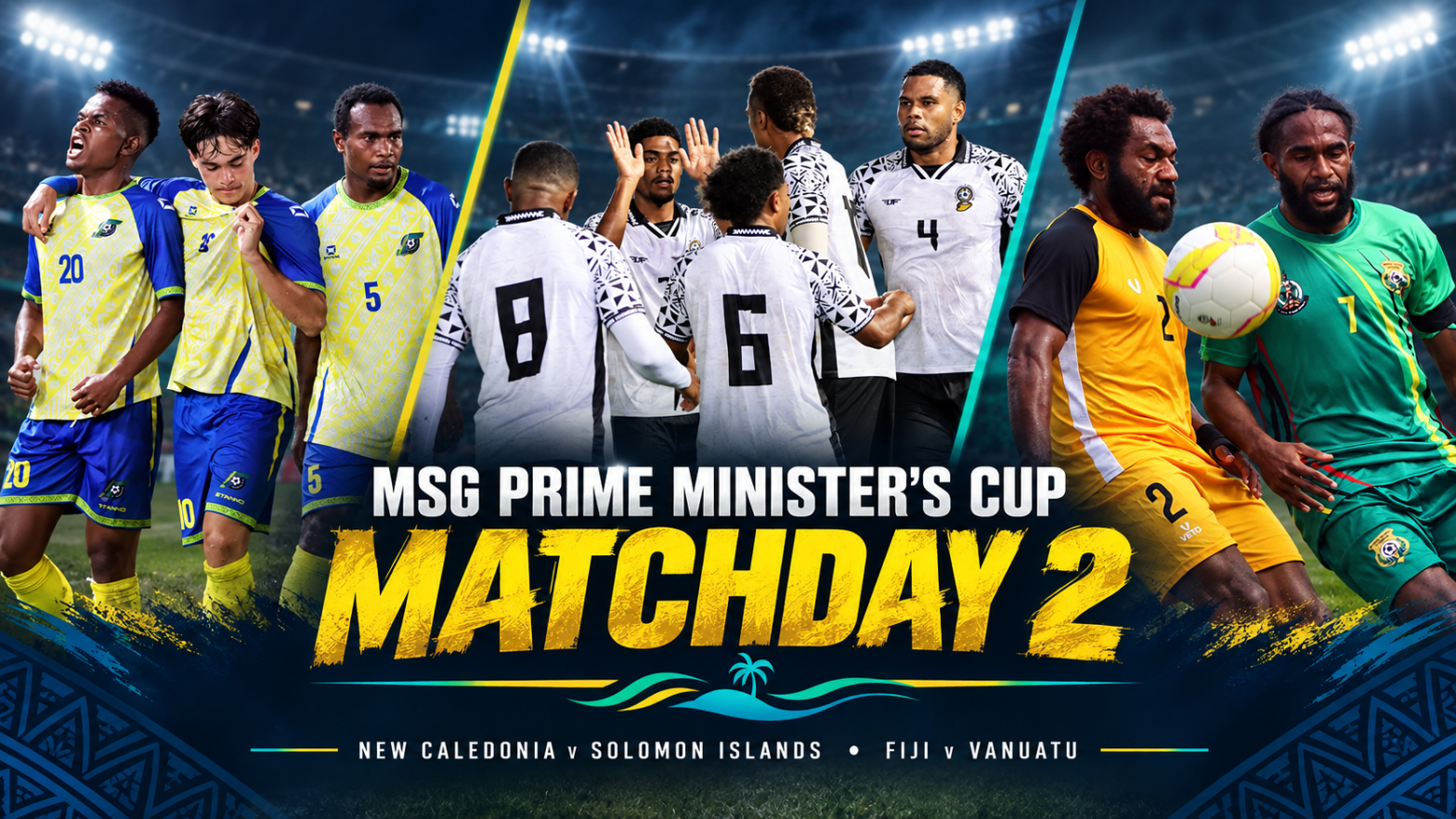
MSG Cup matchday two brings New Caledonia debut and crucial Fiji-Vanuatu contest

The 2026 MSG Prime Minister’s Cup continues on Monday at HFC Bank Stadium in Suva, with New Caledonia entering the tournament against Solomon Islands before Fiji face defending champions Vanuatu.

New Caledonia will begin their campaign at 4pm against a Solomon Islands team carrying confidence after a dramatic 3-3 draw with Fiji. The Bonitos showed impressive resilience in their opening match, recovering from 3-1 down to claim a point through late goals from Jayroll Patty and Javin Wae.

For Solomon Islands, the match offers an opportunity to turn that momentum into a first win. Ben Cahn’s side have plenty of attacking options, including Raphael Lea’i, Atkin Kaua, Rovu Boyers, Rooney Riugaemai and the emerging Patty. Their key task will be to show greater control after conceding three goals against Fiji.

New Caledonia arrive in Fiji under very different circumstances from the team that came close to reaching the 2026 FIFA World Cup. Financial limitations prevented the Cagous from bringing many overseas-based players to the MSG Cup, leaving coach Félix Tagawa with a largely new group and a major opportunity to assess domestic talent.

The evening fixture at 7pm between Fiji and Vanuatu is equally important. Fiji will want an immediate response after allowing Solomon Islands to recover from a two-goal deficit, while Vanuatu need a result after losing 2-1 to Papua New Guinea in their opening match.

Vanuatu led Papua New Guinea through Tony Kaltack before late goals from Nalau Moses and Ezekiel Vela turned the match around. Richard Iwai’s defending champions now face a difficult task against hosts Fiji, especially with the Bula Boys determined to make home advantage count.

The two teams know each other well. Fiji and Vanuatu have faced each other regularly through national-team matches and the OFC Pro League, where players from both countries have become familiar opponents. That history should make Monday’s contest one of the more intense games of the group stage.

Papua New Guinea currently lead the standings with three points, while Fiji and Solomon Islands each have one. Vanuatu remain without a point and New Caledonia have yet to play.

With only the top two teams progressing to the final on October 3, dropped points can become costly very quickly. Matchday two may not decide the tournament, but it could significantly shape the race for the final.

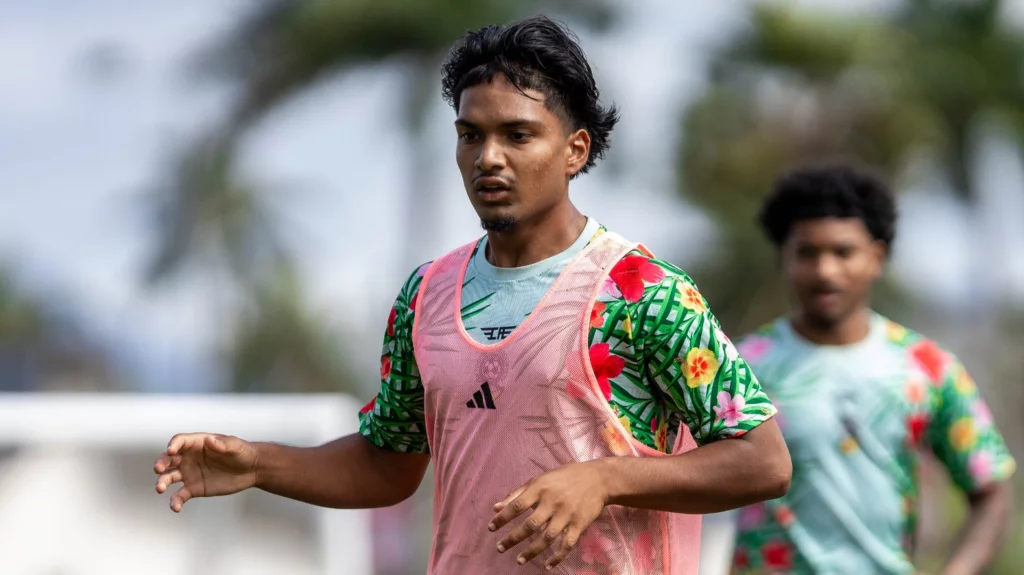
Meet Abdullah Khairati: the Canadian-Fijian midfielder taking his first steps with the Bula Boys

Abdullah Khairati may still be a new name to many followers of Fiji football, but the 18-year-old midfielder has already taken a significant step in his international career.

Born and developed in Canada, Khairati represents a new generation of overseas-based Fijian players beginning to emerge through the national-team system. After featuring for Fiji at the OFC U-19 Men’s Championship, he was brought into the senior squad for the 2026 MSG Prime Minister’s Cup, opening the door to his first experience with the Bula Boys.

For Khairati, however, the journey toward senior international football began long before his first Fiji call-up.

“My name is Abdullah Khairati. I’m a Canadian-Fijian footballer. I play as a central midfielder, but I can also play as a defensive midfielder or attacking midfielder,” he told Oceania Football Center.

Khairati has spent most of his football development with Supra Academy in Canada, where he says he has been playing since the age of 10.

“I play for Supra Academy in Canada, where I’ve been developing as a hardworking and versatile player since I was 10 years old,” he explained.

His football education has not been limited to Canada. From an early age, Khairati was exposed to European opposition through tournaments and friendly matches, experiences that eventually led to opportunities to train and trial abroad.

“We started going to Europe for tournaments and friendlies against top academies all over Europe when I was 13,” Khairati said. “Those tournaments and friendlies gave me opportunities to train in Europe and have trials with a professional Belgian first-division club, as well as other opportunities.”

That background has helped shape a midfielder who describes himself as capable of operating in several roles through the middle of the pitch.

His connection with Fiji has now given him another platform.

Khairati was part of the Junior Bula Boys squad at the OFC U-19 Men’s Championship, where he gained his first major experience representing the country at international level. Although Fiji were unable to achieve their ultimate objective in the tournament, the competition proved important for him personally.

“It was a great experience, and I’m very fortunate and humbled to have been part of a great squad,” he said. “We didn’t achieve our goal, but a lot of personal goals were achieved, as well as the brotherhood we created. We win together and we lose together.”

His performances at U-19 level were followed by an immediate step into the senior environment.

Khairati was selected for Fiji’s squad at the MSG Prime Minister’s Cup, giving him the opportunity to train and compete alongside established Bula Boys internationals only shortly after representing the country at youth level.

Rather than seeing the call-up simply as a reward, Khairati views the tournament as another stage in his development.

“I see it as a great opportunity to take in as much information and experience as possible from the players and the tournament, while also giving me a chance to prove myself and represent my academy back home,” he told OFCe.

For a youngster making the transition into senior football, that combination of learning and proving himself is central to what comes next. The player was praised by Fijian football legend Roy Krishna after his debut – a great sign for the teenager!

Khairati’s long-term ambitions are also clear.

The Canadian-Fijian midfielder wants to build a professional career in Europe, something he has already been preparing for through his academy experience and previous exposure to European football.

“My goal is to sign a professional contract in Europe in the next year or so,” he said.

That possibility may already be beginning to take shape.

Khairati revealed that a club in Denmark has shown interest in him, although no agreement has been reached.

“The plan is to play in Europe and sign a professional contract there. A club in Denmark has shown interest, so we’ll see where that goes.”

For now, his immediate focus remains with Fiji.

Khairati is still at the beginning of his senior international journey, but the pathway is becoming clearer: development in Canada, experience against European opposition, a place with Fiji’s U-19 side and now an opportunity with the Bula Boys.

At only 18, there is still considerable development ahead. But for Fiji, Khairati represents another overseas-based player with strong ambitions, international exposure and a clear desire to build his career while remaining connected to the national team.

The MSG Prime Minister’s Cup may therefore be less of an arrival than an introduction.

Abdullah Khairati is only beginning his senior journey with Fiji.

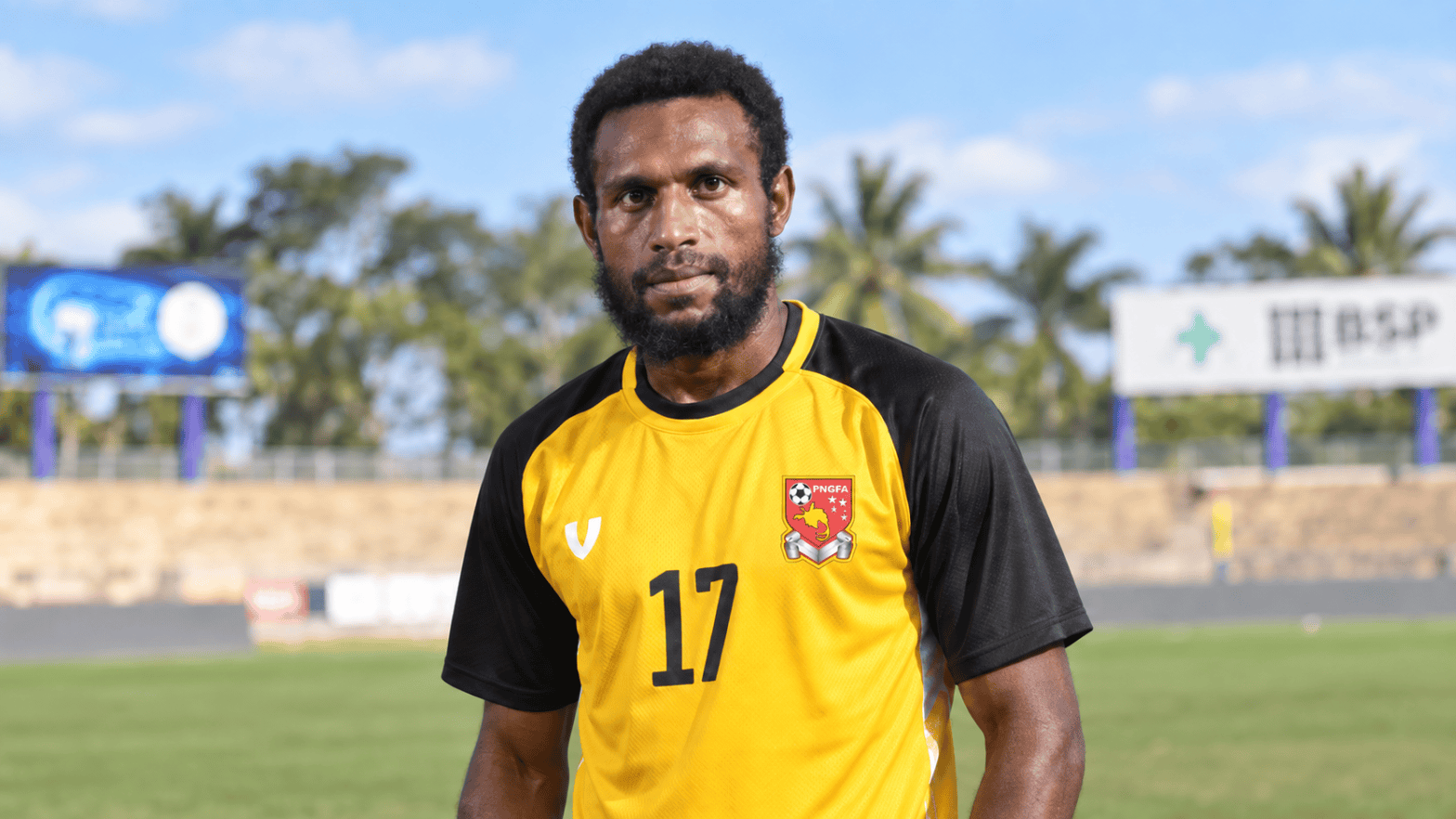
Ferdallas Namuesh relishes Papua New Guinea return as Kapuls turn focus to New Caledonia

Papua New Guinea made an ideal start to the 2026 MSG Prime Minister’s Cup with a dramatic victory over defending champions Vanuatu, and for experienced defender Ferdallas Namuesh, the opening match carried an additional significance: the opportunity to wear the Kapuls colours again.

PNG overturned a late deficit to defeat Vanuatu 2-1 at HFC Bank Stadium in Suva, with substitutes Nalau Moses and Ezekiel Vela scoring in the closing stages after Tony Kaltak had put Vanuatu ahead in the 77th minute.

Speaking to Oceania Football Center after the match, Namuesh was satisfied with PNG’s opening performance but believes there remains considerable room for improvement as the tournament progresses.

“Our first match was good, but we need to work more on our ball movement and our goalscoring opportunities,” Namuesh told OFCe.

The victory was particularly meaningful for the Morobe Wawens captain, who has returned to the national-team environment after a period away from the Kapuls. Namuesh was previously involved with Papua New Guinea during the 2022 Melanesia Cup campaign in Vanuatu and also appeared in the international friendlies against Singapore and Malaysia in June 2023.

His return therefore represents another opportunity for a player who has been involved with PNG football for well over a decade. Namuesh was already appearing in Papua New Guinea youth representative sides as far back as 2013 before establishing himself at senior level and becoming an experienced figure in domestic football.

For the defender, however, the significance of returning was expressed much more simply.

“It was my privilege to represent my country, and it meant so much to me,” he said.

Namuesh has continued to play an important role domestically with FC Morobe Wawens, where his experience and leadership have made him one of the club’s central figures. He captained the side during the 2025 PNG Premier Soccer League campaign and has remained an important presence as Wawens developed a squad combining experienced players with younger talent.

That experience could become increasingly important for the Kapuls in Fiji.

Papua New Guinea’s victory over Vanuatu gave them three points from their opening fixture in the five-team round-robin competition. With only the top two sides progressing to the final, every result carries considerable weight, and PNG have already taken an important step by defeating the team that denied them the MSG title in the 2025 final.

Their next challenge comes against New Caledonia on September 24.

The Cagous present a different test. New Caledonia return to the MSG tournament after missing the 2025 edition and arrive with a footballing tradition that makes them one of Melanesia’s strongest international sides. For PNG, Namuesh believes the response should be built around organisation rather than abandoning the approach that brought success against Vanuatu.

“We will base our game on structured play and good defence so that we can get a positive result,” he told OFCe.

That defensive emphasis could prove particularly relevant. Against Vanuatu, PNG showed the resilience to remain within one goal after falling behind late before turning the match completely around. At the same time, Namuesh’s assessment that the Kapuls must improve their work with the ball and make better use of scoring opportunities suggests the team knows the opening victory did not represent a complete performance.

The encouraging sign for Papua New Guinea is that they were able to win anyway.

Rather than allowing Kaltak’s late goal to decide the contest, the Kapuls responded with two goals of their own and demonstrated the type of mentality that can become decisive in a short tournament. It also immediately strengthened their position in a competition where there are no semi-finals to provide a second chance: after all five teams have played each other, only first and second place advance to the October 3 final.

For Namuesh, the competition now offers something else — a chance to re-establish himself within the national side.

More than three years after his previous senior international appearances, the experienced defender is back representing Papua New Guinea and doing so in a team that has started its MSG campaign with one of the tournament’s most significant results.

The personal satisfaction of returning is clear, but Namuesh is already looking beyond it. The attention has moved from the comeback against Vanuatu to New Caledonia, and his message reflects exactly what PNG will need if they are to turn a strong opening night into a genuine run at the MSG title: better use of the ball, greater efficiency in front of goal and, above all, a disciplined defensive structure.

For a player who described wearing the PNG shirt again as a privilege, there may still be an important role to play in what comes next.

Isimeli Gavidi makes Fiji debut in dramatic MSG Cup draw against Solomon Islands

Ba defender Isimeli Gavidi made his senior international debut for Fiji on the opening day of the 2026 MSG Prime Minister’s Cup, starting in the Bula Boys’ dramatic 3-3 draw against Solomon Islands at HFC Bank Stadium in Suva.

At 20 years old, Gavidi was given a major opportunity by head coach Stéphane Auvray in a match that carried immediate importance for Fiji’s hopes of reaching the final. The Bula Boys are hosting the tournament and entered it with high expectations, but Auvray has also made clear that the competition is part of a wider process of building a stronger squad for the future.

Gavidi’s selection reflected that approach. The defender has already represented Fiji at youth level and developed through domestic football, including time with Lautoka before establishing himself with Ba. Starting against Solomon Islands allowed him to test himself alongside established internationals such as Roy Krishna, Scott Wara, Thomas Dunn and Sterling Vasconcellos.

The contest was a demanding introduction to senior football. Fiji took the lead through captain Krishna, but Solomon Islands responded when Rooney Riugaemai converted a penalty. Maikah Dau restored the home side’s lead before halftime, and Dunn made it 3-1 in the second half.

Fiji appeared to be heading for an important victory until Tevita Waranaivalu’s red card changed the match. With a numerical advantage, Solomon Islands pushed forward and found late goals through Jayroll Patty and Javin Wae to rescue a point.

For Gavidi, the result will be disappointing because Fiji had been in control for long periods. However, his debut remains a significant milestone. Auvray’s squad includes several young players being introduced into senior football, and Gavidi’s starting role showed that he is already regarded as part of that group.

The challenge now is to build on the first cap. Fiji still have matches against Vanuatu, Papua New Guinea and New Caledonia in the round-robin stage, giving Gavidi another opportunity to prove that his debut was the beginning of a regular role with the Bula Boys.

Rooney Riugaemai goes from English non-League football to scoring on Bonitos debut

Rooney Riugaemai’s first senior international match for Solomon Islands ended with a goal as the forward converted a penalty in the Bonitos’ 3-3 draw against Fiji at the MSG Prime Minister’s Cup.

Riugaemai started against the hosts at HFC Bank Stadium in Suva and faced an immediate test in one of the tournament’s most anticipated opening fixtures. Fiji had taken the lead through Roy Krishna, but Solomon Islands were awarded a penalty and Riugaemai showed composure to level the scores.

The goal was a special moment in a football journey that has taken him from lower-level football in England back to the Solomon Islands national team. Riugaemai recently completed a memorable three-year spell with Sussex-based Westfield FC, where he became one of the club’s most influential players.

Westfield confirmed that Riugaemai left with 106 goals in 97 appearances. He played a major part in the club’s successful 2025-26 season, when Westfield won the Mid-Sussex League Premier Division and collected several domestic cup trophies.

After returning to Solomon Islands to reunite with his family, Riugaemai joined Green Shield FC in the S-League. His impact has been immediate. Green Shield are currently leading the domestic league table, while Riugaemai has already scored three times during the campaign.

That domestic form helped create the pathway to his first opportunity with the Bonitos. His story is therefore not simply about returning home after a prolific spell in England; it is about returning home, producing again in the S-League and earning a place on the international stage.

The 3-3 draw against Fiji will be remembered for Solomon Islands’ late comeback, but Riugaemai’s contribution was central. His penalty stopped Fiji from building too much momentum and kept the Bonitos in the match before their strong late finish.

For coach Ben Cahn, Riugaemai’s debut offers another encouraging option in attack. For the player himself, scoring in his first match for Solomon Islands is a perfect beginning to a new chapter.

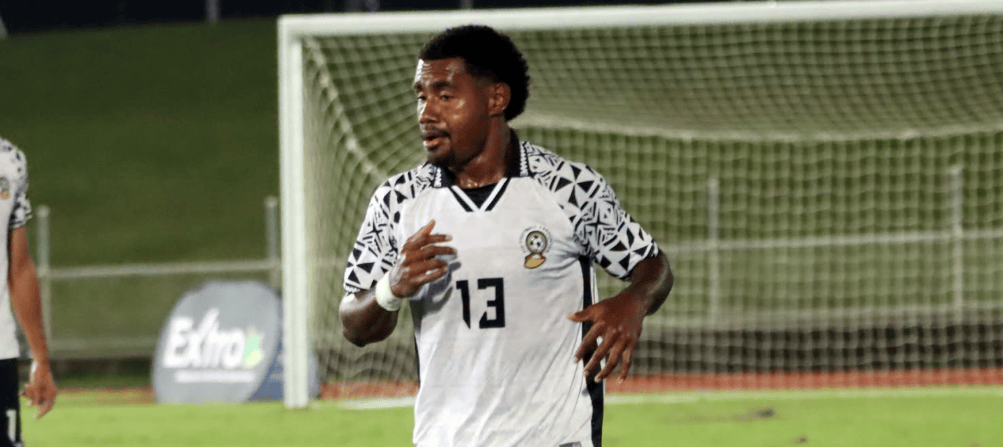
Roy Krishna goal sparks major offside debate after clear second touch

Fiji captain Roy Krishna’s opening goal against Solomon Islands at the MSG Prime Minister’s Cup has generated major debate after supporters examined the available broadcast replay.

Some fans have argued that there cannot be an offside offence because the move began with a Fiji corner kick. That rule is correct only when a player receives the ball directly from the corner.

But that is not what appears to happen in this case.

The replay shows a Solomon Islands defender, No. 4, attempting to deal with the cross and failing to make contact. More importantly, the ball is then clearly flicked upward by a Fiji player inside the six-yard box and sent back into the area where Krishna is waiting close to the goal line.

That second Fiji touch changes everything.

Once a teammate plays or touches the ball after the original corner delivery, the corner-kick exception no longer applies. The normal offside law must then be judged from that moment. The question is not where Krishna was when the corner was taken, but where he was when the ball was flicked back into the danger area.

The footage strongly suggests that Krishna was in an offside position – you can watch it here. He appears to be behind the goalkeeper, extremely close to the goal line and ahead of the second-last Solomon Islands defender when the upward ball is played. If he then touches the ball or becomes involved in the action leading to the goal, the offside flag should be raised.

That is why the argument that “there is no offside from a corner” does not make sense in this particular situation. The goal did not come directly from the corner. It came after a clear second attacking touch.

There was no VAR review in the match, and the broadcast camera does not provide the calibrated lines or perfect angle used in major international competitions. Therefore, no replay can replace the decision made by the referee and assistant referee on the field. However, the available images provide a strong basis for the controversy and suggest the goal should have received much closer scrutiny.

The incident did not alter the official result, with Fiji and Solomon Islands drawing 3–3, but it has remained a major talking point among supporters.

Another detail has added to the debate. Some fans on social media have said that the disputed goal was not included in the match highlights video they watched. They have suggested it may have been left out to avoid further controversy. There is no official confirmation that the goal was deliberately removed, but the claim has increased calls for the full footage to be made available.

Image Credits: Eliud Media