
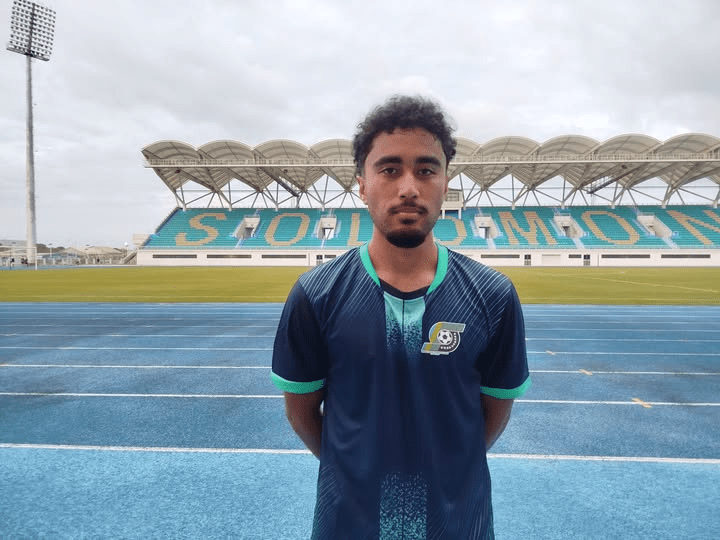
For Ona Sabetian, wearing the Solomon Islands shirt will mean much more than simply representing another country on the football pitch.
Born in New Zealand to a Solomon Islands mother and an Iranian father, the 19-year-old attacker is preparing to embrace one of the most important moments of his young career after being selected for Solomon Islands at the OFC U-19 Men’s Championship in Samoa.
Yet Sabetian’s connection to Solomon Islands football runs considerably deeper than his eligibility. He is the nephew of Benjamin Totori, Gagame Feni and Matson Feni — three names closely associated with the country’s football scene — and now has the opportunity to begin writing his own chapter in that family history.
Speaking to Solomon Star’s Star Sports ahead of the tournament, Sabetian made clear what the call-up means to him.
“I’m so proud and honoured to represent Solomon Islands and proud of my Solomon Islands heritage,” he told Star Sports.
“I’m looking forward to the competition and will do my best for this team in any way I can.”
Born on 10 April 2007, Sabetian has developed as a footballer in New Zealand. He currently represents Waitemata FC in Auckland and has previously spent time within the youth systems of Waitākere United and Auckland City FC, giving him experience in some of the country’s established development environments.
His pathway has therefore been largely shaped by New Zealand football, but the possibility of representing Solomon Islands has always carried a strong personal meaning.
Much of that comes from the footballers he grew up watching within his own family.
Benjamin Totori became one of the most recognisable Solomon Islands players of his generation, representing the national team and playing at a high level across Oceania, including spells in New Zealand and with Wellington Phoenix. Gagame Feni has also been an important figure for Solomon Islands internationally, while Matson Feni has been involved at national level and has had his own long career in domestic football.
For Sabetian, their careers provided something tangible to follow.
“Seeing a lot of my uncles playing for the national team in the past and now, and being big names here, I also want to follow in their footsteps and make them and the nation proud,” he told Star Sports.
That family connection gives his arrival an unusual significance.
Sabetian is not simply a New Zealand-born player discovered through eligibility rules. His Solomon Islands identity has remained part of his life away from football as well, and he has previously appeared in New Zealand initiatives promoting Solomon Islands culture and Pijin language within the Pacific community.
Now football provides him with another way of strengthening that connection.
He arrives in the Solomon Islands U-19 setup as the only overseas-based player selected in the squad and offers coach Franco Ne’e a different background from most of his teammates. Described by Star Sports as a pacey attacker, Sabetian has spent his formative years playing in Auckland’s competitive football environment before joining a squad largely composed of locally based players.
Any concerns about adapting to a new group, however, appear to have disappeared quickly.
“I now have a great bond with the team. They are very welcoming and I’m proud to be with the squad. I hope we can go a long way into the competition,” Sabetian said.
His ambitions extend beyond simply making an appearance at the continental championship.
The OFC U-19 Men’s Championship carries major consequences for Solomon Islands. Two places at the next FIFA U-20 World Cup are available to Oceania, meaning a successful campaign would put this generation of Solomon Islands players on the world stage.
Sabetian believes that possibility should not be considered unrealistic.
“I have a strong belief that this squad can make history for the country,” he told Star Sports. “We have great boys, and I think we can match the other teams and really have a shot.”
Solomon Islands will face hosts Samoa, New Caledonia and Papua New Guinea in Group A, with every match carrying significant weight in the battle to reach the knockout stages and remain in contention for World Cup qualification.
For Sabetian individually, however, the tournament carries another layer of meaning.
He represents an increasingly common reality within Oceanian football: a player developed abroad who remains connected to his Pacific heritage and chooses to bring that experience back into the region’s international game.
His story is also distinctly his own. New Zealand-born, with Iranian roots through his father and Solomon Islands heritage through his mother, Sabetian arrives on the international stage carrying several identities — but one very recognisable football surname legacy.
Totori and the Feni brothers have already left their mark on Solomon Islands football.
Now their nephew has his opportunity.
And when Ona Sabetian finally pulls on the yellow shirt, he will not only be representing Solomon Islands.
He will be continuing a family story that began long before his own international career.
Discover more from Oceania Football Center
Subscribe to get the latest posts sent to your email.

