
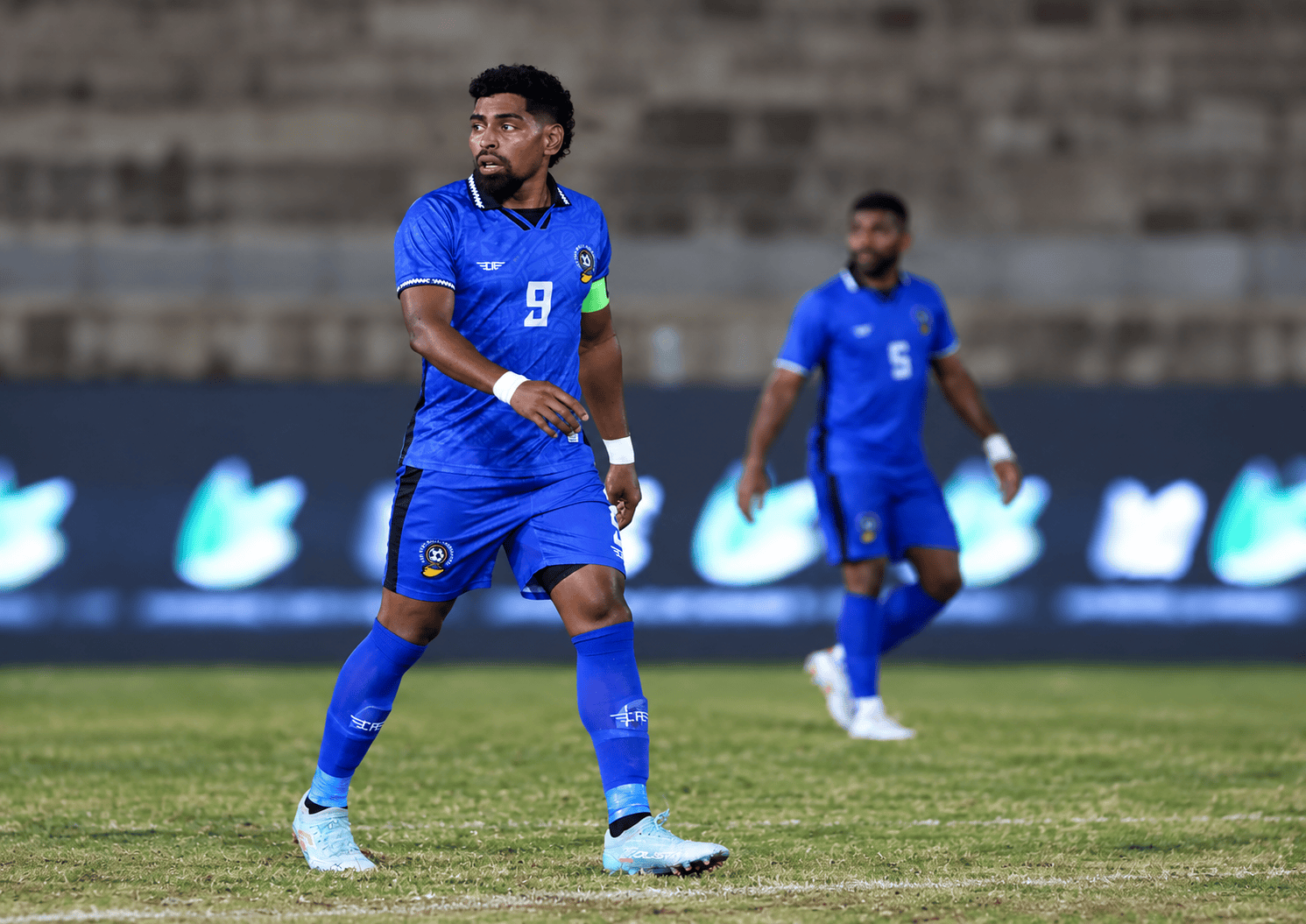
Fiji captain Roy Krishna described the Bula Boys’ MSG Prime Minister’s Cup success as a long-awaited moment for the country after Fiji defeated defending champions Vanuatu 1-0 in the final in Suva, ending a 26-year wait for a senior Melanesian title.
Thomas Dunn scored the decisive goal after only ten minutes at HFC Bank Stadium, completing a remarkable tournament turnaround for a Fiji side that had started the competition with a 3-3 draw against Solomon Islands and then suffered a 1-0 defeat to the same Vanuatu team they would eventually meet again in the final.
For Krishna, however, the significance of the night extended beyond simply reversing that earlier result.
“It was long overdue to win a trophy at home,” the Fiji captain said after the final.
The victory gave Fiji their first Melanesian senior men’s crown since the 2000 Melanesia Cup and their first since the regional competition was revived under the MSG Prime Minister’s Cup name. For one of the most experienced players in Pacific football, lifting the trophy in front of a home crowd carried particular importance.
Krishna also used the moment to recognise those around him rather than place the focus on his own contribution. He paid tribute to his teammates, acknowledged the work of fellow senior player Tevita Waranaivalu and highlighted the role of head coach Stéphane Auvray in building the current side.
The captain also thanked the supporters who followed Fiji throughout the competition and called on them to remain behind a team that is still going through a generational transition. Krishna’s message after the final was that winning the MSG Cup should not be seen as the end of the process, but as an early reward for a group being built with the future in mind.
That point is particularly significant given the composition of Auvray’s squad. Fiji combined experienced figures such as Krishna and Waranaivalu with a younger group that included players being given increasing responsibility at senior international level. Dunn, who scored the winner in the final and was later named the tournament’s Golden Ball winner, became one of the clearest examples of that transition.
Krishna himself had an important role in the decisive moment. His diagonal pass opened the Vanuatu defence before Dunn attacked the space and finished the move to put Fiji ahead. From there, the Bula Boys were required to defend for long periods as Vanuatu attempted to find a way back into the contest.
The result also completed Fiji’s recovery from a difficult beginning to the tournament. After surrendering a two-goal advantage in the 3-3 draw with Solomon Islands, they were beaten by Vanuatu in their second match. Consecutive victories over Papua New Guinea and New Caledonia then carried Fiji into the final, where they overturned the earlier defeat and denied Vanuatu successive MSG titles.
Krishna’s post-match comments therefore reflected both relief and perspective. Fiji finally had a trophy again, and this one had been won at home, but the veteran captain was already directing attention towards what comes next.
For a national side increasingly focused on constructing a team capable of competing through the next World Cup cycle, the MSG Prime Minister’s Cup has provided something that development projects also need: tangible success.
After 26 years without a Melanesian senior title, Fiji have one again.
And according to their captain, the achievement should be viewed as a beginning rather than a destination.
Discover more from Oceania Football Center
Subscribe to get the latest posts sent to your email.

