
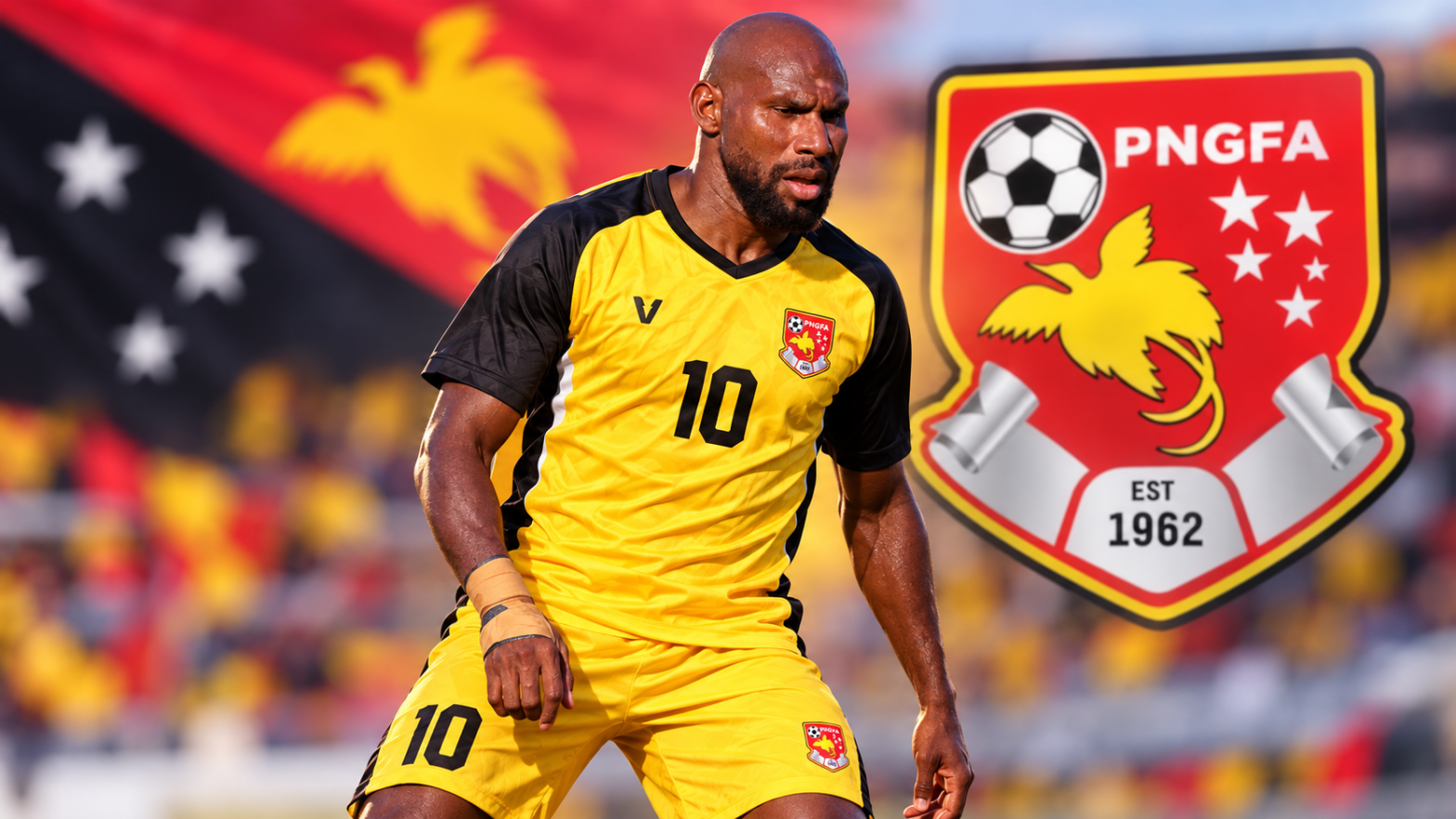
Papua New Guinea international Tommy Semmy believes the Kapuls have promising young talent capable of strengthening the national team in the coming years, but insists that greater commitment and continued work from both the players and the country’s football association will be necessary to turn that potential into results.
Speaking exclusively to Oceania Football Center following PNG’s disappointing campaign at the 2026 MSG Prime Minister’s Cup in Fiji, the experienced forward acknowledged that the team’s performances had fallen short of expectations, despite expressing pride in the effort shown by his teammates.
“It wasn’t a very good run for us, considering our performances. We were just unlucky in some of the games, but I’m happy and proud of the team and the effort everyone put in,” Semmy told OFCe.
Papua New Guinea finished fourth in the five-team competition with four points from four matches. Their campaign began with an impressive 2-1 comeback victory over defending champions Vanuatu, as Nalau Moses and Ezekiel Vela scored twice in the closing minutes to overturn a one-goal deficit.
However, the encouraging opening result was followed by a 2-1 defeat against New Caledonia and a 2-0 loss to eventual champions Fiji. A 1-1 draw with Solomon Islands in their final appearance, secured through Ati Kepo’s second-half equaliser, was not enough to keep PNG in contention for a place in the final.
Despite the disappointing results, the tournament also offered opportunities for emerging players to gain experience alongside established internationals. Moses made an immediate impact with his crucial goal against Vanuatu, while defender Ezekiel Vela also contributed to that victory. Another notable inclusion was 15-year-old Bomecge Basananuc, who continued his remarkable rise through PNG’s national-team structure by earning a starting place against Fiji.
Asked about the future of the Kapuls and the potential of this younger generation, Semmy expressed cautious optimism.
“The future looks promising, mate. It’s all about how we manage ourselves, you know,” he said.
His assessment carries particular significance given his experience with one of the most successful generations in Papua New Guinea’s football history. Semmy was part of the national team that reached the 2016 OFC Nations Cup final on home soil under Danish coach Flemming Serritslev, when the Kapuls came within a penalty shootout of winning their first continental title.
PNG held New Zealand to a goalless draw after 120 minutes before losing 4-2 on penalties. Semmy started the final, playing alongside several experienced figures who helped establish one of the country’s strongest international campaigns.
Ten years later, the challenge is to develop another generation capable of competing consistently at that level. PNG have demonstrated their potential in Melanesian football, winning the MSG Prime Minister’s Cup in 2022 and 2024 before reaching the 2025 final, but transforming regional competitiveness into sustained success across Oceania remains a greater objective.
When asked what would be required to build another team capable of challenging for the OFC Nations Cup, Semmy stressed that improvements must come from within the national-team environment and the wider football structure.
“Nothing new, just stay focused on what’s important from a football perspective, you know. Otherwise, there’s still a lot of work to be done by us individually and by the FA as well,” he explained.
His remarks underline the responsibility shared between those representing the country on the pitch and those responsible for organising and developing football in Papua New Guinea. While the emergence of younger players offers encouragement, Semmy’s message suggests that talent alone will not be sufficient without the necessary commitment and management.
Having returned to domestic football with PNG Hekari after spending several years playing in New Zealand and Australia, Semmy remains among the experienced players capable of helping guide the next generation.
For Papua New Guinea, the MSG Cup ultimately ended without the result the team had hoped for. Nevertheless, the performances of younger players provided reasons for optimism. The question now is whether the national team and the country’s football administration can establish the conditions needed to translate that promise into the kind of collective success Semmy experienced a decade ago.
Discover more from Oceania Football Center
Subscribe to get the latest posts sent to your email.

