
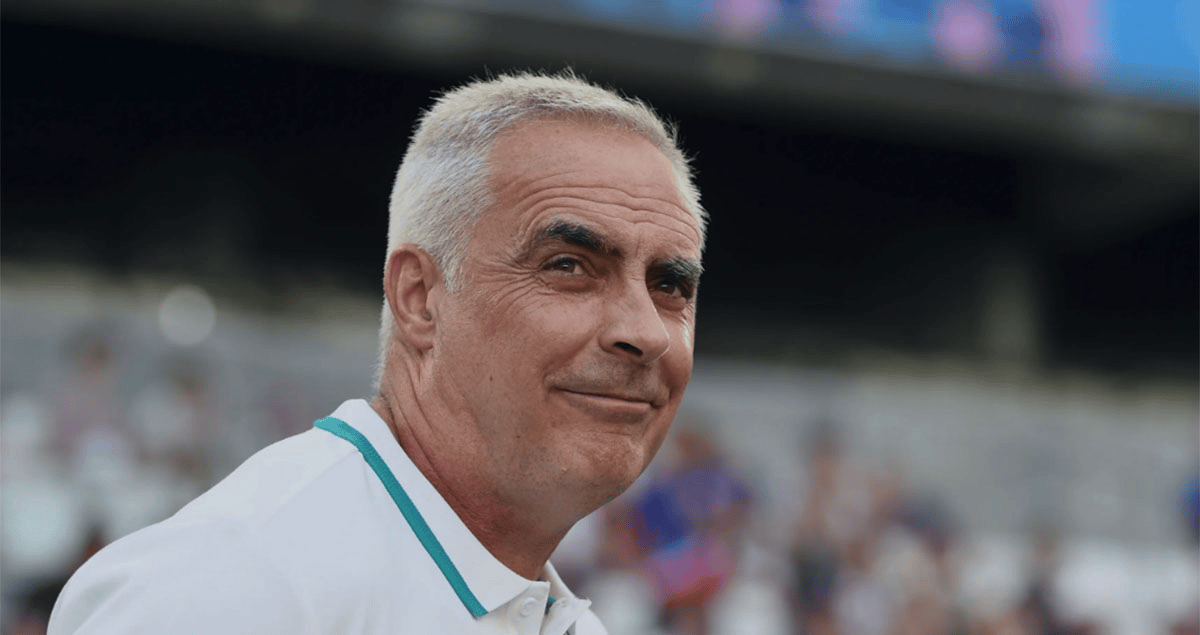
Darren Bazeley will leave his position as New Zealand national team head coach at the end of 2026, with New Zealand Football deciding not to extend his contract despite the 54-year-old’s desire to continue leading the All Whites towards the next FIFA World Cup.
The decision was confirmed by the national association on Saturday, 24 October, bringing an end to a four-year period in which Bazeley oversaw New Zealand’s return to the FIFA World Cup for the first time since 2010 and helped introduce a new generation of players to international football.
Bazeley will remain in charge for the upcoming two-match series against India in November before departing when his contract expires in December. New Zealand Football have not yet announced his successor.
Although disappointed by the decision, the English-born coach acknowledged that the federation had chosen a different direction following the team’s failure to advance beyond the group stage at the 2026 FIFA World Cup.
“While I would have definitely been keen to be involved for the next cycle, I understand this is a football decision,” Bazeley said in a statement released by New Zealand Football.
The All Whites returned to football’s biggest tournament in June after a 16-year absence, but were unable to progress to the knockout rounds, finishing their group-stage campaign with one draw and two defeats.
The outcome was disappointing for a squad that had arrived at the tournament with ambitions of achieving New Zealand’s first-ever World Cup victory and reaching the knockout stages.
Nevertheless, Bazeley’s tenure was marked by several notable performances against opponents from outside Oceania.
In June 2025, New Zealand defeated African champions Côte d’Ivoire 1-0 in Canada, recording one of their most significant international victories in more than a decade.
Another important result followed in March 2026, when the All Whites produced an impressive 4-1 victory over Chile at Eden Park in Auckland during their preparations for the World Cup.
Following the tournament, New Zealand continued testing themselves against international opposition, with Bazeley’s squad defeating China PR 3-0 in September before overcoming Panama on penalties to reach the Kirin Cup final in Japan.
The coach also played an important role in the development of the national team’s emerging players, handing 17 footballers their senior international debuts during his tenure.
His experience within New Zealand football extends well beyond the senior national team. Before becoming All Whites head coach on an interim basis in March 2023 and receiving the permanent appointment later that year, Bazeley had worked with the country’s U-17, U-20 and U-23 national sides.
He also served as an assistant coach under Anthony Hudson and Danny Hay, contributing to several generations of New Zealand footballers progressing through the international system.
That development work became an important part of his approach with the senior team, which increasingly incorporated younger players alongside established internationals such as Chris Wood, Marko Stamenić and Alex Rufer.
Despite the decision not to renew his contract, Bazeley expressed confidence in the squad’s future and the foundations established during his time in charge.
He highlighted the progress made by a young group of players and said he believed they could continue improving ahead of the 2030 FIFA World Cup.
New Zealand Football chief executive Andrew Pragnell acknowledged Bazeley’s contribution, particularly the opportunities provided to emerging internationals and the relationships established within the national team environment.
However, Pragnell also indicated that the association’s ambitions now extend beyond simply qualifying for the World Cup.
Speaking about the decision, he explained that reaching the knockout stages had been an important strategic objective and that New Zealand Football did not believe the team was progressing sufficiently towards achieving that goal in 2030.
The decision therefore reflects a change in expectations for the All Whites following Oceania’s introduction of a guaranteed place at the expanded 48-team FIFA World Cup.
While qualifying for previous editions had required New Zealand to overcome opponents from other confederations in intercontinental playoffs, the current qualification structure offers Oceania’s strongest national team a more direct pathway to the tournament.
That development has created an opportunity for New Zealand to focus more heavily on competing successfully against stronger international opposition once they reach the World Cup.
Bazeley will have two final opportunities to lead the team when New Zealand face India at Go Media Stadium in Auckland on 12 November and at the new One New Zealand Stadium in Christchurch on 15 November.
The second fixture will also mark the first international football match at Christchurch’s new stadium.
The upcoming series will conclude a significant period in the All Whites’ recent history, with Bazeley departing after overseeing the team’s World Cup return and the development of a squad expected to remain central to New Zealand’s international ambitions.
New Zealand Football will announce further details of the recruitment process for his replacement in due course, with the next appointment expected to play a crucial role in shaping the team’s approach towards the 2030 World Cup.

