
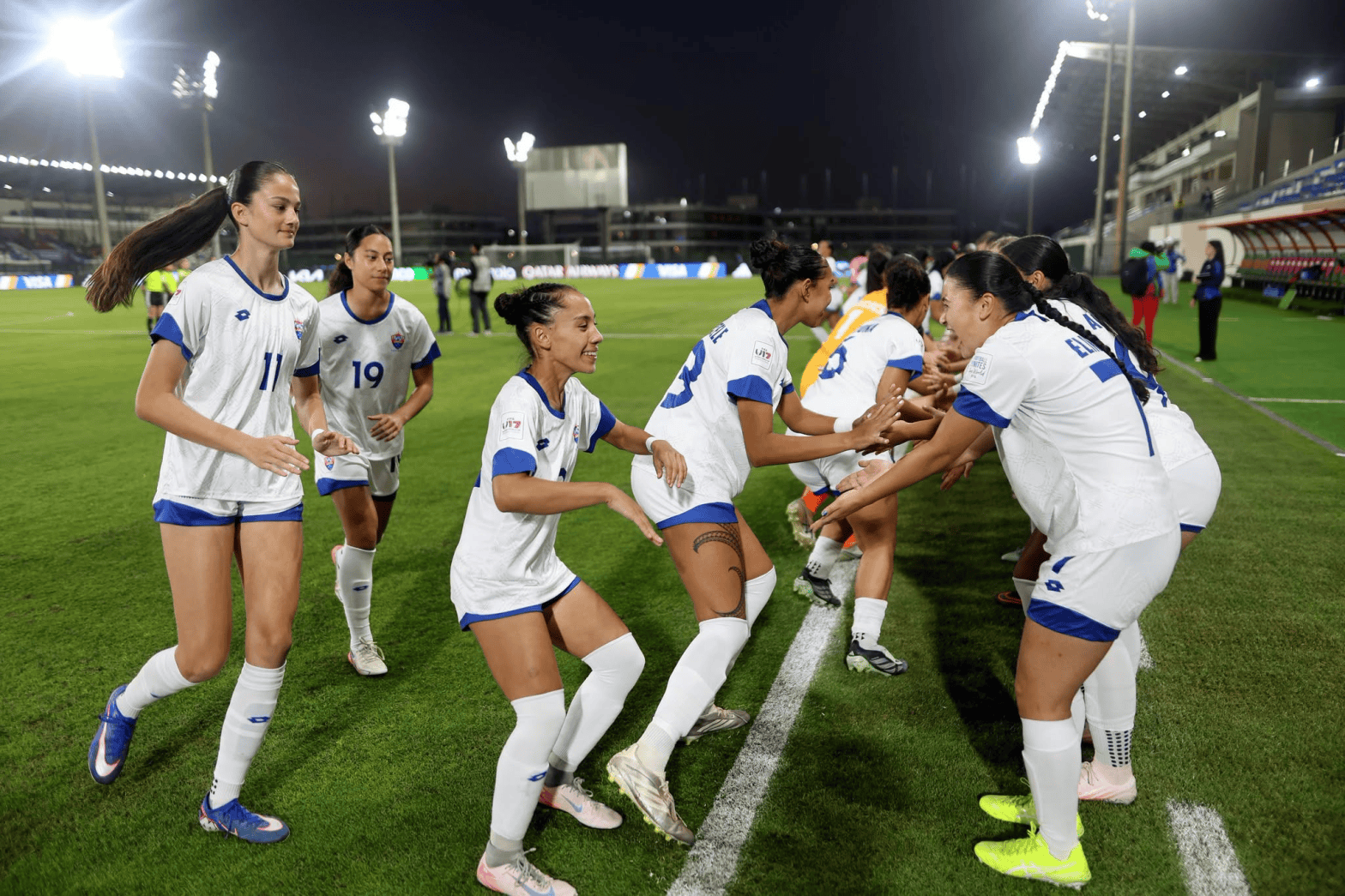
Samoa’s campaign at the 2026 FIFA U-17 Women’s World Cup came to an end on Sunday, 25 October, with a 4-0 defeat against Kenya in Morocco, completing a challenging tournament for the Pacific nation as they continued their development on the international stage.
Competing in their second consecutive edition of the tournament, Samoa suffered three defeats in Group E, conceding 28 goals against the United States, China and Kenya without finding the net.
The results exposed the considerable gap between Oceania’s developing football nations and opponents with access to larger player pools and more established development structures. Nevertheless, the experience represented another opportunity for Samoa’s young players to compete at the highest level of international youth football.
Their final appearance at the Mohammed VI Football Academy in Salé began with an early setback, as Kenya took the lead through Mwanakombo Bakari after just four minutes.
The Junior Starlets entered the encounter needing a convincing victory to maintain their hopes of progressing to the knockout stages, placing Samoa under pressure from the opening exchanges.
Despite conceding early, Juan Chang Urrea’s side managed to prevent Kenya from extending their advantage for much of the first half. Their resistance was eventually broken again in the 44th minute, when Brenda Awuor doubled the lead with a low strike from outside the penalty area.
Samoa reached halftime trailing 2-0, but Kenya continued to dominate possession and create opportunities after the interval.
Gaudancia Maloba scored the third goal in the 62nd minute before Bakari completed her brace just two minutes later, securing the four-goal margin Kenya required to advance to the Round of 16 as one of the best third-placed teams.
Samoa struggled to create opportunities, registering only three attempts compared with Kenya’s 17. Breanna Kitiona and Taimane Devoux were among the players who attempted to threaten the Kenyan goal, but neither could provide a breakthrough.
There was, however, a memorable individual moment in the closing stages when goalkeeper Susahna Peacock saved a penalty from Lindey Atieno in the 74th minute.
The intervention gave the Samoan players something to celebrate despite the result and provided a positive moment at the conclusion of a demanding campaign.
Their journey in Morocco had begun with a particularly difficult encounter against the United States on 19 October.
Facing one of the strongest teams in women’s youth football, Samoa suffered a 17-0 defeat, the largest victory recorded in FIFA U-17 Women’s World Cup history.
American attacker Maddie DiMaria scored six goals, becoming the first player to achieve that feat in a single match at the tournament.
The result demonstrated the scale of the challenge facing Samoa, whose players struggled to contain the speed, technical quality and attacking combinations of the American side.
Three days later, the Samoans returned to action against China, hoping to deliver a more competitive performance.
Although they suffered another heavy defeat, losing 7-0, the team showed greater defensive resistance during stretches of the encounter, particularly after conceding an early penalty.
China led 4-0 at halftime before adding three more goals in the second period.
Following that match, Chang Urrea acknowledged both the difficulties his players faced and the value of competing against elite opponents.
“We knew it was never going to be an easy task against China PR – we knew it was going to be a tough one. But I do think that we did improve and we added another layer for us. We’re just going to continue to learn,” the coach told FIFA.
The final defeat against Kenya confirmed Samoa’s elimination, leaving the team bottom of Group E without points.
Despite the disappointing results, the campaign represented another milestone for a national programme that had never competed at a FIFA tournament before 2025.
Samoa made their historic debut at last year’s U-17 Women’s World Cup, also hosted by Morocco, when they scored twice against former champions France in a 4-2 opening defeat.
That performance demonstrated the potential of a developing programme, although subsequent defeats against Canada and Nigeria ended their first campaign at the group stage.
Their return to Morocco in 2026 followed another successful regional qualification campaign, during which Samoa defeated Solomon Islands 5-0 in the semifinals of the 2025 OFC U-16 Women’s Championship to secure their World Cup place.
The achievement was particularly significant because it confirmed Samoa’s ability to remain competitive at the highest level of Oceania’s youth competitions outside New Zealand.
However, their performances against the United States, China and Kenya highlighted how difficult it remains to translate regional success into competitive results against stronger opposition from other confederations.
While Samoa improved their scorelines across the three matches, the difference in goals conceded cannot by itself establish sustained progress, particularly given the varying quality and playing styles of their opponents.
The tournament also reinforced the importance of regular competitive opportunities, investment in youth development and stronger domestic pathways if Pacific nations are to narrow the gap at future international competitions.
For many of Samoa’s players, the experience of facing opponents from three different confederations will provide a reference point as they continue their football careers.
Before the tournament, Chang Urrea had spoken about his ambition to build on Samoa’s historic first World Cup appearance and eventually help the country collect its first points on the global stage.
That objective remains unfulfilled after the 2026 campaign, but successive qualifications have already established Samoa as an emerging force within Oceania’s women’s youth football.
The next challenge will be ensuring that the experience gained in Morocco translates into stronger preparation, improved player development and more competitive performances in future international tournaments.
For Samoa, the results in 2026 were undeniably difficult. The opportunity now is to build on two consecutive appearances at the highest level and continue strengthening the foundations of women’s football in the country.
Discover more from Oceania Football Center
Subscribe to get the latest posts sent to your email.

