Central United faced Metro FC on Saturday in a friendly match as part of their preparation for 2020 Lotto NRFL Men’s Premier League, the top-tier of winter football season in Auckland region.
Vanuatu international Brian Kaltak started the match on the bench and came into field in the second half. Despite playing only 45 minutes he had an important role in the 3-0 win. The 26-year-old defender scored Central’s opening goal in the 76th minute.
Kaltak scored the first goal of the match – Phototek NZ
The second goal was an own goal and the third one was netted by Dylan Manickum. Central United will debut in Lotto NRFL Men’s Premier League on next Saturday against Melville United at Gower Park.
Football has some high-profile cases of families committed to football around the world; one such case comes from Papua New Guinea, particularly Madang. Behind the recent success of Tusbab Stallions, Madang’s representative in the PNG National Soccer League, there is a lot of work to create the perfect environment for the practice of good football. Among the people who support Stallions, there is a special family: the Wadunah’s.
The Wadunah’s are an important part of the success of the Tusbab Stallions. In the role of Sports Director, we have Conrad Wadunah, one of the most influential members of the Board of Directors, who has worked hard to develop the team since its inception in 2019. Off the pitch, we also have Rachel Wadunah, the head coach of the Tusbab Stallions, the woman responsible for coaching the players and accompanying them in this very good campaign that the Madang team is having in Papua New Guinea this season. Rachel is one of the few women in the world to coach a men’s team competing at national level.
Coach Rachel Wadunah – OFC Media
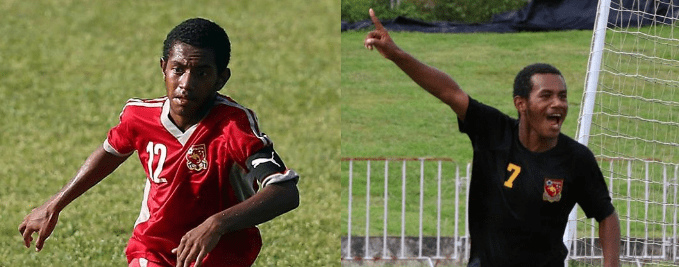
Conrad and Rachel also have two very talented sons: Ricky Wadunah and Jason Wadunah. Ricky, a 19-year-old midfielder, is considered one of the most promising players in Papua New Guinea at the moment. His brother Jason, who also plays in midfield, is only 17-years old. Both players have already represented their country at international youth level.
Ricky and Jason have been playing for the Tusbab Stallions since 2019 in their first appearance in the PNG National Soccer League. Both are starters in the team, which is coached by their mother and directed by their father.
Ricky and Jason Wadunah in international duties
Ricky and Jason are being crucial for Stallions in the current season in Papua New Guinea alongside players such as Stahl Gubag, the top goalscorer of the season so far. The young brothers are impressing the Papua New Guinean community with their performances – helping the Madang based-side to enjoy a superb season so far.
A family united by football works hard to promote the development of the game in their country and province. Rachel, Conrad, Jason and Ricky – along with all the board members, staff and players of the Tusbab Stallions – certainly make Madang proud of their efforts and enjoy very good performances at the Lawaiden Oval.
After the forced break due to the COVID-19 pandemic, the Stallions are already back in training and expect to continue their adventure in good form when they resume their campaign in the PNG National Soccer League in August – when the national league is set to restart.
Sport has its icons, the important figures that inspire the younger generations to pursue the dream of being a successful sportsman. All sporting modalities have their idols; all countries have an athlete who can serve as a role model.
In Solomon Islands, we can remember many important names, especially from football, which is the most attractive sport to Solomon Islanders. Personalities such as Commins Menapi, Batram Suri and Benjamin Totori, to name a few, are of massive importance in the Solomon Islands’ sporting scenario. Henry Fa’arodo, another player of enormous importance in Solomon Islands, can certainly be seen as a role model that the youth should follow – alongside other important sportsmen and women in the country.
The now 37-year-old midfielder began his career in the Nelson Suburbs in 2000 when he was awarded a scholarship in New Zealand. The talented player quickly caught the attention of Australian clubs and signed with Fawkner Blues at NPL Victoria. In 2004, Fa’arodo gained his first experience as a full professional player with the Melbourne Knights in the former National Soccer League, Australia’s highest division at the time.
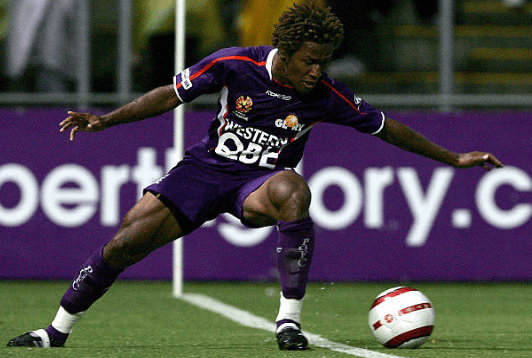
The creation of the Hyundai A-League, the new premier league of Australian football, in 2005 gave Fa’arodo a chance in Perth Glory – making him the first Pacific Islander to play in the newly made league in Australia.
Fa’arodo playing for Perth Glory in 2005
The Solomon Islander’s workload in Glory was not for a long period, as he only played 11 games for the team. Fa’arodo then moved to some NPL clubs as Essendon Royals and Richmond before returning to New Zealand to play for clubs like Canterbury United and Auckland City.
One of the most important achievements of Henry Fa’arodo’s career was in 2010, when he helped Papua New Guinea side Hekari United win the OFC Champions League. The Solomon Islander was crucial to the success of the Port Moresby-based side in the regional tournament.
720Fa’arodo (left) playing for Hekari United – FIFA
Thanks to Hekari United’s fantastic performance, Fa’arodo and his team-mates had the amazing opportunity to represent the OFC at the 2010 FIFA Club World Cup in the United Arab Emirates. They lost 3-0 to Al-Wahda of the host nation in the play-offs, but it is certainly a moment that neither Fa’arodo nor his Hekari teammates will forget.
After this great experience, Fa’arodo played a season in his country for Koloale, but it was not long before the now experienced player attracted the attention of New Zealand’s top-tier club Team Wellington. The Solomon Islander joined the Wellington-based club and made himself a legend of a club – Fa’arodo played more than 30 games for Wellington and scored a total of 15 goals during his time in New Zealand.
Fa’arodo in Team Wellington colours
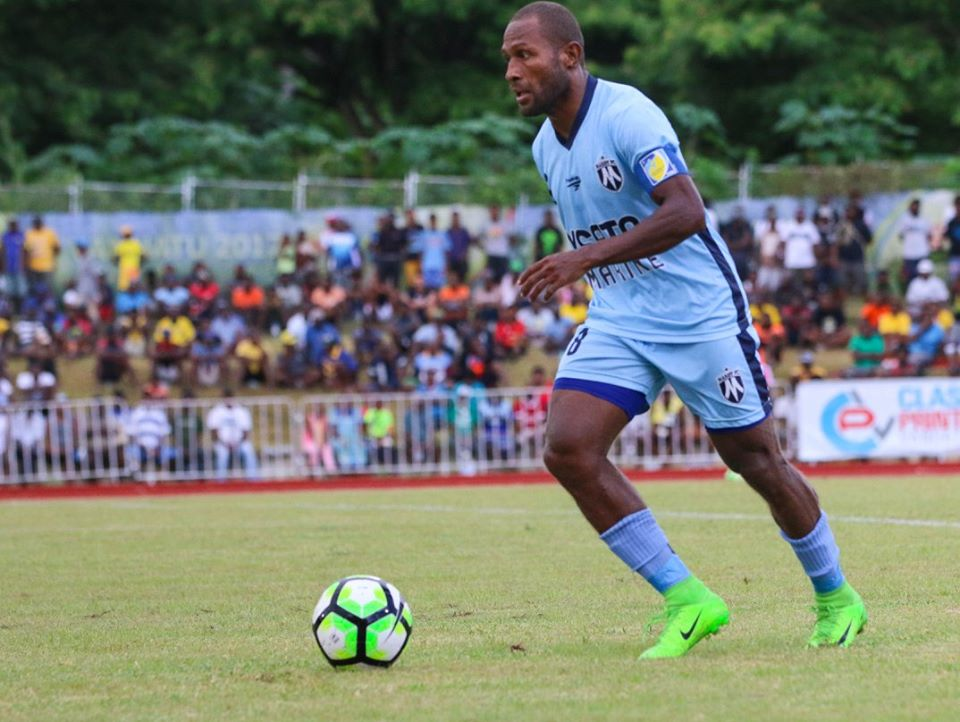
In 2017, Fa’arodo, now 34-years old, joined the Solomon Islands’ Marist FC team. The midfielder helped the club to qualify for the 2018 OFC Champions League and played an important role for the Honiara-based club.
Alongside important players such as Michael Boso and Atkin Kaua, Fa’arodo was captain of a very good team of Marist, the went to the semi-finals of the competition, where they met the Fijian powerhouse Lautoka. The best efforts of Fa’arodo and his teammates were not enough to qualify Marist for the final as they were eliminated by Lautoka.
Henry Fa’arodo as player of Marist FC – OFC Media
After the good campaign Fa’arodo and Marist had in the 2018 OFC Champions League, the player moved back to New Zealand to defend Wellington Olympic’s colours in the Central League. In 2019 Fa’arodo, now 36, returned to his country, but this time as coach of the Solomon Warriors in the Telekom S-League. Fa’arodo’s first experience as head coach could not have been better, leading the Warriors to the league victory and qualification for the OFC Champions League.
It was expected that the legend would coach the Solomon Warriors at the regional tournament, but Fa’arodo decided to put his boots back on the line and accepted a contract in New Zealand to become a top-flight Hamilton Wanderers player – Selson Molea was the responsible coach for the Warriors in the 2020 OFC Champions League.
Fa’arodo in New Zealand playing for Hamilton Wanderers – NZF Media
Fa’arodo played only one game for the Wanderers in the ISPS Handa Premiership – the league had to be finished due to the COVID-19 pandemics. However, Fa’arodo remains as a player for the Hamilton Wanderers and has extended his contract as the team’s midfielder in the season of the Lotto NRFL Premier League in New Zealand. The 37-year-old player still has a lot to do for the Wanderers in this new season.
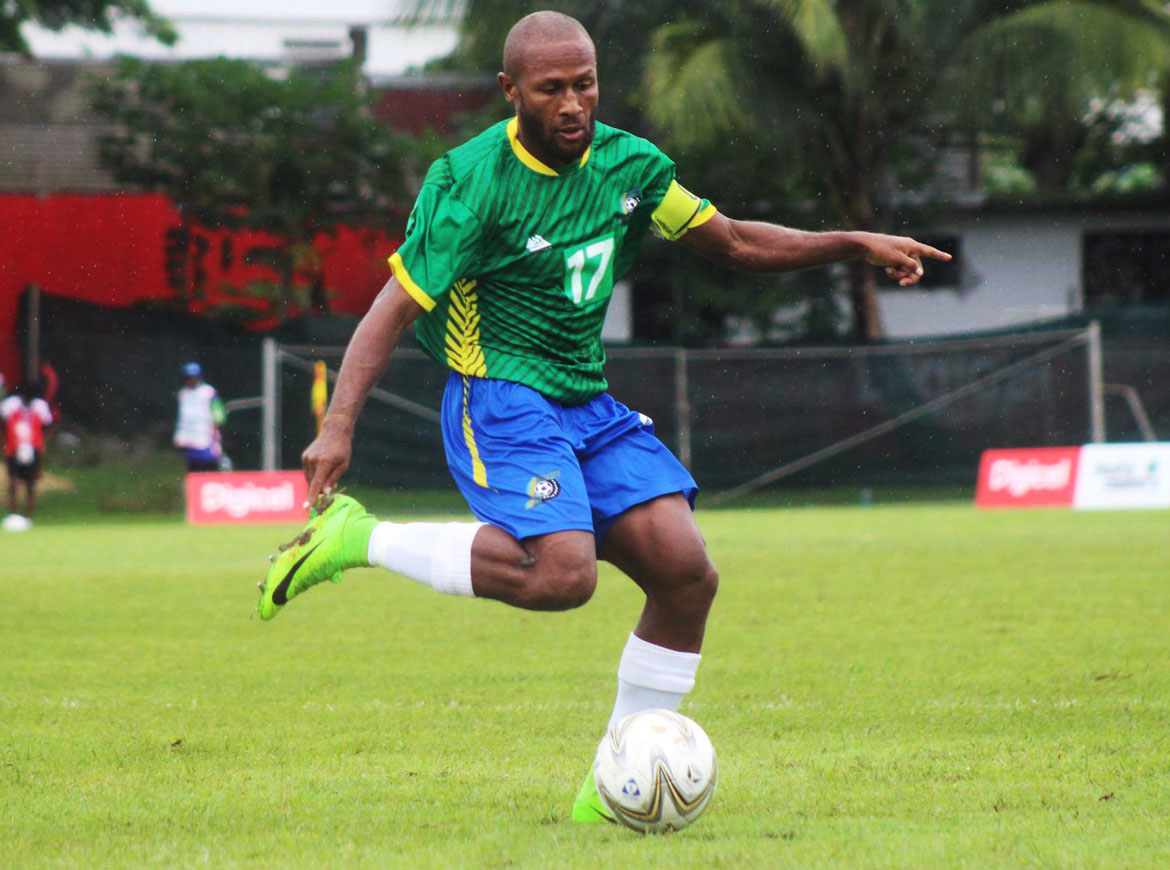
At international level, Fa’arodo is the player who defended Solomon Islands the most – played a total of 61 matches. Fa’arodo’s career as a representative of his country began in 2002 in a game for the OFC Nations Cup against Tahiti and ended in 2017 at the Mini Pacific Games in Vanuatu after a 3-2 defeat to the hosts in the gold medal game. Fa’arodo scored a total of 20 goals for Solomon Islands, being the first of them scored against New Zealand in 2002.
Fa’arodo playing for his national team
Henry Fa’arodo, considered one of the best footballers ever from Solomon Islands, is constantly being praised in his country and in Oceania for his hard work and the important milestones of his career. Fa’arodo is undoubtedly a role model for Pacific Islanders who dream of becoming a successful sportsman; following his dedication will certainly earn you a high rank.
Fijian football has produced many interesting players in Oceania over the past few decades – and its grassroots system continue to work to keep the game going in the country over the next years. Currently, many interesting players such as Kishan Sami, Rahul Naresh and Etonia Dogalau have moved to New Zealand to play in higher level competitions, but many interesting prospects continue to play in the country. One of these players to watch is the goalkeeper Mohammed Alam – that is also set to move to Manukau United in New Zealand to play in the Lotto NRFL Premier League.
The 20-year-old goalkeeper recently represented his country in the OFC Olympic qualifiers, where Fiji were eliminated in the semi-finals after losing to New Zealand. What the Fijian football fans may not know is that Alam is the youngest player ever to play in a Fijian national league. The remarkable moment came in 2013, when Alam was only 13 years old, when he played for Seaqaqa in the Premier Division.
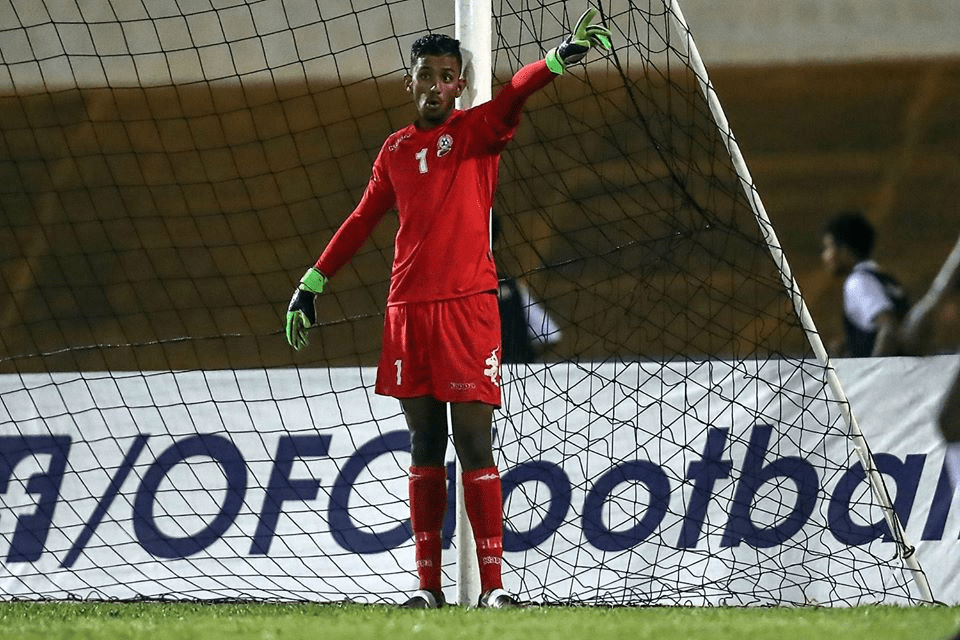
Alam representing Fiji
“He made his debut for Seaqaqa last year at the age of 13 years and may go down in the history books of Fiji football as the youngest player to feature in the senioAli’s predictions were correct, as the goalkeeper represented the U20 and U23 teams of the national team. Mohammed Alzar Alam is currently considered one of the most promising goalkeepers in Fiji.r national competition”, said Fiji Times, “He was introduced to the sport by his father Mohammed Azaad Alam a former Seaqaqa rep himself and first represented the Seaqaqa U10 team when he was in Year 3“.
In that time, Fiji FA was already following closely the development of Alam, as said the Fiji Football Association development officer Saiyad Ali: “Alzar [Alam] is very young and can represent the nation at the U17 level for two years and the U20 for three years”. Ali’s predictions were correct, as the goalkeeper represented the U20 and U23 teams of the national team. Mohammed Alzar Alam is currently considered one of the most promising goalkeepers in Fiji.
Football teams in Port Vila – the capital of Vanuatu – are already back to training as football leagues are cleared to resume in July. Two friendly matches took place at Port Vila Stadium this Saturday as part of the preparation for 2019-20 Port Vila Premier League resumption.
In the first match, current Port Vila Premier League leaders Ifira Black Bird faced Mauwia and won by 2-1 in a tough match – “We started training on Monday and we are not fit enough yet,” said Ifira’s player Jonathan Spokeyjack. Loic Boulet and Loic Taiwia found the net for Ifira while Mauwia’s goal was an own goal scored by Loic Taiwia.
Ifira won by 2-1 – Vanuatu Sports News
In the second match Galaxy and Erakor Golden Star clashed in a very interesting match. Kensi Tangis found the net in the 12th to open the scoreboard in favour of Galaxy while Yvong Wilson extended the lead to 2-0 in the second half.
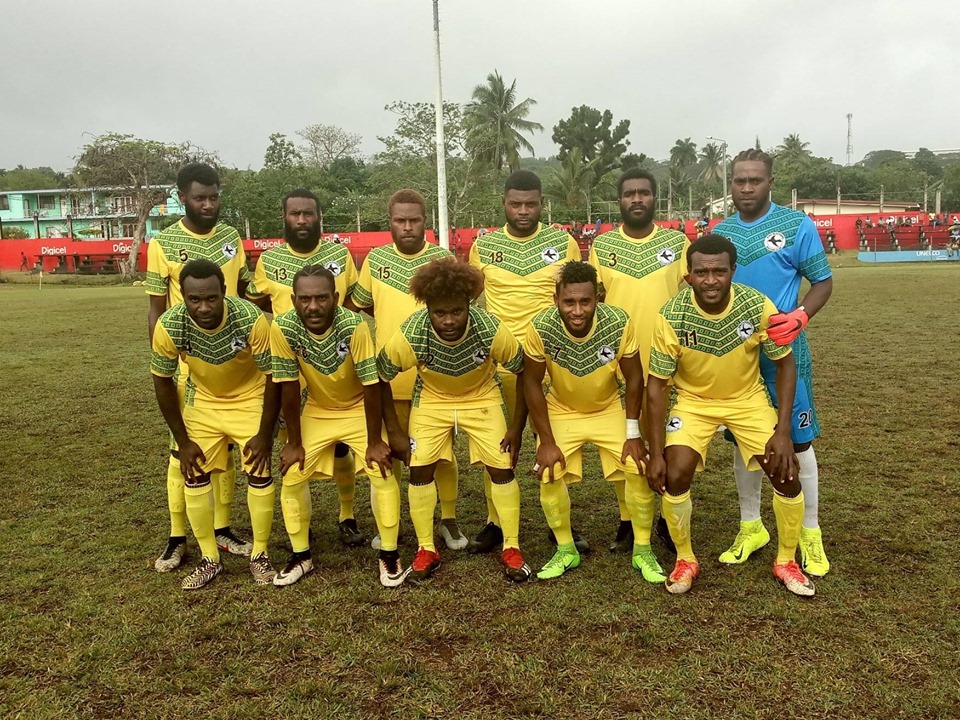
Galaxy and Erakor players greets before the kick-off – Galaxy FC Media
It is very nice to see football resuming in Vanuatu after COVID-19 and Tropical Cyclone Harold. Oceania Football Center congratulates all involved teams in today’s friendlies.
A new football league is born in New Caledonia. Fédération Calédonienne de Football (FCF) confirmed that eight teams will fight for the title in the brand new U-18 tournament called Championnat Fédéral du Football des Jeunes (Federal Youth Football Championship).
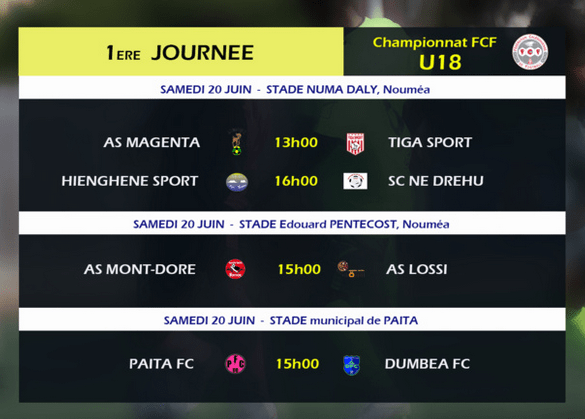
Eight teams will meet in a brand new formula with 14 championship matchdays will be held from 20 June to 5 December 2020. AS Magenta, Tiga Sport, Hienghène Sport, SC Ne Drehu, AS Mont-Dore, AS Lössi, Païta FC and Dumbéa FC are the confirmed teams in the tournament.
The first matchday is scheduled to take place on next Saturday – FCF Media
“It is a novelty for New Caledonian football. We will do our best to ensure that everything goes well and that this project has a long life. We will do our best to ensure that everything goes well and that the project has a long life, because the aim of all this is to get our youngsters playing more,” said Eric Chevalier, Regional Technical Advisor in charge of Development and Promotion of Practices at the FCF.
It is going to be the first official tournament since football activities were cleared to resume in the French territory. The Mobil Super Ligue – the top-tier of senior football in New Caledonia – is expected to resume in August but local clubs want senior football back in July.
AS Magenta and Païta FC clashed in U19 Cup Final last year – FTF Media
Oceania Football Center congratulates FCF for the initiative. You can check the Championnat Fédéral du Football des Jeunes full schedule by clicking here.
Papua New Guinea recently face a revolting case of domestic violence as international rugby player and boxer Debbie Kaore has been beaten with a clothes iron by her then partner. The agression was recorded and the video was released by Kaore to highlight domestic violence in the country.
Since then, many authorities and famous people from Papua New Guinea stood by Debbie’s side and started a huge campaign against domestic violence. Lae City players also joined the campaign as you can check in the picture below:
Stop violence against women – the message of Lae City players
The protest was led by international defender Alwin Komolong and he had the support of his teammates. Oceania Football Center endorses the protests against violence domestic once it is something unnaceptable.
Fijian football has many glorious moments to remember – 2016 is certainly a year that the Fijian football community will remember with joy. The Rio Olympics were the site of a fantastic adventure; led by their wonder boy Roy Krishna, Fiji faced the world and had the chance to experience the most important sporting event in the world – for the first time Fiji took part in the Men’s football tournament.
At the Pacific Games 2015 in Papua New Guinea – a tournament that also served as a qualifier for the Olympic Games in football – Fiji was in a group with Micronesia, Vanuatu and Tahiti. The Fijians drew with Vanuatu and Tahiti and recorded a massive 38-0 win over Micronesia, with Atonio Tuivuna scoring 10 goals in a single match. The results qualified Fiji for both the knockout stages of Olympic qualifying and the Pacific Games – Tahiti, the team that finished first in the group, could not compete for a place in the Olympic Games as they are not members of the IOC (International Olympic Committee). Despite losing to New Caledonia in the Pacific Games semi-finals, Fiji would have something bigger to celebrate.
While Vanuatu faced New Zealand in one semi-final, Fiji took on Papua New Guinea in Port Moresby looking for a place in the grand final, which would side the winner of the spot in the 2016 Rio de Janeiro Olympics. A hat-trick from Napolioni Qasevakatini earned Fiji a 3-1 win over the hosts to qualify for the final, which would decide which team would travel to Brazil. In the other semi-final Vanuatu lost 2-0 to New Zealand, but Vanuatu appealed to the competition organisers that New Zealand had used an irregular player. The match was awarded to Vanuatu as it was confirmed that the New Zealand player Deklan Wynne still did not have New Zealand nationality – the player was born in South Africa.
In the final match neither Vanuatu nor Fiji scored in regular time and extra time. The Olympic Games entry had to be decided on penalties, and despite the failures of Napolioni Qasevakatini and Garish Prasad, Vanuatu also missed two penalties through Junior Vava and Bong Kalo. The final two penalties decided the fate of both sides: Remy Kalsarap missed for Vanuatu, but Jale Dreloa confirmed his penalty for Fiji and made history for his country.
Fiji celebrated a fantastic performance, but they knew they would have a very tough challenge in 2016 when they would play against some of the best youth players in the world in Brazil. The Fijian squad had a period of trainings for the Olympics in Spain – also playing against some local teams – and decided which three senior players would join the U23 squad for the historic participation in the Olympics: Simione Tamanisau, Roy Krishna and Alvin Singh.
Fiji was unlucky in the draw for the Men’s Olympic Football Tournament: they were grouped alongside the then Olympic champions Mexico, the powerhouse Germany and South Korea. The first match of the Fijians could have been much better: they faced South Korea in Salvador and conceded only one goal in the first 45 minutes of the game, but their stamina was not at the level of the South Koreans, who scored seven more goals in the second half, including one from Tottenham’s star Son Heung-Min – a tough 8-0 defeat was the debut of Fijian football at the Olympics.
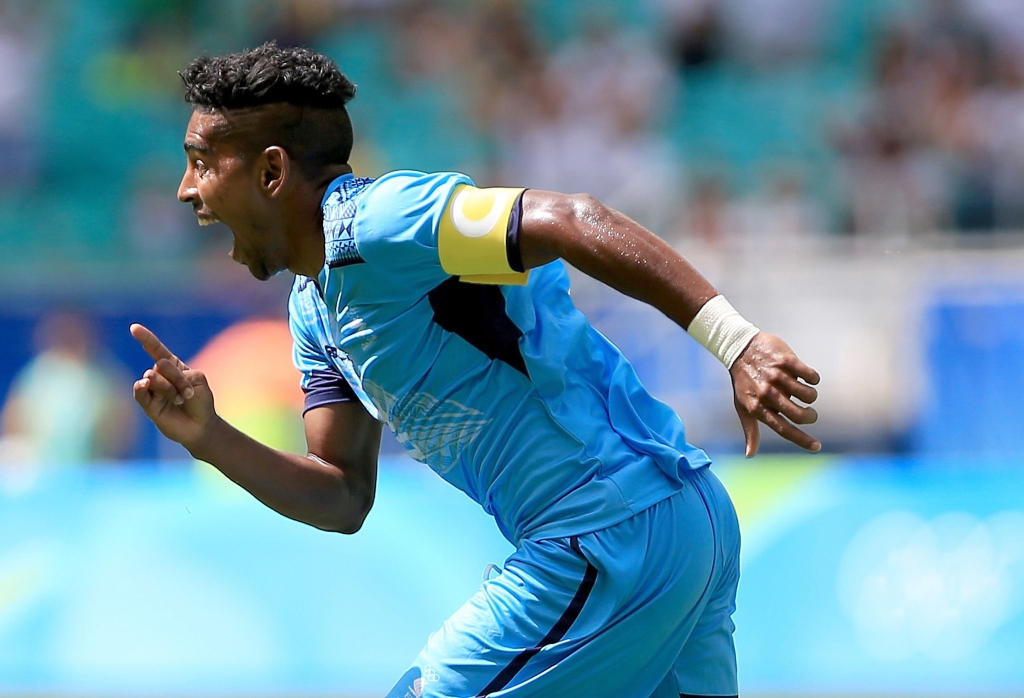
The second match of Fiji was against Mexico again in Salvador – and it was when the magic happened. Mexico had more possession of the ball in the initial stages of the game, but in a rapid movement Fiji could retain the ball; Iosefo Verevou saw Krishna upfront marked by the Mexican defenders, as he had no better option he sent a long pass from the middle of the park for the Fijian striker – Mexican defenders and his goalkeeper failled and allowed Krishna to head the ball towards the goal, as the goalkeeper left his posts, the ball quietly entered to nets to the delight of the Fijians and to many Brazilians supporting the Bula Boys in the stadium that started to shout ‘Krishna, Krishna, Krishna‘ celebrating the moment.
The Fijians managed to hold the lead for the rest of the first half – Fiji won Mexico, the reigning Olympic champions, 1-0 in 45 minutes of football. Much to the chagrin of the home crowd and Fijian football, Mexico managed to score five goals in the final part of the match, proving that the Fijian side at times do not seem particularly well phisically prepared for the high demands of this competition.
The Fijians would have one last chance against Germany in Belo Horizonte. The Germans proved too strong for the Fijians when Max Meyer, Serge Gnabry and Nils Petersen destroyed the Fijians’ defence in the first half and scored a total of five goals. In the second half the same players continued their productive form and also scored five more goals for Germany to end the game with a strong 10-0 victory over the Fijians. The best moment of the game for Fiji was when Siomione Tamanisau saved a penalty from starlet Max Meyer.
Fiji finished in the bottom of their group, suffering a total of 23 goals and scoring just once through the historic header of Roy Krishna. Despite suffering so many goals in the competition, which was to be expected given the different technical level of their opponents compared to Fijians, it was one of the best moments ever of the Fijian football to share the same pitch of players as Son Heung-Min, Serge Gnabry and Julian Brandt.
It seems that the Fiji FACT will face some changes this year. The tournament was previously scheduled for May but it was postponed to November due to COVID-19 pandemics. Besides that there is another change annouced by Fiji Football Association (FFA) chief executive officer Mohammed Yusuf: the number of teams is reduced from eight to six.
The tourament will be played at Subrail Park in Labasa and six teams (including hosts Labasa) are going to fight for the trophy. The other participants were not released yet.
Six teams will fight for Fiji FACT title this year. Source: Fiji FA Media
On the other hand, the Battle of the Giants and the Inter-District Championship are not going to have the number of participants reduced. Nadi is the current Fiji FACT champions as they defeated Suva by 2-1 in the final match last year.
Now men’s youth leagues are finally drawn. Football Federation Samoa (FFS) livestreamed the draw of U-17 and U-19 leagues. The U-17 tournament will count on eleven teams while the U-19 tournament will have twelve teams. Both leagues were splitted in two groups and you can check them below:
U-17 TOURNAMENT GROUP A: Vaivase Tai, Vaiusu, Lotopa, Faleaseela Catholic Church, Moataa and Faleasiu GROUP B: Lepea, Lupe o le Soaga, Kiwi, Vaigaga and Faatoia United
U-19 TOURNAMENT GROUP A: Kiwi, Vaitele-Uta, Vaiusu, ADIDAS, Faleasiu and Moaula GROUP B: Lepea, Faatoia United, Lupe o le Soaga, Vaivase Tai, Vaipuna and Sogi
Youth leagues resume next week in Samoa.
As it was mentioned before, the leagues must start on next Saturday and they are scheduled to finish on August 8. Oceania Football Center wish good luck to all teams!











 Oceania Football Center