Oceania Football Confederation (OFC) is surely the least development continental football confederation in the world. They have been improving really fast in the past few years and they count with some partners to help in this development process: another continental confederations.
It is already known that OFC holds a partnership with Union of European Football Associations (UEFA) as the European association funds youth football development in Oceania with exchanges of football and tournament promotions in Europe or in the OFC region.
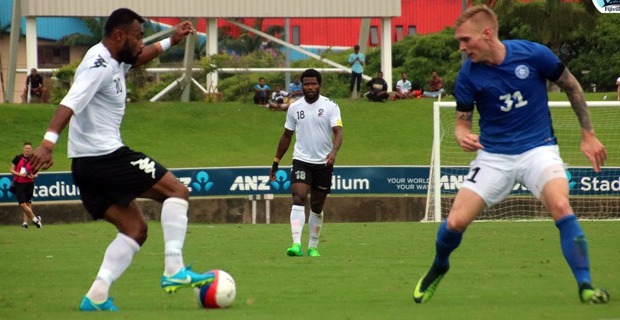
Estonia National Football Team is used to face the Pacific Islands countries. They played friendlies against Fiji, New Caledonia and Vanuatu in 2017 and they also took part of 2019 OFC Youth Development Tournament held in Vanuatu. The Estonian side was ready to face New Caledonia in a friendly that was scheduled to take place in March but it was cancelled due to COVID-19 pandemics.
Fiji and Estonia clashing in a friendly match in 2017
According to OFC president Lambert Maltock, they have made discussions and agreements with other confederations like Asian Football Confederation (AFC) and South American Football Confederation (CONMEBOL) to assist OFC. An agreement was set to be signed in June but it was also postponed due to COVID-19.
Maltock also revealed in an exclusive interview with Oceania Football Center that there will be more youth tournaments and more friendly matches against AFC, UEFA and CONMEBOL nations once all agreements are signed.
OFC still has a long way to go in order to get closer to other confederations. However, the first steps are done. Now it is time to wait and check if these projects will bring some real development to Oceanian football.
Football is a globalized sport and it is not so difficult to find foreign players in a football team. Many clubs from Europe have key players from South America or Africa, for example. It is not different in Oceania where we can find some players from these continents having success in the region like Uruguayan Martin Bueno and Nigerian Sanni Issa.
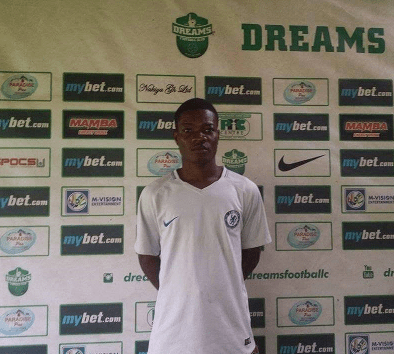
While some foreign players shine in Oceania, some others are fighting for space in the continent like Oscar Anto. Born in Kintampo, Ghana, the 17-year-old forward was playing in a football academy in Accra – the capital of his homeland – before moving to Samoa to play for Lupe o le Soaga in 2019.
Anto arrived in Samoa in 2019
He was part of Lupe’s squad for 2020 OFC Champions League but he missed the tournament due to Visa problems. Oscar is currently playing in the youth team as youth football leagues from Samoa resumed on last Saturday – “I am working hard to prove myself to receive the opportunity to play in another countries,” he revealed. The young forward is also part of Lupe’s senior squad, but he is playing for the youth team at the moment because the Senior National League has not started yet.
Anto is not the first player from Africa in Samoa. Currently playing for Suva in Fiji, Jibola Afonja and Michael Oyesanya from Nigeria also had a stint there while Ken Kerewi – who is also from Nigeria – played two OFC Champions League for Samoan clubs.
Oscar is very young and he still has a lot to learn. If he takes the right decisions he will have the chance to play in bigger football leagues from Oceania.
The New Caledonian Football Federation’s Federal Council met on Friday 26 June at the Federation’s headquarters and concluded the debate about Mobil Super Ligue – the top-tier of New Caledonian football – resumption.
As it was previously announced by federation’s president Steeve Laigle, the Super Ligue will be held over two calendar years for this year 2020/2021 and the tournament will resume in July. The date of July 11th has been suggested and now they depend on stadium’s availabilty.
Mobil Super Ligue is likely to resume on July 11th
Before the last meeting all indications were that the Super Ligue would resume on Saturday 8 August, with the end of the championship scheduled for May 2021. Some clubs did not agree with league’s resumption in August and now the league will resume as soon as possible. You can check the current league standings by clicking here.
It is official: Roy Krishna will play another season for ATK. The 32-year-old forward confirmed that his contract with the club was extended which means that he is going to play 2020-21 Indian Super League season.
Krishna was one of the most important players of the league in the last season by leading ATK to the national title with fifteen goals scored in 21 matches – “I am delighted to extend the contract with my club. After a successful season winning the 2019/2020 Hero ISL Cup, I had no hesitation is choosing to remain with the Champion Team,” he said in a press statement.
Currently in Fiji, he is expected to rejoin the club for pre-season in October as the new season will probably kick-off in November.
Solomon Islands legendary player Henry Fa’arodo is currently living in New Zealand as he is playing for Hamilton Wanderers in the Lotto NRFL Premier – one of the regional football leagues in New Zealand’s winter football season. Despite being far from his homeland, Fa’arodo still cares about football in his country.
According to sources, the next season of Telekom S-League – the main football league from Solomon Islands – is set to begin in August. However the local teams are struggling to start their preparations for the upcoming season as there are no available training grounds in the country’s capital Honiara.
“I heard that the start date for the next Telekom S-League season has been announced. I am sure by now that S-League clubs should have a plan or a program for their coaching and playing staff by now. I do hope that trainings should be given the green light as I am aware that other social activities have been given the green light in Solomon Islands,” he stated.
Fa’arodo is a legendary player and his commitment with the sport is the same outside the pitch. His last experience in Solomon Islands’ football was in 2019-20 Telekom S-League when he won the tournament as Solomon Warriors’ head coach.
Having relevant players having a serious positioning about things that are not going well in the sport is very important and Solomon Islands need it.
Solomon Islands rising star Raphael Le’ai is one of the biggest prospects from Oceania. The 16-year-old forward still has a long way to go as a footballer but his talent make us thinking about how far he can go.
Le’ai has a very impressive career for a 16-year-old player: he led his team in 2018 OFC U-16 tournament and played FIFA U-17 World Cup last year. He made his debut in OFC Champions League this year and scored an amazing goal against Lae City from Papua New Guinea in his first ever match in the tournament. He also scored 24 goals in seven matches for Henderson Eels in 2019-20 Telekom S-League, the major football league from Solomon Islands.
Le’ai has a very impressive career for a 16-year-old player
Raphael is still a teenager but we can not close our eyes to what he has done so far. Some legendary players from Pacific Islands like Benjamin Totori,Henry Fa’arodo and Roy Krishna were not at this level when they were 16 years old.
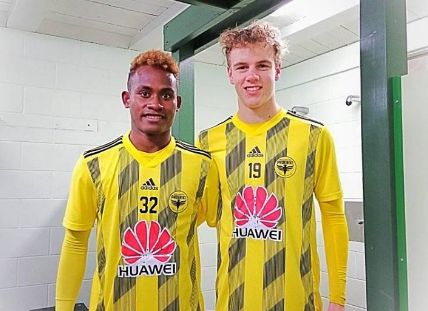
These three legendary players mentioned above have something in common: all of them played in A-League, the main football league from Australia – and we can see Le’ai playing there once he turns 18 as he has already two opportunities to be with A-League clubs: Melbourne Victory and Wellington Phoenix.
Le’ai (left) wearing Wellington Phoenix uniform during his period at Scots College
Raphael is very talented and a true hard worker. If he keeps his focus on his career and take right decisions, the A-League will become a reality to open the doors of the world to him.
Arami Manumanubai playing for Lautoka in 2019 OFC Champions League – OFC Media
The young defender did not travel to Australia with the other players because he was going to play 2020 OFC Champions League for Lautoka. He should have gone to Australia right after the continental tournament but COVID-19 prevented him to go.
Manumanubai is one of the most talented defenders from his country. He represented his country in OFC Olympic Qualifier that was held in Fiji last year.
Thierry Sardo est une personne qui a du succès dans le football international. Né à Toulon, France Sardo a fait toute sa carrière comme entraîneur-chef en Nouvelle-Calédonie. Sa première grande réalisation a été en 2011, lorsqu’il a aidé l’AS Mont-Dore à remporter la Ligue nationale.
Cela fait cinq ans qu’il est devenu l’entraîneur en chef de l’équipe nationale de Nouvelle-Calédonie. Depuis lors, il a emmené les Cagous en finale des Jeux du Pacifique à deux reprises: une fois en 2015, lorsqu’ils ont été couronnés champions en battant Tahiti en finale par 2-0 et une autre fois en 2019, lorsqu’ils ont perdu contre la Nouvelle-Zélande dans le temps additionnel.
L’Oceania Football Center s’est entretenu avec Sardo sur le développement du football en Nouvelle-Calédonie. Vous pouvez consulter l’intégralité de l’interview ci-dessous:
J’aimerais savoir comment vous voyez le développement du football en Nouvelle-Calédonie. Comment les ligues locales améliorent-elles leur qualité?
Le football évolue favorablement avec les résultats mémorables de Hienghène et de l’AS Magenta en Ligue des champions de l’OFC et la sélection pour les Jeux du Pacifique. Récemment, deux techniciens sont arrivés sur le territoire pour former avec des diplômes français les éducateurs et entraîneurs du territoire, ce qui ne fera que renforcer leurs compétences et nous permettra de mieux encadrer nos joueurs et de continuer à les faire progresser.
Comment se déroule le développement des jeunes joueurs en Nouvelle-Calédonie?
Les clubs sont particulièrement structurés au niveau des jeunes. Ce week-end, un nouveau championnat territorial U18 a été créé, un pont extraordinaire entre les U18 et les équipes seniors. Comme je le disais, la formation des entraîneurs pédagogiques sera un outil important pour le développement du football néo-calédonien, en particulier chez les jeunes.
La situation financière des clubs locaux autorise-t-elle des investissements ou est-elle tout aussi restreinte que d’autres clubs dans d’autres pays de la région?
Les clubs disposent d’un budget qui dépend de l’endroit où ils jouent, notamment en Super Ligue, ou lorsque les longs trajets par route ou par avion sont assez importants. Le mécénat ou le sponsoring sont assez difficiles à trouver, encore plus aujourd’hui avec la pandémie civile.
En particulier, l’organisation des ligues et du football en Nouvelle-Calédonie me semble être à un meilleur niveau que les autres pays d’Océanie. Lors de conversations avec certains athlètes d’importants clubs de Mobil Super Ligue, ils m’ont révélé qu’ils ne recevaient aucune allocation de ces clubs, informations qui m’ont surpris. Cela se produit vraiment, à quoi ressemble la séparation des activités entre le football et le travail rémunéré?
Oui, en Calédonie, le football est amateur et les joueurs font de gros efforts, notamment pour participer à des matchs ou des manifestations internationales. Il existe un système qui permet aux joueurs identifiés et proposés aux autorités de faire payer ou rembourser par le gouvernement 18 jours par an pour participer aux groupes de sélection seniors, mais cette liste est limitée et les choix sont difficiles à faire. Certains clubs essaient d’aider les joueurs à trouver un emploi.
Malgré toutes ces difficultés, similaires dans une certaine mesure au reste de la confédération, on peut dire que ces dernières années, les clubs et les équipes nationales ont obtenu de meilleurs résultats que la plupart des autres membres de l’OFC. Quelles sont les raisons de ce succès?
Pour la sélection, nous avons également la chance d’avoir la contribution de joueurs qui jouent dans les 5 premières divisions françaises ou même en Europe ou en Nouvelle-Zélande. Nous avons aussi une superbe génération de joueurs qui jouent dans le pays, sans parler de la nouvelle génération qui a bien réussi à la Coupe du monde des moins de 17 ans.
La fédération française permet de former les éducateurs avec leur formation; elle a un lien fort avec la FCF même si celle-ci est indépendante et autonome.
Comment la fédération de Nouvelle-Calédonie trouve-t-elle en Europe des joueurs éligibles pour jouer en équipe nationale?
En tant qu’entraîneur, mon rôle était de trouver des joueurs qui pourraient jouer pour nous – certains étaient connus ici avant mon départ, d’autres que j’ai trouvés par le bouche à oreille ou qui m’ont contacté. Ensuite, je vérifie auprès de leurs clubs pour confirmer leur niveau. En 2018, je suis allé les voir en France métropolitaine.
Sardo a un rôle important dans la recherche de joueurs à l’étranger
Quelle est votre opinion sur Georges Gope-Fenepej? Il’a été longtemps hors du terrain à cause d’une blessure, mais il est bien revenu en Ligue 2. Il semble que maintenant il se soit à nouveau blessé.
Je ne sais pas s’il est à nouveau blessé car il jouait régulièrement avant le confinement. Georges est plus qu’un grand joueur, c’est une grande personne. Quand il peut être avec nous, il remonte le groupe.
N’a-t-il pas été rappelé récemment en raison de ses engagements envers le club pour lequel il joue?
Georges est toujours disponible pour son équipe nationale et son club ne pose pas de problème sur les vitrines de la FIFA.
Comment jugez-vous la campagne de Hienghène et AS Magenta en Ligue des champions de l’OFC de cette année après avoir été finalistes en 2019?
Hienghène a connu une saison fantastique ainsi que l’AS Magenta. Ces deux clubs comptent beaucoup d’internationaux dans leurs rangs.mils sont les plus gros fournisseurs de l’équipe nationale. Ces équipes sont au niveau des meilleurs clubs de Nouvelle-Zélande et ici, chez nous, elles ont donné l’exemple aux autres. Certaines équipes sont assez ambitieuses pour venir ici cette saison et les défier dans les Super Ligues.
Pensez-vous qu’Hienghène a déçu en phase de groupes de l’OFC Champions League 2020?
Par le résultat peut-être, mais ils ont été très réduits; c’est le problème des clubs amateurs: il est difficile d’être disponible tout le temps.
Oceania Football Center tient à le remercier d’avoir pris le temps de nous parler du football en Nouvelle-Calédonie.
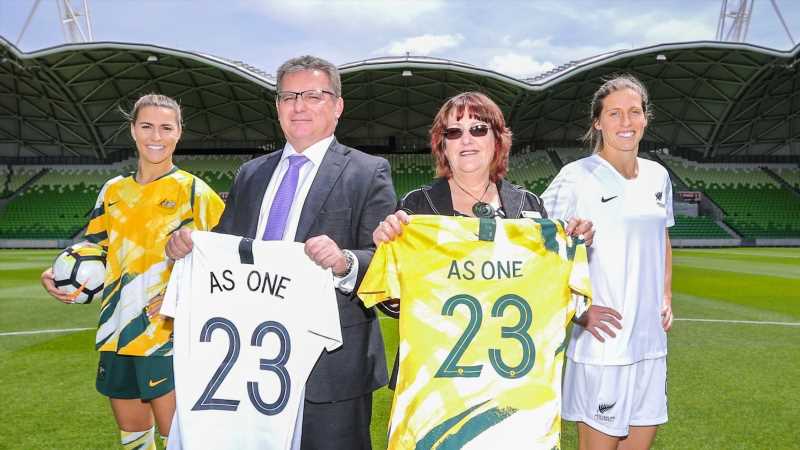
Good news for Oceania! The Trans-Tasman joint-bid is the winner and Australia and New Zealand will co-host 2023 FIFA Women’s World Cup!
As Brazil and Japan withdrew from trying to host the upcoming Women’s World Cup there were only two options in the final poll: Colombia and Australia/New Zealand. The Trans-Tasman bid was the the favourite to win as FIFA revealead that they were judged the strongest during the technical evaluation phase as the joint-bid had a 4.1 score while Colombian bid had a 2.8 score.
The announce was made by FIFA’s president Gianni Infantino through an official livestream shared by FIFA official social media.
Both countries have tradition when it comes to women’s football. Australia played seven out of eight World Cup editions and won 2010 AFC Women’s Asian Cup while the Football Ferns appeared in five World Cups and won OFC Women’s Nations Cup for six times.
The upcoming FIFA Women’s World Cup will be the first edition with 32 teams. The tournament will be held in twelve venues: seven in Australia and five in New Zealand. Oceania Football Center congratulates both countries for this major accomplishment.
The year is 2018 and Solomon Islands are ready to host the U16 OFC Championship at its main venue, the Lawson Tama Stadium in Honiara. The expectations of the local team are high: would it be possible for the Solomon Islands boys to qualify for their country for the first football FIFA tournament ever? The two finalists in the competition would advance to the FIFA U-17 World Cup, which was to be held in Peru at that time. The Solomon Islands were not in an easy group: Papua New Guinea, Vanuatu and New Zealand – the local side would have to fight hard to reach the semi-finals.
The theory was tough for the locals – but not the practice: Raphael Lea’i‘s four goals put Solomon Islands well ahead of Papua New Guinea in the opening game – Chris Satu added another for Solomon Islands to bring the qualifying campaign into fashion. The most shocking result of Oceania football since the 2016 OFC Nations Cup came in Solomon Islands’ second group match, this time against regional powerhouse New Zealand. The Lawson Tama Stadium saw a fantastic performance by the local boys against – they razed New Zealand to the ground with a surprising 5-0 win; a brace from Raphael Lea’i and a goal each for Maxwell Keana, Leon Kofana and Javin Wae made Solomon Islands believe they could qualify. To end the group, Solomon Islands took the lead of the group with another 5-0 win over Vanuatu – alredy the best ever campaign of Solomon Islands in the tournament – and this time counting on a brace from the team’s captain, Charles Mani.
The deciding match whether Solomon Islands would participate in the U17 World Cup or not was against Fiji. Many spectators watched the game in the stands and saw Charles Mani’s double and Raphael Lea’i’s goal in injury time, which earned Solomon Islands a 3-1 win over Fiji to qualify for their first-ever football FIFA tournament. Despite the fantastic campaign, Solomon Islands were unable to win the competition in the grand final as they faced New Zealand once again – although they had won 5-0 in the group stage, the final was much more difficult, with a 0-0 win after extra time. Much to the chagrin of the locals, only Derrick Taebo lost his penalty in the shootout and New Zealand took regional glory.
Solomon Islands U16 team – OFC Media
A fantastic performance – 18 goals in the tournament and only one goal conceded – prompted Solomon Islands to celebrate their first ever participation in a FIFA football tournament. 2019 was the year in which all the magic was to happen. Once again, Brazil stood in the way of Solomon Islands’ footballing history – Peru decided not to host the tournament and their South American neighbours took take responsibility for hosting the FIFA U17 World Cup.
Despite the celebrations, Solomon Islands’ participation in their first-ever global football tournament was threatened as the OFC questioned the availability of player Chris Satu. After investigations, it was determined that the player was overaged to play in the U16 tournament. The OFC and FIFA decided to allow Solomon Islands to participate in the competition despite the case; Maxwell Keana was later also investigated and the OFC confirmed another case of age manipulation which resulted in Solomon Islands being banned from participating in the next OFC U16 Championship.
But it was time to prepare and go ahead – Solomon Islands team played friendly tournaments against European teams in their way to the competition. The Pacific Islanders found out their group in the FIFA U17 World Cup would be very tough: Italy, Mexico and Paraguay – it would be certainly a great experience for the young boys.
Their first game was against Italy – the OFC representatives held the European powerhouse for 24 minutes as Wilfried Gnonto scored the Italians’ first goals. Despite all the boys’ efforts, the game ended in a 5-0 defeat. Solomon Islands had the opportunity to play against players from the youth academies of teams such as Juventus and Inter Milan in their debut in the FIFA football tournament.
Solomon Islands in Brazil before the match against Italy – FIFA
The second game was also tough, with Solomon Islands taking on Paraguay and unable to go three minutes without conceding a goal. Many defensive errors led to a poor performance by the young side as the South Americans scored seven goals to win their first game in the tournament. The group’s final match was against Mexico in Cariacica (ES), and once again, many defensive errors meant that the Islanders conceded a goal in the second minute of the match. The Mexicans would qualify for the knockout rounds with a strong 8-0 win. Despite the result, it was the game in which Solomon Islands came closest to scoring – after a free kick the ball was offered to Leon Kofana in front of goal, the defender was unlucky when the ball hit the post. Solomon Islands conceded a total of 20 goals in the tournament and were unable to score a goal that would have been historic.
Despite the results, this was the first step in the development of the sport in a football-loving nation – much remains to be done to continue the process. Players such as Leon Kofana and Raphael Lea’i are special players who can lead Solomon Islands on their path of football development in the years to come. Their participation was historic – and has certainly inspired younger generations to get involved in the beautiful game.