Timothy Filiga Cahill, more known as Tim Cahill is one of the greatest Australian players of all time. However he also has Samoan roots and he represented Samoa at youth level in the 90s.
Born in Sydney, Australia, Tim Cahill and his brother Sean (goalkeeper) were invited by Football Federation Samoa to play 1994 OFC U-20 Championship for them. Cahill was just 14 years old by that time – “They asked if I would take part, even though I was only 14 at the time and it was an under-20 tournament. I saw it simply as a chance to go on holiday because my grandmother was ill at the time in Samoa. I turned up for a couple of training sessions and never attended any of the team meetings.” he said. Tim also has a younger brother called Chris that capped 15 times for Samoa National Football Team.
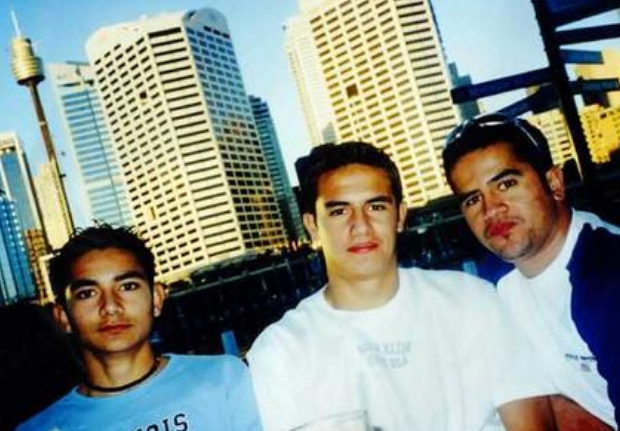
Chris, Tim and Sean Cahill
He played two matches in the tournament. He came from the bench in the 3-0 loss against New Zealand and played in the 3-0 loss against Vanuatu.
These two caps for Samoa U-20 made him ineligible to represent Australia until 2004 when FIFA changed its eligibility rules, allowing players capped at junior levels to switch international allegiance, meaning that Cahill was then able to play for England, Ireland, Australia or Samoa. He chose to represent the country of his birth and became a legend.
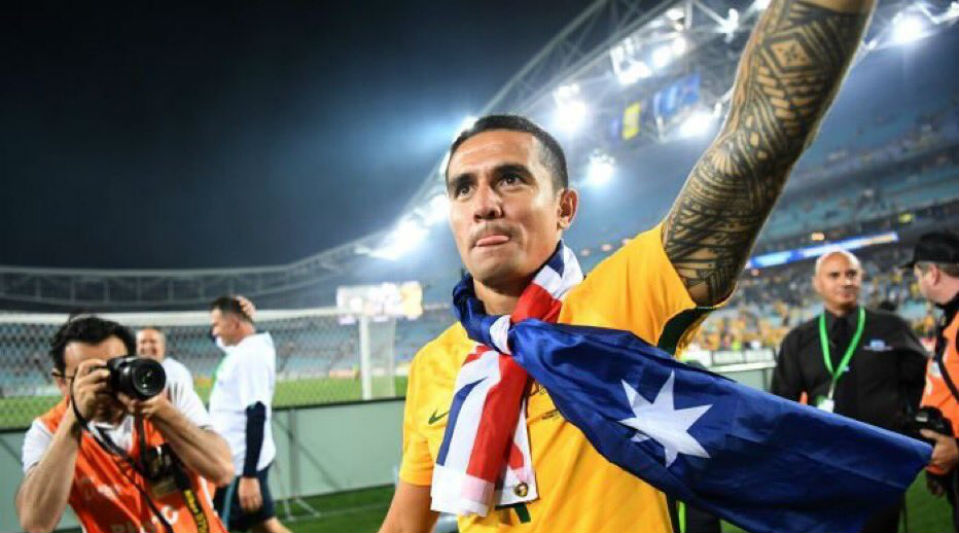
Tim Cahill
He debuted for Australia National Team in a friendly against South Africa on 30 March 2004. Despite debuting for National Team at 25 years old, Cahill managed to score 50 goals for Socceroos and he helped his country to play four World Cups – 2006, 2010, 2014 and 2018.
Port Vila is the capital and most important city of Vanuatu – when someone ask us to mention a city in the country, most of the times we will think about Port Vila. The capital is also the land of the most important football clubs in the country, as Galaxy, Tafea, Erakor Golden Star and historical side Amicale.
But there is not only football in the capital: recently Nalkutan – a club based in Tanna, Tafea province – represented the country in an OFC Champions League edition, after winning the VFF National Super League in 2016. But Nalkutan is not the most succesful club outside Port Vila in Vanuatu: Malampa Revivors, the current national champions, takes part in the National Super League for several years and in the last edition won Galaxy in the final match in Port Vila to give them first ever national title for the club.
Malampa Revivors celebrates their success – Yumi ToktokStret News
The club was created in 2010 by Elder Shem Dahmassing, as a youth ministry within the Youth Fellowship program of Centenary Presbyterian Church, at Sarakata in Luganville – in the Espiritu Santo island.
Since then their history of success is plenty: they played in the National Soccer League in its all previous editions and reached very positive results. In 2014 they lost to Amicale in the semi-finals and in the following year the same Amicale beat them, but this time in the final match.
In 2018 they qualified once again for the grand final against Erakor Golden Star, but were denied the title after losing in the penalty shooutout. But their lucky changed when they played the might Galaxy FC in the 2019 edition of the National Super League and beat the team coached by Moise Poida by 3-1.
Malampa Revivors celebrates winning goal against Galaxy – Vanuatu Sport
The club already played in two editions of the OFC Champions League: 2017 and 2019. In their first appareance in the most important club tournament of the region, they lost all matches in a group that had Auckland City, Western Unied and Lae City FC. In 2019, they played against Hienghène Sport, AS Tefana and Lae City – just drawing one match against Tefana in their final group match.
Malampa Revivors in 2019 OFC Champions League – OFC Media
After playing six games in the continental tournament and just collecting one point, the team in blue and white will have the opportunity to win their first ever game in the Champions League in front of their home crowd.
With the success of the team, many players of the club represented Vanuatu internationally – both at youth and senior levels. The striker Andre Batick was in the last squad that represented Vanuatu in the Pacific Games 2019 held in Samoa. In the last OFC U23 Olympic Qualifiers Malampa Revivors had Tasso Jeffrey, Claude Aru and Armando Ravo called up to defend the national colours.
The club also dominates the football in the local league – Luganville Premier League – being the current title holders of the 2019 edition of the league. The new season in Luganville (2019/20) already started and Malampa Revivors won their both starting two matches of the competition to be at the top of the table.
The success seems to continue for Malampa at regional and national level, but will they expand it to the continental level? The OFC Champions League is coming and this tournament will give us an idea of how it goes.
After the release of the report, many football fans got excited with the news expecting the defender could also represent Vanuatu internationally in the upcoming tournaments the Ni-Vanuatu side will play.
Nelson Sale (right) in a match for Solomon Islands – Zimbio
Unfortunately for the Ni-Vanuatu fans, the only good news are only for Galaxy that will get free a slot for an international player in the next Champions League. Nelson Sale already played 35 times for his home country Solomon Islands – including the last two OFC Nations Cup editions. According to FIFA regulations, a player can only represent one country internationally at senior level – once the player featured in an official international match – FIFA or OFC tournaments – he can not play for any other national team in the future.
The experienced defender is being key for Galaxy in the Port Vila Premier League after ten years playing in Vanuatu. He also played his club football in New Zealand and also in homeland Solomon Islands.
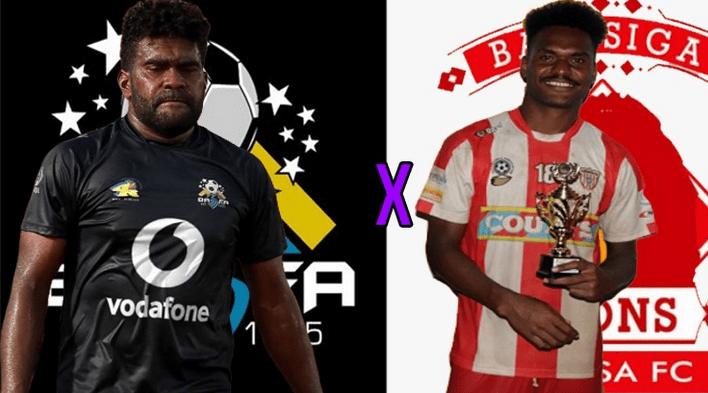
Champion versus Champion (CVC) is a football championship contested by two teams: The winner of Vodafone Premier League (Ba) and the winner of Battle of the Giants (Labasa).
Both teams are currently facing some problems with their respective stadiums: Govind Park (Ba) is being remodeled while Subrail Park (Labasa) is currently closed.
CVC is a pair of home-and-away games and they are played as a season opener. See the CVC schedule below:
19 January – Ba vs Labasa (Churchill Park) 26 January – Labasa vs Ba (Ratu Cakobau Park)
Oceania Football Center wish good luck to both teams.
Bairiki National Stadium is the biggest football stadium in Kiribati and it is used by Kiribati National Football Team. However it has never been used for an international match because Kiribati have never played an international football match at home, due to the fact that the pitch surface in the stadium is sand, not grass which is required.
According o local people there is only one football pitch with grass surface in the country – The Mormon Soccer Field. However this field is small and does not match international requirements for football pitches dimensions.
Bairiki National Stadium
This new stadium will solve some problems and it is going to allow Kiribati National Team to play at home. Furthermore it would help them to join FIFA because having a football stadium with a grass pitch is one of the requirements to join the biggest entity of international football.
There is no reliable information about which kind of grass will be used in this new stadium but it seems that it is going to be a grass carpet pitch. Oceania Football Center keeps investigating to bring reliable information about the new football stadium in Kiribati.
Joses Nawo and Atkin Kaua still need help to go to Malta. Netherlands Oceania Support Foundation recently started a fundraising to help Nawo and you can donate by clicking here.
Unfortunately time marches on and their dream is close to be over. Both players need to arrive in Malta to start training with Tarxien Rainbowns until January 8. If they do not manage to arrive until this day, the trial will be cancelled.
Joses Nawo
That is the biggest opportunity ever that Solomon Islands is having at professional football level and it is running down by Solomon Islanders hands. Netherlands Oceania Support Foundation is a serious organization and they are providing a huge opportunity for these two players but they need financial help to fund their flights.
Oceania Football Center recently wrote an article about Terry Stephenson, a 17 years old defender from Papua New Guinea that is playing in England. However Papua New Guinea is not the only country from Oceania with a defender playing at youth level in England – Fiji also counts on a good and promising defender that already played for National Team: Scott Wara.
Wara is 20 years old and he is some steps ahead Stephenson. He is already part of Stoke City U23 squad and plays regularly in the U23 Premier League. The Fijian defender also had the opportunity to play at Senior level for Leek Town in English 6th tier during a one-month loan from Stoke City in 2018.
Scott Wara (in the air) playing for Stoke City. Source: Stoke City Media
Wara received his first opportunity in Fiji National Team in 2018 after being scouted by Christophe Gamel who was Fiji’s head coach by that time. He made his debut on 5 September 2018, in a 1–1 draw against the Solomon Islands, appearing as a half-time substitute for Narendra Rao.
He did not play any other matches for Senior Team but he took part of Fijian squad that played 2019 OFC Olympic Qualifiers. Wara played all five matches and had a good performance in the tournament but he is remembered by his own-goal against New Zealand in the semi finals. He was a key player for Fiji to reach the fourth place in the competition.
Wara is being well treated by Stoke City and it would not be surprising if we see him making the next level in England soon by playing in a professional league there.
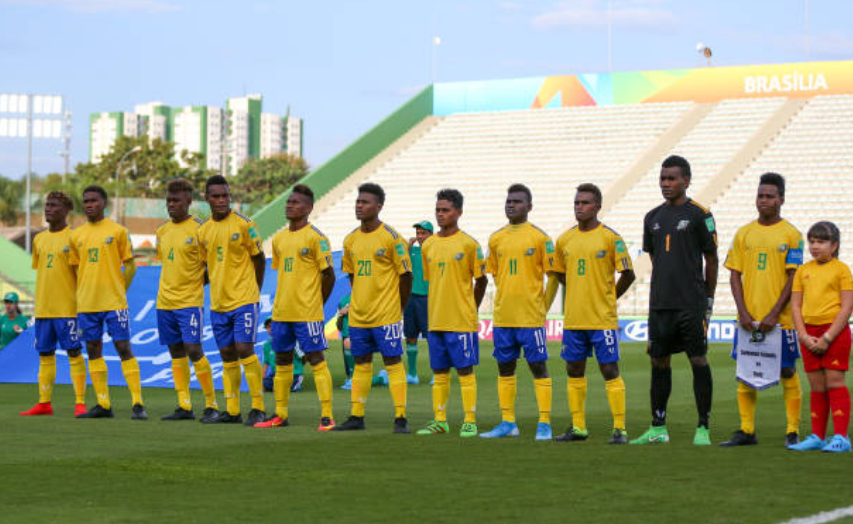
As we enter in 2020, it is time to make a recap about the previous year – and the 2019 of Solomon Islands football is surely a year to remember for history. The U17 FIFA World Cup held in Brazil – played in 2019 – was the first ever tournament a Solomon Islands football team played in a FIFA tournament. The likes of Raphael Lea’i, Leon Kofana and Charles Mani shown their talent in South America to represent their homeland and Oceania.
Despite the controversial cases of Chris Satu and Maxwell Keana that almost costed the spot of the Solomon Islanders in the World Cup, the team travelled to Brazil to show the world there is football in Oceania.
Solomon Islands team in the U17 World Cup – FIFA Media
Solomon Islands was in very harsh group: Italy, Paraguay and Mexico. All three sides qualified for the knock-out stage – Mexico reached the final against Brazil and lost by 2-1, while Italians and Paraguayans stopped their campaign in the quarterfinals.
It was clear to everyone: the goal of the Solomon Islanders in the competition was purely to learn from it. The experience gotten from the young talented players can be crucial for the development of their careers.
Solomon Islands started their campaign against Italy. They could hold the European giants for more than 20 minutes, but the deadlock was broken and they went losing by 3-0 in the half time break. In the final part of the game the Oceanians suffered more two goals to finish the match in a 5-0 defeat.
Their second match was against also a very traditional nation from South America – the Paraguayans had players from their most important teams in the country and proved too strong for the Solomon Islanders pulling ahead in the scoreline in the starting minutes of the game. Unfortunately for the Oceania football fans, Solomon Islands young side suffered one more heavy defeat in that match – 7-0.
Raphael Lea’i tried his best for Solomon Islands – FIFA Media
The final match for Solomon Islands was also against a strong side: – that ended the World Cup in the 2nd place losing for the hosts Brazil – Mexico. The Mexicans were in need of a big win to qualify for the knock-out stage and unfortunately for the Solomon Islanders they could really get it. The heaviest defeat of the tournament was suffered by the Oceanians: 8-0. Once again many defensive mistakes happened in the game and another analysis was made by our staff.
Solomon Islands team before the match against Italy
Despite suffering twenty goals in the tournament and coming home with three defeats, a lot of learning can be taken for this historical moment for the Solomon Islands sport.
There are not doubts regarding the technical quality of the players produced in the country: they can compete. But they can compete for only an amount of game time – their physicial conditions are not still able to allow them to hold the match for the entire ninety minutes.
The physical condiotining was a crucial problem for the Solomon Islanders, but their tactical system and organization in the pitch also let them very vulnerable to the experience attacks they played against in the U17 World Cup. Another problem to take is the mental area of the game – after conceding a goal, usually Solomon Islands suffered another and losing the control of the game – the lapses of concentration and lack of attention allowed the opponents to score many goals.
It is a rare opportunity to have this international exposure – especially at world stage. It allows to see how is the real level of football played in Oceania and in which areas are necessary to focus looking for improvement. Solomon Islands had their chance and now the work need to keep going forward in order to prepare this generation for the upcoming challenges the country will have in football.
Galaxy FC keep looking for a striker to play 2020 OFC Champions League once Senegalese striker Waliou Ndoye is not going to play for them. According to reliable sources, there are some options being discussed by Galaxy’s management and the new striker will be revealed soon.
However there will be a problem for Galaxy coaching staff: They are going to have five foreign players but OFC Champions League rules only allow four foreign players for each team. This could be a bigger problem for Galaxy if Solomon Islands’ defender Nelson Sale Kilifa did not get the Ni-Vanuatu citizenship.
Nelson Sale Kilifa will not count as a foreign player for OFC Champions League
Roberson, Diego Máximo, James Naka and Gagame Feni are the current Galaxy foreign players. Oceania Football Center will keep investigating to bring accurate information about the case.
Every nation has their key figures in the sport; football is not an individual game and it is very important to have a strong and organized team to make the difference inside the pitch, but the decisive players, those who make the difference in the game – defensively or offensively – make their path to history.
The goal is the most celebrated moment of football, when we look to Europe and see the best players of the world we can recognize many outstanding players, real goal scorers. For Portugal, Cristiano Ronaldo already scored 99 times, for England Wayne Rooney netted 53 times and for Germany Miroslav Klose scored 71 goals. In South America, Lionel Messi scored 70 times for his country, Luis Suárez has 59 goals for Uruguay and the Brazilian and worldwide legend Pelé is the Brazilian all-time topscorer with 77 goals.
In the other side of the planet, Fiji certainly has its talent. Roy Krishna continues to spread his talent – first in Oceania and now in Asia – and is the current captain of the Fiji national football team. Many fans of the sport in the country feel Krishna as the best player ever produced in Fiji, but some may still remember the quality of another player that made his career in Australia and gave lots of joy to the Fijian football fan: Esala Masi.
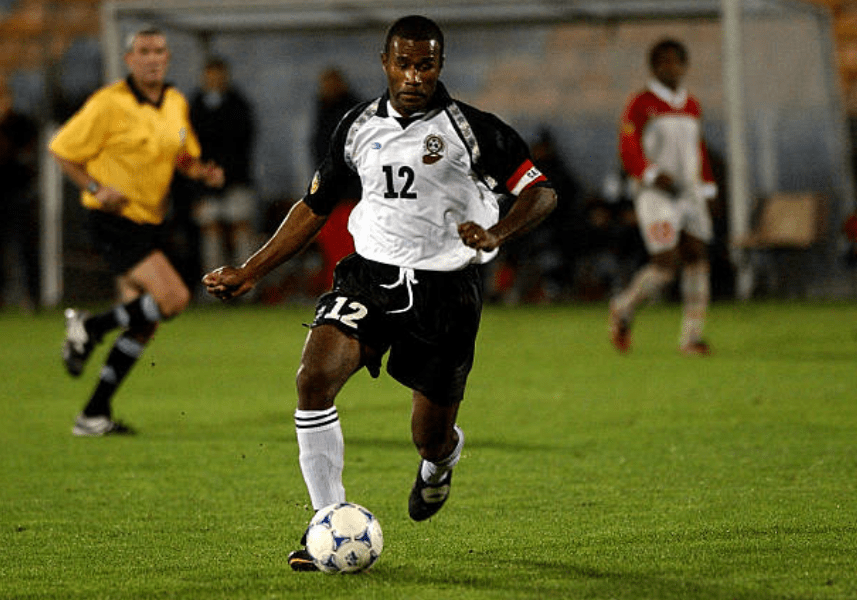
The Fijian football legend Esala Masi
Striker Esala Masi also captained Fiji for several years – most of his club football career was in Australia where he defended teams as Newcastle Jets and Wollogong Wolves in the former National Soccer League – which was the top-tier of football in the country in that time. Masi turned into a respected striker in Australia after scoring more than 40 goals during his time in the country – playing in the National Soccer League and other leagues in the nation.
Masi scored 32 goals in 52 matches for Fiji – the now 45-year old coach is the all-time top scorer of Fijian football, but his countryman Krishna is not far away from him.
When Masi last played for the Bula Boys in 2005, Roy Krishna was still a young talented player – just 17 years old in that time. But it did not take much time for the Fijian to catch the attention of foreign clubs after his good performances in Labasa. During his years in Waitakere United, Auckland City and Wellington Phoenix the striker scored 107 goals, making his name to become a legend.
For his national team, Krishna scored 29 goals in 41 appearances – his last goal was in the bronze medal contest at Pacific Games 2019 held in Samoa.
Krishna against Germany in Olympic Games
Krishna has also made history for Fiji by scoring the first ever goal in the Olympics Men’s Football Tournament – when he scored against Mexico in the Rio de Janeiro Olympics in 2016.
The now 32-year old striker is currently playing in India – in their most important league, the Indian Super League – and he is having a very good start for his new club ATK.
Krishna is just three goals away to tie the mark of Esala Masi as the top scorer ever for Fiji national football team. After scoring seven goals in 2019 for his country, he will have the opportunity to pursue Masi’s record in 2020.
Roy may have time to add this honour to his career, since the peak of his career was in 2019 after being the best player of the Australian A-League and top goalscorer of the season. Despite the records, both Masi and Krishna wrote fantastic stories and they are two important figures of the Fijian football that hopes for even better achievements in the next years – it is a pity for football fans that both magnificent goalscorers could not play together for their homeland.








 Oceania Football Center