Vanuatu international Mitch Cooper reaches VPL1 after remarkable four-year rise with Bayside Argonauts

Mitch Cooper has spent much of his career outside the spotlight of Pacific football, but the Vanuatu international continues to build an increasingly difficult case to ignore.

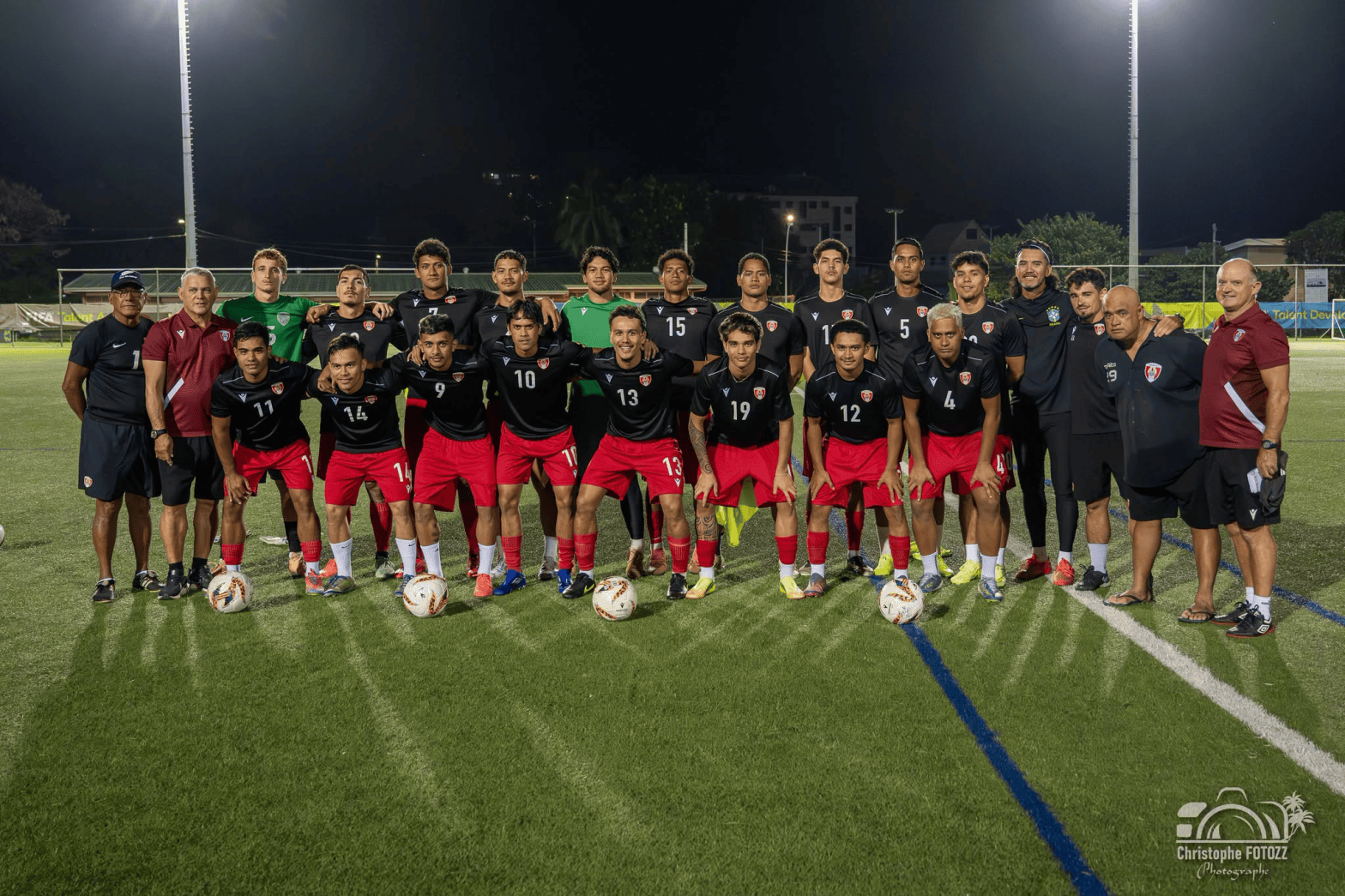
Just one day after turning 32, Cooper celebrated another major achievement in Australia as Bayside Argonauts defeated Essendon Royals 1-0 at Lakeside Stadium to secure promotion to Victoria Premier League 1 for the 2027 season. For Bayside, it completes an extraordinary climb through the Victorian football pyramid. For Cooper, it adds another chapter to a career that still appears to have something to offer Vanuatu.

The Argonauts’ promotion did not arrive in isolation. Bayside have now moved up in four consecutive seasons, progressing from State League 3 South-East to a place in VPL1. They finished runners-up in State League 3 in 2023, became State League 2 champions in 2024, finished second in State League 1 South-East in 2025 and have now survived the much more demanding VPL2 campaign before winning their promotion play-off.

Cooper has been an important figure during that rise.

His outstanding season came in 2024, when the Port Vila-born attacking midfielder scored 23 goals as Bayside won the State League 2 South-East championship. His performances earned him both the competition’s Golden Boot and Best and Fairest award, while he was also recognised as Bayside’s senior men’s Best and Fairest.

Moving up a level did little to diminish his influence. In 2025, Cooper was joint winner of the State League 1 South-East Best and Fairest award as Bayside finished runners-up and continued their rapid progression through the divisions.

The 2026 season brought another step up in standard, with Bayside competing in VPL2. Cooper was no longer required to carry the same goalscoring burden, but he remained part of an experienced squad that developed into one of the competition’s strongest sides during the latter stages of the season.

His contribution became particularly important when the campaign reached its decisive moment.

Facing Box Hill United in the promotion play-off semi-final, Bayside were level at 1-1 when Cooper struck in the 61st minute, forcing the ball home from close range to restore the Argonauts’ advantage. Bayside eventually won 3-2, sending them into a final against Essendon Royals for the last available VPL1 place.

A week later, a 1-0 victory completed the job.

It means that a player who was competing in State League 3 only a few seasons ago will now move with Bayside into VPL1 — the second tier of the Football Victoria system — in 2027. More importantly, Cooper has not simply been carried along by the club’s ascent. Individual awards, goals and decisive contributions show how significant he has been during the journey.

For Oceania followers, it also raises an obvious question: should Mitch Cooper be back in the conversation for Vanuatu?

Cooper has not announced his retirement from international football and his most recent period with the national team came during the 2026 FIFA World Cup qualifying campaign. In October 2024, he started against Samoa at Freshwater Stadium and opened the scoring after only seven minutes as Vanuatu won 4-1. He subsequently started against New Zealand and Tahiti as Vanuatu’s qualifying campaign continued.

That was hardly the contribution of a player who had already become irrelevant internationally.

Cooper’s relationship with Vanuatu football has always been unusual. Born in Port Vila, he moved away as a child and originally represented Australia at youth level, including at the FIFA U-17 World Cup. His professional career later took him into the A-League, where he played for Gold Coast United and Newcastle Jets.

He became particularly well known in Australia in 2012 when, at just 17, he captained Gold Coast United on his A-League debut. Injuries, including serious knee problems, eventually altered the trajectory of a career that once appeared destined to remain entirely within Australian football.

Vanuatu eventually brought him back into its football story.

Cooper made his senior international debut for the country in 2019 and quickly became an important attacking option. His connection with the national side has never been as continuous as that of players based in Port Vila or elsewhere in the Pacific, but whenever available he has brought something different: experience from the Australian system, technical quality and the ability to operate between midfield and attack.

At 32, the discussion is naturally different from the one surrounding a developing prospect. Vanuatu are also going through a period in which younger players and new combinations need opportunities. Selection cannot be based on reputation alone.

But Cooper’s recent record makes his name worth considering.

Vanuatu have no shortage of naturally gifted attacking players, yet international football also demands experience, tactical understanding and players capable of adapting to matches against stronger opposition. Cooper has spent virtually his entire senior career within Australian football and is still contributing to a team climbing rapidly through one of the country’s strongest state systems.

His goal against Samoa less than two years ago is also a reminder that his international relevance is not distant history.

There is no guarantee that another Vanuatu call-up will come, nor that Cooper would necessarily walk back into the starting eleven. But after another successful Australian season, another promotion and another decisive contribution when Bayside needed it most, leaving him entirely outside the conversation would be difficult to justify.

Four years ago, Bayside Argonauts were playing several divisions below where they will be in 2027. Cooper has climbed with them, collecting individual awards, scoring goals and helping turn successive promotions into something more than a one-season story.

The journey continues upward — and perhaps Vanuatu should be watching again.

South Pacific supporters face US$50 overseas pay-per-view cost to watch MSG Cup

The 2026 MSG Prime Minister’s Cup is bringing major Melanesian international football back to Fiji, but many supporters outside the country face a significant cost to follow their teams live.

Mai TV has announced pay-per-view coverage of the tournament, including every football match, the opening and closing ceremonies and the Cultural Night programme. The package is priced at FJD$50 for local viewers and US$50 for overseas viewers.

For supporters in Solomon Islands, Vanuatu, Papua New Guinea, New Caledonia and the wider Pacific diaspora, the overseas price has become an important issue. The MSG Cup is a regional event built on Melanesian identity and rivalry, but many of its most passionate supporters live outside Fiji and cannot attend matches at HFC Bank Stadium.

Mai TV’s current promotion does not include a free online stream. The broadcaster’s advertised option for overseas viewers is the US$50 pay-per-view package.

The situation creates a difficult balance. Live sports coverage requires investment in cameras, production staff, commentary, broadcast infrastructure and online streaming. Pay-per-view revenue can help a broadcaster recover those costs and improve the quality of the product.

However, the MSG Cup is also a tournament with a special regional role. It is not simply a domestic event. Every participating nation has supporters across the South Pacific, Australia, New Zealand and other overseas communities who want access to their national teams.

The first men’s matchday showed exactly why interest is high. Papua New Guinea came from behind to defeat defending champions Vanuatu 2-1, while Fiji and Solomon Islands produced a six-goal thriller that ended 3-3 after a late Bonitos comeback.

With only the top two teams progressing to the final, the tournament still has several decisive matches ahead. Fans want to see whether Fiji can use home advantage, whether Vanuatu can defend their title, whether Papua New Guinea can continue their strong start and whether Solomon Islands can build on their comeback.

The football is attracting attention across Melanesia. The question now is how many supporters will be able to afford to watch it live.

Roy Krishna backs Abdullah Khairati after teenager completes rapid rise to Fiji senior team

Abdullah Khairati’s rapid progression through Fiji football has reached another important milestone, with the Vancouver-based youngster making his senior international debut for the Bula Boys at the MSG Prime Minister’s Cup — and receiving public backing from national team captain Roy Krishna shortly afterwards.

Khairati featured for Fiji against Solomon Islands in the Bula Boys’ opening match of the tournament at HFC Bank Stadium, completing the jump from the Junior Bula Boys to senior international football only a short time after representing Fiji at the OFC U-19 Men’s Championship in Samoa. His inclusion is part of head coach Stéphane Auvray’s decision to give several emerging players an opportunity within the senior national team environment.

The significance of the occasion became even clearer after Fiji Football Association highlighted Khairati’s debut on social media. Krishna responded directly to the federation’s post with a message praising the youngster not simply for his ability, but for the mentality he has shown while stepping into the senior setup.

“So proud of this boy. His attitude, behaviour and professional mindset at such a young age are special. Keep working hard son. Stay humble. Bigger things are coming your way,” Krishna wrote.

For Khairati, the words carry particular weight. The teenager has gone from representing Fiji at youth level to sharing the national team environment with Krishna and other experienced Bula Boys in a matter of weeks. Rather than being separated from the senior side by several years of development, his performances and progression have been enough for Auvray to introduce him immediately to international football at the next level.

Based in Vancouver, Canada, Khairati has developed his football away from Fiji while remaining connected to the national programme. His appearance at the recent OFC U-19 Championship provided Fiji supporters with a clearer look at one of the players emerging from the country’s overseas-based talent pool, and the MSG Prime Minister’s Cup has now provided the next stage of that development.

He is not the only member of Fiji’s recent U-19 group being exposed to senior football. Maikah Dau and Ryan Naresh have also made the transition into the Bula Boys setup, underlining Auvray’s willingness to use the tournament not only in pursuit of results but also as an opportunity to assess younger players alongside established internationals.

That mixture can be particularly valuable for players such as Khairati. Training and playing alongside experienced figures gives the younger members of the squad an opportunity to understand the demands of senior international football beyond what happens during the 90 minutes. Krishna’s message specifically highlighting attitude, behaviour and professionalism suggests that Khairati has already made an impression within that environment.

For Fiji, his debut is therefore more than another new name added to the list of senior internationals. It represents another step in connecting the country’s youth teams with the Bula Boys and giving promising players a pathway into senior football while their development is still accelerating.

Khairati has now taken the first of those steps. The challenge will be turning a memorable debut into further opportunities, but the endorsement from Fiji’s captain shows that his introduction to the senior national team has already attracted attention for the right reasons.

Ten-Man Fiji Surrender Two-Goal Lead as Solomon Islands Rescue Dramatic Draw

Fiji appeared to be cruising towards a winning start to the 2026 MSG Prime Minister’s Cup when Thomas Dunn put the hosts 3–1 ahead early in the second half. Yet an avoidable red card, a gradual loss of territorial control and an increasingly confident Solomon Islands response transformed the contest. Jayroll Patty reduced the deficit in the 82nd minute before Javin Wae struck in added time to complete a remarkable comeback and secure a 3–3 draw.

The result will feel very different inside the two dressing rooms. Fiji demonstrated enough attacking quality to win the match and led by two goals with less than 20 minutes remaining. However, their failure to protect that advantage exposed problems in discipline and game management. Solomon Islands, meanwhile, recovered from conceding three times and being placed in an apparently hopeless position. Their point was not simply the product of Fiji’s collapse; it was also earned through persistence, composure and an immediate recognition of how the match had changed after the hosts were reduced to ten men.

Krishna provides the expected leadership

Fiji made the more convincing start in front of their home crowd, with captain Roy Krishna opening the scoring in the 26th minute. Krishna remains the central reference point of Stéphane Auvray’s developing side, and his goal provided precisely the type of contribution expected from the country’s record scorer.

His importance extends beyond finishing. Krishna’s movement gives Fiji a forward capable of creating space for the younger players around him, while his experience offers structure to an attack still learning how to operate together. On an opening night when Fiji fielded several emerging players, it was significant that the breakthrough came from their most established figure.

Solomon Islands responded through Rooney Riugaemai, who converted from the penalty spot to make it 1–1. The equaliser interrupted Fiji’s momentum and demonstrated the danger posed by Ben Cahn’s team whenever the hosts allowed the game to become open. Fiji nevertheless recovered before the interval, with Maikah Dau restoring their advantage and sending the Bula Boys into halftime leading 2–1.

Dau’s goal was one of the most encouraging elements of the performance for Fiji. The youngster was promoted directly from the country’s recent under-19 programme and is part of Auvray’s attempt to build a squad for the next World Cup cycle. Scoring in his first major senior tournament appearance was therefore more than an isolated moment. It suggested that Fiji’s youth integration can produce immediate competitive value rather than serving only as a long-term experiment.

Dunn puts Fiji in control

Fiji began the second half with the same attacking intent and extended their advantage in the 54th minute through Thomas Dunn. At 3–1, the hosts had established the strongest position of the match.

The three goals also revealed the breadth of Fiji’s attacking resources. Their captain had delivered the opener, one of their youngest players had scored the second, and Dunn added the third. Rather than depending entirely on Krishna, Fiji received contributions from different parts of the forward unit.

At that stage, the main challenge was no longer creating opportunities. It was controlling the remaining time. A two-goal lead did not require Fiji to withdraw completely, but it did demand greater attention to risk: keeping the team compact, protecting possession and preventing Solomon Islands from building sustained pressure.

Instead, the match changed dramatically in the 72nd minute.

Waranaivalu’s red card changes everything

Tevita Waranaivalu, introduced at the beginning of the second half, was sent off after only 26 minutes on the field. His dismissal was the decisive incident of the contest because it altered both the numerical balance and the psychological direction of the match.

Before the red card, Fiji were leading comfortably and Solomon Islands needed two goals merely to draw level. After it, the visitors had an extra player, approximately 20 minutes to attack and nothing to gain from remaining cautious. Fiji were forced to abandon much of their earlier attacking ambition and devote additional players to protecting the spaces created by their numerical disadvantage.

The dismissal was particularly damaging because Waranaivalu had been brought on to influence the second half. Instead, Fiji lost both the substitute and the flexibility that substitution was intended to provide. Auvray’s team went from managing a lead with eleven players to defending deep with ten, while Solomon Islands could commit greater numbers forward without facing the same level of pressure in transition.

Fiji still had a two-goal cushion, but the flow of the match had reversed. Their clear routes out of defence became less frequent, possession was harder to retain and each clearance invited another Solomon Islands attack. The hosts were no longer dictating where the game was played.

Solomon Islands recognise their opportunity

Solomon Islands deserve considerable credit for how they exploited the change. Playing against ten men does not automatically produce goals, particularly when the opposition still holds a substantial lead. The Bonitos needed to circulate the ball quickly, stretch Fiji’s reduced defensive structure and maintain belief as the clock continued to run.

Their pressure finally produced a reward in the 82nd minute when Jayroll Patty made it 3–2. The goal changed the emotional balance once again. What had initially looked like a consolation became the beginning of a genuine attempt to rescue the match.

For Fiji, Patty’s strike created a difficult final period. The hosts were protecting only a one-goal lead, had one fewer player and were facing a Solomon Islands team that could sense uncertainty. At that point, Fiji needed calm possession or a sequence of controlled defensive actions to slow the game. They found neither consistently enough.

Javin Wae completed the comeback in injury time, scoring the sixth and final goal of a contest that Fiji had seemed certain to win. The timing made the equaliser especially painful for the hosts because there was almost no opportunity to repair the damage.

For Solomon Islands, however, Wae’s goal was the product of a team refusing to accept the apparent direction of the match. They had fallen behind three times in the scoring sequence, trailed by two goals in the second half and still emerged with a point.

A promising attack undermined by poor management

Fiji should not allow the late collapse to erase the positive elements of their performance. Scoring three times against Solomon Islands is significant, and the contributions of Krishna, Dau and Dunn suggest that Auvray has several different attacking profiles available. Dau’s emergence was especially valuable in a tournament being used partly to expose Fiji’s next generation to senior international football.

However, tournament football is determined as much by control as creativity. Fiji had already done the most difficult work by establishing a 3–1 lead. The failure to convert that advantage into three points means the discussion will inevitably focus on discipline, defensive concentration and decision-making under pressure.

The red card provides the clearest explanation for the turnaround, but it should not become a complete excuse. Fiji still had a two-goal advantage when they went down to ten men. More experienced management of the closing stages could have protected at least one additional goal, slowed Solomon Islands’ momentum or reduced the amount of added-time danger.

For Solomon Islands, the defensive side of the match also requires attention. Conceding three goals showed that Cahn’s new-look team remains vulnerable when opponents attack with speed and make effective use of movement around the penalty area. Yet their response demonstrated an important quality for a side at the beginning of a longer project: they did not lose their structure or belief when the result appeared beyond them.

A costly point for Fiji, a valuable one for Solomon Islands

The draw leaves both nations on one point after the opening round, behind Papua New Guinea following their 2–1 victory over defending champions Vanuatu earlier in the day. In a five-team round-robin competition where only the leading two sides reach the final, Fiji may eventually view this as a major missed opportunity.

The hosts now face Vanuatu on Sunday knowing that another failure to win would place significant pressure on their remaining fixtures against Papua New Guinea and New Caledonia. Solomon Islands will next face New Caledonia and can approach that contest with confidence generated by their late recovery.

The opening performance offered reasons for optimism about Fiji’s attacking future, particularly through Dau’s impact and the continued influence of Krishna. But it also delivered a warning. Talent can create a winning position; discipline and control are required to finish the job.

Solomon Islands understood that reality better during the decisive final minutes. Fiji produced the stronger opening and built the larger advantage, but the Bonitos produced the

PNG turn defeat into victory with dramatic late response against Vanuatu

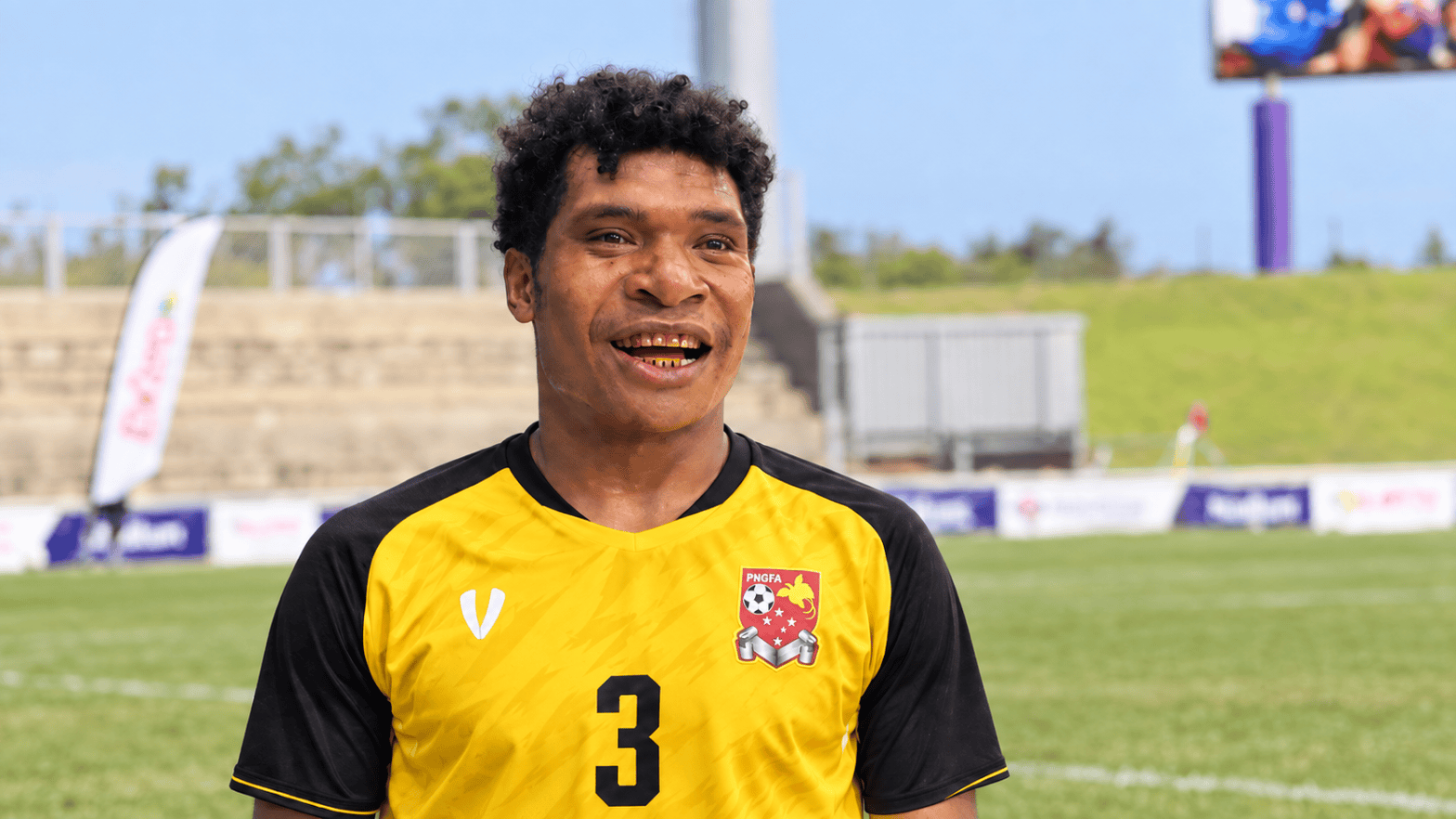
Papua New Guinea transformed a likely opening defeat into a significant 2-1 victory over defending champions Vanuatu with two goals in the closing minutes of their first match at the 2026 MSG Prime Minister’s Cup.

Tony Kaltak put Vanuatu ahead in the 77th minute at HFC Bank Stadium, but the match changed after substitute Nalau Moses equalised for PNG. Ezekiel Vela then completed the turnaround only minutes later, converting after Abraham Allen delivered a corner into the Vanuatu penalty area.

The result gives PNG three important points in the tournament’s five-team round-robin stage and represents an immediate response to their defeat against the same opponents in last year’s final. Vanuatu appeared to have managed the match successfully for most of the afternoon, but their control disappeared during a decisive late period in which PNG’s persistence was finally rewarded.

The opening half was closely contested and ended without a goal. Vanuatu had more of the ball during periods of the match, while PNG remained organised and prevented the defending champions from turning their possession into a decisive advantage. Neither side established sustained control in the attacking third, producing the kind of cautious contest that could be expected from two teams familiar with each other and aware of the importance of avoiding an opening defeat.

That balance continued well into the second half. Vanuatu eventually found the breakthrough through Kaltak, one of the most experienced attacking players in the squad. With little more than ten minutes remaining, the goal appeared likely to be enough for the defending champions, particularly after they had kept PNG scoreless for most of the match.

The decisive issue, however, was not simply that PNG equalised. It was how quickly Vanuatu lost their defensive security after conceding.

Moses had entered from the bench and gave PNG greater presence around the penalty area. His late equaliser changed the emotional and tactical direction of the match: PNG suddenly believed all three points were available, while Vanuatu were forced to reorganise after spending most of the second half protecting a narrow advantage.

Instead of slowing the match and recovering their shape, Vanuatu conceded again within minutes. Allen’s corner provided PNG with another opportunity to load the penalty area, and Vela capitalised to complete the comeback. The defender’s winning goal also demonstrated that PNG’s threat was no longer restricted to their recognised attacking players. With the match opening up, they found a second route to goal through a set piece and the participation of players from deeper positions.

For PNG coach Bob Morris, Moses’s contribution was especially encouraging. The Lae City forward was not required to carry the attack from the beginning, but he responded when introduced and delivered the goal that made the turnaround possible. His impact strengthened a PNG squad that already contains established attacking names such as Tommy Semmy and Ati Kepo, showing that Morris has alternatives capable of changing a match from the bench.

Vela’s intervention carried a different significance. PNG’s comeback was completed by a defender attacking a late corner, reflecting the collective commitment required when the team fell behind. Rather than becoming dependent on an individual moment from one of their senior forwards, the Kapuls found their two goals through a substitute and a defender.

For Vanuatu, the defeat exposes a problem that cannot be reduced to the absence of Brian Kaltak and Alex Saniel. Both are important losses: Kaltak provides leadership and defensive authority, while Saniel was the leading scorer in the inaugural OFC Pro League. Nevertheless, Vanuatu had already navigated most of the match successfully and were leading with the closing stages approaching. Their greater failure was an inability to manage the period immediately after PNG’s equaliser.

The defending champions had an opportunity to reduce the tempo, protect the point and prevent PNG from carrying their momentum into another attack. Instead, they allowed the game to remain open and soon conceded from a set piece. In a competition decided through only four round-robin matches, those few minutes may prove considerably more costly than the general performance across the other 80.

The match also continued the recent rivalry between the two nations. Vanuatu defeated PNG on penalties in the 2025 final after a 2-2 draw in Port Moresby, ending a long wait for another Melanesian title. Their first meeting of 2026 produced another tight contest, but this time PNG controlled the defining moments.

The victory is also notable because PNG’s participation in the tournament had previously been uncertain amid unresolved financial commitments connected to earlier editions. Once the team travelled to Fiji, however, attention returned to the field, and the Kapuls opened their campaign by defeating the reigning champions.

PNG will next face New Caledonia on September 24, while Vanuatu must recover before meeting hosts Fiji on September 21. With only the leading two teams advancing to the final, PNG have already gained an important advantage over a direct rival. Vanuatu, meanwhile, must ensure that a few damaging minutes in their opening match do not shape the remainder of their title defence.

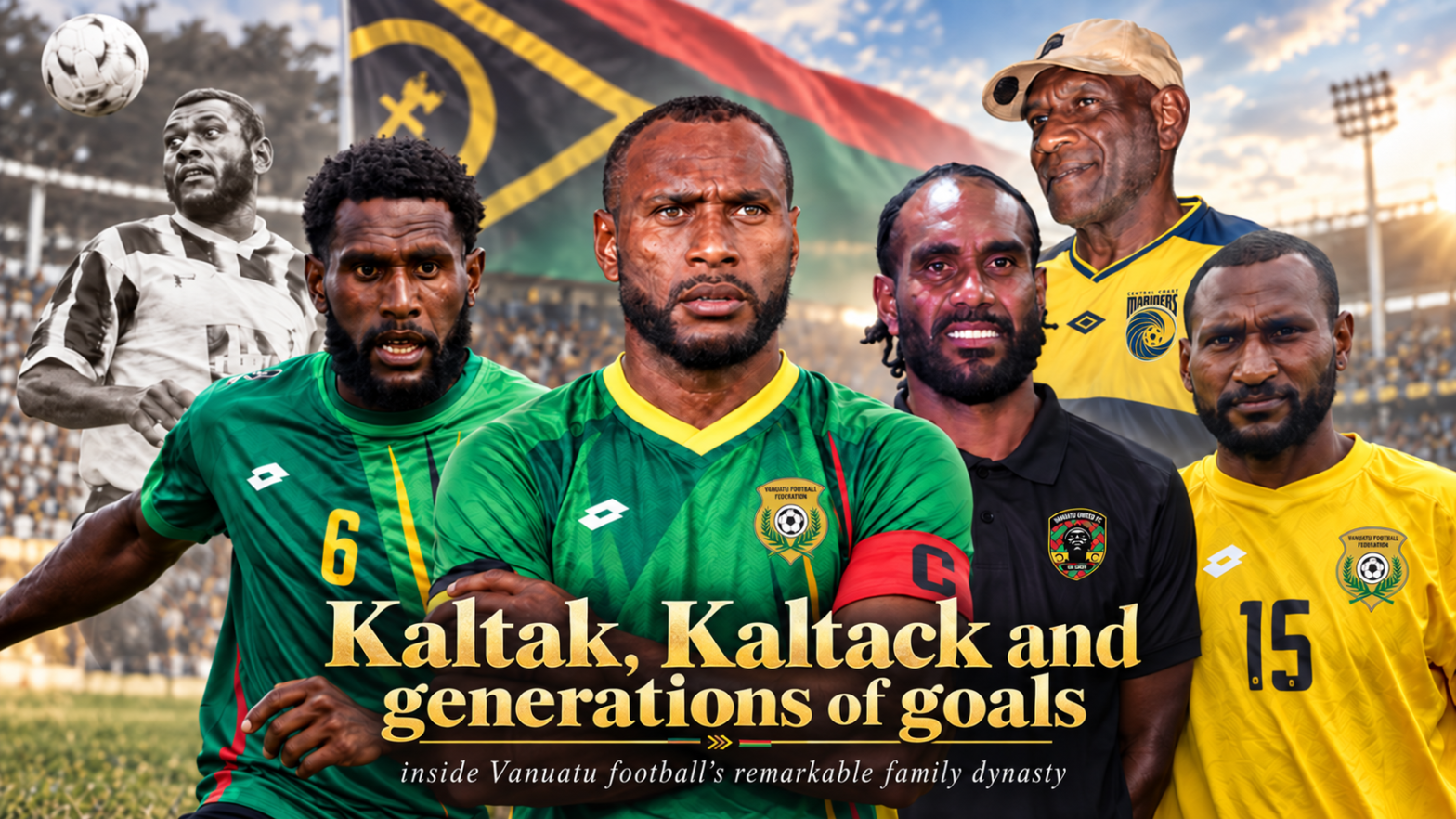
Brian Kaltak exclusive: Glory ambitions, Pacific pathways and the problems facing Vanuatu football

Brian Kaltak has established himself as one of the Pacific’s most successful footballers, but as another A-League season approaches, the Vanuatu international believes the game in his homeland still has significant ground to make up.

Speaking exclusively to Oceania Football Center, the Perth Glory defender discussed his preparations for the 2026/27 season, the future of football in Vanuatu, the development of the next generation of Pacific players and when supporters might see him wearing his country’s colours again.

For Kaltak, the immediate focus is Perth.

After an outstanding first season in Western Australia, in which he was named Glory’s Most Glorious Player as well as the club’s Members’ and Players’ Player of the Year, the 32-year-old is preparing for another campaign in purple.

Pre-season is going strong. We are all looking forward to the season starting,” Kaltak told Oceania Football Center. “Some new players have been added to the squad and they are settling in well. It will be an exciting season for us.

Kaltak arrived at Perth in 2025 following three highly successful seasons with Central Coast Mariners. His time in Gosford included two A-League Championships, the 2023/24 Premiership and the AFC Cup title, transforming a player who had spent years trying to break into professional football into one of the competition’s established defenders.

His ambitions at Glory, however, remain straightforward.

For now, my focus is with Perth Glory. I want to help the team be successful this season.”

While Kaltak prepares in Australia, Vanuatu are competing in Fiji at the MSG Prime Minister’s Cup without their star defender. The defending champions have taken a significantly changed squad into the competition, providing opportunities for a younger group of players.

Kaltak has been following them from afar.

It is our new generation of players that are coming through, and it is good to see them do well with Team Vanuatu and also the national team,” he said. “I would like to wish them all the very best for this tournament.”

But when the conversation moved from individual players to the state of domestic football in Vanuatu, Kaltak offered a much more critical assessment.

Asked whether he had seen improvements through his involvement with football development back home, he made an important distinction between grassroots development and the national competition.

“I don’t see any improvement at all with our local football. I think we need to improve that,” he initially said, before clarifying: “Our national league, I mean. Grassroots have made some progress over the years.”

It is a significant assessment from arguably Vanuatu’s most prominent active footballer.

Kaltak believes the issue goes beyond the quality of players. For him, the structure surrounding the game needs to change, and development cannot remain concentrated primarily around Port Vila.

Football in general in Vanuatu is lacking structurally,” he said. “There are a lot of things that need to be done, and Vanuatu Football itself cannot solve the issue. We need a long-term plan to develop and strengthen football around Vanuatu, not just Port Vila.”

He went further, arguing that lasting reform will require cooperation beyond football administration alone.

From what I’m seeing now, and to have the power to make this work for the long term, the Vanuatu government has to step in with Vanuatu Football to make it work,” Kaltak said. “Strengthening football all around Vanuatu.”

Against that backdrop, Kaltak sees the new OFC Professional League — and Vanuatu United’s participation in it — as an important opportunity to create the pathway currently missing for local players.“Yes, it’s a good pathway for our local talent to showcase their talent, and the league itself promotes our football from Oceania to the next professional level,” Kaltak said.

His support for the competition also connects with a wider question facing Pacific football: whether a stronger professional environment within Oceania can eventually produce more players capable of moving into competitions such as the A-League.

His comments carry particular weight because his own career illustrates what can be possible for players emerging from the Pacific.

Kaltak did not make his A-League debut until 2022, but subsequently became a championship-winning defender with Central Coast Mariners and an established starter in Australian professional football. Now at Perth, he believes others from the islands can eventually follow the pathway that he and Fiji great Roy Krishna have helped establish.

Maybe in the future there will be some Pacific Island players in the A-League following our footsteps.”

Whether Kaltak himself will soon return to international football is less certain.

Asked when Vanuatu supporters could expect to see him representing the national team again, his answer was simple: “I don’t know yet.”

When Oceania Football Center noted the difficulty of balancing club responsibilities with national-team matches staged outside FIFA international windows, Kaltak agreed.

For now, that leaves one of Vanuatu football’s biggest questions unanswered.

Kaltak remains closely connected to the national game and is watching the emergence of the country’s younger generation, but his immediate professional priority is a Perth Glory side preparing for a new A-League campaign.

At the same time, his message for football back home extends well beyond his own availability.

For a player who has experienced the transition from Pacific football to the professional game at its highest level in the region, developing the next Brian Kaltak will require more than discovering talented players. In his view, Vanuatu needs the long-term structures capable of giving those players a pathway — across the entire country.

PNG make early statement as women’s MSG Prime Minister’s Cup gets underway in Fiji

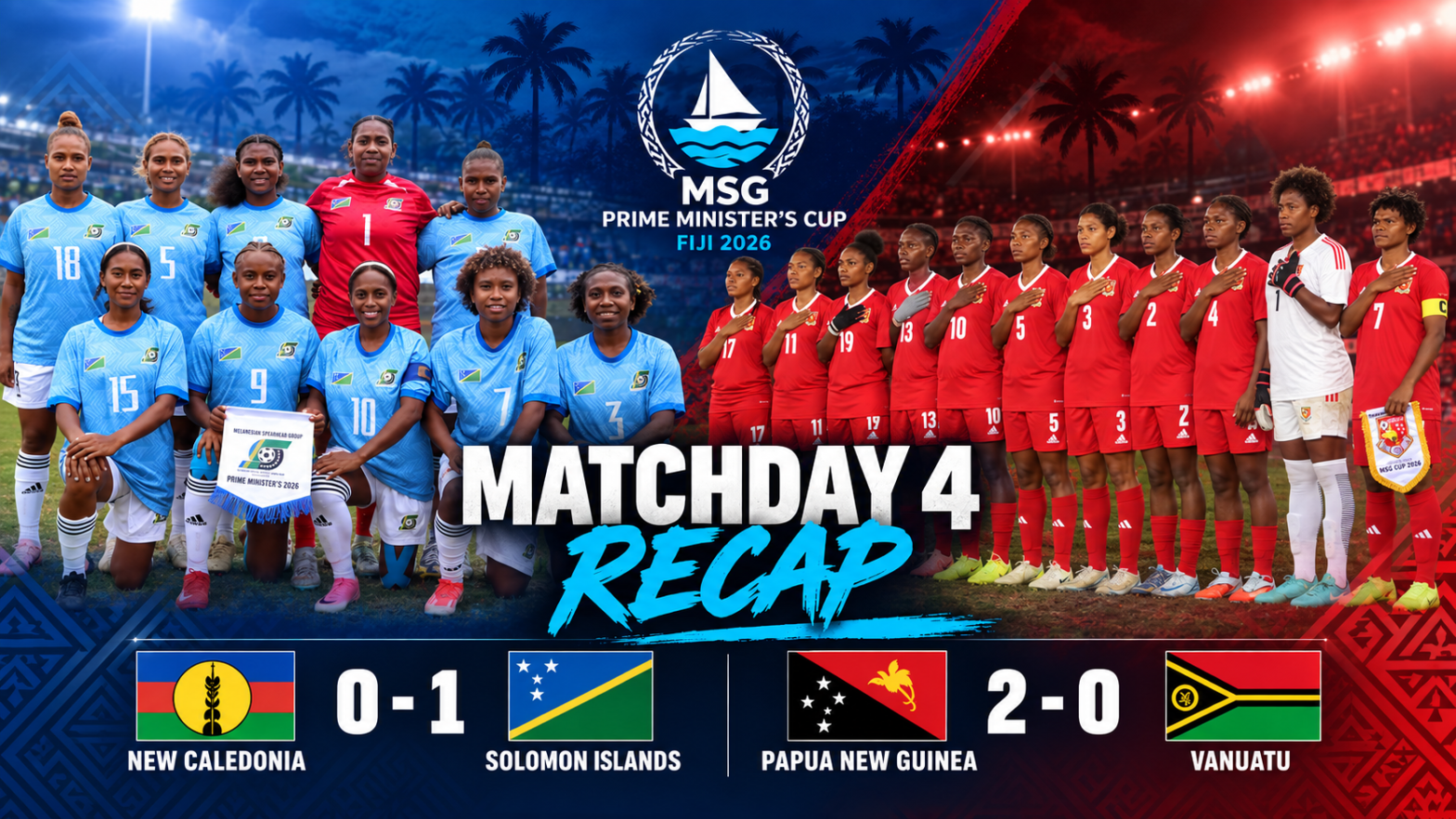
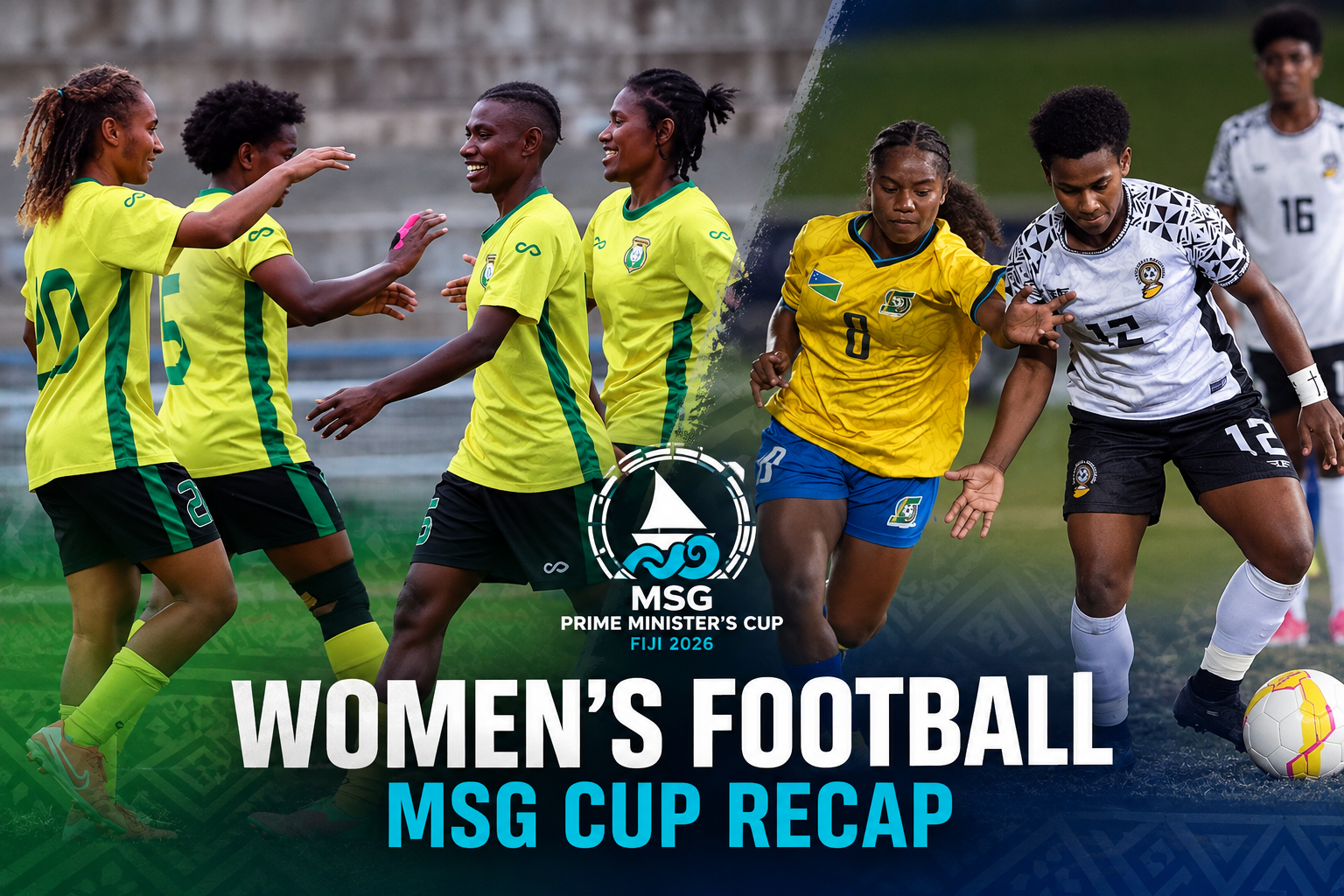
The second edition of the Women’s MSG Prime Minister’s Cup kicked off in Suva on Thursday, with defending champions Papua New Guinea immediately sending a warning to their Melanesian rivals while Solomon Islands and Vanuatu shared the points in the tournament opener.

Papua New Guinea produced the standout performance of the first day, defeating hosts Fiji 4-0 at HFC Bank Stadium in a rematch of last year’s final.

The Bilums wasted virtually no time taking control of the contest.

PNG opened the scoring after only three minutes and doubled their advantage three minutes later, leaving Fiji with an enormous task before the match had properly settled.

The defending champions continued to dictate proceedings and added a third goal in the 38th minute, taking a commanding 3-0 advantage into halftime.

Any hopes of a Fijian response after the interval were quickly extinguished. Papua New Guinea struck again in the 47th minute to make it 4-0 and put the result beyond doubt.

It was a particularly significant opening statement considering the recent history between the two sides.

Fiji and PNG met in the inaugural women’s MSG Prime Minister’s Cup final in Port Moresby last year, when the Bilums won 3-0 to become the competition’s first champions. Thursday’s result therefore extends PNG’s recent superiority in the fixture and puts Ericson Komeng’s team in an excellent early position to defend their title.

The Bilums arrived in Fiji with much of their established senior core, including Ramona Padio, Marie Kaipu, Meagan Gunemba, Betty Sam and Yvonne Gabong, alongside younger players being integrated into the national setup.

The tournament also serves an important purpose beyond the regional trophy for Papua New Guinea. The country remains alive in qualification for the 2027 FIFA Women’s World Cup and will compete in the inter-confederation playoff tournament later this year, making competitive matches in Fiji another valuable part of their preparation.

For the hosts, meanwhile, the heavy opening defeat leaves little margin for error over the remaining three round-robin fixtures.

Fiji had entered the competition hoping to challenge again after reaching last year’s final but were unable to contain PNG’s explosive start. Their attention will now turn towards Vanuatu on Sunday as they look for their first points of the tournament.

Solomon Islands fight back to deny Vanuatu

The opening match of the women’s competition produced a much tighter encounter as Solomon Islands and Vanuatu drew 1-1.

Vanuatu took the advantage during the first half and went into the break leading 1-0.

Solomon Islands, however, responded after halftime to level the match and ensure both sides opened their campaigns with a point.

For Solomon Islands, the result continues a difficult period since their historic OFC Women’s Nations Cup triumph in 2025.

The Solomons entered the MSG tournament searching for their first senior international victory of 2026 after failing to reproduce the results that made them continental champions last year. While Thursday did not provide that breakthrough, recovering from a goal down ensured they avoided beginning another tournament with defeat.

Vanuatu can also take encouragement from the performance.

They arrived in Fiji after a winless campaign in the second round of Oceania’s 2027 Women’s World Cup qualifiers, but showed enough organisation to lead the reigning Oceania champions for a significant portion of Thursday’s contest.

The 1-1 draw leaves both nations level behind PNG after the first day and means their subsequent matches could become decisive in the race for the top two positions.

New Caledonia enter next

New Caledonia were the only team not in action on the opening day.

They will begin their first-ever Women’s MSG Prime Minister’s Cup campaign on Sunday against Papua New Guinea, providing the defending champions with what should be another important test.

New Caledonian women’s football arrives at the tournament during a remarkable period of progress. Their U-20 side recently became the country’s first women’s team to compete at a FIFA tournament, while the U-16 team has just secured historic qualification for the 2027 FIFA U-17 Women’s World Cup.

Senior international football now provides the next opportunity for that momentum to continue.

Sunday’s second matchday will see New Caledonia face Papua New Guinea, before Fiji meet Vanuatu later in the evening.

All five nations play each other once during the round-robin stage, with the two highest-ranked teams advancing to the final on October 3.

After only one day, Papua New Guinea have already made their intentions clear: the inaugural champions have no intention of surrendering their Melanesian crown easily.

MSG Prime Minister’s Cup 2026: the complete guide to Melanesia’s battle in Fiji

International football returns to the heart of Melanesia this September as Fiji hosts the 2026 MSG Prime Minister’s Cup, bringing together five neighbouring nations in a competition that carries considerably more history and importance than its relatively low international profile might suggest.

For somebody approaching Pacific football for the first time, the tournament can be understood as a Melanesian championship. Fiji, Solomon Islands, Vanuatu, Papua New Guinea and New Caledonia will meet in Suva, with regional pride at stake but also something increasingly important for every participant: the construction of the teams that will eventually attempt to qualify for the 2030 FIFA World Cup.

The men’s competition begins on September 18 at HFC Bank Stadium and continues until October 3. Every country plays the other four once, with the two highest-ranked teams progressing to the final.

There are no easy conclusions to make before the first ball is kicked. Fiji arrive with the region’s biggest international name but a coach deliberately looking beyond immediate results. Solomon Islands are beginning an ambitious project under Ben Cahn. Papua New Guinea have brought back several established internationals after losing last year’s final. Defending champions Vanuatu have changed coach and lost important members of the side that won the trophy. New Caledonia, meanwhile, have effectively brought a completely different national team from the one that came within one match of the 2026 World Cup.

It makes the 2026 tournament one of the most intriguing editions since the competition was revived.

What exactly is the MSG Prime Minister’s Cup?

The tournament is the modern continuation of the old Melanesia Cup, one of the traditional competitions of Oceanian international football.

The first Melanesia Cup was played in 1988. Seven editions were staged between 1988 and 2000, and the competition was significant enough to serve at times as a pathway towards the OFC Nations Cup.

Fiji were the dominant force of that era, winning five editions — 1988, 1989, 1992, 1998 and 2000. Vanuatu won in 1990 and Solomon Islands in 1994.

After disappearing for more than two decades, the competition returned in 2022 as the MSG Prime Minister’s Cup, organised within the framework of the Melanesian Spearhead Group.

Papua New Guinea won the revived tournament in Vanuatu in 2022. Solomon Islands took the trophy in New Caledonia in 2023, PNG regained it in Honiara in 2024, and Vanuatu produced a memorable triumph in Port Moresby last year.

The 2025 final provides the immediate background to this year’s competition. Vanuatu and Papua New Guinea drew 2-2 before Vanuatu prevailed 5-4 on penalties, ending a 25-year wait for another Melanesian title.

Fiji therefore remain the historically dominant country with five titles, but remarkably have not won the competition since 2000.

There is another important development in 2026. The women’s MSG Prime Minister’s Cup, introduced in Papua New Guinea last year, is also being staged alongside the men’s competition. Papua New Guinea are the defending women’s champions. For the first time in Fiji, the event therefore provides an extended showcase for both men’s and women’s international football across Melanesia.

The format

The men’s tournament is unusually simple.

There are five teams and only one group. Fiji, Solomon Islands, Vanuatu, Papua New Guinea and New Caledonia each play four matches. After the round-robin phase, the top two meet again in the final on October 3.

That structure gives considerable importance to every match. There is no separate semi-final stage in which a team can recover from finishing third or fourth. Dropped points during the league phase can immediately become costly.

The opening fixtures are particularly interesting. Papua New Guinea face Vanuatu in a repeat of last year’s final, while hosts Fiji meet Solomon Islands in what is probably the most anticipated match of the first round.

New Caledonia enter one matchday later against Solomon Islands.

The men’s schedule is:

September 18: Papua New Guinea v Vanuatu; Fiji v Solomon Islands.

September 21: New Caledonia v Solomon Islands; Fiji v Vanuatu.

September 24: Solomon Islands v Vanuatu; Papua New Guinea v New Caledonia.

September 27: Vanuatu v New Caledonia; Fiji v Papua New Guinea.

September 30: Papua New Guinea v Solomon Islands; Fiji v New Caledonia.

October 3: Final.

All of the matches are scheduled to be played at HFC Bank Stadium in Suva.

FIJI — home advantage, Roy Krishna and the beginning of something bigger

For outsiders, Fiji might initially appear to be the obvious reference point. They have the greatest historical record in this competition, are playing at home and have Roy Krishna, unquestionably one of the most recognisable footballers the Pacific has produced.

But head coach Stéphane Auvray is approaching the competition from a wider perspective.

The former Guadeloupe international has repeatedly made clear that Fiji are building towards the next World Cup cycle rather than assembling a team simply to maximise their chances of winning one tournament in 2026.

Auvray has described success as something that will ultimately be measured when the decisive stages of the 2030 qualification campaign arrive. Before that, he wants what he calls smaller victories: finding the correct players, creating a national-team culture, establishing a recognisable style and exposing Fiji’s emerging talents to higher levels.

That philosophy can be seen clearly in his 20-man squad.

Krishna remains the captain and reference point. The veteran forward is Fiji’s record goalscorer and remains capable of changing international matches through his movement, intelligence and finishing. Around him are established national-team players including Tevita Waranaivalu, Gabiriele Matanisiga, Sitiveni Cavuilagi, Sterling Vasconcellos and Australia-based defender Scott Wara.

But the squad also contains a fascinating younger group.

Ryan Naresh, Maikah Dau and Abdullah Khairati have moved directly from Fiji’s recent OFC U-19 campaign into the senior squad. Their inclusion is not simply cosmetic. Auvray has openly spoken about exposing younger players now so that Fiji develop the group that will eventually contest future senior competitions and the Olympic qualifying cycle.

“I believe these young players have abilities. They have a mindset, they’re hungry; they want to prove something and they want to represent the country,” Auvray told the Fiji Sun.

He has also warned that Fiji may need time during the tournament before their combinations become natural.

“I think we will probably start to roll by game two or three,” he said.

Preparation has been unusual because the national camp followed immediately after the Battle of the Giants, one of the biggest tournaments in Fiji’s domestic calendar. Several players therefore arrived with significant match load rather than needing competitive minutes.

Auvray said recovery became a major part of the preparation because some players had already played five matches over a very short period. The advantage is obvious: most of his domestic players arrive match sharp. The risk is fatigue.

There is also a growing connection between Fiji’s national team and Bula FC, the country’s professional representative in the OFC Pro League. Auvray works with both structures, providing him with considerably more contact time with many of the players than is normally possible for a Pacific national-team coach.

Players to watch: Roy Krishna remains the obvious name, but Nabil Begg’s development deserves attention, while Maikah Dau represents one of Fiji’s most interesting young attacking prospects. Abdullah Khairati offers another intriguing case after developing partly in Canada, and Scott Wara brings Australian experience into the defence.

What to expect: a Fiji side still under construction, probably trying to control matches more deliberately than some previous national teams, but with considerable questions over how quickly a young group can turn Auvray’s longer-term ideas into results. The home crowd and Krishna’s presence ensure there will still be expectations.

SOLOMON ISLANDS — Ben Cahn starts the road towards 2030

Perhaps no team arrives with its intentions stated as explicitly as Solomon Islands.

New head coach Ben Cahn has already identified the 2030 FIFA World Cup as the long-term objective of the national programme.

Cahn previously worked with the national side during this year’s FIFA Series in Indonesia before taking permanent charge. Fiji will now provide his first competitive tournament as senior national-team coach.

His idea goes considerably beyond the 20 players selected for the MSG Cup.

Cahn wants to build a national-team pool containing approximately 50 to 60 realistic candidates over the next three or four years. Players from the Telekom S-League, the country’s youth national teams, futsal and overseas football are all being monitored.

Nearly 40 players were involved during the latest preparation period before the group was reduced.

There is, however, no suggestion that the long-term project provides an excuse for poor immediate results.

Asked about the objective in Fiji, Cahn’s response was straightforward:

“The aim is to win.”

He also delivered an important message concerning selection.

“No one gets the shirt because of a name, they have to earn that.”

The squad illustrates the mixture Cahn is trying to create.

Raphael Lea’i remains the biggest individual attacking talent. After already playing professionally in Europe and being one of the leading figures of his generation in Solomon Islands football, Lea’i is still only entering what should be the strongest years of his career.

Atkin Kaua provides creativity and technical quality, while Don Keana and William Komasi know Fijian football well through their club careers. David Supa is another player already based in Fiji and was allowed to join the national team there after his club commitments prevented him from attending the complete Honiara camp.

Rovu Boyers offers recent New Zealand experience after his involvement with South Island United in the OFC Pro League and Christchurch United.

Then there is Jayroll Patty.

Only days after captaining Solomon Islands at the OFC U-19 Championship, Patty has been brought directly into the senior national-team environment. He scored a hat-trick against New Caledonia during the youth competition and represents exactly the type of transition Cahn wants to create between the country’s youth teams and the Bonitos.

Several members of the squad have also been involved with Solomon Kings, the country’s OFC Pro League side, meaning that the coach inherits a group containing players who have already spent extensive time together.

The opening match against Fiji is therefore much more than a difficult first fixture. It is an immediate examination of where Cahn’s project stands against a host nation undergoing a similar rebuilding process.

Players to watch: Raphael Lea’i is the obvious danger, but Atkin Kaua can dictate attacking phases and Rovu Boyers brings a different midfield profile. Jayroll Patty is worth monitoring as one of the young players making the jump towards senior football. Don Keana, meanwhile, has repeatedly shown his ability to score from midfield.

What to expect: technical football, individual flair and an attempt to turn Solomon Islands’ enormous talent base into a more structured senior national-team programme. Their attacking ceiling is high. The question is whether Cahn can create stability quickly enough.

VANUATU — champions without several of the men who made them champions

Vanuatu arrive carrying the trophy, but this is not quite the same team that lifted it in Port Moresby.

Last year’s triumph ended a 25-year drought since Vanuatu won the old Melanesia Cup in 1990. They defeated Papua New Guinea on penalties in the final and returned home as regional champions.

The title defence begins with a major change.

Lars Hopp, who coached the successful 2025 campaign and subsequently led Vanuatu United during the inaugural OFC Pro League season, is no longer in charge of the national team.

Former Vanuatu international Richard Iwai has stepped into the position.

Iwai is an important figure in Vanuatu football in his own right. A prolific former international forward, he later moved into coaching and has worked alongside some of the country’s strongest club structures. Shortly before the tournament he also received his OFC C Licence, satisfying the coaching qualification requirements necessary for his role on the international touchline.

Vanuatu completed approximately three weeks of national-team preparation before travelling. Iwai reported strong attendance and no training absences through injury during that period, while several selected players remained active in domestic knockout competitions.

However, availability has significantly altered the squad.

The biggest absence is Alex Saniel.

Saniel enjoyed an outstanding 2026 with Vanuatu United and finished as the inaugural OFC Pro League Golden Boot winner with 11 goals. He was also part of the successful 2025 MSG team, but will not defend the title as he prepares to move to Australia for club football.

Michel Coulon is unavailable because of a family health situation, while Jason Thomas is absent because of a family wedding.

Those absences leave Iwai with a different attacking structure and place greater responsibility on players such as Azariah Soromon and John Alick.

Soromon remains one of Vanuatu’s most dangerous attacking footballers when fit and confident. John Alick provides technical quality from deeper positions, while goalkeeper Kaloran Firiam brings continuity from the title-winning team.

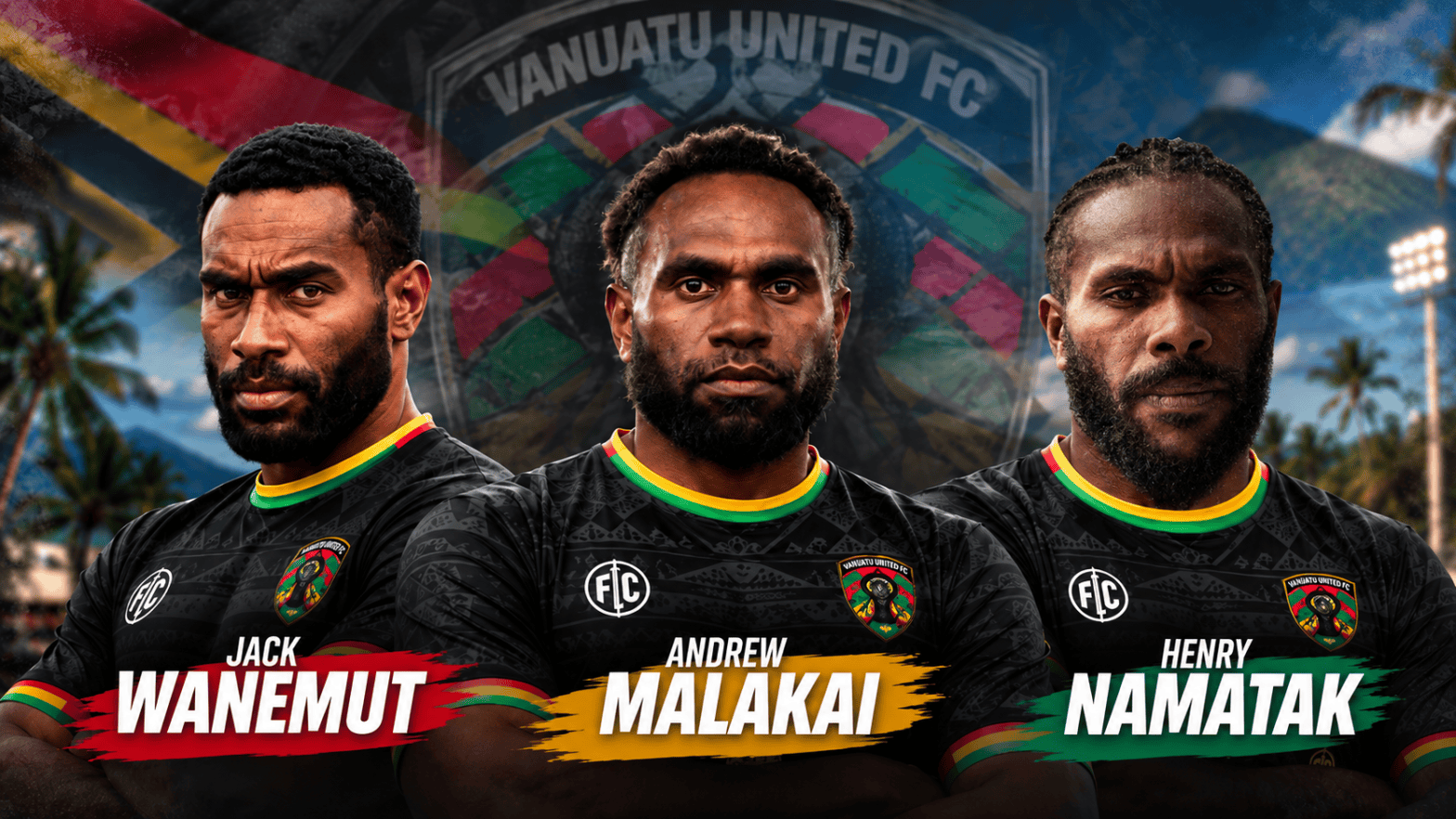
Kathy Iamak also merits attention after establishing himself as an increasingly important figure, and younger players including Henry Namatak and Andrew Malaki now have an opportunity to move closer to the centre of the national-team project.

Perhaps no opening game could be more appropriate: Vanuatu begin against Papua New Guinea, immediately revisiting the 2025 final.

Players to watch: Azariah Soromon, John Alick and Kaloran Firiam are the established references. Kathy Iamak could become particularly important in a reshaped team, while Henry Namatak is one of the younger names with an opportunity to increase his international status.

What to expect: defending champions who should not be confused with an unchanged champion team. Vanuatu still possess enough experience and talent to trouble anyone, but replacing Saniel’s goals and adapting to Iwai’s leadership are significant challenges.

PAPUA NEW GUINEA — experience returns for another attempt at the trophy

Papua New Guinea have been the most successful country since the competition returned.

The Kapuls won the 2022 revival and were champions again in 2024. They reached the 2025 final on home soil and came within a penalty shootout of retaining the trophy.

That record gives PNG an unusual degree of continuity in this particular competition.

Bob Morris has named a 20-man group mixing experienced internationals with players emerging through Lae City, Morobe Wawens, Hekari and the wider domestic system.

Ronald Warisan remains one of Oceania’s most experienced international goalkeepers. Daniel Joe brings years of senior football into the defence, while Ati Kepo and Oberth Simon provide another layer of international experience.

The return of Tommy Semmy is particularly significant.

Semmy spent several years playing abroad, especially in New Zealand and Australia, before returning to Papua New Guinea football with Hekari. At his best, his pace and direct running give PNG an attacking weapon very few Melanesian defenders enjoy facing.

Yagi Yasasa has also developed through Australian football with Bendigo City, while Hossain Kaio gives Morris another player with experience in Australia.

Rex Naime is especially interesting because he arrives after playing in Fiji with Labasa. That gives him familiarity with the conditions and some of the players PNG will face.

PNG were already in Fiji several days before the start of the competition and therefore have had time to settle before their opening rematch against Vanuatu.

Their preparations were not completely straightforward. PNGFA acknowledged that there had been challenges surrounding participation before the men’s and women’s delegations were eventually able to travel. Once there, however, the focus shifted towards reversing what happened in last year’s final.

Players to watch: Tommy Semmy provides the obvious explosive threat, while Yagi Yasasa’s experience in Australia makes him increasingly relevant. Ati Kepo remains a proven scorer at this level, Rex Naime knows the Fijian game well and Ronald Warisan’s experience in goal can become crucial in close matches.

What to expect: probably one of the more physically imposing teams in the competition, with significant senior experience through the spine. PNG’s recent record in the MSG Cup should give the group confidence, but there is also pressure to turn another deep run into a third title.

NEW CALEDONIA — almost an entirely new national team

No participant arrives in circumstances remotely comparable to New Caledonia.

Only months ago, the Cagous were one game away from the FIFA World Cup.

New Caledonia became the first Melanesian national team to reach the FIFA intercontinental playoff, eventually losing 1-0 to Jamaica in March. That squad included a substantial group of players based in France and elsewhere overseas, among them some of the most accomplished footballers available to any Pacific national side.

Almost none of them are coming to Fiji.

Financial constraints have prevented the Fédération Calédonienne de Football from bringing its overseas contingent back for the MSG Cup.

New coach Félix Tagawa initially identified a pool of approximately 50 potential players, including around ten based in metropolitan France. With the federation unable to finance those returns for this tournament, he worked instead with a domestic preliminary group and eventually selected an 18-man squad composed entirely of locally based footballers.

The scale of the transformation is remarkable.

Of the 26 players who went to the intercontinental playoff against Jamaica, only goalkeeper Mickaël Ulile and forward Pierre Iékawé are in the MSG squad.

Angelo Fulgini, Georges Gope-Fenepej, César Zeoula, Jekob Jeno, Pierre Bako, Didier Simane, Joseph Athale and Germain Haewegene are among the major absentees.

For Tagawa, however, this creates a different kind of opportunity.

The former Hienghène Sport coach knows the domestic game intimately. His most famous achievement came in 2019, when he guided Hienghène to the OFC Champions League title and subsequently to the FIFA Club World Cup.

He now begins his senior national-team tenure by discovering how much depth exists underneath New Caledonia’s overseas generation.

Players such as Brice Dahite, Aymard Tidjite and Stephane Wahaga come from the local system Tagawa knows well. Pierre Iékawé will carry much of the attacking responsibility, while Mickaël Ulile provides rare continuity from the World Cup playoff squad.

New Caledonia’s tournament therefore needs to be interpreted differently. The Cagous who play in Fiji should not automatically be viewed as representative of the strongest New Caledonian XI currently available. Instead, this is an audition for locally based players hoping to remain in the national setup when the overseas contingent becomes available again.

Players to watch: Pierre Iékawé is the most recognisable attacking name, while Mickaël Ulile offers experience in goal. Brice Dahite and Aymard Tidjite are among the domestic players with an opportunity to make a stronger case for future selection.

What to expect: uncertainty. The potential talent in New Caledonian domestic football is considerable, but Tagawa is working with a dramatically changed squad. Their performances may tell us as much about New Caledonia’s depth as about its immediate international standing.

Five teams, five rebuilds

The most striking feature of this MSG Prime Minister’s Cup is that every team is simultaneously trying to win and trying to discover what comes next.

Fiji are deliberately introducing younger players and trying to define the group that Stéphane Auvray wants for the next cycle.

Solomon Islands have given Ben Cahn the task of constructing a deeper, more organised programme with the stated dream of reaching the 2030 World Cup.

Vanuatu are defending champions but have changed coach and lost important members of the winning side.

Papua New Guinea are combining familiar internationals with another emerging generation after reaching three of the four decisive stages since the competition’s revival.

New Caledonia have effectively been forced to conduct a domestic talent experiment because their overseas stars are unavailable.

That makes the competition particularly difficult to read.

Reputation alone may not tell us very much.

Players an international audience should know

Roy Krishna remains the tournament’s genuine international headline name. His career in New Zealand, Australia and India and his record for Fiji separate him from almost every other player at the event.

Raphael Lea’i is arguably the most naturally gifted attacker among the younger generation. His career has already taken him from Solomon Islands to professional football overseas, and he remains central to the Bonitos’ attacking potential.

Tommy Semmy brings years of New Zealand and Australian football back into the PNG national team. Few players in the competition possess his combination of pace, strength and experience.

Azariah Soromon has long been one of Vanuatu’s most dangerous attacking players and now carries additional responsibility without Alex Saniel.

Pierre Iékawé is one of only two members of New Caledonia’s World Cup playoff group included for Fiji, making him one of the few connections between the country’s historic 2026 campaign and Tagawa’s experimental MSG squad.

Then there is the next layer: Maikah Dau, Abdullah Khairati and Ryan Naresh for Fiji; Jayroll Patty for Solomon Islands; Henry Namatak for Vanuatu; Yagi Yasasa and Rex Naime for PNG; and the large group of domestic Cagous trying to convince Tagawa that they belong alongside New Caledonia’s overseas professionals in the future.

For many of them, the MSG Cup can change their position inside their national team within two weeks.

Matches that could shape the tournament

Papua New Guinea against Vanuatu immediately stands out. It is the rematch of the 2025 final and provides a direct comparison between the defending champions under new leadership and a PNG side determined to erase the memory of that penalty shootout.

Fiji against Solomon Islands on the opening night is equally important. Both countries possess major expectations, both are under coaches trying to create new national-team identities, and both will understand how damaging an opening defeat could become in a five-team table.

Fiji against Vanuatu carries another layer because many players from both countries have become familiar through Bula FC and Vanuatu United’s involvement in the inaugural OFC Pro League. The two countries also met twice in Port Vila in June, when Vanuatu won 2-1 before the second match finished 2-2.

Solomon Islands against Vanuatu is traditionally one of Melanesian football’s most technically interesting matchups, with players from the two countries frequently meeting each other at club level across the Pacific.

And Fiji-New Caledonia on the final round could become particularly significant if qualification for the final remains unresolved.

Why this tournament matters outside Melanesia

The MSG Prime Minister’s Cup is not the OFC Nations Cup and does not carry the same direct global consequences as World Cup qualifying.

Its importance lies elsewhere.

International football opportunities can be limited for Pacific nations. Geography makes travel expensive, domestic seasons vary considerably and assembling overseas-based players is not always financially possible. A concentrated tournament involving four international matches therefore provides coaches with something extremely valuable: meaningful time with their players.

This year it is even more relevant because Oceania has entered a different football environment.

New Zealand’s automatic qualification for the 2026 FIFA World Cup demonstrated the value of the confederation’s direct World Cup place, while New Caledonia’s progression to the intercontinental playoff showed that a Melanesian team can move much closer to the world’s biggest tournament than historically seemed possible.

The 2030 cycle has consequently already entered the vocabulary of coaches such as Cahn and Auvray.

For the next generation of Fijian, Solomon Islands, Vanuatu, PNG and New Caledonian internationals, the work towards that campaign is beginning now rather than in the year qualifying starts.

What should we expect?

Expect a tournament where familiarity and unpredictability coexist.

Many of these footballers already know one another. Solomon Islanders play in Fiji. Papua New Guineans have played in Fiji and Australia. Vanuatu and Fiji players have spent the year competing through the OFC Pro League. New Caledonia’s domestic standouts regularly meet in a small but technically productive football environment.

Yet the teams themselves are changing rapidly.

There is enough attacking quality for open games, but the round-robin format may also encourage caution once the table begins to take shape. With only the top two reaching the final, goal difference and points lost against direct rivals could become decisive.

Fiji have the crowd. Vanuatu have the trophy. Papua New Guinea have the strongest recent MSG record. Solomon Islands have arguably the most intriguing new project. New Caledonia have the tournament’s biggest unknown quantity.

And that is what makes the 2026 edition particularly compelling.

The MSG Prime Minister’s Cup may remain largely invisible to the wider football world, but for five Pacific nations it will provide two weeks of international football, national rivalry and a first serious glimpse at the players who could define Melanesia’s next World Cup cycle.

John Alick goes from Ba’s domestic treble straight into Vanuatu’s MSG title defence

Vanuatu international John Alick has linked up with the national team camp in Fiji after completing a hugely successful domestic campaign with Ba FC, adding another experienced figure to Richard Iwai’s squad ahead of the 2026 MSG Prime Minister’s Cup.

Alick arrives with considerable momentum. The 35-year-old midfielder joined Ba during the mid-season transfer window after spending the opening part of 2026 with PNG Hekari in the inaugural OFC Pro League, and his move proved to be part of a remarkable revival for the Men in Black. Ba went on to capture the Fiji FACT, Extra Premier League and Battle of the Giants, completing a domestic treble before turning their attention towards the Inter-District Championship.

The Vanuatu midfielder made his impact almost immediately after arriving in Fiji. In his first Fiji FACT match for Ba, Alick opened the scoring against Nadroga with a spectacular long-range strike as the Men in Black recorded a 4-1 victory. Ba eventually went all the way in the competition, defeating Navua on penalties in the final to end a 16-year wait for the Fiji FACT trophy.

The success continued in the league. Ba secured their first national championship since 2019 and a record-extending 22nd league title before completing the treble last weekend with a 2-1 victory over Rewa in the Battle of the Giants final at Govind Park. It was Ba’s 18th BOG crown and their first since 2018.

Alick expressed his satisfaction after the latest achievement, telling Fiji media: “I’m really very proud. Ba FC have been treating me well. I’m proud to be part of the team; we have won our third title this season.”

There is little time for the midfielder to celebrate, however. With the BOG completed on Sunday, Alick has now moved into the Vanuatu national-team environment as the defending champions prepare for another campaign against Melanesia’s leading national sides.

His presence is particularly important in a considerably reshaped Vanuatu squad. Coach Richard Iwai will be without several established names, including Alex Saniel, Brian Kaltak, Jason Thomas and Michel Coulon, leaving Alick alongside Azariah Soromon, Kathy Iamak, Kaloran Firiam and Tony Kaltack as some of the most experienced players available to the new national-team coach.

Vanuatu begin their campaign against Papua New Guinea on Friday, September 18 at HFC Bank Stadium in Suva, immediately recreating the 2025 MSG Prime Minister’s Cup final. Vanuatu won that encounter on penalties after a dramatic 2-2 draw to claim their first title in the competition in 25 years. Richard Iwai’s side will then face Fiji, Solomon Islands and New Caledonia, with the top two nations advancing to the final on October 3.

For Alick, the tournament represents the continuation of an unusually busy and successful year across the Pacific. After representing Hekari in Oceania’s first professional league, he crossed to Fiji and helped Ba restore themselves to the top of the domestic game. He now enters another challenge carrying the responsibility of helping Vanuatu defend the regional crown they captured twelve months ago.

From U-17 World Cup qualification to the senior team: Lea’i brothers share Solomon Islands training ground

Only weeks after George Lea’i helped Solomon Islands qualify for their second FIFA U-17 World Cup, the youngster has already been given an opportunity to experience the next level of international football — alongside his older brother Raphael Lea’i.

The two brothers trained together with the Solomon Islands senior national team in Honiara, providing a striking image of two different generations of the Lea’i family sharing the same national-team environment.

George was among the players from the successful Solomon Islands U-16 side invited into senior training by head coach Ben Cahn, who has made integrating the country’s most promising youngsters into the wider national-team programme part of his plans for the future.

Cahn recently confirmed that members of the U-16 squad had been brought into the senior environment following their impressive campaign at the OFC U-16 Men’s Championship in Papua New Guinea.

“We’ve had a good look at the U-16 boys who obviously did a great job to qualify for the FIFA U-17 World Cup in Qatar. We’re bringing them in, they’ve done really well, it’s been very positive,” Cahn said.

For George, the invitation comes shortly after achieving something his older brother knows particularly well.

Back in 2018, Raphael was one of the outstanding players of the Solomon Islands team that qualified for the 2019 FIFA U-17 World Cup in Brazil, the country’s first appearance at a FIFA outdoor football tournament. Eight years later, his younger brother has helped the Solomons reach the same global stage.

George played an important role throughout the 2026 OFC U-16 Championship and was part of the side that secured Oceania’s final qualification berth for the 2027 FIFA U-17 World Cup in Qatar. After losing to Fiji on penalties in the semifinal, Solomon Islands faced hosts Papua New Guinea in a decisive third-place playoff.

The young Kurukuru came from behind to draw 1-1 before winning 4-1 on penalties, securing Solomon Islands’ second U-17 World Cup appearance and their first since Raphael’s generation competed in Brazil.

George was already attracting attention before qualification was secured. The younger Lea’i was a major attacking presence during the tournament, with OFC highlighting his speed and threat from the left wing during the semifinal against Fiji.

Now the brothers’ respective journeys have briefly converged.

At 22, Raphael is already one of the established attacking figures of Solomon Islands football. After emerging through that historic U-17 generation, his career has taken him from domestic football to Europe and back into the Pacific, while he has become a regular member of the senior national team. He is part of Cahn’s 20-man squad for the upcoming MSG Prime Minister’s Cup in Fiji.

George remains at a very different stage. His immediate international challenge will be preparing for Qatar 2027, but his presence at senior training suggests the national-team staff are already looking beyond the age-group distinction when identifying players capable of eventually strengthening the Bonitos.

It fits directly into Cahn’s wider project. The coach wants to expand the senior national-team pool to around 50 to 60 players over the next three or four years, monitoring footballers from the S-League, overseas competitions, futsal and the Solomon Islands youth national teams.

That makes the sight of Raphael and George training together more than simply an interesting family moment.

Eight years separate Solomon Islands’ two qualifications for the FIFA U-17 World Cup. A Lea’i has been involved in both. Raphael was part of the generation that opened the door in 2018; George is now part of the generation that has taken Solomon Islands back onto the world stage.

And this week in Honiara, for the first time, those two stories met on the same senior national-team training pitch.