Liam Gillion scores first A-League goal against former club as Auckland FC suffer heavy defeat

New Zealand international Liam Gillion reached an important milestone in his professional career on Saturday, 24 October, scoring his first A-League Men goal against former club Auckland FC as Western Sydney Wanderers claimed an emphatic 5-2 victory at CommBank Stadium.

The 23-year-old attacker, who left Auckland during the off-season to join the Wanderers, scored just seconds into the second half to put his new side ahead, beginning a decisive spell that transformed the contest and condemned the defending A-League champions to their first defeat of the 2026/27 campaign.

Gillion’s goal carried particular significance given his recent departure from the Black Knights, where he had spent two seasons and established himself as a popular figure among supporters.

He joined Auckland FC in 2024 from Auckland City as one of the club’s inaugural scholarship signings, contributing to the team’s early success in domestic and continental football.

Although Gillion had previously scored for Auckland in other competitions, including five goals during their title-winning OFC Pro League campaign, he had never found the net in the A-League Men.

That changed in the 46th minute against his former teammates.

With the match level at 1-1 following an entertaining opening half, Gillion capitalised on an opportunity inside the penalty area and directed a left-footed finish into the bottom corner, giving Western Sydney the lead for the first time.

The goal came at the beginning of a remarkable period for the Wanderers, who scored again four minutes later through Nicolas Milanović to establish a 3-1 advantage.

For Gillion, the moment was the culmination of a move that had taken him across the Tasman Sea in search of a new challenge.

Western Sydney announced his arrival in June on a two-year contract, with the winger hoping to establish himself further in the Australian professional competition.

Speaking before facing Auckland, Gillion acknowledged the personal significance of the fixture.

“I’m pumped. Me personally, I’m coming from Auckland. I’m an Auckland boy,” he told the Wanderers’ media team.

His performance ultimately helped Western Sydney secure their first victory against Auckland FC after failing to win any of their previous four meetings.

The Black Knights had initially appeared capable of maintaining that unbeaten record, taking the lead through one of their youngest players.

Eighteen-year-old defender Luka Vicelich opened the scoring in the 24th minute, converting a delivery from fellow New Zealand international Francis de Vries following a well-executed corner routine.

The goal was Vicelich’s first in the A-League and made him the youngest scorer in Auckland FC’s history.

The son of former All Whites captain Ivan Vicelich, Luka has been gradually establishing himself in the club’s senior squad, and his performance provided one of the few positive moments for the visitors.

Auckland maintained their advantage until the closing stages of the first half, when Western Sydney captain Brandon Borrello equalised after a swift counterattack in the 43rd minute.

Gillion’s strike immediately after the restart then shifted the momentum towards the hosts, with Milanović extending the lead to 3-1 in the 50th minute.

Auckland attempted to respond and were handed an opportunity in the 68th minute when Borrello inadvertently scored an own goal, reducing the deficit to 3-2.

The defending champions continued pushing forward, but their attempts to recover left spaces for Western Sydney to exploit.

Miguel Di Pizio restored the hosts’ two-goal advantage in the 86th minute before substitute Atiya Waraga completed the scoring three minutes later, sealing the 5-2 victory.

The result represented an encouraging early achievement for Wanderers coach Ufuk Talay, whose side had opened their campaign with a goalless draw against Sydney FC.

For Auckland coach Pedro Moreira, however, the defeat highlighted defensive problems after his team had begun the season with a 3-1 victory against Melbourne City.

Auckland conceded four goals after halftime and struggled to contain Western Sydney’s counterattacks, particularly as they chased a way back into the contest.

The loss left the Black Knights with three points from their opening two matches and provided an early reminder of the challenges involved in defending their championship.

Gillion’s contribution also demonstrated how quickly circumstances can change in professional football.

Only a few months earlier, he had been celebrating Auckland’s inaugural OFC Pro League title, having played an important attacking role in the club’s continental campaign.

His performances included a memorable solo goal against South Melbourne, later recognised by Auckland FC as their OFC goal of the season.

Now representing a direct A-League rival, Gillion has begun making his mark in Western Sydney, with his first league goal arriving against the club that helped launch his professional career.

For the New Zealand international, it was a significant personal milestone. For Auckland FC, it was an unwelcome reminder of the attacking talent they lost during the off-season.


Maikah Dau sets sights on overseas career after Fiji’s MSG Cup triumph and breakthrough OFC Pro League season

At just 17 years old, Maikah Dau has already experienced several important milestones in his football career. From captaining Fiji at the FIFA U-17 World Cup to making his professional debut with Bula FC and scoring twice for the senior national team during the country’s victorious MSG Prime Minister’s Cup campaign, the Nasinu youngster has enjoyed a rapid rise in Fijian football. Speaking exclusively to Oceania Football Center (OFCe), Dau reflected on his development, the opportunities being offered to young players in Fiji and his ambition to eventually establish himself as a professional footballer overseas.

The past twelve months have been particularly significant for the young attacking midfielder, whose international journey reached an important stage in November 2025 when he captained Fiji at their first-ever FIFA U-17 World Cup in Qatar. The Junior Bula Boys faced Tunisia, Belgium and Argentina, three nations with considerably greater experience at the highest levels of youth football. Although Fiji suffered three defeats, the tournament offered Dau an opportunity to measure himself against some of the world’s most promising young players.

Looking back on the experience, Dau described it as a valuable part of his development, particularly because of the quality of the opposition. He told OFCe it was a “great experience” to face players competing at such a high level and acknowledged how much he had learned throughout the tournament. For a teenager still developing within Fiji’s domestic football structure, participating in a FIFA World Cup represented an opportunity that few players from the country had previously experienced.

His development continued into 2026 when he joined Bula FC for the inaugural OFC Professional League. At only 16, Dau became the youngest member of the Fijian franchise and was selected in the starting lineup for its opening match against Vanuatu United at Auckland’s Eden Park. The occasion was particularly notable because he played alongside Fiji’s most recognised footballer, Roy Krishna, in a contest that finished 2-2.

There was also a personal connection between the two players. Krishna had previously represented Fiji alongside Dau’s father, Lorima Dau, a former national team defender who played for Rewa. More than a decade after sharing the international stage with Lorima, Krishna found himself playing professionally alongside his son, illustrating the generational transition taking place within Fijian football.

For Dau, the experience of playing in a fully professional environment proved considerably different from the football he had known with Nasinu. The demands of training, preparation and competing against experienced players forced him to adapt to a faster and more demanding game.

“Being in a professional environment you get to learn a lot of things and get to experience a lot on and off the pitch with players that’s already reached that level,” he explained.

Asked which aspects of his game had improved the most during his time with Bula FC, Dau specifically identified the speed of play and the importance of making decisions under pressure.

“The game goes fast and you need to think really fast,” he said, adding that he had also learned considerably about decision-making.

His observations reflect one of the important differences between Fiji’s domestic competitions and the professional environment introduced by the OFC Pro League. While district football continues to provide the foundation for many local players, the new competition has given younger talents the opportunity to train and compete alongside experienced professionals on a regular basis.

Dau’s progress was rewarded in June when he earned his first senior international opportunities during Fiji’s friendly matches against Vanuatu. He subsequently represented the country at the OFC U-19 Men’s Championship in Samoa, serving as vice-captain under Delon Shankar before returning to the senior setup for the MSG Prime Minister’s Cup in September.

The Melanesian tournament proved particularly memorable. Dau scored his first senior international goal in Fiji’s 3-3 draw against Solomon Islands on 18 September, restoring his country’s lead during the first half. He followed that achievement with an even more decisive contribution against New Caledonia, scoring the winning goal in the 66th minute of a 2-1 comeback victory that secured Fiji’s place in the final.

The Bula Boys subsequently defeated Vanuatu 1-0 at the HFC Bank Stadium in Suva, with Thomas Dunn scoring the decisive goal. The triumph ended Fiji’s 26-year wait for another Melanesian title, their previous success having come in 2000, nine years before Dau was born.

For the teenager, being involved in the national team’s return to regional success was a source of considerable satisfaction. Dau told OFCe that the MSG Prime Minister’s Cup had provided him with valuable experience, not only through the matches themselves but also through the opportunity to learn from established senior internationals.

“Being part of the senior man national team is a proud moment for me,” he said.

Despite already scoring twice for Fiji, Dau remains particularly appreciative of the confidence shown in him by the national team’s coaching staff. Rather than focusing on individual statistics, he emphasised his responsibility to contribute whenever given an opportunity.

“I’m very proud of this achievement and I’m thankful to the coaches for believing in me,” he explained. “How many minutes I get I try and go in and do my best for the team.”

Fiji’s success also provided an opportunity to reflect on the development of football in the country. When Fiji last won the Melanesia Cup in 2000, the current generation of young internationals had not yet been born. Twenty-six years later, players such as Dau are benefiting from opportunities that were previously much harder to access, particularly through the establishment of the OFC Pro League.

Asked whether his generation could achieve more than those that preceded it, Dau expressed confidence in the direction of Fijian football.

“I would say yes to that since there more development happening now and coaches are also giving chances to the young ones to show what they are capable of,” he said.

His assessment is closely connected to his own experiences. Within a relatively short period, Dau has progressed from district football to a FIFA youth tournament, a professional club competition and a senior international title. The opportunities offered to younger players by national team coach Stephane Auvray have also contributed to a changing senior squad, with several footballers from the country’s youth teams receiving opportunities alongside established internationals.

Despite his involvement at professional and international levels, Dau remains connected to Nasinu, the district where he developed much of his football. The club has experienced a challenging domestic season, although its performances in the 2026 Battle of the Giants provided encouragement. Nasinu reached the semifinals after defeating Navua and Suva during the group stage, eventually losing 3-2 to Rewa despite twice taking the lead.

For Dau, the results have not always been consistent, but he considers the team’s relative youth an important part of its development.

“Yea it’s been good, some ups and down but it’s also good because we are a young team that’s building and learning on the way as we go,” he told OFCe.

Returning to district competitions after the professional league season has also required him to adapt between two different football environments. While Bula FC exposed him to the intensity and organisation of professional football, Nasinu continues to provide regular domestic competition and an environment in which he has developed since his early teenage years.

The possibility of moving to a stronger district is not something Dau is currently prepared to decide independently. Asked whether he had considered leaving Nasinu for another Fijian club, the youngster explained that he relies on his father for guidance on such decisions.

“With moving districts I leave that to my dad to decide cause he knows more about it more than me at this age,” he said.

That involvement reflects the importance of his family in his development. His father Lorima, who previously represented Fiji internationally, has remained an influential figure throughout Maikah’s progression, offering guidance as the teenager encounters opportunities and decisions that could shape his future career.

Looking ahead, the OFC Professional League remains another important objective. Bula FC’s first campaign exposed its squad to opponents from across Oceania and Australia, and the experience has provided a foundation for the club’s preparations for the second edition of the competition in 2027.

Dau’s expectation for the Fijian franchise is straightforward: “To do even better than the first year.”

However, his ambitions extend well beyond domestic football and the regional professional competition. Having already represented Fiji at a FIFA World Cup, played alongside some of the country’s leading professionals and helped the Bula Boys win an international trophy, the teenager hopes to eventually continue his development outside Fiji.

“My dream is to make it big as a professional player and play somewhere out of Fiji,” Dau told OFCe.

For now, the priority remains gaining experience and continuing to improve. At 17, Dau still has considerable room for development, but his experiences over the past year have already provided a foundation few Fijian players of his age have enjoyed. Whether through another campaign with Bula FC, further appearances for the national team or an eventual opportunity overseas, his progression will be one to follow as Fiji looks to build on its recent Melanesian success.

Magenta claim 13th New Caledonian title as Tiga snatch second place in dramatic Super Ligue finale

AS Magenta have been crowned champions of New Caledonia for the 13th time in their history after completing the 2026 Super Ligue season with a convincing 5-0 victory over CA Saint-Louis, while defending champions Tiga Sport secured second place on the final day of the competition.

The Nouméa-based club finished the championship with 57 points from 18 matches, four ahead of Tiga Sport and five clear of ASC Gaïca, who had been Magenta’s principal rivals throughout the closing stages of the season.

Magenta’s title was confirmed even before they took the field for their final fixture on Saturday, 24 October, after Gaïca surrendered points in a dramatic 3-3 draw against SC Ne Drehu.

Gaïca had entered the final weekend still mathematically capable of challenging for the championship, but their hopes disappeared when Ne Drehu equalised in stoppage time to deny them victory.

The result left Magenta with an unassailable advantage, allowing Pierre Wajoka’s players to approach their final match knowing the title was already secured.

Nevertheless, the newly crowned champions ended their campaign in emphatic fashion.

After a goalless first half against CA Saint-Louis, Magenta found their attacking rhythm after the interval, scoring five unanswered goals to celebrate their championship success in style.

Jean-Marie Hmaloko was among the goalscorers, netting the team’s second goal, while captain Romaric Walone later received the championship trophy.

The victory completed a remarkable finish to the season for Magenta, who had faced considerable pressure from Gaïca and defending champions Tiga Sport during the closing rounds.

Earlier in October, Magenta produced a dramatic comeback against Tiga, recovering from a 2-1 deficit to win 3-2 through late goals from Gilbert Kukogne and Hmaloko.

The result proved particularly important in the championship race, allowing Magenta to remain within reach of Gaïca before taking control of the standings during the penultimate round.

A commanding 6-0 victory over SC Ne Drehu subsequently strengthened their position, while Gaïca suffered a damaging 3-1 defeat against Tiga Sport.

Those results transformed the title race, putting Magenta in a commanding position heading into the final weekend.

Their championship success was built on a combination of attacking consistency and defensive strength.

Magenta finished with 46 goals scored and only 14 conceded across 18 matches, giving them both the strongest attack and the best defensive record in the competition.

The club recorded 13 victories during the campaign, completing another successful season in New Caledonia’s highest domestic division.

Alongside the championship trophy, Magenta received a prize of 500,000 CFP francs from the Fédération Calédonienne de Football, as well as financial assistance of 1.5 million CFP francs towards their participation in the 2027 OFC Men’s Champions League.

While the title had already been decided, the battle for second place remained open until the final matchday on Sunday, 25 October.

Tiga Sport entered their encounter against AS Lössi needing victory to move ahead of Gaïca, who had finished their campaign with 52 points.

The defending champions responded with a narrow but decisive 1-0 victory, courtesy of an early goal from Willy Read.

The young attacker struck in the third minute, meeting a corner with a powerful header to put the Tokanod side ahead.

Despite opportunities at both ends, neither team managed to change the scoreline, allowing Tiga to secure their eleventh league victory of the campaign and finish second with 53 points.

The result ensured that Tiga followed their 2025 championship success with another podium finish, continuing their presence among New Caledonia’s leading clubs.

Read also celebrated an individual achievement, finishing as the Super Ligue’s leading goalscorer with 13 goals.

His decisive header against Lössi allowed him to finish two goals ahead of Hienghène Sport attacker Brice Dahité, who ended the season with 11 after failing to score in his team’s 2-2 draw against Horizon Sport.

Guy-Eric Wahéo, who found the net for Gaïca against Ne Drehu, also finished among the leading scorers with 11 goals.

Tiga’s second-place finish earned the club a prize of 250,000 CFP francs, adding another reward to a season in which they also represented New Caledonia in the OFC Men’s Champions League.

For Gaïca, the conclusion was considerably more disappointing.

The club had led the standings during important stages of the campaign and remained in contention for the championship until the closing rounds.

However, dropped points against Hienghène Sport, defeat to Tiga and the final draw against Ne Drehu ultimately proved costly, leaving Gaïca third with 52 points.

AS Lössi completed the top four with 49 points, followed by AS Kunié on 47 and Hienghène Sport on 45.

SC Ne Drehu finished seventh with 44 points, ahead of CA Saint-Louis on 32 and Horizon Sport on 27.

At the bottom, AS Mont-Dore endured a difficult campaign, finishing with only 19 points after failing to win any of their 18 matches.

Their final fixture ended in a 3-2 defeat against AS Kunié, confirming the end of a disappointing season for the former New Caledonian champions, who have been relegated from the top division.

The 2026 campaign marked the return of the Super Ligue’s traditional league format, with ten clubs competing across 18 rounds after the shortened championship organised in 2025.

The next season is expected to feature an expanded 12-team competition, creating additional opportunities for clubs progressing through New Caledonia’s provincial championships.

For Magenta, attention will now turn towards preparations for the 2027 OFC Men’s Champions League, where they will represent New Caledonia after reclaiming the domestic title.

Their 13th championship extends the club’s successful history and confirms their return to the top of New Caledonian football, while Tiga Sport’s late rise to second and Read’s goalscoring achievement provided a fitting conclusion to a closely contested season.

Solomon Islands legend Batram Suri takes charge of Ba in Fiji following Ravinesh Kumar’s departure

Ba FC have appointed former Solomon Islands international Batram Suri as their new head coach for the 2026/27 season, bringing in one of Oceania’s most experienced football figures just days after the controversial departure of Ravinesh Kumar.

The appointment was confirmed by Ba Football Association on 23 October, with Suri set to lead a new coaching structure that includes the return of Joshua Wilson as assistant coach and Izaz Ali as team manager.

The decision comes after Ba completed a remarkable domestic season, winning four major titles under Kumar before the association unexpectedly terminated his contract on 18 October.

The Men in Black secured the Fiji FACT, Battle of the Giants, Inter-District Championship and Extra Premier League titles, completing a domestic quadruple that restored the club’s position at the forefront of Fijian football.

Despite those achievements, Ba’s executive committee decided to make a coaching change, creating an opportunity for Suri to take charge of one of the country’s most successful football districts.

The Solomon Islander arrives with extensive experience both as a player and a coach, having represented his country on nearly 50 occasions and spent part of his playing career in New Zealand.

Suri also has longstanding connections with Fijian football, having represented Nadi FC during his playing career before returning to the country in recent years as a coach.

His most significant recent coaching achievement came with Vanuatu’s Galaxy FC, whom he guided to the semifinals of the 2026 OFC Men’s Champions League in Fiji.

Galaxy impressed during the continental tournament, winning all three group-stage matches to finish first in Group B ahead of Rewa FC.

Their campaign eventually ended in a dramatic semifinal against Solomon Islands representatives Central Coast FC, with Suri’s side recovering from a two-goal deficit to force extra time before losing 3-2 to a late winner from Raphael Lea’i.

Although Galaxy narrowly missed out on the final, their performances demonstrated Suri’s ability to compete against some of Oceania’s strongest clubs.

Following the tournament, the former Solomon Islands international accepted an opportunity to coach Lautoka FC during the 2026 Battle of the Giants, taking charge of the Blues shortly before the competition in September.

His subsequent move to Ba represents another important appointment in Fijian football, particularly given the expectations surrounding a club that has just completed one of its most successful domestic campaigns in recent years.

Suri has also worked with Solomon Islands youth national teams and previously coached Ifira Black Bird in Vanuatu, gaining experience across several football environments in the Pacific.

For Ba, the immediate challenge will be maintaining the standards established during the 2026 season while beginning preparations for another demanding campaign.

The appointment of Wilson as assistant coach provides continuity within the association, while Izaz Ali will take responsibility for the team’s management operations.

The new technical staff are expected to oversee Ba’s preparations for the Pacific Cup, scheduled to take place from 25 to 29 November at 4R Stadium in Fiji.

The appointment also comes during a period of considerable attention surrounding Kumar’s departure.

The former head coach publicly questioned the circumstances of his dismissal, stating that he had not received a formal termination letter or detailed information regarding allegations made against him.

Ba Football Association, meanwhile, thanked Kumar for his contribution and expressed its intention to build on the team’s recent success.

With Suri now confirmed as his successor, the association has moved quickly to establish a new coaching team ahead of the forthcoming season.

For the Solomon Islands football legend, the appointment provides an opportunity to add another chapter to a career that has taken him across several Pacific countries.

For Ba, the challenge will be considerably different: after winning four domestic titles in 2026, the Men in Black will enter the new campaign with expectations of maintaining their dominance under a new head coach.

Young Football Ferns end U-17 World Cup campaign with defeat to Germany after three difficult group matches

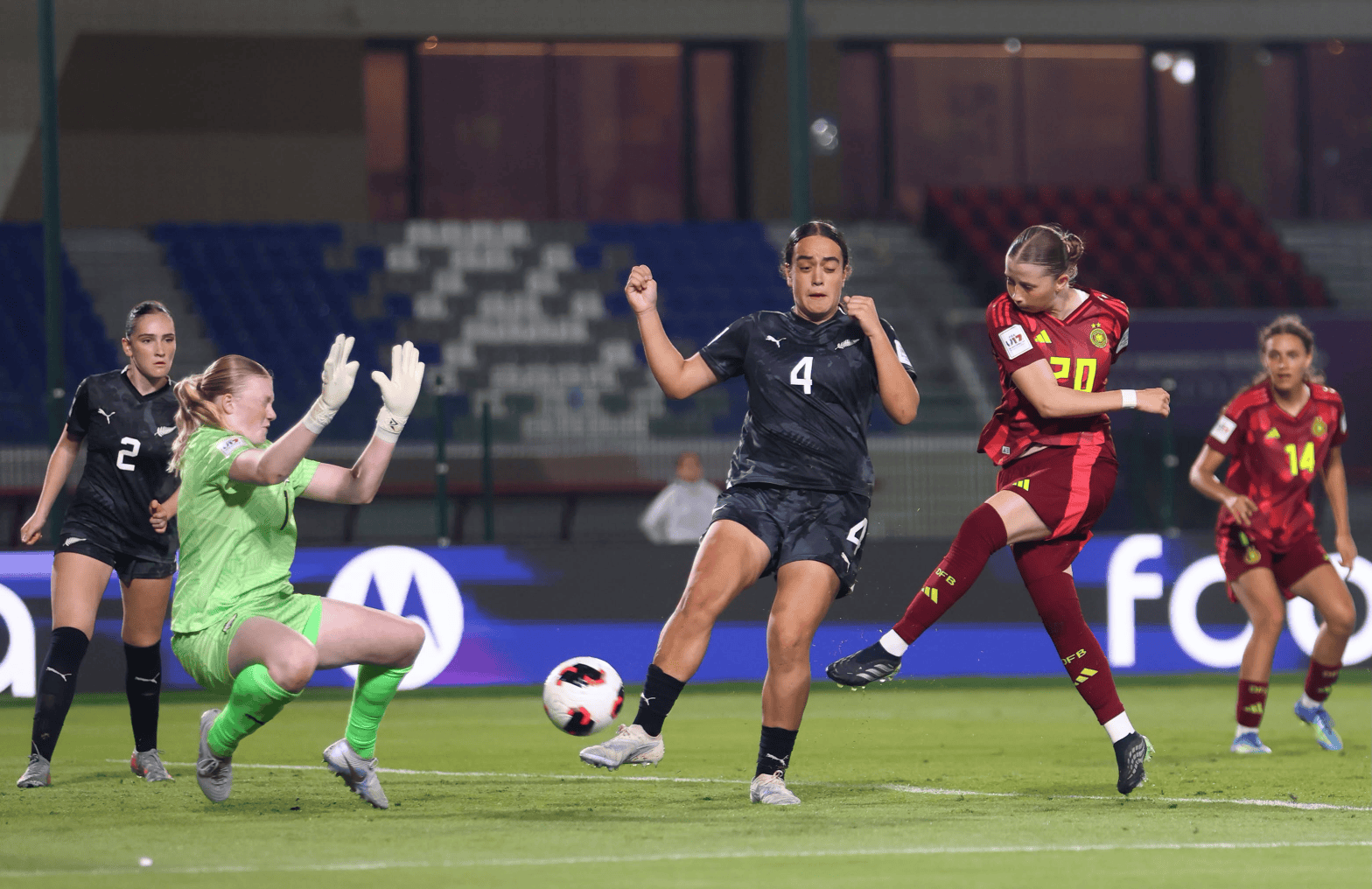
New Zealand’s campaign at the 2026 FIFA U-17 Women’s World Cup in Morocco has come to an end following a 2-0 defeat to Germany in their final Group A fixture on Friday. The Young Football Ferns finished bottom of the group without a point or a goal, having also suffered defeats against hosts Morocco and Argentina.

Alana Gunn’s side entered their final match already eliminated from contention for the knockout stages, but faced another demanding challenge against a German team that had won its opening two fixtures. Despite an improved defensive effort and several important saves from goalkeeper Nienke Holland, the New Zealanders were unable to prevent the European side from completing the group stage with a perfect record.

Germany dominated possession and created several opportunities during the first half, with Holland repeatedly called into action. The New Zealand goalkeeper denied Clara Choisy and Marie Kleemann, while the latter also struck the woodwork as Germany pushed for an opening goal.

The breakthrough eventually came in first-half stoppage time, when Laura Ernst headed home from a corner delivered by Mia Kuhn in the 45+2nd minute. Germany maintained their pressure after the interval and doubled their advantage in the 56th minute, with Choisy finishing from close range.

New Zealand’s situation became more complicated just four minutes later when Emmie Butler received a second yellow card and was sent off. Playing the final half-hour with ten players, the Young Football Ferns continued defending against sustained German pressure, with Holland helping to prevent a heavier defeat.

The result concluded a difficult tournament for the Oceania representatives, whose problems had begun in their opening fixture against hosts Morocco on 17 October.

Playing at the Mohammed VI Football Academy in Salé, New Zealand managed to keep the match scoreless throughout the first half despite Morocco creating numerous opportunities. However, the hosts eventually broke through in the 57th minute when Sonia Abajiou opened the scoring.

An own goal from Eden Chaytor in the 70th minute doubled Morocco’s advantage before Imane Dhissi added a third six minutes later. Hiba Youssoufi completed the 4-0 victory from the penalty spot in the 82nd minute, leaving New Zealand with a considerable challenge ahead of their remaining fixtures.

The statistics reflected Morocco’s dominance, with the hosts recording 39 attempts compared to just two from the Young Football Ferns. New Zealand struggled to establish an attacking presence and were unable to register a shot on target.

Their second encounter, against Argentina on 20 October, offered another opportunity to respond, but the South American side also proved too strong.

Argentina controlled much of the opening period, striking the crossbar three times before Mercedes Diz finally broke the deadlock in the 42nd minute. The attacker connected with a cross from Brunella Pilati to head Argentina in front shortly before half-time.

New Zealand attempted to respond after the break, showing more attacking intent, but Argentina extended their lead in the 69th minute. Diz scored her second goal of the match with a left-footed finish following an assist from Violeta Álvarez, securing a 2-0 victory that represented Argentina’s first win in FIFA U-17 Women’s World Cup history.

Following that defeat, New Zealand captain Amelia Hitchcock acknowledged the disappointment while praising the commitment of her teammates.

“It was a very tough game. Argentina are such a good team,” Hitchcock said.

“Obviously, it’s a bit frustrating, the result. But, I mean, there’s nothing we can do now. We tried our best and we really put ourselves out there. I’m really proud of the team for doing that.”

The defeat left the Young Football Ferns without a realistic route into the knockout stages, turning their final encounter against Germany into an opportunity to finish the competition with a stronger performance.

Across their three matches, New Zealand conceded eight goals without scoring, finishing fourth in Group A. Germany advanced as group winners with nine points, followed by Argentina with six and Morocco with three.

The results also highlighted the difficulties New Zealand encountered when facing opponents capable of maintaining possession and consistently creating chances. Although Gunn’s team showed periods of defensive resistance, particularly during the first halves against Morocco and Germany, converting those efforts into sustained attacking play remained a major challenge.

The tournament marked New Zealand’s tenth appearance at the FIFA U-17 Women’s World Cup, maintaining their record of participation in every edition of the competition.

For several members of the squad, the experience provided an opportunity to compete against international opposition at the highest level of their age category. However, the results underline the considerable work ahead as New Zealand looks to strengthen its competitiveness against teams from outside Oceania.

With the Young Football Ferns eliminated, attention now turns to the lessons from three demanding matches and how that experience can contribute to the development of the country’s next generation of women’s footballers.

Ibraheem Afazal commits to second season with Bula FC after breakthrough year for club and country

Fiji international Ibraheem Afazal will continue his professional career with Bula FC after the club confirmed that the 19-year-old attacker has re-signed for the 2027 OFC Professional League season. The young footballer returns with greater experience following a debut campaign in which he scored his first professional goal and earned his first senior international appearances for Fiji.

Born and raised in Sydney, Australia, Afazal began his football journey with Mounties Wanderers FC and APIA Leichhardt FC before joining Sydney Olympic FC in 2025. His development in Australian football was accompanied by opportunities to represent Fiji at youth international level, featuring in the OFC U-17 and U-19 Championships.

His career took an important step forward in 2026 when he signed his first professional contract with Bula FC, becoming part of the Fijian club’s inaugural OFC Professional League squad. During his first season, Afazal scored against South Melbourne and made his senior international debut for Fiji in friendly matches played in Vanuatu in June.

Speaking about his decision to remain with Bula FC, Afazal expressed gratitude to those who have supported his development and helped him pursue a professional career.

“It’s a blessing from God, and I’m grateful for the sacrifices my parents and older brother have made for me,” Afazal said. “I’m also thankful to the coach for trusting me and giving me another opportunity to prove myself.”

The transition from Australia’s semi-professional football environment to the demands of a professional competition required considerable adjustments. Afazal acknowledged that his first season helped him understand the importance of preparation and discipline beyond what happens during training sessions and matches.

“It’s a very different environment going from semi-professional to professional football. I was also lucky to have experienced people around me who helped me grow both on and off the field.”

“I’ve learnt that football isn’t just about putting your boots on and stepping onto the field. It’s also about what you eat, how much you sleep and how you prepare your body. Everything you do off the field plays a big part in your performance on it.”

Working alongside established Fiji internationals and experienced professionals also contributed to his development. For Afazal, sharing the training ground with players who have already achieved success at international level provided additional motivation to pursue his own ambitions.

“Training alongside experienced players in Bula FC has given me a lot of confidence. Seeing what they’ve achieved makes me believe I can do the same if I put my mind to it, stay focused and continue working hard.”

However, adapting to professional football involved more than improving his performances on the pitch. Having spent much of his life in Sydney, Afazal also faced the challenge of living away from his family and becoming responsible for his daily routine.

“My biggest challenge was living away from home. It wasn’t easy, but I understood that sacrifice is part of achieving your goals,” he explained.

“I’ve grown not only as a footballer but also as a person. Living at home, my mum would take care of things like cooking, cleaning and washing my clothes. Moving away from home taught me to become more independent, take responsibility and mature outside of football.”

With those experiences behind him, Afazal is approaching the 2027 season determined to establish himself further in Bula FC’s attacking options. Having already experienced professional football and earned international recognition, the youngster wants to translate his development into more consistent contributions for the club.

“My goals for the 2027 season are to score more goals, become a more important player for the team and help win games.”

Although his immediate focus remains on Bula FC, Afazal has ambitions of eventually playing in Australia’s A-League or progressing to an even higher level. Regardless of where his club career takes him, representing Fiji remains an important part of his plans.

“My dream is to play in the A-League or even higher than that. No matter where football takes me, I always want to represent Fiji at the international level and make my nation proud.”

Afazal’s decision to continue with Bula FC gives him another opportunity to develop within a professional environment while strengthening his prospects of becoming a regular member of Fiji’s senior national team.

The young attacker also shared a message for aspiring footballers across Fiji, encouraging them to remain committed to their ambitions even when progress appears slow.

“I would tell every young footballer across Fiji to keep working hard, even when you’re not seeing the results you want. Everyone has their own time, and success doesn’t always come straight away.”

“Stay patient, keep believing in yourself and never stop working because your opportunity will come.”

Tuvalu proposes Four Nations Cup in New Zealand for January 2027

The Tuvalu Islands Football Association (TIFA) is working towards organising a Four Nations Cup in Auckland, New Zealand, in January 2027, potentially bringing together several Pacific national teams for a new international football competition.

The plans were revealed in an official invitation sent to the Kiribati Islands Football Federation on 15 October, signed by TIFA General Secretary and Technical Director Michiel van der Werf.

According to the letter, the proposed tournament would take place on 23, 27 and 30 January, with Tuvalu, Kiribati, the Cook Islands and Tonga among the prospective participants. A Māori Aotearoa national selection is also being considered, although the final composition of the competition has not been established.

The invitation represents an important step towards organising a tournament that could provide valuable international opportunities for smaller football nations in Oceania, several of which have limited access to regular national-team fixtures.

TIFA indicated that it intends to work alongside New Zealand Football to provide playing venues and training facilities for the participating teams. The association also stated that the Oceania Football Confederation is aware of the initiative and supports the proposed event.

However, the competition remains in the planning stages, with participating nations still to be confirmed and logistical arrangements to be finalised.

One of the main challenges concerns funding. Under the proposed arrangements, participating associations would be responsible for their own travel, accommodation, meals and other expenses, although TIFA indicated that it would seek to provide additional assistance wherever possible.

Those financial requirements could influence which teams are ultimately able to participate.

For Tuvalu, the initiative forms part of a broader effort to expand the country’s involvement in international football.

The Pacific nation currently holds associate membership of the Oceania Football Confederation and has been pursuing full membership, with the longer-term ambition of joining FIFA.

Under van der Werf’s leadership, the association has been working to create new opportunities for Tuvaluan players, including international fixtures and development experiences overseas.

Tuvalu participated in the 2023 Pacific Games in Solomon Islands, but opportunities to compete internationally remain relatively limited. The establishment of a tournament involving comparable Pacific football nations could provide more consistent competition outside the traditional regional championship calendar.

Kiribati’s inclusion among the invited teams is particularly notable following the country’s recent appearance at Fiji’s Inter-District Championship, where the national selection won the Premier Division title.

The proposed tournament would offer Kiribati an opportunity to build on that experience by facing other national teams rather than domestic clubs.

The Cook Islands and Tonga would also bring experience from Oceania’s official international competitions, potentially providing valuable opposition for nations seeking to develop their national-team programmes.

Meanwhile, the possible participation of a Māori Aotearoa selection would add a different dimension to the event, reflecting the wider football connections between New Zealand and the Pacific Islands.

Beyond the results, a competition of this nature could help address one of the longstanding difficulties faced by smaller Oceania football associations: the lack of regular international matches.

National teams from countries with small populations and limited financial resources often go extended periods without competitive fixtures, making it difficult to assess their development, maintain squad continuity and prepare players for international football.

A tournament staged in Auckland could provide access to suitable facilities while bringing several national teams together within a relatively short period.

It could also create an opportunity for Pacific players based in New Zealand to represent their countries without the additional costs and logistical challenges associated with travelling across multiple islands.

Nevertheless, several important details remain unresolved, including the final list of participants, confirmation of the proposed venues and the financial arrangements necessary to stage the competition.

The invitation to Kiribati demonstrates that TIFA has begun approaching potential participants, but it does not establish that the tournament has received final confirmation.

Should the plans move forward, the Four Nations Cup could become a valuable addition to Oceania’s international football calendar, providing smaller Pacific nations with opportunities to compete against one another and continue developing their national teams.

For now, the proposed January dates represent an encouraging initiative from Tuvalu as the association seeks to expand international football opportunities across the region.

Darren Bazeley to leave All Whites despite wanting to continue after World Cup campaign

Darren Bazeley will leave his position as New Zealand national team head coach at the end of 2026, with New Zealand Football deciding not to extend his contract despite the 54-year-old’s desire to continue leading the All Whites towards the next FIFA World Cup.

The decision was confirmed by the national association on Saturday, 24 October, bringing an end to a four-year period in which Bazeley oversaw New Zealand’s return to the FIFA World Cup for the first time since 2010 and helped introduce a new generation of players to international football.

Bazeley will remain in charge for the upcoming two-match series against India in November before departing when his contract expires in December. New Zealand Football have not yet announced his successor.

Although disappointed by the decision, the English-born coach acknowledged that the federation had chosen a different direction following the team’s failure to advance beyond the group stage at the 2026 FIFA World Cup.

“While I would have definitely been keen to be involved for the next cycle, I understand this is a football decision,” Bazeley said in a statement released by New Zealand Football.

The All Whites returned to football’s biggest tournament in June after a 16-year absence, but were unable to progress to the knockout rounds, finishing their group-stage campaign with one draw and two defeats.

The outcome was disappointing for a squad that had arrived at the tournament with ambitions of achieving New Zealand’s first-ever World Cup victory and reaching the knockout stages.

Nevertheless, Bazeley’s tenure was marked by several notable performances against opponents from outside Oceania.

In June 2025, New Zealand defeated African champions Côte d’Ivoire 1-0 in Canada, recording one of their most significant international victories in more than a decade.

Another important result followed in March 2026, when the All Whites produced an impressive 4-1 victory over Chile at Eden Park in Auckland during their preparations for the World Cup.

Following the tournament, New Zealand continued testing themselves against international opposition, with Bazeley’s squad defeating China PR 3-0 in September before overcoming Panama on penalties to reach the Kirin Cup final in Japan.

The coach also played an important role in the development of the national team’s emerging players, handing 17 footballers their senior international debuts during his tenure.

His experience within New Zealand football extends well beyond the senior national team. Before becoming All Whites head coach on an interim basis in March 2023 and receiving the permanent appointment later that year, Bazeley had worked with the country’s U-17, U-20 and U-23 national sides.

He also served as an assistant coach under Anthony Hudson and Danny Hay, contributing to several generations of New Zealand footballers progressing through the international system.

That development work became an important part of his approach with the senior team, which increasingly incorporated younger players alongside established internationals such as Chris Wood, Marko Stamenić and Alex Rufer.

Despite the decision not to renew his contract, Bazeley expressed confidence in the squad’s future and the foundations established during his time in charge.

He highlighted the progress made by a young group of players and said he believed they could continue improving ahead of the 2030 FIFA World Cup.

New Zealand Football chief executive Andrew Pragnell acknowledged Bazeley’s contribution, particularly the opportunities provided to emerging internationals and the relationships established within the national team environment.

However, Pragnell also indicated that the association’s ambitions now extend beyond simply qualifying for the World Cup.

Speaking about the decision, he explained that reaching the knockout stages had been an important strategic objective and that New Zealand Football did not believe the team was progressing sufficiently towards achieving that goal in 2030.

The decision therefore reflects a change in expectations for the All Whites following Oceania’s introduction of a guaranteed place at the expanded 48-team FIFA World Cup.

While qualifying for previous editions had required New Zealand to overcome opponents from other confederations in intercontinental playoffs, the current qualification structure offers Oceania’s strongest national team a more direct pathway to the tournament.

That development has created an opportunity for New Zealand to focus more heavily on competing successfully against stronger international opposition once they reach the World Cup.

Bazeley will have two final opportunities to lead the team when New Zealand face India at Go Media Stadium in Auckland on 12 November and at the new One New Zealand Stadium in Christchurch on 15 November.

The second fixture will also mark the first international football match at Christchurch’s new stadium.

The upcoming series will conclude a significant period in the All Whites’ recent history, with Bazeley departing after overseeing the team’s World Cup return and the development of a squad expected to remain central to New Zealand’s international ambitions.

New Zealand Football will announce further details of the recruitment process for his replacement in due course, with the next appointment expected to play a crucial role in shaping the team’s approach towards the 2030 World Cup.

New Zealand’s Matt Ellis makes dream A-League debut with first-touch goal for Perth Glory

New Zealand winger Matt Ellis made an extraordinary start to his A-League career on Friday, 23 October, scoring with his first touch for Perth Glory just seconds after coming off the bench during a 2-1 defeat against Brisbane Roar at Suncorp Stadium.

The 25-year-old, who joined Perth in September following a successful season in Oceania football, needed only 33 seconds to make his mark in Australia’s top division. Introduced shortly before the hour mark, Ellis capitalised on a defensive mistake to score his first A-League goal and bring Glory back into a match they had been trailing 2-0.

Brisbane had established their advantage through goals from Justin Vidic in the 28th minute and South Korean international Nam Tae-hee in the 42nd, with the latter producing an impressive long-range strike to double the hosts’ lead.

Perth head coach Adam Griffiths turned to Ellis in the 59th minute, replacing Pieter Jacobsz as the visitors searched for a way back into the contest.

The New Zealander immediately justified that decision.

Taking advantage of a loose pass from Brisbane’s defence, Ellis reacted quickly to punish the mistake and reduce the deficit to 2-1 in the 60th minute. His goal provided Perth with renewed hope, although Brisbane maintained their advantage until the final whistle to secure all three points.

Despite the defeat, Ellis’ introduction provided one of the standout individual moments of the evening and continued a remarkable sequence of goals in important matches over the past year.

In December 2025, the winger scored for Auckland City FC in the New Zealand National League grand final against Wellington Olympic. Coming off the bench, Ellis headed home Haris Zeb’s cross in the 81st minute to give the Navy Blues the lead.

The dramatic encounter eventually finished 2-2 after extra time, with Auckland City winning 7-6 on penalties to retain the national championship.

Five months later, Ellis was again on the scoresheet in a major final, this time representing Auckland FC in the inaugural OFC Professional League.

Facing South Melbourne at Eden Park on 24 May, he entered as a substitute and scored Auckland’s second goal in the 72nd minute, collecting Aston Burns’ pass before finishing through the goalkeeper’s legs.

His contribution proved decisive as Auckland FC secured a 2-1 victory and became the first champions of Oceania’s professional football competition.

Ellis then added another important achievement to his record in August, representing Auckland City during the 2026 OFC Men’s Champions League in Fiji.

The winger scored the second goal in the final against Solomon Islands champions Central Coast FC, sealing a 2-0 victory at Govind Park in Ba and helping Auckland City claim their 14th continental title.

Those performances meant Ellis had scored in three significant finals within nine months, across New Zealand’s domestic championship, the OFC Professional League and the OFC Men’s Champions League.

His immediate impact against Brisbane has now added an A-League debut goal to that sequence.

Ellis’ progression is particularly notable because his opportunity in Australia’s professional competition arrived after several successful campaigns within New Zealand and Oceania football.

He made 18 appearances for Auckland FC during the inaugural OFC Professional League season, contributing four goals and two assists, while continuing to represent Auckland City in other competitions.

The former New Zealand U-23 international also gained experience at the FIFA Club World Cup with Auckland City, adding another major international tournament to his playing career.

His performances eventually attracted Perth Glory, who signed him on a one-year agreement in September.

At the time, Glory football director Stan Lazaridis emphasised the winger’s pace and attacking qualities, suggesting that Ellis had been overlooked despite his consistent performances.

“We feel that he’s been overlooked and is exactly the type of player we need,” Lazaridis said when the club announced his arrival.

For Ellis, the move represented the opportunity to fulfil a long-held ambition of playing professionally in the A-League.

“This is an opportunity that you dream of having, and it’s something that you work so hard for ever since being a little kid,” he said following his signing.

His debut could hardly have produced a more immediate personal contribution, even if the result ultimately left Perth disappointed.

Glory have now lost their opening two matches of the 2026/27 A-League season, having also suffered a 2-1 defeat against Macarthur FC in the opening round.

Nevertheless, Ellis’ goal gives the coaching staff another encouraging attacking option as Perth prepare for their first home fixture against Adelaide United on 1 November.

For the New Zealander, the challenge will now be to establish himself at A-League level and turn an unforgettable debut into consistent performances.

Having already delivered in three major finals across Oceania, Ellis has demonstrated an ability to make important contributions under pressure. His first touch in Australian professional football provided another example of that quality.

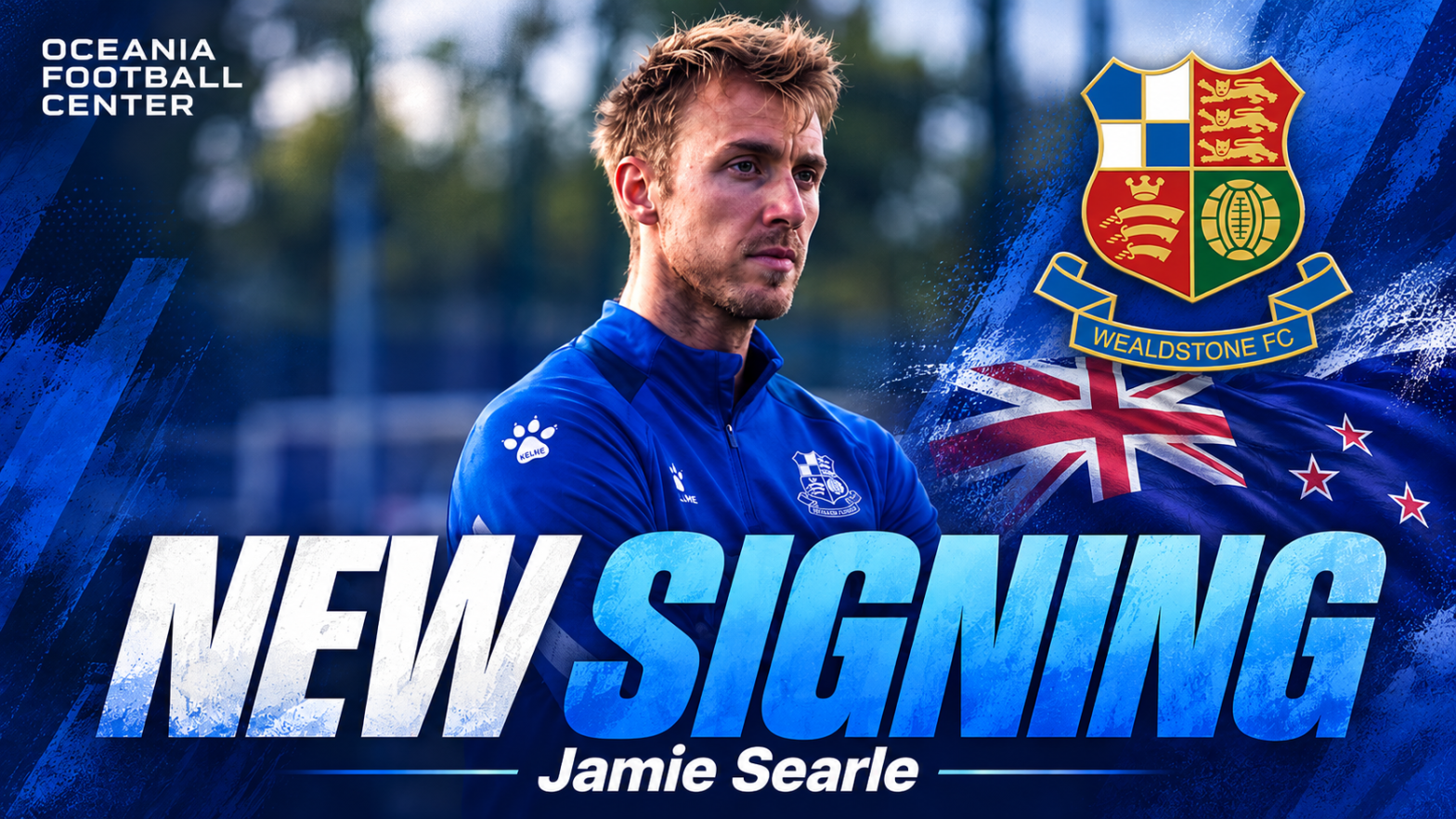
All Whites goalkeeper Jamie Searle joins Wealdstone after brief spell at Eastleigh

New Zealand international goalkeeper Jamie Searle has completed another move in English football, joining National League club Wealdstone on a non-contract agreement after a brief spell with Eastleigh.

The 25-year-old has changed clubs for the second time in little more than a month, having joined Eastleigh on a short-term arrangement in September following his departure from Eastbourne Borough.

Wealdstone confirmed Searle’s arrival alongside fellow goalkeeper Sam Long, who has joined on a 28-day loan from League Two side Salford City. The two signings give the London-based club additional options as they continue their campaign in England’s fifth tier.

Searle’s latest move comes after several seasons spent progressing through different levels of English football, having originally left New Zealand in 2019 to pursue opportunities overseas.

Born in Whakatāne, the goalkeeper began his development with local club Whakatāne Town before representing Cambridge and Melville United. His performances earned him an opportunity with Aston Villa’s academy, marking the beginning of a career that has included several established English clubs.

Searle joined Swansea City in 2020 before moving to Barnsley two years later. He subsequently signed for Forest Green Rovers in July 2023, spending two seasons with the club before joining Eastbourne Borough in June 2025.

His spell at Eastbourne produced eight appearances in all competitions before he became a free agent.

The New Zealander joined Eastleigh on 18 September 2026, but his stay with the Hampshire club proved short-lived, leading to another move within the National League.

Unlike a conventional fixed-term contract, Searle’s non-contract agreement with Wealdstone gives both parties greater flexibility, although the club has not announced how long he is expected to remain.

At international level, Searle has made one senior appearance for New Zealand, featuring throughout the 90 minutes against New Caledonia during the FIFA World Cup qualifying campaign in March 2022.

He was also a member of the New Zealand squad at the Tokyo Olympic Games, where the OlyWhites reached the quarterfinals.

Those experiences place him among a group of New Zealand goalkeepers continuing their careers within the English football pyramid, although establishing regular first-team opportunities remains an important objective.

Wealdstone’s decision to strengthen their goalkeeping department provides Searle with another opportunity to compete for playing time at National League level.

For the former All Whites goalkeeper, the move represents a chance to regain stability and build momentum after a period featuring several changes of club.

His immediate challenge will be to establish himself in Wealdstone’s squad and earn opportunities on the pitch as the club continues its domestic campaign.