
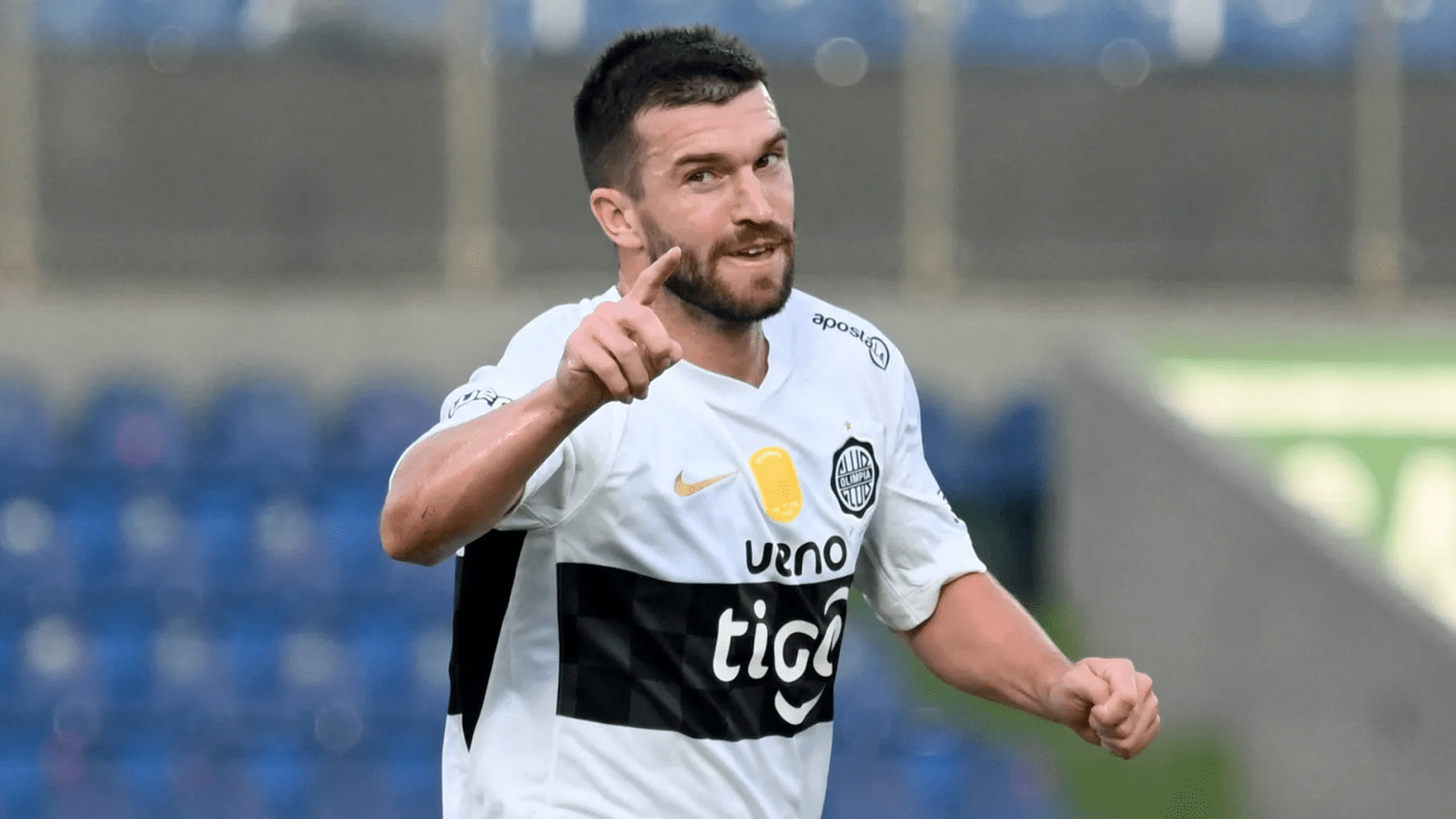
What began as one of the most unlikely stories of the 2026 FIFA World Cup is rapidly developing into something far more substantial for Tim Payne.
The New Zealand international arrived in Paraguay carrying an extraordinary level of attention after going from one of the least-followed players heading into the World Cup to a social media phenomenon with millions of followers. His move from Wellington Phoenix to Olimpia inevitably attracted curiosity well beyond New Zealand and Paraguay.
A few weeks into his South American adventure, however, Payne is beginning to give people a footballing reason to continue following him.
The 32-year-old completed the full 90 minutes as Olimpia defeated arch-rivals Cerro Porteño 2-1 in the Paraguayan Superclásico on Sunday, another important step in a remarkably positive start to life with one of South America’s historic clubs.
It was Payne’s third appearance in the Paraguayan Clausura — and Olimpia have won all three matches in which the All White has taken the field.
His introduction to Paraguayan football could hardly have gone better. After entering from the bench against Rubio Ñu on August 2, Payne marked his official debut with a spectacular goal in a 5-0 victory. He later earned a place in the starting XI for the 2-1 win over Sportivo Ameliano before retaining his position for the biggest domestic fixture on Olimpia’s calendar.
Against Cerro Porteño, Payne was no longer a novelty signing waiting to be introduced to Paraguayan football. He was Olimpia’s starting right-back in front of a packed Defensores del Chaco, playing the entire Superclásico as the Decano recovered from a goal down to claim a 2-1 victory.
That distinction matters.
Payne’s transfer was inevitably accompanied by discussion over its commercial potential. His extraordinary rise on social media during the World Cup gave Olimpia access to an international audience vastly larger than the one normally surrounding a Paraguayan domestic signing.
But the first weeks of his spell have begun shifting the conversation from marketing towards football.
His popularity has also started to become visible among Olimpia supporters themselves.
When the club released its squad for the Copa Paraguay round-of-32 meeting with Cristóbal Colón of J. Augusto Saldívar, Payne was among the regular starters left out as coach Pablo Sánchez prepared to rotate his team following a demanding sequence of matches. The decision quickly generated reactions from supporters on social media asking why the New Zealander was absent and when they would see him again.
Some fans pointed to the obvious explanation — that Payne was being rested and preserved for the Clausura — but the reaction itself was revealing. Only weeks after arriving in Paraguay, supporters were already asking to see the All White every time Olimpia took the field.
There have been other signs of that growing connection.
The match-worn and signed shirt from Payne’s goalscoring debut attracted extraordinary interest when it was put up for auction, with bidding reaching more than 20 million Paraguayan guaraníes. For a player who had never represented Olimpia before August, the attention surrounding his first shirt provided another indication that his World Cup fame had successfully travelled with him to Asunción.
The important difference now is that the relationship is beginning to work both ways. The global following brought attention to Olimpia, while Olimpia supporters are increasingly embracing Payne because of what he has actually done in their colours.
His South American spell has already brought him close to another significant milestone.
Payne was registered by Olimpia for the knockout stages of the Copa Sudamericana and was among the substitutes for both legs of the round-of-16 tie against Brazilian giants Vasco da Gama. He did not enter either match, with the Paraguayan side eventually eliminated after a 4-1 defeat in Asunción following a goalless first leg at São Januário.
That means Payne is still waiting for his first appearance in a CONMEBOL club competition.
The route he has taken remains extremely unusual for a New Zealand footballer.
Former All White Michael Wilson had a spell with Ecuadorian side Aucas in 2009, while Marco Rojas later represented Chilean giants Colo-Colo and went one step further by appearing in the Copa Libertadores. Payne has now added Paraguay to that very short history of New Zealand internationals establishing themselves in South American club football.
His case is particularly striking because of the environment into which he has arrived.
Olimpia are not merely another destination abroad. The club are three-time Copa Libertadores champions and one half of Paraguay’s defining football rivalry. Within weeks of leaving Wellington, Payne has gone from A-League football to playing 90 minutes in a Superclásico and being part of a Copa Sudamericana knockout squad.
The story also remains closely connected to the All Whites.
New Zealand will return to international action later this year, giving Payne another opportunity to carry his Paraguayan experience back into Darren Bazeley’s national team. The All Whites are scheduled to compete in Japan’s Kirin Cup in October before returning home for two matches against India in November.
For Payne, regular minutes at Olimpia would provide a very different preparation for those international windows from anything he had experienced before the World Cup.
And that may ultimately become the most interesting part of the story.
During the World Cup, millions began following Tim Payne because an internet campaign turned an almost unknown New Zealand defender into an unlikely global celebrity.
Olimpia recognised the opportunity and brought that audience to Paraguay.
But football has a way of deciding whether those stories last.
A goal on debut, three league appearances followed by three victories, a full 90 minutes in a winning Superclásico and Olimpia supporters already asking why he is not involved when his name disappears from a matchday squad suggest that Payne is beginning to accomplish something much more difficult than becoming viral.
He is becoming relevant for what happens on the pitch.
Discover more from Oceania Football Center
Subscribe to get the latest posts sent to your email.

