
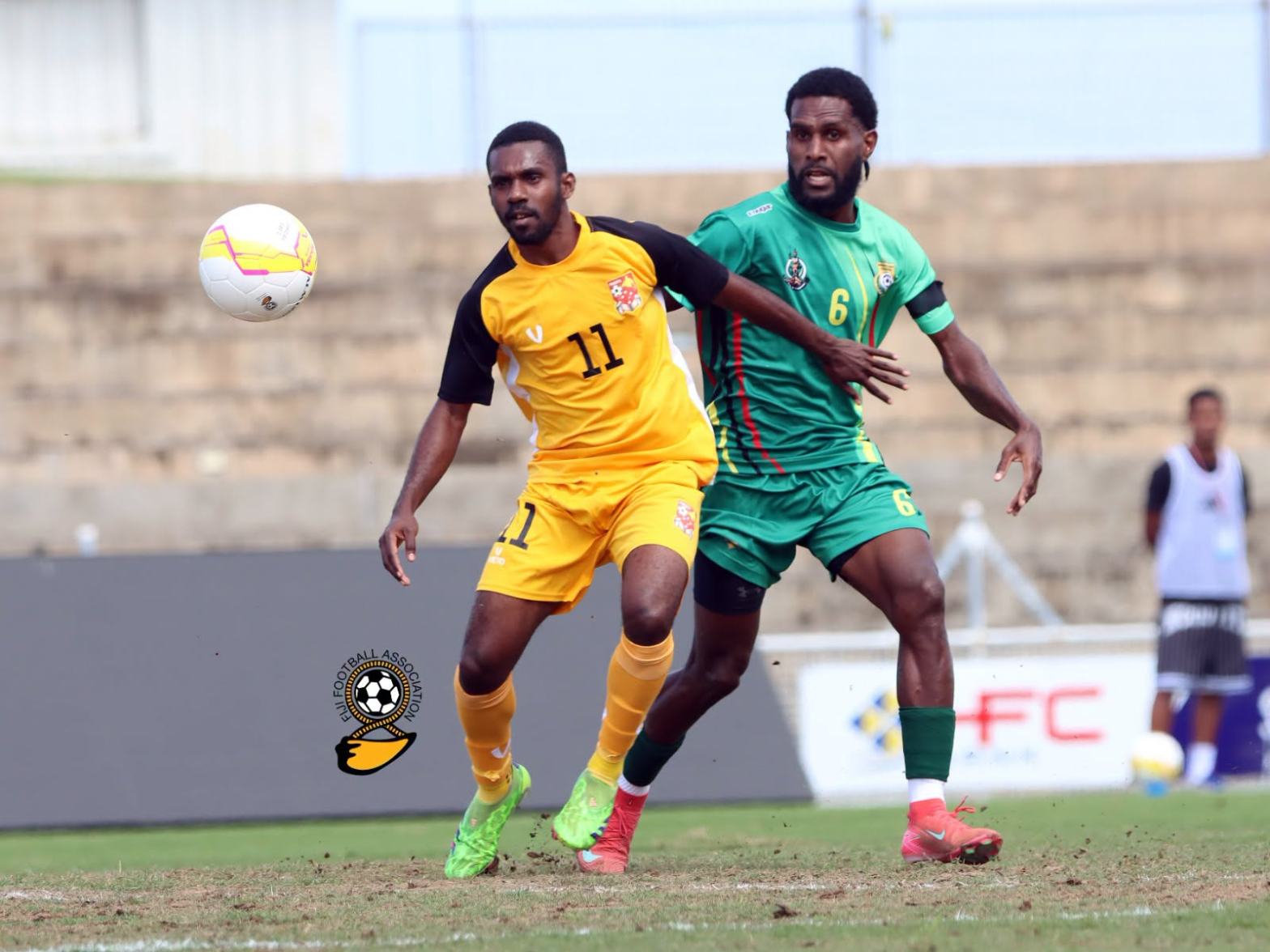
Papua New Guinea transformed a likely opening defeat into a significant 2-1 victory over defending champions Vanuatu with two goals in the closing minutes of their first match at the 2026 MSG Prime Minister’s Cup.
Tony Kaltak put Vanuatu ahead in the 77th minute at HFC Bank Stadium, but the match changed after substitute Nalau Moses equalised for PNG. Ezekiel Vela then completed the turnaround only minutes later, converting after Abraham Allen delivered a corner into the Vanuatu penalty area.
The result gives PNG three important points in the tournament’s five-team round-robin stage and represents an immediate response to their defeat against the same opponents in last year’s final. Vanuatu appeared to have managed the match successfully for most of the afternoon, but their control disappeared during a decisive late period in which PNG’s persistence was finally rewarded.
The opening half was closely contested and ended without a goal. Vanuatu had more of the ball during periods of the match, while PNG remained organised and prevented the defending champions from turning their possession into a decisive advantage. Neither side established sustained control in the attacking third, producing the kind of cautious contest that could be expected from two teams familiar with each other and aware of the importance of avoiding an opening defeat.
That balance continued well into the second half. Vanuatu eventually found the breakthrough through Kaltak, one of the most experienced attacking players in the squad. With little more than ten minutes remaining, the goal appeared likely to be enough for the defending champions, particularly after they had kept PNG scoreless for most of the match.
The decisive issue, however, was not simply that PNG equalised. It was how quickly Vanuatu lost their defensive security after conceding.
Moses had entered from the bench and gave PNG greater presence around the penalty area. His late equaliser changed the emotional and tactical direction of the match: PNG suddenly believed all three points were available, while Vanuatu were forced to reorganise after spending most of the second half protecting a narrow advantage.
Instead of slowing the match and recovering their shape, Vanuatu conceded again within minutes. Allen’s corner provided PNG with another opportunity to load the penalty area, and Vela capitalised to complete the comeback. The defender’s winning goal also demonstrated that PNG’s threat was no longer restricted to their recognised attacking players. With the match opening up, they found a second route to goal through a set piece and the participation of players from deeper positions.
For PNG coach Bob Morris, Moses’s contribution was especially encouraging. The Lae City forward was not required to carry the attack from the beginning, but he responded when introduced and delivered the goal that made the turnaround possible. His impact strengthened a PNG squad that already contains established attacking names such as Tommy Semmy and Ati Kepo, showing that Morris has alternatives capable of changing a match from the bench.
Vela’s intervention carried a different significance. PNG’s comeback was completed by a defender attacking a late corner, reflecting the collective commitment required when the team fell behind. Rather than becoming dependent on an individual moment from one of their senior forwards, the Kapuls found their two goals through a substitute and a defender.
For Vanuatu, the defeat exposes a problem that cannot be reduced to the absence of Brian Kaltak and Alex Saniel. Both are important losses: Kaltak provides leadership and defensive authority, while Saniel was the leading scorer in the inaugural OFC Pro League. Nevertheless, Vanuatu had already navigated most of the match successfully and were leading with the closing stages approaching. Their greater failure was an inability to manage the period immediately after PNG’s equaliser.
The defending champions had an opportunity to reduce the tempo, protect the point and prevent PNG from carrying their momentum into another attack. Instead, they allowed the game to remain open and soon conceded from a set piece. In a competition decided through only four round-robin matches, those few minutes may prove considerably more costly than the general performance across the other 80.
The match also continued the recent rivalry between the two nations. Vanuatu defeated PNG on penalties in the 2025 final after a 2-2 draw in Port Moresby, ending a long wait for another Melanesian title. Their first meeting of 2026 produced another tight contest, but this time PNG controlled the defining moments.
The victory is also notable because PNG’s participation in the tournament had previously been uncertain amid unresolved financial commitments connected to earlier editions. Once the team travelled to Fiji, however, attention returned to the field, and the Kapuls opened their campaign by defeating the reigning champions.
PNG will next face New Caledonia on September 24, while Vanuatu must recover before meeting hosts Fiji on September 21. With only the leading two teams advancing to the final, PNG have already gained an important advantage over a direct rival. Vanuatu, meanwhile, must ensure that a few damaging minutes in their opening match do not shape the remainder of their title defence.
Discover more from Oceania Football Center
Subscribe to get the latest posts sent to your email.

