
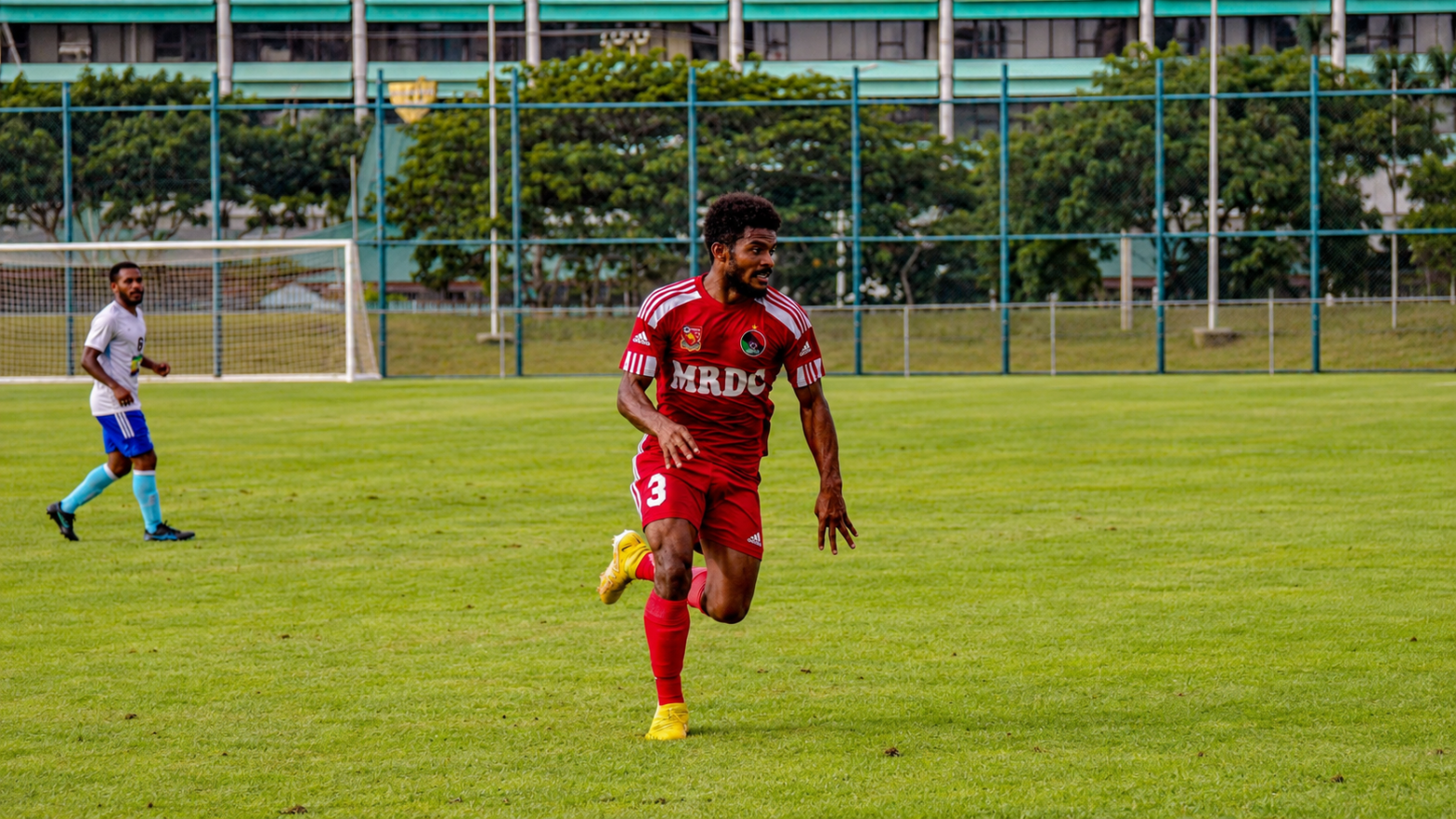
After five seasons with Hekari, Papua New Guinea defender Godfrey Haro has experienced almost every level of the club’s recent journey. From domestic football in PNG to repeated appearances in the OFC Champions League, a continental final and now the first season of the OFC Pro League, the 28-year-old has been part of a period of major change for one of the Pacific’s most established clubs.
Speaking exclusively to Oceania Football Center, Haro reflected on how the demands of the new professional competition have differed from anything he had previously experienced in his career, while also addressing his absence from Papua New Guinea’s squad for the recent MSG Prime Minister’s Cup.
Haro’s pathway with Hekari has gradually taken him beyond the domestic game. In 2025, he was part of the side that reached the OFC Champions League final in Honiara, where Hekari faced Auckland City after returning to the continental decider for the first time in 15 years.
“For me, I would say it has been a great journey. Being able to play in our local league and then step onto another level of football has been a great experience. It was my third year playing in the Champions League with the club, with the most recent one being in Solomon Islands, where we made it all the way to the final against Auckland City in 2025,” Haro told OFCe.
That experience, however, was still different from what followed with PNG Hekari’s entry into the inaugural OFC Pro League. Instead of playing a short continental tournament, Haro and his teammates had to adjust to a longer professional environment involving regular travel, short recovery periods and opponents from across Oceania.
For Haro, the creation of a professional competition in the region represented something many Pacific players had been waiting for.
“For the OFC Pro League, it has been a dream for many football players in the world, and we in Oceania are lucky enough to have professional football introduced. It is another stepping stone for Oceania as a whole, giving us a better idea of what a professional league is like in other countries.”
The defender said some of the changes were completely new to him. One was the use of Video Assistant Referee technology. Another was the physical and mental demand created by the competition schedule.
“There are so many things that I had never come across before in my football journey. Things like the introduction of VAR, which I had sometimes only seen while watching EPL matches. Time is also very important, especially when you have games with only two days of break and recovery.”
The travelling nature of the competition was another significant adjustment. Rather than remaining in Papua New Guinea for the majority of the season and travelling only for occasional continental tournaments, Hekari had to operate within an international professional structure.
“The other thing is travelling to and from different venues and countries, and getting to play against bigger clubs in Australia and New Zealand,” Haro added.
Haro was not merely observing the change from the outside. He featured throughout Hekari’s Pro League campaign and produced important moments, including a decisive goal-line clearance in the club’s historic first victory in the competition, a 3-1 win over Vanuatu United in Melbourne.
For the defender, Hekari’s challenge was also about adapting its squad to professional football. The team entered the new competition with experienced figures alongside younger players who had never previously experienced an environment of this kind.
“For us at Hekari, we had a mixture of senior players and some junior players in our first tournament early this year,” he explained.
That transition did not prevent Haro from highlighting another element he considers central to Hekari’s history. He credited the club’s achievements to its strong Christian identity and faith.
“The most important thing that has brought this club to where it is now is our Heavenly Father, God Almighty, who has been behind the success of this Hekari football team.”
After the Pro League, Haro returned to domestic football with Hekari and continued to have an important role during the 2026 Premier Soccer League campaign. Hekari remained in the title race until the closing stages, eventually completing the season with 48 points from 22 matches. Haro himself contributed at the other end of the pitch as well, including a stoppage-time equaliser in a key match against Gulf Komara and another goal during Hekari’s late-season comeback against Lae City Dwellers.
Asked by OFCe how he viewed his domestic season, Haro kept his assessment simple.
“It’s been great.”
One issue has nevertheless remained outside his control.
Despite his experience with Hekari and previous involvement with the Papua New Guinea national team, Haro was not selected for the Kapuls squad that contested the 2026 MSG Prime Minister’s Cup.
Rather than criticising the decision, Haro admitted he had not been given an explanation and accepted that selection ultimately belonged to the coaching staff.
“To be honest, I have no idea why I wasn’t selected for the MSG team. It was the coach’s call.”
It is a notable position for a defender who has remained active at one of PNG’s leading clubs while accumulating experience across domestic, continental and professional football. At 28, Haro is also still at an age where a return to the national setup remains very much possible.
His last few seasons illustrate how quickly the environment around Papua New Guinea football has changed. Hekari went from competing domestically and chasing another OFC Champions League run to reaching the 2025 continental final and then becoming Papua New Guinea’s representative in Oceania’s first professional league.
For Haro, that progression has brought VAR, international travel, demanding recovery schedules and a different standard of preparation. Whether it eventually brings him back into the Kapuls squad will depend on decisions beyond his control, but his place in Hekari’s transition into the professional era has already given him an experience few Papua New Guinean players before this generation have had.
Discover more from Oceania Football Center
Subscribe to get the latest posts sent to your email.

