Papua New Guinea recently face a revolting case of domestic violence as international rugby player and boxer Debbie Kaore has been beaten with a clothes iron by her then partner. The agression was recorded and the video was released by Kaore to highlight domestic violence in the country.
Since then, many authorities and famous people from Papua New Guinea stood by Debbie’s side and started a huge campaign against domestic violence. Lae City players also joined the campaign as you can check in the picture below:
Stop violence against women – the message of Lae City players
The protest was led by international defender Alwin Komolong and he had the support of his teammates. Oceania Football Center endorses the protests against violence domestic once it is something unnaceptable.
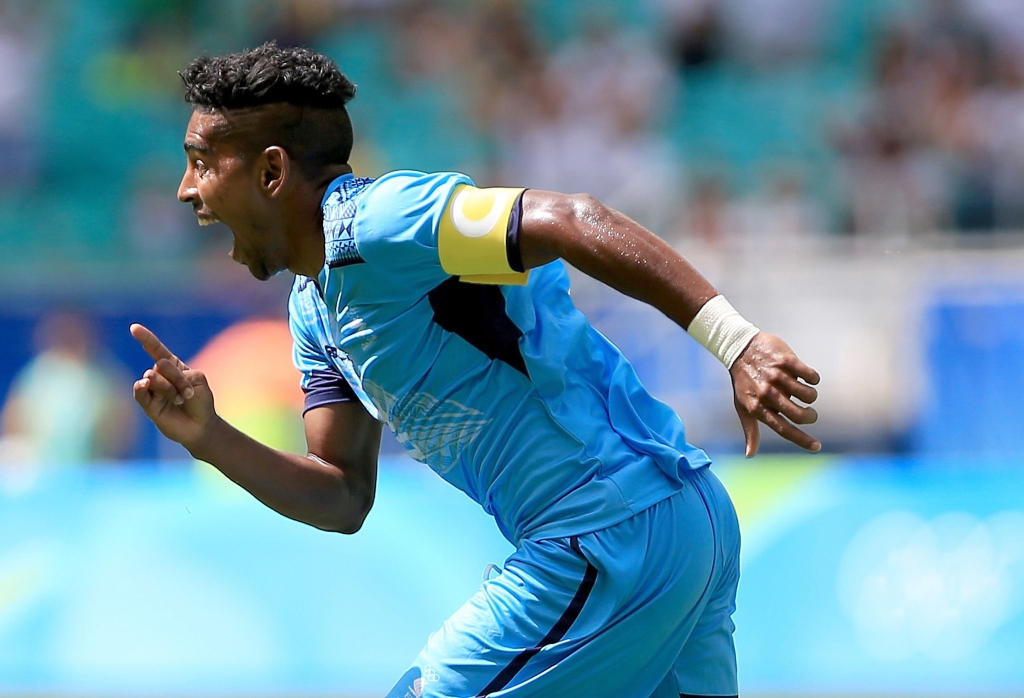
Fijian football has many glorious moments to remember – 2016 is certainly a year that the Fijian football community will remember with joy. The Rio Olympics were the site of a fantastic adventure; led by their wonder boy Roy Krishna, Fiji faced the world and had the chance to experience the most important sporting event in the world – for the first time Fiji took part in the Men’s football tournament.
At the Pacific Games 2015 in Papua New Guinea – a tournament that also served as a qualifier for the Olympic Games in football – Fiji was in a group with Micronesia, Vanuatu and Tahiti. The Fijians drew with Vanuatu and Tahiti and recorded a massive 38-0 win over Micronesia, with Atonio Tuivuna scoring 10 goals in a single match. The results qualified Fiji for both the knockout stages of Olympic qualifying and the Pacific Games – Tahiti, the team that finished first in the group, could not compete for a place in the Olympic Games as they are not members of the IOC (International Olympic Committee). Despite losing to New Caledonia in the Pacific Games semi-finals, Fiji would have something bigger to celebrate.
While Vanuatu faced New Zealand in one semi-final, Fiji took on Papua New Guinea in Port Moresby looking for a place in the grand final, which would side the winner of the spot in the 2016 Rio de Janeiro Olympics. A hat-trick from Napolioni Qasevakatini earned Fiji a 3-1 win over the hosts to qualify for the final, which would decide which team would travel to Brazil. In the other semi-final Vanuatu lost 2-0 to New Zealand, but Vanuatu appealed to the competition organisers that New Zealand had used an irregular player. The match was awarded to Vanuatu as it was confirmed that the New Zealand player Deklan Wynne still did not have New Zealand nationality – the player was born in South Africa.
In the final match neither Vanuatu nor Fiji scored in regular time and extra time. The Olympic Games entry had to be decided on penalties, and despite the failures of Napolioni Qasevakatini and Garish Prasad, Vanuatu also missed two penalties through Junior Vava and Bong Kalo. The final two penalties decided the fate of both sides: Remy Kalsarap missed for Vanuatu, but Jale Dreloa confirmed his penalty for Fiji and made history for his country.
Fiji celebrated a fantastic performance, but they knew they would have a very tough challenge in 2016 when they would play against some of the best youth players in the world in Brazil. The Fijian squad had a period of trainings for the Olympics in Spain – also playing against some local teams – and decided which three senior players would join the U23 squad for the historic participation in the Olympics: Simione Tamanisau, Roy Krishna and Alvin Singh.
Fiji was unlucky in the draw for the Men’s Olympic Football Tournament: they were grouped alongside the then Olympic champions Mexico, the powerhouse Germany and South Korea. The first match of the Fijians could have been much better: they faced South Korea in Salvador and conceded only one goal in the first 45 minutes of the game, but their stamina was not at the level of the South Koreans, who scored seven more goals in the second half, including one from Tottenham’s star Son Heung-Min – a tough 8-0 defeat was the debut of Fijian football at the Olympics.
The second match of Fiji was against Mexico again in Salvador – and it was when the magic happened. Mexico had more possession of the ball in the initial stages of the game, but in a rapid movement Fiji could retain the ball; Iosefo Verevou saw Krishna upfront marked by the Mexican defenders, as he had no better option he sent a long pass from the middle of the park for the Fijian striker – Mexican defenders and his goalkeeper failled and allowed Krishna to head the ball towards the goal, as the goalkeeper left his posts, the ball quietly entered to nets to the delight of the Fijians and to many Brazilians supporting the Bula Boys in the stadium that started to shout ‘Krishna, Krishna, Krishna‘ celebrating the moment.
The Fijians managed to hold the lead for the rest of the first half – Fiji won Mexico, the reigning Olympic champions, 1-0 in 45 minutes of football. Much to the chagrin of the home crowd and Fijian football, Mexico managed to score five goals in the final part of the match, proving that the Fijian side at times do not seem particularly well phisically prepared for the high demands of this competition.
The Fijians would have one last chance against Germany in Belo Horizonte. The Germans proved too strong for the Fijians when Max Meyer, Serge Gnabry and Nils Petersen destroyed the Fijians’ defence in the first half and scored a total of five goals. In the second half the same players continued their productive form and also scored five more goals for Germany to end the game with a strong 10-0 victory over the Fijians. The best moment of the game for Fiji was when Siomione Tamanisau saved a penalty from starlet Max Meyer.
Fiji finished in the bottom of their group, suffering a total of 23 goals and scoring just once through the historic header of Roy Krishna. Despite suffering so many goals in the competition, which was to be expected given the different technical level of their opponents compared to Fijians, it was one of the best moments ever of the Fijian football to share the same pitch of players as Son Heung-Min, Serge Gnabry and Julian Brandt.
It seems that the Fiji FACT will face some changes this year. The tournament was previously scheduled for May but it was postponed to November due to COVID-19 pandemics. Besides that there is another change annouced by Fiji Football Association (FFA) chief executive officer Mohammed Yusuf: the number of teams is reduced from eight to six.
The tourament will be played at Subrail Park in Labasa and six teams (including hosts Labasa) are going to fight for the trophy. The other participants were not released yet.
Six teams will fight for Fiji FACT title this year. Source: Fiji FA Media
On the other hand, the Battle of the Giants and the Inter-District Championship are not going to have the number of participants reduced. Nadi is the current Fiji FACT champions as they defeated Suva by 2-1 in the final match last year.
Now men’s youth leagues are finally drawn. Football Federation Samoa (FFS) livestreamed the draw of U-17 and U-19 leagues. The U-17 tournament will count on eleven teams while the U-19 tournament will have twelve teams. Both leagues were splitted in two groups and you can check them below:
U-17 TOURNAMENT GROUP A: Vaivase Tai, Vaiusu, Lotopa, Faleaseela Catholic Church, Moataa and Faleasiu GROUP B: Lepea, Lupe o le Soaga, Kiwi, Vaigaga and Faatoia United
U-19 TOURNAMENT GROUP A: Kiwi, Vaitele-Uta, Vaiusu, ADIDAS, Faleasiu and Moaula GROUP B: Lepea, Faatoia United, Lupe o le Soaga, Vaivase Tai, Vaipuna and Sogi
Youth leagues resume next week in Samoa.
As it was mentioned before, the leagues must start on next Saturday and they are scheduled to finish on August 8. Oceania Football Center wish good luck to all teams!
Football in Papua New Guinea is booming – the new format of the PNG National Soccer League is attracting many fans to the stadiums, and local talent is being duly recognised on the long road ahead as football develops in the country. In the past, many important personalities have helped to create a basis for the improvement of football in Papua New Guinea; personalities such as Michael Foster, David Muta and Raymond Gunemba are already in the final stages of their football careers, but they have opened the door for a younger generation to further spread the culture of football in the country. One of these key figures of the past decade in Papua New Guinean football is former Hekari United and Kapuls striker Kema Jack, a true legend of football in his country, who helped Papua New Guinea gain worldwide recognition in the footballing world.
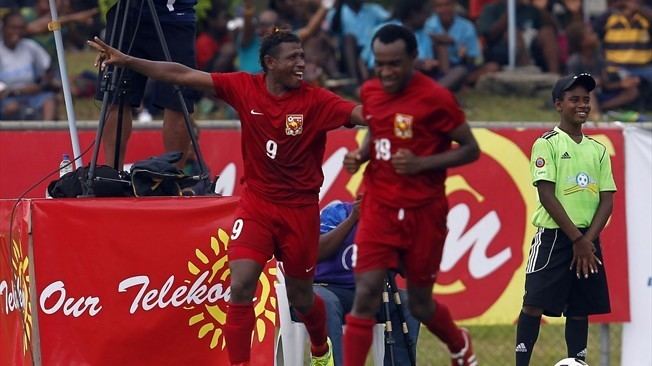
Jack spent most of his career with Papua New Guinean giants Hekari United and retired from that level of football in 2015. Jack represented the Papua New Guinea national team at the 2012 OFC Nations Cup in Solomon Islands. The team were eliminated in the group stage, but Jack managed to score once in the competition.
Kema Jack (left) celebrating a goal in 2012 OFC Nations Cup
The striker played seven editions of the OFC Champions League for Hekari United between 2008 and 2015 – Jack is the Papua New Guinea player with the most appearances in the regional tournament, 30 in all, with only Raymond Gunemba being the Papua New Guinean who scored more goals in the OFC Champions League than Kema Jack.
Certainly the most important edition of the OFC Champions League played by Jack was the in 2009/10, when Hekari became the first non-Australian or New Zealand club to win the competition. Jack played an important role in the competition, scoring six goals in the entire tournament being three in the two final matches against New Zealand club Waitakere United.
Jack in Hekari colours
The regional glory qualified Hekari for an amazing trip to the United Arab Emirates, where they represented the OFC at the FIFA Club World Cup. A 3-0 defeat to United Arab Emirates national champions Al-Wahda did not erase the Port Moresby club’s magnificent achievement. Jack played every 90 minutes of Hekari United’s most important game.
To complete his remarkable career, Kema Jack also won three Golden Boot Awards in the PNG National Soccer League, making him one of the most celebrated Papua New Guinean footballers of his time. Since retiring, Jack has returned to his origins, playing in local amateur football tournaments in Ringo District in the Central Province of Papua New Guinea.
While the Round Cup does not begin, football activities are slowly resuming in Cook Islands as two important events took place there during this month.
The first one was a Senior Coaching Course held at Atiu from 1st to 4th of June that counted on twenty participants. The Course was delivered by Tahiri Elikana – the Development Officer of Cook Islands Football Association (CIFA). Atiu is an island 187 km northeast of Rarotonga – the main island in the archipelago.
The second event is the Cook Islands U-16 Men’s Academy 2020, a development program for players from 14 to 16 years old that is also part of the preparation for National Team duties at youth level. This program is also being delivered by Elikana who is doing great efforts to develop the sport there.
U-16 players training
Cook Islands is likely play the next OFC U-16 Championship that must take place later this year or in the first months of 2021. Oceania Football Center congratulates CIFA and Elikana for their efforts on promoting the sport.
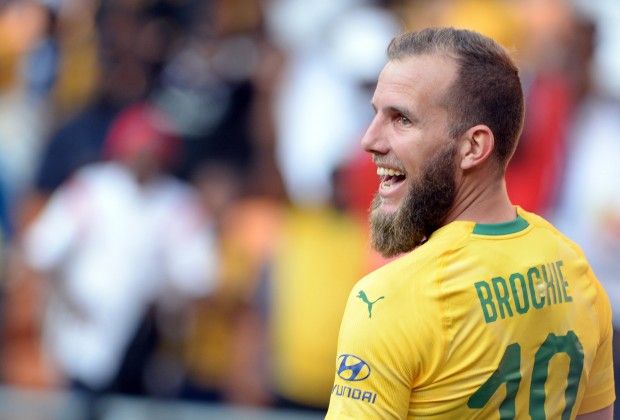
Jeremy Brockie is ready to leave Mamelodi Sundowns. The 32-year-old forward from New Zealand will become a free agent when his contract with Sundowns expire at the end of this month.
According to Kickoff the New Zealand international could be returning to SuperSport United as United’s Chief Executive Officer revealed that they are interested on signing Brockie.
Brockie is ready to leave Mamelodi Sundowns
Brockie spent the 2019-20 season on loan to Maritzburg United. He scored only one goal in fifteen matches for Maritzburg. The All Whites forward is playing in South Africa since 2015.
Samuel Garcia has a long history in football. The former midfielder represented Tahiti in 22 matches and scored two goals for his National Team. He also played four OFC Nations Cup editions and helped his nation to finish 2002 OFC Nations Cup in the third position.
After his retirement, Garcia remained involved with football and now he is one of the most important head coaches in Oceania. He is the current head coach of Tahiti National Football Team and AS Vénus – one of the strongest team from his homeland.
His first big challenge as a coach was five years ago when he managed AS Pirae in 2014-15 OFC Champions League. Garcia’s side did not have a good performance and they were eliminated in the group stage. Later on he was appointed to coach AS Vénus – a team that he knows very well as he played there for many years.
Since then he is building a very successful career leading Vénus by winning Coupe de Polynésie and Ligue 1 VINI – the top-tier of Tahitian football – once each. However his major accomplishment with the team happened this year when they qualifyed to 2020 OFC Champions League knockout stage. Garcia expressed his satisfaction – “We have reached our qualification goal. Auckland City was logically the favourite team in our group by the level of its championship, but we can not be ashamed of our 1-0 defeat against them,” he said.
It is important to remember that 2020 OFC Champions League quarter-finals were scheduled to be played in April but it was postponed due to COVID-19 pandemics. Despite having all eight qualified teams decided, the quarter-finals matches were not drawn yet but Garcia shows optimism – “We have qualified for the quarter-finals and now the objective is advancing to semi-finals even if we have to play outside,” he stated.
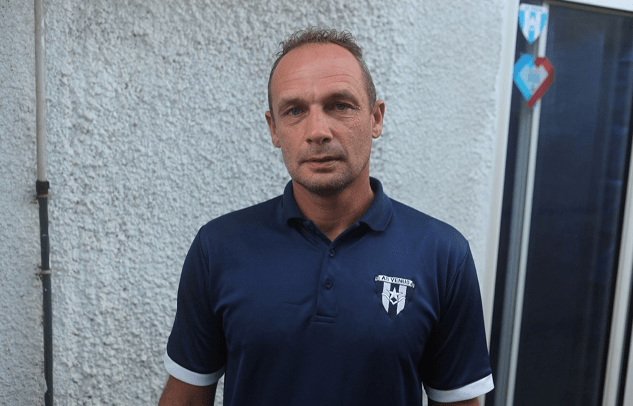
Garcia (in red) in a AS Vénus training session
After winning 2018-19 Ligue 1 VINI, Garcia had his first challenge as Tahiti’s head coach – the 2019 Pacific Games. Tahiti won three out of five matches but it was not enough as they finished the Group B in the third position behind New Caledonia and Fiji.
Tahiti is one of the strongest National Teams in Oceania and the only nation except New Zealand and Australia to win the OFC Nations Cup in 2012. It was surely the biggest moment of Tahitian football and you can read more about it by clicking here. This unprecedented title was a major accomplishment and it helped to boost the football in the French Polynesia – “Financially it must have helped Fédération Tahitienne de Football (FTF) and football in general. Our football needs a big game to progress which is not always easy because we are far away. In addition to progress, it will bring people back to our stadiums. We saw it during the last As Vénus vs Auckland City in Mahina,” said Garcia.
The 45-year-old head coach recently released a 30-men list as Tahiti National Team provisional squad and you can check this list clicking here. The To’a Aito (Tahiti National Team’s nickname) started training this week as part of their preparation for 2022 FIFA World Cup qualifiers. Some known players like talented goalkeeper Moana Pito and 2019-20 Ligue 1 VINI top scorer Sandro Tau are not in this list due to work commitments – “They are not in the list because they decided to put priority on their professional careers. This is a respectable reason because Tahitian football is amateur,” explained Garcia.
As Tahiti is a French territory (part of French Polynesia), FTF holds a partnership with FFF – the French Football Federation – “FFF help in some areas like youth development, the training of educators and the support of club infrastructures. It also allows one Tahitian club to qualify for French Cup each season,” said Garcia.
Every year a football club from Tahiti qualifies for the seventh round of French Cup and AS Vénus was the last club from French Polynesia to play this tournament. They received Racing Besançon from the fifth-tier of French football at Stade Pater in Pirae last year but unfortunately they lost to the French side by 4-1.
As 2019-20 football season was cancelled in and there is no scheduled date for 2020 OFC Champions League resumption, Garcia is having plenty of time to dedicate his time to prepare the National Team. With a strong squad, the head coach will have the opportunity to eternalize his name in the history of Tahitian football.
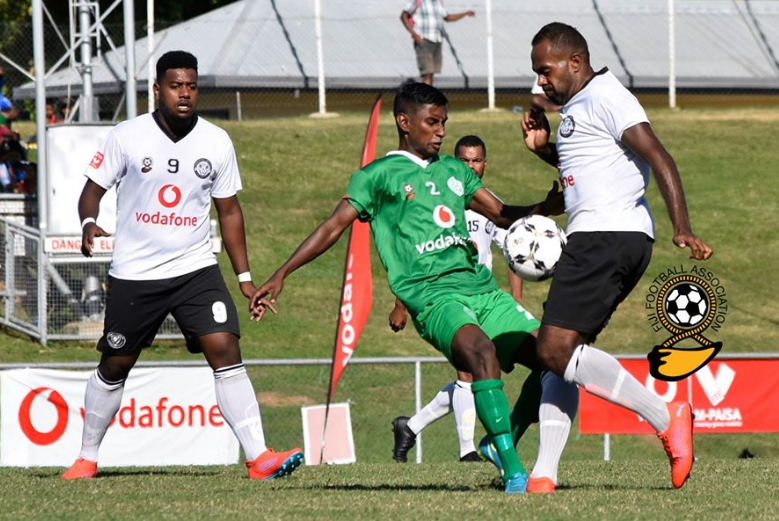
Labasa fans might be in heaven after their team performance in the 2019 season in Fiji – the BabasigaLions won two major tournaments this year, Battle of Giants and the Inter-District Championship, and began 2020 with a convincing win over Ba in the Champion vs Champion series.
Players like Siotame Kubu, Atonio Tuivuna and Akuila Mateisuva were decisive for the good time of Labasa. Despite their good moment only Tuivuna already played for the national team of Fiji. Goalkeeper Mateisuva is an obioval requirement for the Bula Boys, as names like Beniamino Mateinaqara and Simione Tamanisau are getting older and older and their time with the national team could be in the final stages.
Mateisuva represented Fiji in 2019, but at the OFC Futsal Nations Cup where they failed to qualify for the FIFA Futsal World Cup finishing 5th in the tournament. The 28-year-old player is also capped by Fiji in the U20 and U23 youth national teams, but he is still to be properly recognised in the senior national team.
The new head coach of the Bula Boys, Danish and former Papua New Guinea coach Flemming Serritslev, could bring changes to the team that will be battling for a place at the 2022 FIFA World Cup in Qatar. Labasa’s good moment is usually enough to give a chance to some of their key players, notably Akuila Mateusiva. The giant goalkeeper was a rock in the 2019 season and is proving to be the most regular goalkeeper in the Vodafone Premier League.
Labasa fans and the majority of football fans in Fiji are demanding the presence of Mateisuva in the national team – and this is nothing new for the Fijians. The goalkeeper has been a good performer, at least for the past three seasons in Fiji, and he still to be receive a chance in the national team.
Akuila Mateisuva
With the return of football competitions to Fiji next month after the compulsory break due to the COVID-19 pandemic, Mateisuva and his teammates from Labasa hope to recover from their defeats in the first matches of the 2020 edition of the national league. The goalkeeper will want to continue his good form and expect for the national team call- up that he is truly deserving.
Fiji Football Association (FFA) confirmed that the next transfer window in the country will open in July. However the mid-season transfer window is going to be different this year.
According to FFA chief executive officer Mohammed Yusuf the window will be open for only a week – from 1st to 7th July. It was also confirmed that this upcoming transfer period is only for free transfers which means that any player having an ongoing contract with their districts cannot apply for a transfer – “Players on contract will not be allowed to seek transfers if they will be breaching a current contract duly registered,” said Yusuf.
The next window is only for free players. Source: Fiji FA Media
It is important to remember that 2020 Vodafone Premier League – the top-tier of Fijian football – is going to resume in July which means that the window will open before the league’s resumption.








 Oceania Football Center