
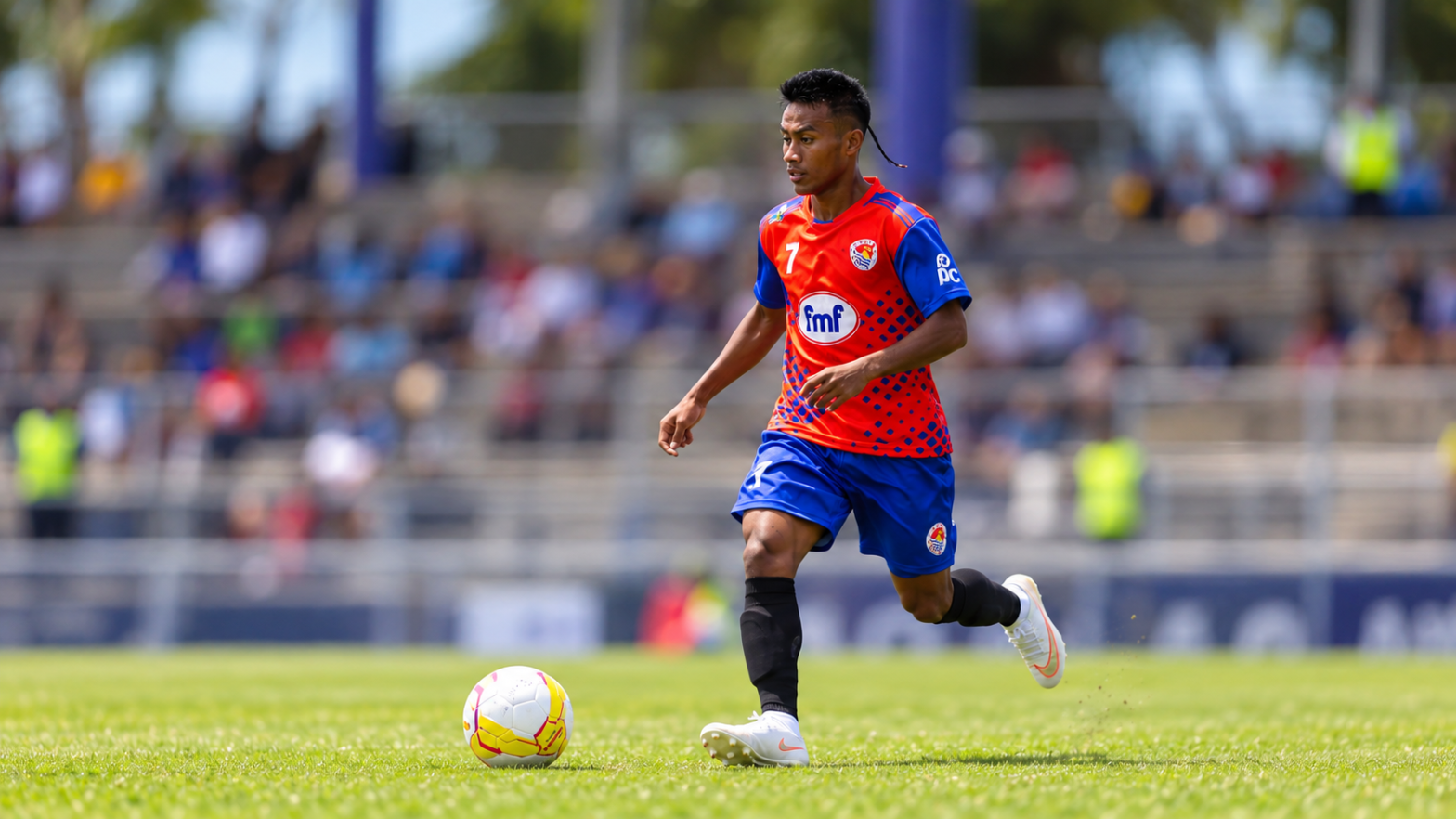
Kiribati’s first match at the FMF Inter-District Championship produced a historic goal, but for Teweia Butibara, the experience in Suva also exposed the enormous difference between the football environment available to many players at home and the conditions they are now encountering in Fiji.
The 27-year-old Butibara scored Kiribati’s first-ever goal at the IDC as Te Itei fought back during their 4-2 defeat to Seaqaqa at HFC Bank Stadium. The result was disappointing for a team that had travelled to Fiji believing it could compete, and Butibara felt Kiribati had opportunities to make considerably more of the match.
“I felt this was our day to win the game. Unfortunately, we missed a lot of chances,” Butibara told Oceania Football Center after the match.
For the attacker, playing against Fijian opposition itself was not completely unfamiliar. Butibara spent time in Fiji while studying at the University of the South Pacific between 2020 and 2022, playing football around Nasinu and representing the USP Laucala campus in inter-tertiary competition. That experience meant the physical nature of the opening IDC encounter was something he already understood.
“The game in Fiji was very good, especially the physical contact. I already knew their style of playing because I joined some clubs in Nasinu when I was here from 2020 to 2022,” he explained.
His teammates, however, arrived with very different experiences. When asked about the situation of football inside Kiribati, Butibara was clear that talent is not the principal problem. Instead, one of the biggest obstacles is something much more basic: the playing surfaces available to footballers at home.
“In Kiribati there are plenty of good players, but the pitch is not good. The pitch that we use to play on is sand,” he said.
That difference became particularly evident once Kiribati stepped onto the grass at HFC Bank Stadium.
“Our teammates were new to playing on a good pitch, and they don’t know how to play on this kind of pitch. They are not used to grass,” Butibara added.
It is an important detail when assessing Kiribati’s first experience in one of Fiji football’s major tournaments. The players are not only being asked to face opponents who train and compete regularly within an organised league structure; some are simultaneously adapting to a playing surface that changes the speed of the ball, movement, control and positioning.
Butibara is one of the members of the squad who already has experience beyond those conditions. He has played in Gisborne, New Zealand, with Thistle Athletic Bobcats, combining football with seasonal employment. He normally operates as a striker or on the left wing and intends to return to Gisborne in November for another period of seasonal work, with the expectation of playing football again while he is there.
His connection with the Bobcats has already produced success. Butibara showed OFCe a photograph from his previous spell with the club and said he hopes to return to the same environment because of his familiarity with the players. Public New Zealand competition records also show him scoring for Thistle Athletic Bobcats, while the Kiribati Broadcasting and Publications Authority previously highlighted his contribution to the Gisborne side.
Back home, Butibara currently represents Dijoren, one of the leading sides in Kiribati. His pathway therefore illustrates something increasingly important for the country: exposure to football abroad can provide individual players with experiences that remain difficult to reproduce domestically.
That difference may become even more important in Kiribati’s second IDC match. Te Itei will next face Nadroga, a district with recent experience competing against Fiji’s leading sides and another demanding test for a team still adapting to its new surroundings.
Butibara is aware that the challenge will increase.
“We will try our best,” he said. “They are stronger than the team we played today.”
Whatever happens in the remaining matches, Kiribati’s IDC participation is already providing information that results alone cannot show. Butibara’s historic goal demonstrated that players from the island nation can make an impact on this stage. His comments also underline how far the development environment at home still has to travel if those players are to receive the same preparation regularly enjoyed by their opponents.
For Kiribati, the experience in Fiji is therefore not simply about competing. It is also an opportunity to discover what needs to change.
Discover more from Oceania Football Center
Subscribe to get the latest posts sent to your email.


2 thoughts on “From sand pitches to IDC history: Teweia Butibara explains Kiribati’s challenge in Fiji”