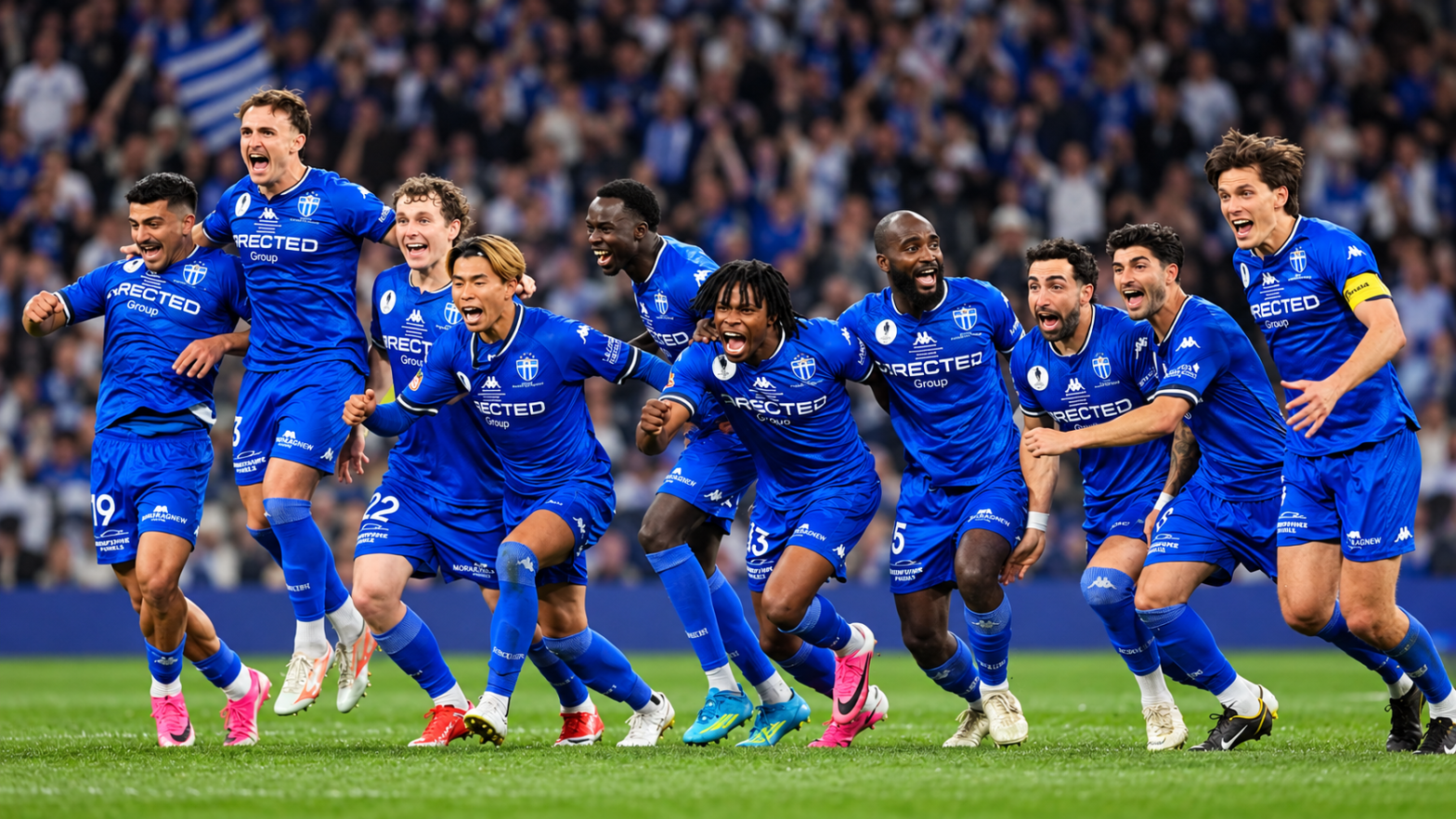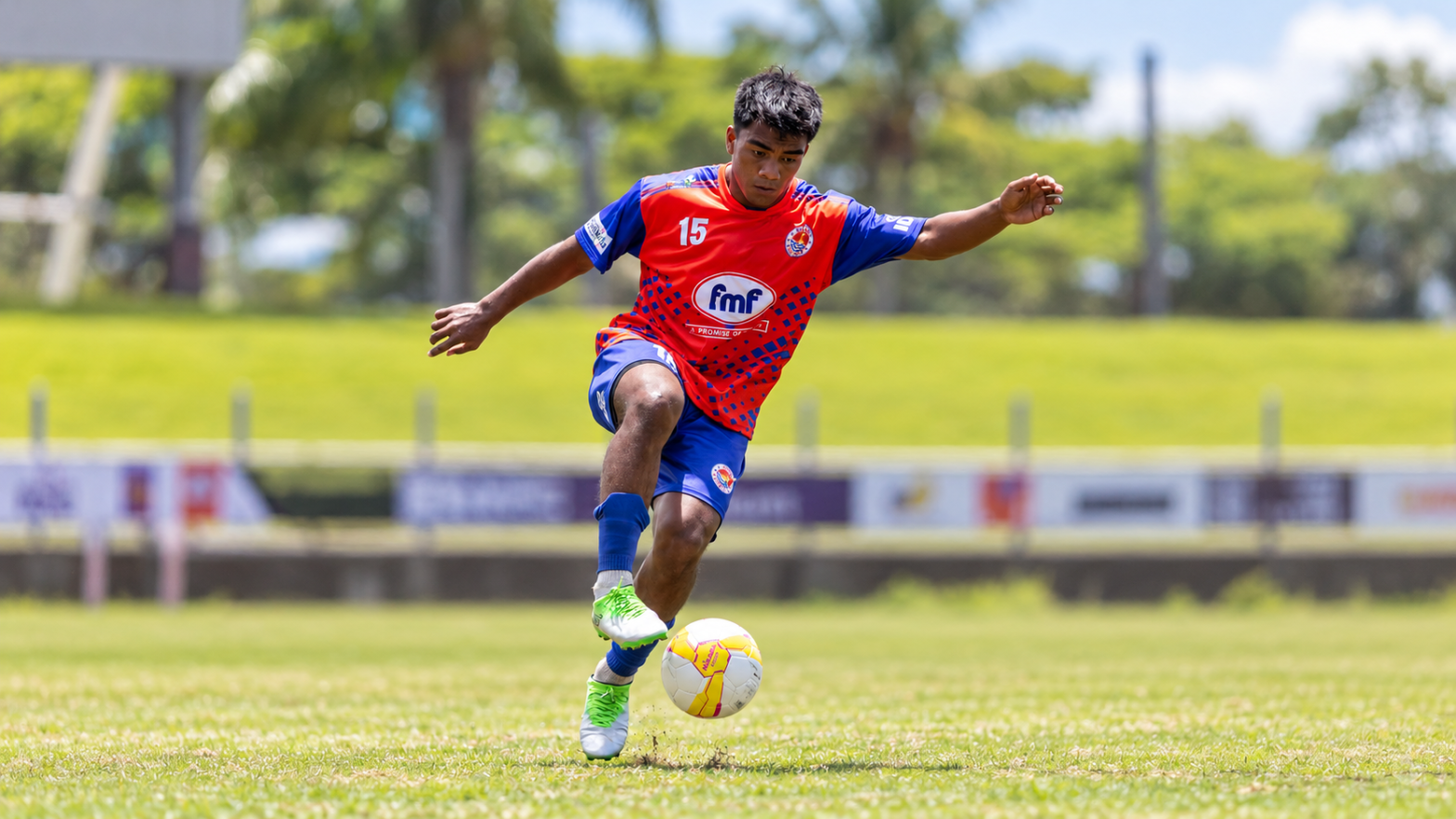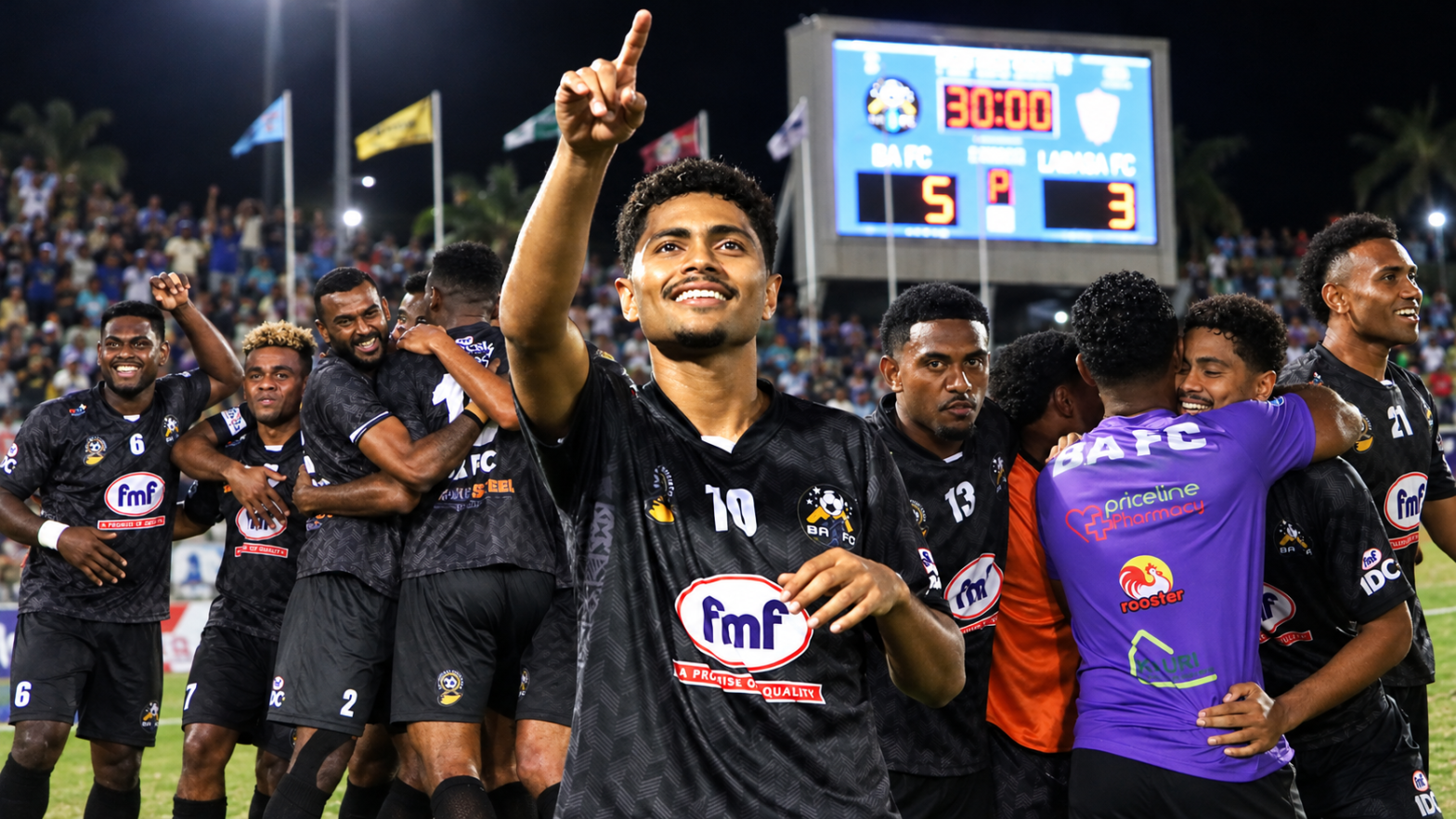
From 47 years without a win to champions: Kiribati thrash Seaqaqa 6-1 to claim historic Fiji IDC title

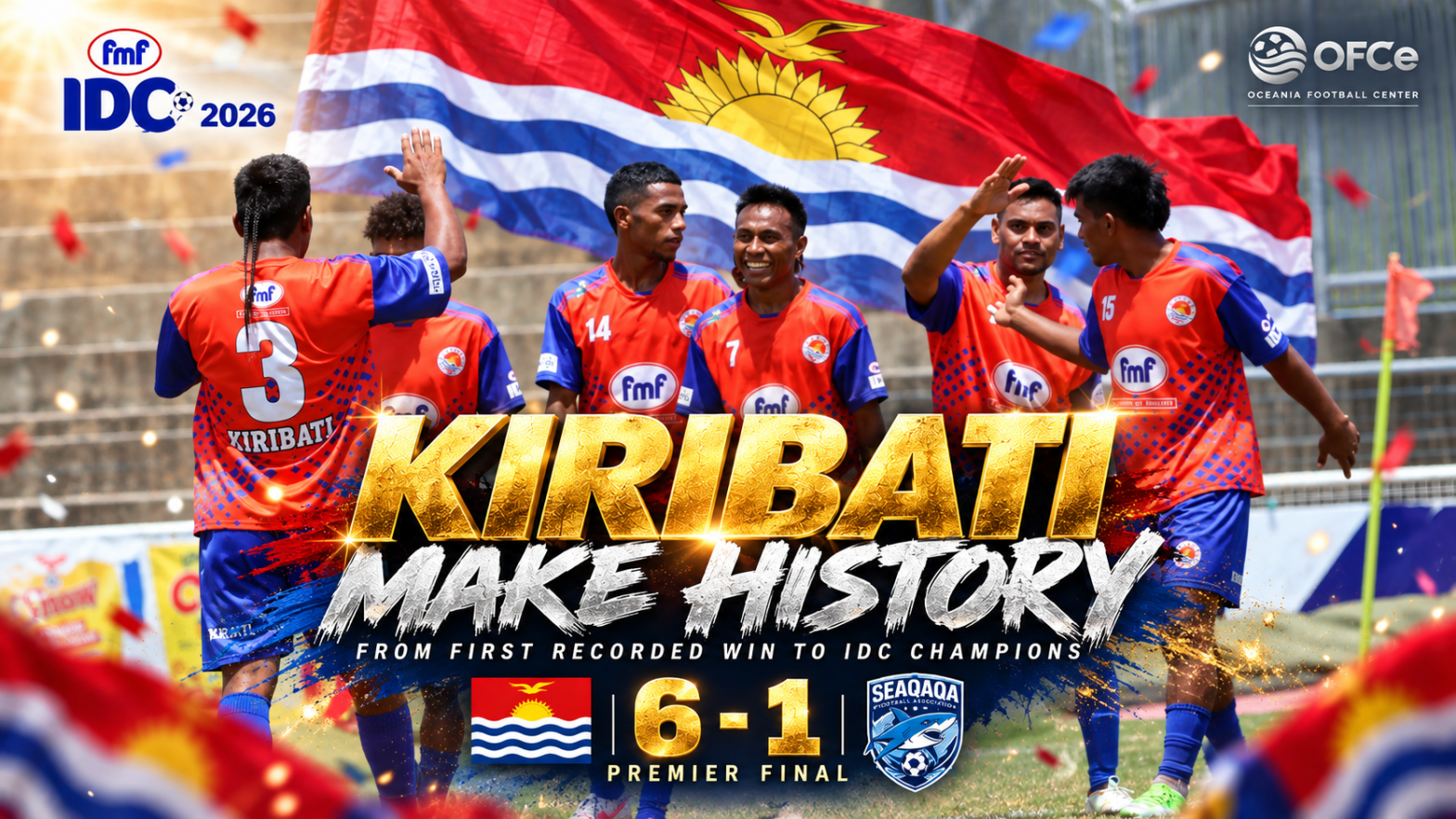
Kiribati have completed one of the most extraordinary campaigns in recent Oceanian football history, defeating Seaqaqa FC 6-1 to win the Premier Division title at the 86th FMF Inter-District Championship on Sunday, October 11. Playing in the tournament for the first time, the Pacific island nation’s senior national team lifted the trophy at HFC Bank Stadium in Suva, just five days after losing 4-2 to the same opposition in their opening match. For a country that had never recorded a victory with its senior national team before this week’s competition, the achievement represents a remarkable transformation.

The final began with Kiribati showing the attacking confidence that had developed throughout the tournament. Nabetari Itiata Ioera opened the scoring in the 26th minute, but Seaqaqa responded almost immediately through Apenisa Dulukobau, who equalised four minutes later. The sides went into half-time level at 1-1, leaving the championship undecided between a Kiribati team chasing an unprecedented title and a northern Fijian district that had already beaten them during the group stage.

The decisive moment arrived in the 59th minute when Dulukobau was shown a red card, reducing Seaqaqa to ten players. Kiribati took full advantage of the dismissal, with Ioera restoring their lead three minutes later. Peter Diehm extended the advantage in the 72nd minute before substitute Kiniore Siu made it 4-1 five minutes later. Bauro Martin Jr added a fifth in the 80th minute, and Diehm completed his double in the 89th to seal an emphatic 6-1 victory. Five goals in the final 28 minutes transformed what had been a closely contested championship decider into an overwhelming triumph.

The result was especially significant considering how Kiribati’s campaign had started. Their opening defeat against Seaqaqa on October 6 exposed defensive weaknesses, and head coach Pine George Holomoana Iosefa acknowledged that his players had struggled with aspects of the opposition’s game. Nevertheless, scoring twice against an established Fijian district provided encouragement that the team could compete at a higher level.

Speaking exclusively to Oceania Football Center after that opening match, Iosefa expressed his surprise at his team’s attacking capabilities.

“We did not expect to score against one of the top teams in Fiji. It was amazing for us to see that we can reach the standard of football in the Pacific region and even go beyond,” the Kiribati coach said.

Only days later, his players had gone considerably further than simply demonstrating they could compete.

Kiribati’s second match produced a result that changed the country’s football history. A 6-0 demolition of Nadroga, inspired by a hat-trick from Bauro Martin Jr, became the first recorded victory achieved by the Kiribati senior national team since its international football history began in 1979. The result also secured qualification for the Premier Division semi-finals, where Kiribati faced Fiji’s Under-17 national team, a squad preparing for the FIFA U-17 World Cup.

Rather than allowing their historic first victory to remain an isolated achievement, Kiribati followed it with another impressive performance. Goals from Peter Diehm, Martin Jr and Nabetari Itiata secured a 3-1 victory over Fiji U-17 at Buckhurst Park, sending the islanders into their first IDC final. There they faced the same Seaqaqa side that had defeated them at the beginning of the competition, providing an opportunity to demonstrate just how much progress they had made.

Across four matches, Kiribati scored 17 goals, winning three consecutive games after their opening defeat. Martin Jr emerged as one of the tournament’s most influential players, scoring six goals during the campaign, including his hat-trick against Nadroga and another important contribution in the final. Diehm also played a decisive role in the knockout stages, finding the net against Fiji U-17 before scoring twice in the championship decider.

The scale of the achievement becomes clearer when considering Kiribati’s football history. Before the IDC, the national team had played just 11 recorded senior international matches, all at editions of the Pacific Games or South Pacific Games between 1979 and 2011, without registering a victory. Its last appearance at that level had come 15 years earlier in New Caledonia. Kiribati are also not FIFA members and remain associate members of the Oceania Football Confederation, limiting their access to international tournaments and regular high-level competition.

There is an important distinction: Kiribati’s victories in Fiji do not count as official senior international wins because they came against Fijian district clubs and a national youth selection. Nevertheless, the IDC has provided the senior national team with its first documented competitive victories and now a championship trophy, milestones that remain significant regardless of their classification in international records.

The achievement also reflects the obstacles faced by Kiribati footballers at home. The country has limited suitable football infrastructure, and many players develop their skills on sandy surfaces rather than conventional grass pitches. Earlier in the tournament, Kiribati attacker and team captain Teweia Butibara explained the situation to Oceania Football Center, emphasising that the lack of proper facilities remains a major difficulty for football development.

“In Kiribati there are plenty of good players, but the pitch is not good. The pitch that we use to play on is sand,” Butibara said.

Despite those limitations, a 19-player squad assembled by the Kiribati Islands Football Federation has demonstrated that the country possesses players capable of competing successfully beyond its borders. Their performances also provide encouragement for the federation’s ambition of securing full OFC membership and eventually joining FIFA, although those objectives will depend on continued institutional and football development.

Fiji’s decision to invite Kiribati into one of its oldest and most established domestic tournaments has therefore produced an outcome extending well beyond the Premier Division championship. It has given players who rarely experience sustained international competition the opportunity to compete, improve and ultimately win silverware against opposition from a stronger domestic football environment.

The historical connection between the two countries makes the occasion particularly meaningful. Kiribati’s first recorded senior international was against Fiji at the 1979 South Pacific Games. Forty-seven years later, it is again on Fijian soil that the country’s national team has experienced a defining moment in its development.

Kiribati arrived at the IDC hoping to measure their standard against Fijian football. They leave Suva as champions, having overturned an opening defeat, recorded three successive victories and scored six goals in a final. For a national team that had spent decades without a recorded win, their first appearance at the tournament has ended with a trophy and a powerful demonstration of what their footballers can achieve when given the opportunity to compete.
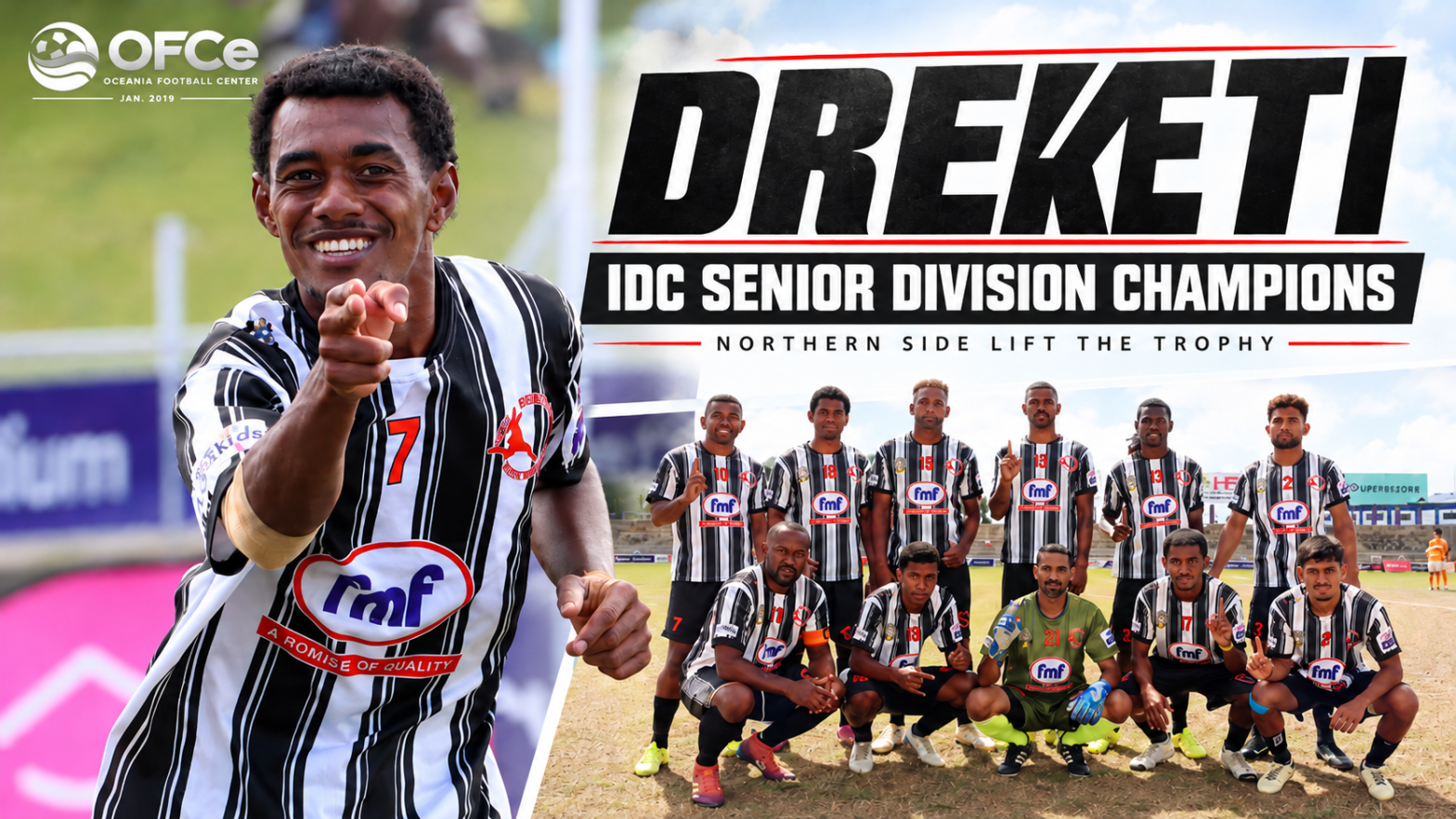
Dreketi end 17-year wait for IDC Senior Division title with victory over Bua

Dreketi FC have been crowned champions of the 2026 FMF Inter-District Championship Senior Division after defeating fellow Vanua Levu side Bua FC 1-0 in Sunday’s final at HFC Bank Stadium in Suva. A second-half goal from Viliame Koroikarawa secured the trophy for the Northern district, ending a 17-year wait since their previous triumph in 2009.

The final remained goalless throughout the opening 45 minutes, with both teams looking to claim one of Fiji’s traditional football honours. Dreketi eventually broke the deadlock in the 68th minute when Koroikarawa found the net following a move through midfield. Bua pushed for an equaliser but could not break through, allowing Dreketi to celebrate their first IDC Senior Division title since 2009.

Coached by Ravinesh Singh, Dreketi entered the final having produced an impressive campaign. They opened the group stage with a 3-1 victory over Lami before defeating Bua by the same scoreline. A place in the semi-finals followed, where they overcame Taveuni 3-0 to advance to the championship decider.

The victory also carries particular significance after Dreketi came close to winning the competition two years earlier. In the 2024 final, they were beaten by Rakiraki in a dramatic penalty shootout, losing 8-7 after a goalless encounter. This time, Dreketi returned to the final and completed the job, adding another chapter to the district’s football history.

Following the match, Singh praised his players for following the team’s game plan in a difficult final. The coach highlighted the importance of the achievement after 17 years without the title and acknowledged the contribution of the club’s supporters and sponsors, including Shah Group of Companies.

The triumph also brought Dreketi a FJ$3,500 winners’ prize, while runners-up Bua received FJ$1,500. For Dreketi, however, the greatest reward was the opportunity to take the Senior Division trophy back to Vanua Levu after nearly two decades.

No warm-up, no fear: Jovilisi Borisi reflects on his penalty heroics as Navua prepare for Ba final

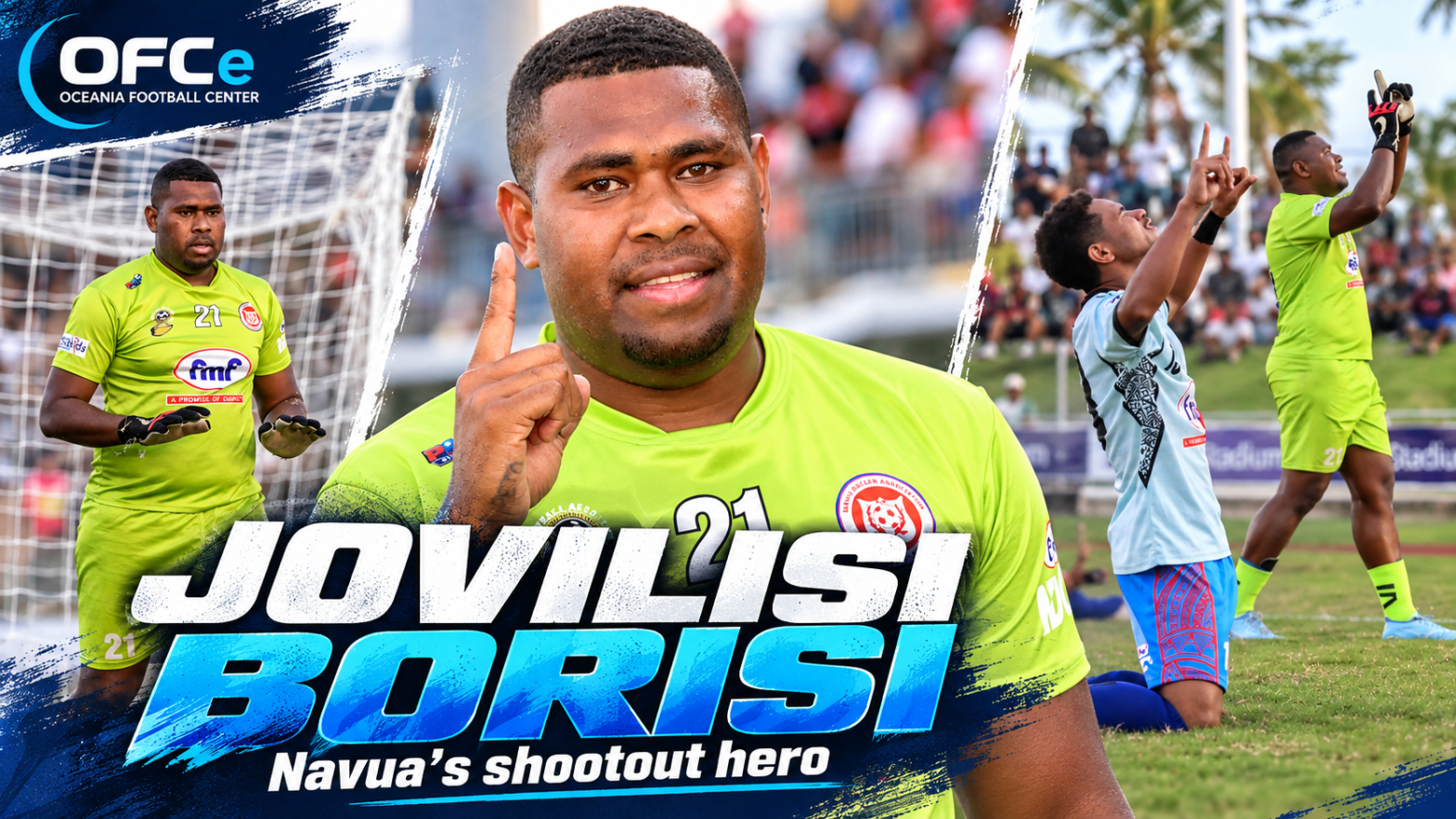
Jovilisi Borisi was not expecting to be the centre of attention when Navua faced defending champions Rewa in the semi-finals of the 2026 FMF Inter-District Championship. The reserve goalkeeper had not even warmed up before coach Rodicks Singh called him into action specifically for the penalty shootout. Minutes later, his two saves had helped Navua secure a place in Sunday’s final against Ba.

After 120 goalless minutes at HFC Bank Stadium in Suva, Singh decided to replace starting goalkeeper Tevita Ravia with Borisi for the shootout – before the end of the extra-time in time for the goalkeeper to take part of the decisive shots. The gamble paid off as Borisi denied Scott Wara and Semi Nabenu, helping Navua win 4-1 on penalties and eliminate the defending champions.

Speaking exclusively to Oceania Football Center (OFCe), Borisi revealed that he had entered the decisive moment without any physical preparation on the sidelines, but with the support of his teammates.

“I thank the boys for believing in me. Although I never went for a warm-up, they still believed in me,” Borisi told OFCe, also thanking God for His protection and blessings.

Despite becoming one of the main figures in Navua’s remarkable semi-final victory, the goalkeeper does not expect his performance to change his position in the squad.

“I’ll still be in the reserves, and nothing has changed,” he said.

His response reflects the unusual circumstances of his contribution. Borisi had spent the entire match watching from the bench before being trusted with one of the most demanding responsibilities a goalkeeper can face. With Navua’s place in the final at stake, he delivered precisely what his coach had hoped for.

Asked whether he would be prepared to repeat the role if necessary, Borisi gave a straightforward answer: “Sure.”

Navua now face Ba in Sunday’s championship decider, a familiar opponent who defeated them in the Fiji FACT final earlier this season. Borisi also featured in that shootout, saving one penalty, but was unable to prevent Ba from claiming the trophy.

The upcoming encounter provides another opportunity for Navua to overcome the Men in Black, who have already enjoyed considerable success in Fiji’s domestic competitions this year.

Borisi remains confident that his team can challenge Ba for the title, expressing his belief that Navua can produce another memorable result.

“We’re believing in this. God will do miracles on the ground,” he said.

The goalkeeper also had a message for Navua supporters ahead of the final, encouraging them to help the team through one last challenge.

“Just come out in numbers and support the boys, and keep believing in the boys,” Borisi concluded.

Whether he starts on the bench or is called upon again, Borisi has already demonstrated the value of having a goalkeeper ready to make a difference when his opportunity arrives. On Sunday, Navua will hope that the same collective confidence that carried them past Rewa can help them go one step further against Ba.

OFC Pro League side South Melbourne make Australian football history with Australia Cup triumph

South Melbourne FC have made Australian football history after becoming the first club from outside the A-League to win the Australia Cup, defeating Melbourne Victory 4-3 on penalties following a dramatic 1-1 draw at AAMI Park on Saturday night. The achievement also represents a significant moment for the OFC Pro League, with the Melbourne-based club having strengthened its squad during the season by recruiting players from two of its fellow Oceania competitors.

In front of 29,911 spectators, South Melbourne overcame an A-League opponent with considerably greater experience at the country’s highest domestic level. After a goalless 90 minutes, Denis Genreau put Melbourne Victory ahead early in extra time, seemingly placing the trophy within reach. However, Max Mikkola equalised in the 117th minute, forcing a penalty shootout in which goalkeeper Javier López emerged as the decisive figure. The Spaniard denied Harrison Sawyer before Victory captain Jason Davidson missed the final spot-kick, confirming a historic victory for South Melbourne.

For coach Sinisa Cohadzic and his players, the result completed an extraordinary cup campaign and added another chapter to the history of one of Australia’s most traditional football clubs. South Melbourne, four-time national champions during the former National Soccer League era, have spent more than two decades outside the country’s top division. Their Australia Cup success is therefore particularly meaningful, demonstrating that a club competing outside the A-League can still challenge and defeat its professional counterparts for a major national trophy.

The OFC Pro League connection

South Melbourne’s participation in the inaugural OFC Pro League provided an important dimension to its 2026 season. Competing against clubs from across Oceania, the Australian side was exposed to different opponents and players, with those encounters eventually influencing its recruitment strategy for the remainder of the domestic campaign.

Two players arrived directly from fellow OFC Pro League participants in July: defender Hassan Ramazani, signed on loan from Vanuatu United, and David Yoo, recruited from New Zealand outfit South Island United. Both transfers illustrated how the new regional competition could create opportunities for player movement between clubs that would otherwise have had limited competitive contact.

Both players also featured in the historic Australia Cup final against Melbourne Victory. Yoo was included in South Melbourne’s starting eleven before being substituted, while Ramazani was introduced from the bench. Their involvement meant that two players recruited from fellow OFC Pro League clubs were directly part of South Melbourne’s landmark victory.

Ramazani had been among the standout defenders in the OFC Pro League, earning selection in the competition’s Team of the Season. His performances against South Melbourne attracted the attention of the Australian club, which subsequently secured his services for its domestic commitments, including the Australia Cup.

The defender also made a tangible contribution to South Melbourne’s journey to the final. During the 3-1 semi-final victory over Lions FC, Ramazani supplied the cross for Bul Juach to score the goal that put South Melbourne ahead. Juach eventually completed a hat-trick, sending the club into its first Australia Cup final.

Yoo’s arrival from South Island United further strengthened the connection between South Melbourne and the wider Oceania football environment. His move, alongside Ramazani’s, showed how the OFC Pro League could serve as a platform for identifying and recruiting players across the region, extending its influence beyond the matches played within the competition itself.

South Melbourne also recruited Bul Juach from Canadian club Pacific FC and Paulo Retre from Wellington Phoenix during the same transfer window, reinforcing a squad that was competing across several tournaments. The combination of established players and new arrivals helped the club maintain its ambitions on multiple fronts.

A historic achievement with significance beyond Australia

South Melbourne’s Australia Cup victory carries particular significance at a time when the club is pursuing a more prominent position in Australian professional football. Having won the inaugural Australian Championship in 2025, South Melbourne subsequently joined the OFC Pro League as part of its transition towards a professional football environment.

The club has also publicly expressed its intention to explore a future A-League licence, making its latest national success another important development in that ambition.

For the OFC Pro League, South Melbourne’s achievement offers an early example of how participation in the competition can intersect with success elsewhere. The Australian club did not win the Australia Cup solely because of its involvement in Oceania’s new professional competition, but its recruitment of Ramazani and Yoo demonstrates a practical benefit of the relationships established through regional football.

With South Melbourne now holding the Australia Cup trophy, its success provides a notable achievement for one of the OFC Pro League’s participating clubs and highlights the potential for stronger sporting connections between Australia, New Zealand and the Pacific Islands.

From Butaritari to IDC history: meet Bauro Martin Jr, Kiribati’s 19-year-old goalscoring sensation

At just 19 years old, Bauro Martin Jr has become one of the most remarkable stories of the 2026 FMF Inter-District Championship. The Kiribati forward has scored five goals in three matches, helping his country secure its first recorded senior football victory and reach the Premier Division final in its debut appearance at the traditional Fijian tournament.

For a player who began representing his home island of Butaritari only three years ago, the achievement marks an extraordinary step forward. Yet Martin’s emergence has not happened overnight. Behind his impressive performances in Suva lies a journey through island football, domestic competitions and an earlier international futsal tournament that already demonstrated his goalscoring potential.

According to information shared exclusively with Oceania Football Center by Kiribati Islands Football Federation media and marketing officer Kamaraia Namina, Martin has played football since childhood and first represented Butaritari at the age of 16 during the 2023 Te Runga Games.

The tournament brings together teams representing different islands and communities across Kiribati and remains one of the country’s most important domestic sporting events.

Butaritari enjoyed a strong campaign in 2023, finishing unbeaten at the top of their group with four victories and one draw before advancing to the quarter-finals, where they were narrowly eliminated 4-3 by Betio Town Council.

For Martin, the experience provided an opportunity to compete beyond his local football environment while representing the island where he grew up.

Following the tournament, he joined Tekinati FC, a club based in Butaritari, and continued developing his abilities as a striker.

Tekinati have been among the competitive sides in Kiribati’s domestic football structure, participating in the national Te Runga tournament alongside clubs from Tarawa and other islands. The club finished top of its group during the 2025 edition, illustrating the strength of football being developed outside the capital.

Martin’s progression also highlights an important aspect of the current Kiribati national team. Although much of the country’s organised football activity is concentrated around Tarawa, players from the outer islands remain a valuable part of the national selection.

Namina explained that Martin was initially selected alongside two other Tekinati teammates for Kiribati’s trip to Fiji. However, one of those players, a defender, was unable to travel after taking up seasonal employment in New Zealand.

Consequently, only two of the three selected players from the club ultimately joined the delegation.

The circumstances reflect some of the challenges faced by footballers in Kiribati, where opportunities to pursue employment abroad can overlap with sporting commitments and participation in international tournaments.

For Martin, however, the opportunity to represent his country in Fiji has produced a breakthrough.

His IDC campaign began against Seaqaqa on October 6, when Kiribati suffered a 4-2 defeat in their opening Premier Division fixture. Despite the result, the team showed encouraging attacking qualities, with Teweia Butibara scoring their first goal of the tournament before Martin added another in the second half.

Two days later, Martin delivered the performance that placed his name firmly in Kiribati football history.

The young striker scored a hat-trick as Kiribati defeated Nadroga 6-0, securing the first recorded victory achieved by the country’s senior men’s national football team since its initial appearance in international competition in 1979.

The result carried an important distinction. Because Nadroga are a Fijian district club rather than a national team, the victory does not count as an official senior international win. Nevertheless, it represented an unprecedented sporting achievement for the Kiribati national selection.

Martin was at the centre of it.

His three goals took his tournament tally to four, already surpassing the number of goals scored by any identified Kiribati player during the country’s documented history of senior international football.

The striker was not finished.

In Saturday’s Premier Division semi-final against Fiji U17, Martin found the net once again as Kiribati secured an impressive 3-1 victory over a national youth side preparing for the FIFA U-17 World Cup.

Peter Diehm and Nabetari Itiata also scored, with Kiribati producing a disciplined performance to reach Sunday’s final against Seaqaqa.

Martin’s fifth goal made him Kiribati’s leading scorer at the IDC and added another achievement to a campaign that has attracted attention across the Pacific.

When asked about the significance of the youngster’s goalscoring record, Namina described a player who has remained modest despite his growing reputation.

Rather than celebrating his individual statistics, Martin reportedly responded with a smile.

There is, however, another remarkable chapter in his football journey that predates the IDC.

In July 2024, Martin represented Kiribati B at the inaugural Outrigger Challenge Cup, an international futsal tournament held in Majuro, Marshall Islands.

Although the competition was played under futsal rules rather than traditional eleven-a-side football, it provided an early indication of his attacking ability outside Kiribati.

Martin scored five goals in a 9-2 victory over Marshall Islands B during the group stage and another five in a 15-1 win against the Federated States of Micronesia in the third-place match.

His ten goals across those two encounters demonstrated that the teenager already possessed considerable finishing ability, even before his emergence as one of the leading players in Kiribati’s IDC campaign.

The distinction between the two achievements remains important. His goals in the Marshall Islands came in futsal, while his five goals in Fiji have been scored in eleven-a-side football against district clubs and a national youth team.

Neither set of statistics should be confused with official senior international goals, but together they provide evidence of a young player capable of finding the net in different competitive environments.

His progress is particularly encouraging for a country that continues to face substantial limitations in football infrastructure.

Kiribati is not a FIFA member, and its senior national team has historically had few opportunities to compete outside the country. Players also contend with limited access to suitable grass pitches, making the transition to organised competitions abroad especially challenging.

Despite those obstacles, Martin and his teammates have transformed their IDC participation into an unexpected success.

After losing their opening match against Seaqaqa, Kiribati recovered to defeat Nadroga and Fiji U17, scoring nine goals across those two victories and securing a place in the Premier Division final.

For a team that arrived in Fiji hoping to gain valuable competitive experience, the possibility of returning home with a trophy represents an extraordinary outcome.

Their final opponents will be familiar.

Seaqaqa, who defeated Kiribati 4-2 in the opening match, advanced after beating Tavua 3-1 in Saturday’s other semi-final. The two sides will meet again at HFC Bank Stadium in Suva on Sunday, October 11, with kick-off scheduled for midday.

Martin will enter that encounter as one of the key attacking players in the Kiribati squad, carrying the confidence of five goals in three matches.

Regardless of the result, his emergence has already provided an important example of the football talent being developed across Kiribati’s outer islands.

From representing Butaritari at 16 to scoring goals in Fiji at 19, Martin’s journey illustrates how quickly opportunities can change the direction of a young footballer’s career.

And with an entire country following Kiribati’s historic campaign, the striker from Butaritari now has the chance to add another chapter to an extraordinary week.

IDC: Ba survive Labasa penalty drama to set up Navua rematch and keep historic clean sweep alive

Ba are just one victory away from completing an extraordinary sweep of Fiji’s four major domestic football titles after surviving a dramatic penalty shootout against Labasa in the 2026 FMF Inter-District Championship semi-finals. The Men in Black were held to a 1-1 draw after extra time at HFC Bank Stadium in Suva on Saturday, before goalkeeper Misiwani Nairube played a decisive role in securing their place in Sunday’s grand final against Navua.

Solomon Islands international John Orobulu gave Ba the lead during the first half, continuing his outstanding scoring form throughout the competition. However, veteran Labasa forward Christopher Wasasala brought the Babasiga Lions level, ensuring that one of Fiji football’s traditional rivalries would remain undecided until the penalty shootout.

The match carried enormous significance for both districts. Ba arrived in the semi-finals having already captured the Extra Premier League, Fiji FACT and Battle of the Giants titles in 2026, putting Ravinesh Kumar’s side in a position to achieve something unprecedented under Fiji’s modern domestic competition format.

Labasa, meanwhile, were determined to prevent their rivals from extending that dominance and reach another major tournament final after overcoming a difficult group-stage campaign.

Ba had finished unbeaten at the top of Group B, collecting seven points from victories over Lautoka and Nadi and a 2-2 draw against Navua. Labasa qualified as runners-up in Group A, having beaten Suva and Nasinu but suffered a heavy 3-0 defeat against defending champions Rewa.

The Men in Black made the better start in front of goal, with Orobulu finding the breakthrough before half-time.

The Solomon Islander had already scored three times in the group stage, including a double against Nadi, and his latest contribution took his tally to four goals at the 2026 IDC. Having helped Rewa win last year’s championship, Orobulu is now pursuing the same trophy with Ba.

His goal placed Labasa under pressure, but the Babasiga Lions once again demonstrated the determination that had carried them into the knockout stage.

Wasasala, who had already been instrumental in Labasa’s opening victory over Suva, produced the equaliser to bring the northerners back into contention.

The experienced forward has repeatedly proved his importance in decisive tournament moments. His spectacular late goal against Suva secured Labasa’s first three points of the competition, and his intervention against Ba kept their hopes of reaching the final alive.

With neither side able to find another breakthrough during the remainder of the contest, the match proceeded to a penalty shootout.

Ba initially found themselves in difficulty when Penisoni Tirau failed to convert their opening attempt, giving Labasa an early opportunity to take control.

However, the Babasiga Lions were unable to capitalise.

Misiwani Nairube produced a crucial save to deny Lekima Gonerau, while another Labasa penalty struck the crossbar, allowing Ba to recover from their early setback.

The sequence highlighted the fine margins separating the two teams after a physically demanding encounter. With both sides having fought through extra time, the contest ultimately came down to which players could maintain their composure from the penalty spot.

Nabil Begg eventually delivered the decisive moment, converting the winning penalty to confirm Ba’s passage into the final and bring Labasa’s campaign to an end.

For Nairube, his save represented another important contribution in a season dominated by Ba’s success across Fiji’s domestic competitions. His intervention helped preserve the club’s ambition of adding a fourth major trophy to an already remarkable collection.

The result also extended Ba’s recent dominance over Labasa in knockout football.

The two districts met in the Fiji FACT semi-finals in June, when Etonia Dogalau scored during extra time to secure a 1-0 victory for the Men in Black at Subrail Park. That result eliminated the defending champions from the competition and allowed Ba to progress towards their first Fiji FACT title in 16 years.

Saturday’s encounter was considerably tighter, but the outcome was ultimately the same.

Labasa had opportunities to challenge Ba’s ambitions and fought back after conceding the opening goal, yet the Babasiga Lions were unable to convert their penalty shootout chances when the match reached its decisive stage.

For Ba, the victory creates another opportunity to make history.

Kumar’s side have already completed a domestic treble, winning the league championship, Fiji FACT and Battle of the Giants in the same season. The IDC is the only remaining major domestic title needed to complete a remarkable clean sweep.

Their final opponents will be familiar.

Navua eliminated defending champions Rewa earlier on Saturday, winning 4-1 on penalties following a goalless draw after extra time. Substitute goalkeeper Jovilisi Borisi emerged as the hero with saves against Scott Wara and Semi Nabenu before Apolosi Seru converted the decisive kick.

The outcome sets up a repeat of the 2026 Fiji FACT final, when Ba defeated Navua 3-1 on penalties after 120 scoreless minutes at Subrail Park.

That meeting ended Ba’s long wait for the Fiji FACT trophy, but Sunday’s encounter will carry an even greater prize for the Men in Black.

The two teams have already met during this IDC, sharing a dramatic 2-2 draw in the group stage. Ba established a two-goal advantage through Begg and Orobulu before Navua fought back, with captain Peniame Drova scoring a late equaliser.

That result demonstrated Navua’s ability to challenge Ba, while their elimination of Rewa in the semi-finals has reinforced their credentials as serious contenders for the championship.

Both finalists will also enter Sunday’s decisive match after 120 minutes of football and the pressure of a penalty shootout, leaving limited time for recovery.

For Navua, victory would represent another major achievement after eliminating the defending champions. For Ba, it would complete one of the most remarkable seasons in the history of Fijian domestic football.

The 2026 IDC Super Premier Division final is scheduled for Sunday, October 11, at 3pm at HFC Bank Stadium in Suva.

Ba have already claimed three of Fiji’s biggest prizes this season. After surviving Labasa’s resistance and another dramatic shootout, the Men in Black now have one final obstacle standing between them and an historic fourth title.

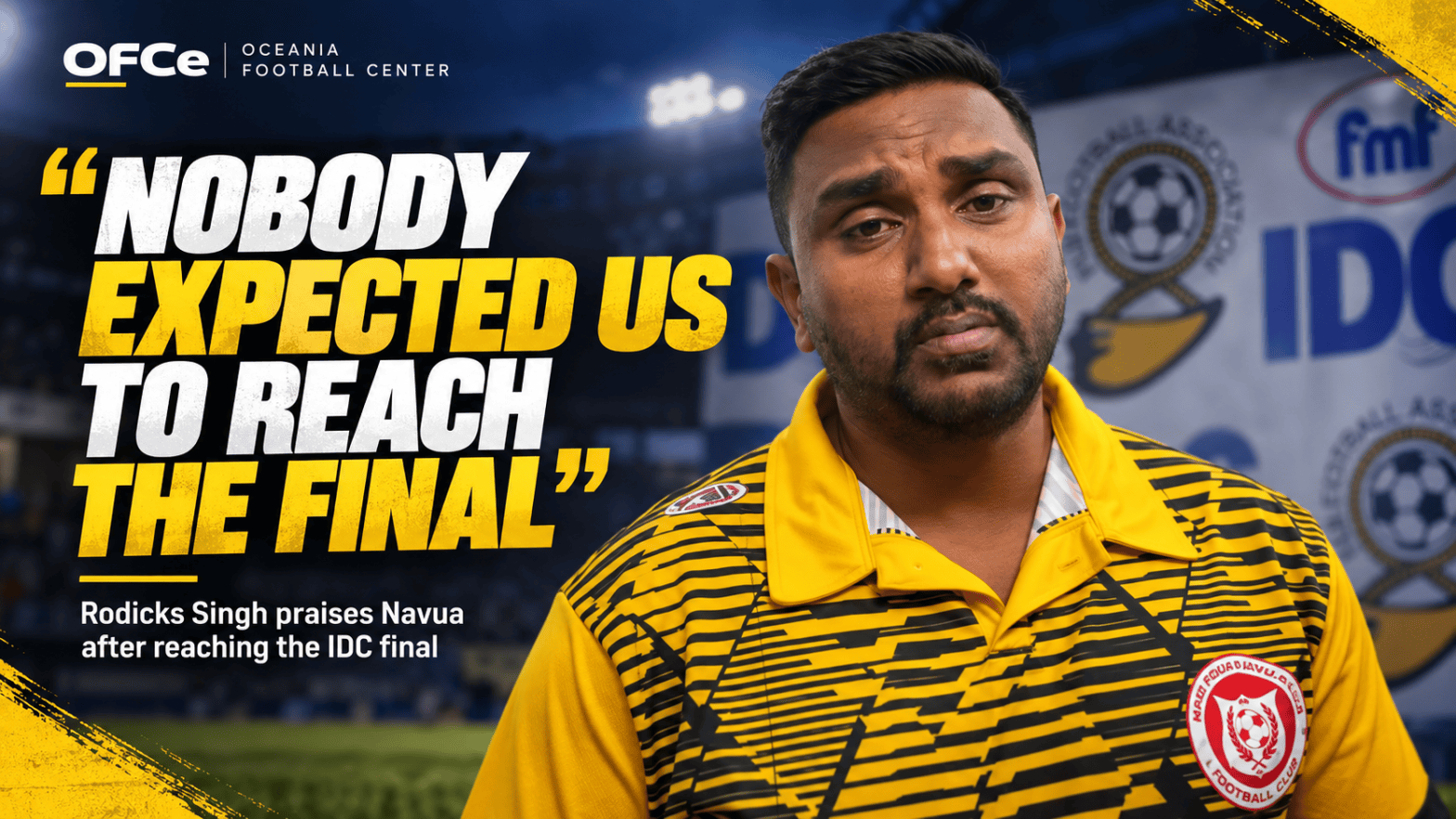
“Nobody expected us to reach the final”: Navua coach Rodicks Singh praises his players after stunning Rewa

Navua FC head coach Rodicks Singh has praised his players for overcoming the absence of several important squad members to reach the final of the 2026 FMF Inter-District Championship (IDC). Speaking exclusively to Oceania Football Center following Saturday’s dramatic victory over defending champions Rewa, Singh admitted that few people expected his team to make it this far, but credited the players’ belief and determination for their remarkable campaign.

Navua eliminated Rewa 4-1 on penalties after a goalless draw across 120 minutes at the HFC Bank Stadium in Suva. The result was particularly impressive considering the players unavailable to Singh, including William Komasi, Jack Junior Ani, Simione Damuni, Sunny Deol and Thomas Dunn. The latter two were suspended after accumulating yellow cards during the group stage, while Solomon Islands forward Junior Jack had already been ruled out of the tournament due to a family commitment.

“First of all, I would like to thank God Almighty for this victory,” Singh told OFCe. The Navua coach acknowledged the difficulty of facing a strong Rewa side without so many established players, but was particularly pleased with those who stepped into the team and delivered when their opportunity arrived. He praised their consistency against the defending champions and their determination to keep pushing until the end.

Rewa entered the semifinal as one of the tournament’s strongest teams, having finished unbeaten at the top of Group A. However, Navua managed to contain their opponents throughout the match before the contest was decided from the penalty spot. Goalkeeper Jovilisi Borisi, introduced specifically for the shootout, proved decisive by denying Scott Wara and Semi Nabenu, while Vinal Prasad, Monit Chand, Walter Leoru and Apolosi Seru converted their attempts to send Navua into the final.

Despite the celebrations, Singh acknowledged just how unexpected Navua’s progress had been.

“I think nobody expected us to reach the final,” he said. “The boys believed in themselves, and they believed in me.”

The coach also expressed his gratitude to the people who continued supporting the team, particularly sponsors Vantex Solutions and Umesh, as well as Navua president Rajeev Prasad and the club’s officials. Their backing has been especially important during a season in which Navua experienced both disappointment and success, including an early elimination from the Battle of the Giants and an appearance in the Fiji FACT final, where they lost to Ba on penalties.

Navua’s IDC campaign has demonstrated their ability to compete with Fiji’s leading districts. They opened the tournament with a 3-0 victory over Nadi, recovered from a two-goal deficit to draw 2-2 with Ba and secured qualification with a goalless draw against Lautoka. Their semifinal victory over Rewa has now given them another opportunity to challenge for a major domestic trophy.

Singh, however, is determined to ensure that the excitement of reaching the final does not distract his players from the task ahead.

“For now, we will remain humble and focus on the final, whoever we face,” he said.

Navua will return to the HFC Bank Stadium on Sunday, October 11, for the IDC Super Premier Division final, scheduled for 3pm, against the winner of the semifinal between Ba and Labasa. After reaching two major tournament finals in the same season, Singh and his players now have another opportunity to turn their resilience into silverware.

Football Ferns’ Panama opener cancelled after powerful earthquake disrupts World Cup preparations

New Zealand’s Football Ferns have seen their first international friendly against Panama cancelled following a powerful 7.7-magnitude earthquake that struck the Central American country on Friday, October 9. Panamanian football authorities confirmed that Saturday’s match at Estadio Rommel Fernández Gutiérrez would not go ahead, prioritising the safety of players, staff and spectators as the country assesses the damage caused by the earthquake and subsequent aftershocks.

New Zealand Football has confirmed that every member of the visiting squad and coaching staff is safe. The federation remains in contact with local authorities and match organisers as preparations continue for the second international, which is still scheduled for Tuesday, October 13, at 7:30pm local time.

The decision to cancel the opening encounter was announced jointly by the Panamanian Football Federation (FPF) and the country’s national sports authority, Pandeportes, following an assessment of the situation.

The earthquake caused significant disruption across Panama, with reports of structural damage, evacuations and temporary interruptions to public transport and airport operations. Sporting facilities have also been subject to precautionary inspections.

Although the first international has been cancelled, the authorities have not announced any changes to the second fixture at Estadio Rommel Fernández Gutiérrez. Its scheduled date remains unchanged, although the developing situation means further updates cannot be ruled out.

For New Zealand, the cancellation represents an unexpected setback during an important phase of preparations for the 2027 FIFA Women’s World Cup in Brazil.

The Football Ferns have already secured their place at the tournament through Oceania qualification, allowing head coach Michael Mayne to focus on developing a squad capable of competing more effectively against international opposition.

The two-match series against Panama had been arranged to provide experience in Central American conditions and an opportunity to assess different tactical combinations ahead of next year’s tournament.

The importance of those matches has increased as New Zealand attempts to improve its performances outside Oceania. The Football Ferns entered the international window without a victory in their previous seven matches against non-OFC opponents, having struggled to convert attacking opportunities against stronger opposition.

Mayne has consequently used recent international windows to evaluate both experienced players and emerging talent, with the Panama trip expected to provide another opportunity to establish greater consistency.

However, injuries had already forced changes to the travelling squad before the earthquake disrupted the schedule.

Experienced defender Rebekah Stott and forward Milly Clegg withdrew through injury, with midfielder Emma Pijnenburg and forward Kelli Brown brought into the squad as replacements.

Pijnenburg plays for Hera United in the Netherlands, while Brown has recently joined Canberra United ahead of the new A-League Women season.

The squad also includes two players hoping to make their senior international debuts. Daisy Brazendale, who captained New Zealand at the 2026 FIFA U-20 Women’s World Cup, received her first senior call-up alongside Iceland-based midfielder Helena Errington.

Another important storyline surrounding the international window is the return of Malia Steinmetz.

The 26-year-old midfielder is hoping to make her first appearance for the Football Ferns since the 2024 Paris Olympics, having endured a lengthy recovery from a serious knee injury sustained while playing for Danish club FC Nordsjælland.

Steinmetz returned to the national-team environment during New Zealand’s World Cup qualifying campaign and was an unused substitute against Morocco in June, but she has yet to make her competitive international comeback.

Speaking to New Zealand Football ahead of the Panama series, Steinmetz reflected on the challenges of recovering from injury and returning to the national team.

“It’s been a huge journey coming back from the injury,” she said, adding that being able to complete full matches again had been particularly rewarding.

Her availability offers Mayne another option in midfield as the competition for World Cup places intensifies.

The New Zealand coach has emphasised the limited amount of time remaining before the final squad is selected, making every international opportunity particularly valuable.

“The next phase of our campaign is about building cohesion and strengthening combinations,” Mayne explained.

Panama had also approached the series as an important part of their international preparations.

The Central American side, coached by Spain’s María Antonia ‘Toña’ Is, selected a 23-player squad containing 15 members of their historic 2023 Women’s World Cup campaign.

Their squad includes experienced internationals such as goalkeeper Yenith Bailey, defender Carina Baltrip Reyes and midfielder Karla Riley, alongside Sydney FC forward Riley Tanner.

Unlike New Zealand, Panama have not yet secured qualification for Brazil 2027. Their next major challenge is a meeting with Canada on November 28 in the CONCACAF W Championship, a fixture carrying important implications for both the Women’s World Cup and the 2028 Los Angeles Olympics.

The October friendlies were expected to be the first senior women’s international meetings between Panama and New Zealand.

There is also a historical connection between the two nations. Panama secured qualification for their first Women’s World Cup through the 2023 intercontinental play-offs held in Hamilton, New Zealand.

For now, however, football has taken a secondary role as Panama responds to the consequences of the earthquake.

The second match remains scheduled for October 13 at 7:30pm in Panama City, corresponding to October 14 at 1:30pm in New Zealand.

If the fixture proceeds, it will provide Mayne with an opportunity to continue assessing his squad and potentially welcome Steinmetz back into international action.

For the Football Ferns, the immediate reassurance is that the entire delegation is safe. Whether their remaining time in Panama can deliver the competitive preparation originally planned will depend on developments over the coming days.

Borisi’s penalty heroics stun Rewa as depleted Navua reach IDC final

Navua have produced one of the biggest upsets of the 2026 FMF Inter-District Championship, eliminating defending champions Rewa 4-1 on penalties after a goalless draw in their Super Premier Division semi-final at HFC Bank Stadium in Suva on Saturday. Substitute goalkeeper Jovilisi Borisi emerged as the hero, saving attempts from Scott Wara and Semi Nabenu before Apolosi Seru converted the decisive spot-kick to send Navua into Sunday’s final.

Few would have considered Navua favourites heading into the encounter. Rewa had dominated Group A, scoring nine goals and conceding only once across three matches, including emphatic victories over Nasinu and Labasa. The Delta Tigers entered the knockout stage unbeaten and were widely regarded as one of the strongest contenders to retain the trophy they won in 2025.

Navua, meanwhile, had to overcome the absence of two important players. Fiji international Thomas Dunn, who recently scored the winning goal for the national team against Vanuatu in the MSG Prime Minister’s Cup final, was suspended after accumulating two yellow cards during the group stage. Simione Damuni, another important member of the squad, was also unavailable for the same reason.

The suspensions left coach Roderick Singh facing a difficult challenge against an opponent that had demonstrated considerable attacking strength throughout the tournament.

Nevertheless, Singh had insisted before the match that his players were capable of competing against the defending champions.

“Rewa are the champions and we will give them the respect but will play our own style of football,” the Navua coach told FijiLive.

His team delivered on that determination.

Despite Rewa’s superior attacking record and the expectations surrounding the defending champions, Navua managed to keep the Delta Tigers scoreless throughout the opening 90 minutes.

The contest remained tightly balanced, with neither side able to find the breakthrough required to avoid extra time. An additional 30 minutes also failed to separate the teams, leaving the first place in the 2026 IDC final to be decided from the penalty spot.

It was there that Navua’s most decisive figure emerged.

Jovilisi Borisi, who had started the match on the substitutes’ bench with Tevita Ravia initially occupying the goalkeeper’s position, became the central character in the shootout.

Borisi denied Scott Wara and Semi Nabenu, producing two crucial saves that transformed the contest in Navua’s favour. With Rewa unable to convert those opportunities, Navua maintained their advantage before Apolosi Seru stepped forward to score the winning penalty.

The successful kick sparked emotional celebrations among the Navua players and supporters as the magnitude of their achievement became clear.

For Borisi, the performance was particularly significant. Earlier in the season, he had experienced disappointment in another major penalty shootout when Navua lost the Fiji FACT final to Ba. On that occasion, he saved an attempt from Suliano Tawanakoro but could not prevent the Men in Black from lifting the trophy.

This time, the outcome was different.

His two saves against Rewa secured Navua’s return to a major domestic final and brought an abrupt end to the defending champions’ pursuit of consecutive IDC titles.

The result also represents an important achievement for Singh, whose side had entered the tournament under pressure following a disappointing Battle of the Giants campaign in September.

Navua began the IDC with a 3-0 victory over Nadi, inspired by a hat-trick from Vanuatu international Walter Leoru. They subsequently recovered from a two-goal deficit to draw 2-2 against Ba before holding Lautoka to a goalless draw, securing their place in the semi-finals without losing a match.

Their progress was built on resilience rather than overwhelming attacking superiority. Against Ba, captain Peniame Drova struck a dramatic late equaliser to rescue a point. Against Lautoka, Navua demonstrated the defensive organisation required to secure qualification.

Against Rewa, those qualities became even more valuable.

For the Delta Tigers, the elimination is a major disappointment after a group stage that had suggested they were capable of retaining their crown. Their emphatic opening performances established them as favourites, but they were unable to reproduce that attacking effectiveness when it mattered most.

Rewa’s defeat also guarantees that the 2026 Super Premier Division will have a new IDC champion.

Navua will now face either Ba or Labasa in Sunday’s final, scheduled for 3pm at HFC Bank Stadium. Their opponents will be determined by the second semi-final, while Navua will have limited recovery time following 120 minutes of football and the emotional demands of the shootout.

However, after overcoming the defending champions without two key players, Singh’s side will approach the final with renewed confidence.

For Navua, Saturday’s achievement was about more than surviving a penalty shootout. It was a demonstration that a disciplined and determined team could overcome the tournament favourites, even when important players were unavailable.

And for Borisi, a substitute goalkeeper who entered the contest with everything at stake, it was an afternoon that transformed him into Navua’s hero.

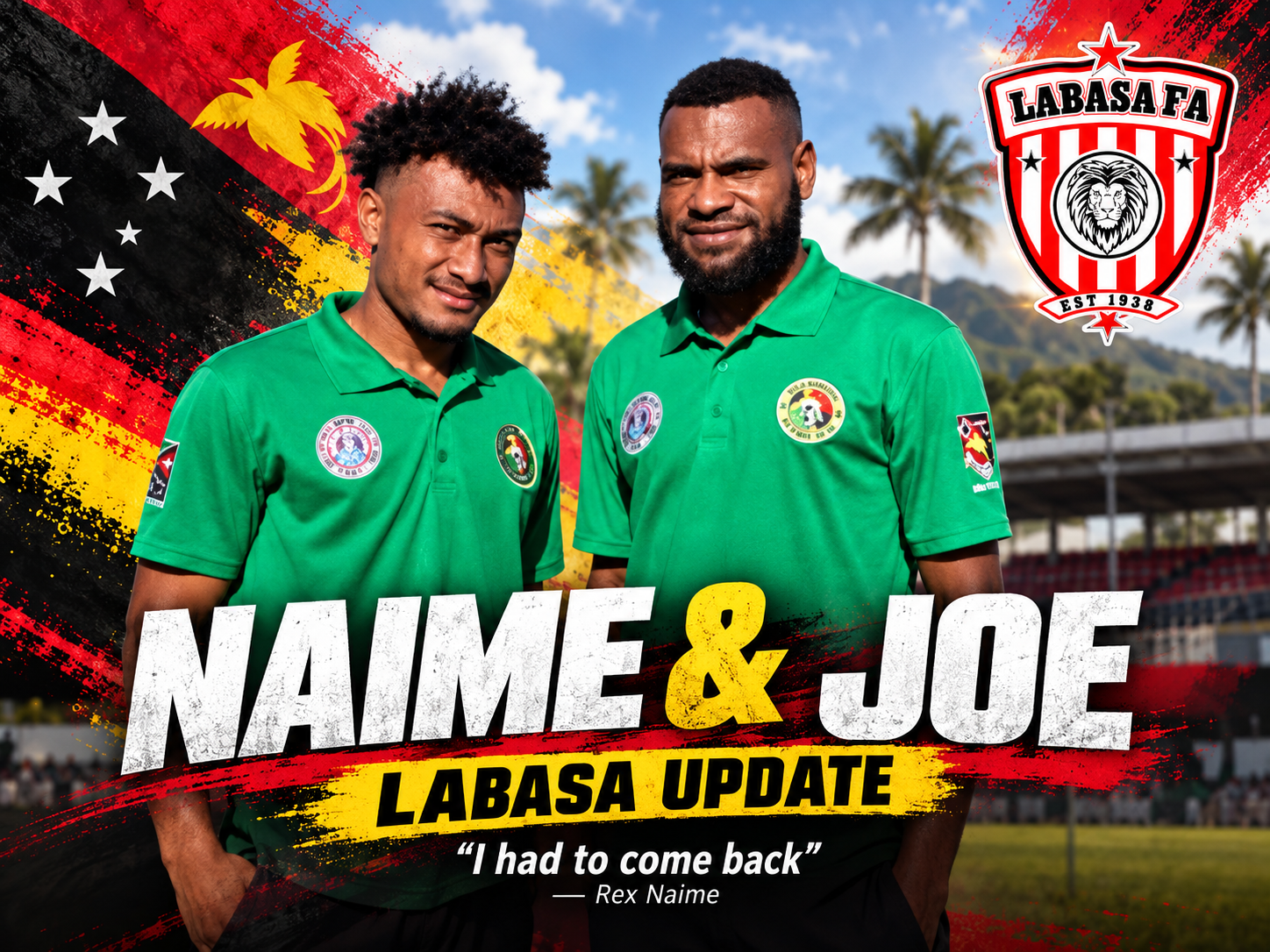
Rex Naime breaks silence on Labasa IDC absence, denies money dispute and explains OFC Pro League return

Papua New Guinea international Rex Naime has clarified the circumstances behind his absence from Labasa’s squad for the 2026 FMF Inter-District Championship, revealing exclusively to Oceania Football Center that he returned home to begin preparations for the upcoming OFC Pro League season rather than because of a financial disagreement with the Fijian club.

Naime and fellow PNG international Joseph Joe were among four players withdrawn from Labasa’s final 22-man IDC squad shortly before the tournament began in Suva on October 6. Their unexpected absence raised questions among supporters, particularly as both had been important additions to the Babasiga Lions during the domestic season.

Speaking directly to Oceania Football Center, Naime confirmed that he was already back in Papua New Guinea and explained that his professional commitments had prevented him from remaining in Fiji for the tournament.

“Because I have to prepare for the upcoming Pro League,” the forward said when asked why he would not be returning to represent Labasa.

Naime revealed that he had originally intended to participate in the IDC but needed to return home before October 5, when preparations for the next professional season were scheduled to begin.

“I was supposed to play in the IDC, but I had to be back before October 5 because our Pro League training starts on that date, so I came back,” he explained.

The clarification also addresses speculation surrounding the departures of the two Papua New Guinean players. Asked whether he and Joe had left Labasa because of disagreements over financial arrangements, Naime firmly rejected the suggestion.

“Nope,” he responded.

When asked whether Joseph Joe had returned to Papua New Guinea for the same reason, Naime confirmed that this was the case.

The explanation provides important context to Labasa’s late squad changes. Naime was replaced by Rapoama Dakai, while Joe’s place went to Meli Muasobu, leaving the Babasiga Lions without two players who had arrived from PNG Hekari earlier in the year.

Both internationals joined Labasa ahead of June’s Fiji FACT after representing PNG Hekari in the inaugural OFC Pro League. Their arrival strengthened the Fijian side with players accustomed to regional competition, although their involvement was ultimately cut short before the final major domestic tournament of the season.

Naime made an impression during his time in Fiji, scoring three goals in the 2026 Premier League, including against eventual champions Ba. He had previously enjoyed a productive continental campaign with Hekari, scoring four goals during their run to the 2025 OFC Men’s Champions League final.

His first OFC Pro League campaign also demonstrated his attacking qualities. The forward scored three times for PNG Hekari in 2026, with his speed and ability to threaten opponents on the counterattack attracting recognition from the Oceania Football Confederation.

In an earlier interview with Oceania Football Center, Naime spoke extensively about the importance of Hekari in his development, crediting the Papua New Guinean club with helping him reach the professional level.

“Hekari built me. Without Hekari, there is no Rex Naime at this level,” he said in August.

His latest comments underline the demands created by Oceania’s new professional football calendar, particularly for players who also represent clubs in domestic competitions elsewhere in the Pacific.

With the 2027 OFC Pro League scheduled to begin on January 22, preparations are already underway for another season involving eight professional clubs from across the region.

For Labasa, the timing meant losing two established Papua New Guinean players just as the club prepared for the IDC, where the Babasiga Lions have nevertheless progressed to the Super Premier semi-finals.

For Naime and Joe, the decision was dictated by the need to report for professional training in Papua New Guinea.

Their absence from the IDC, Naime has now made clear, was a matter of scheduling and preparation for the next OFC Pro League campaign, not a dispute over money.