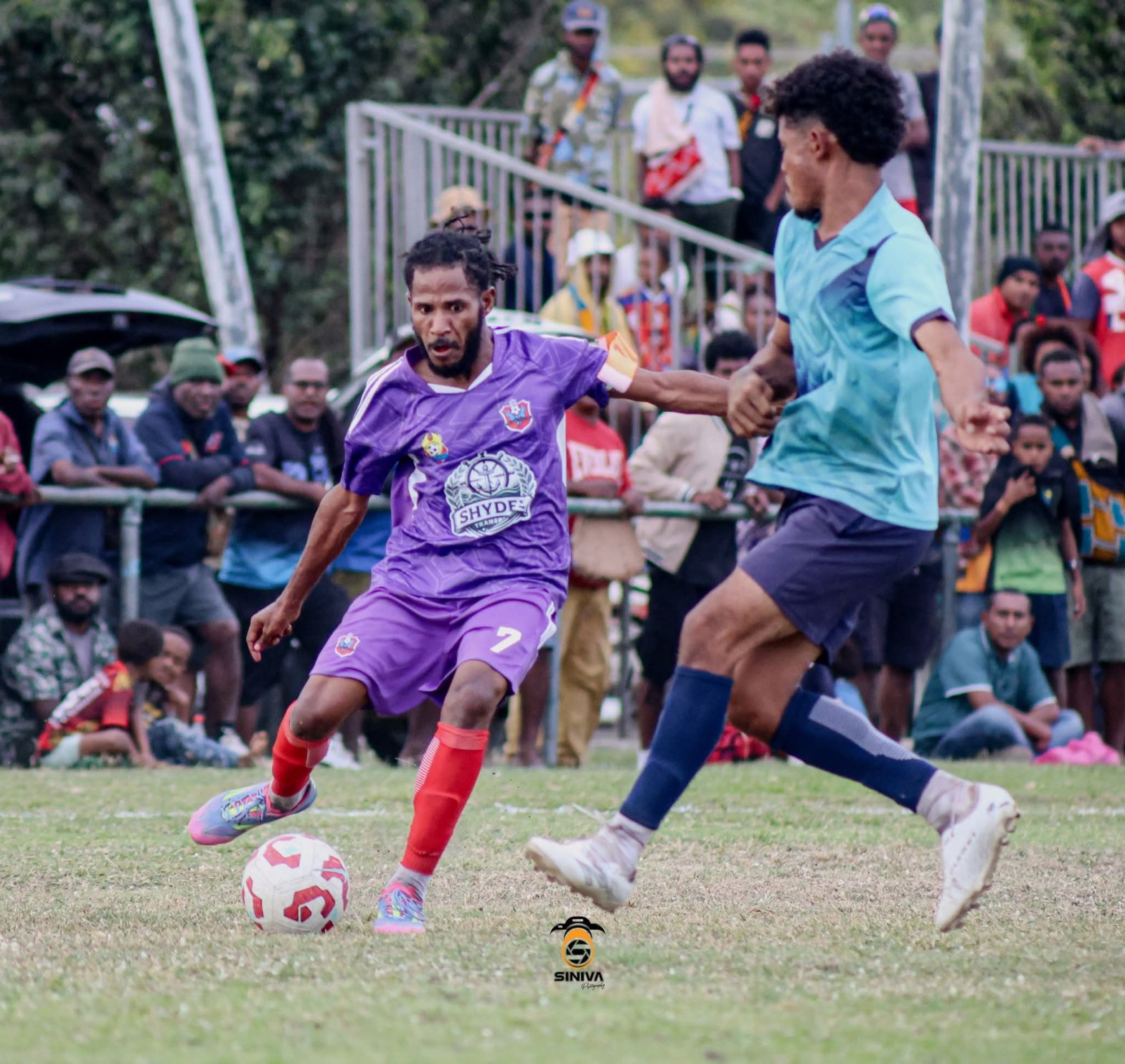
Central Coast crush Green Shield as goal-filled S-League day delivers 22 goals at Lawson Tama

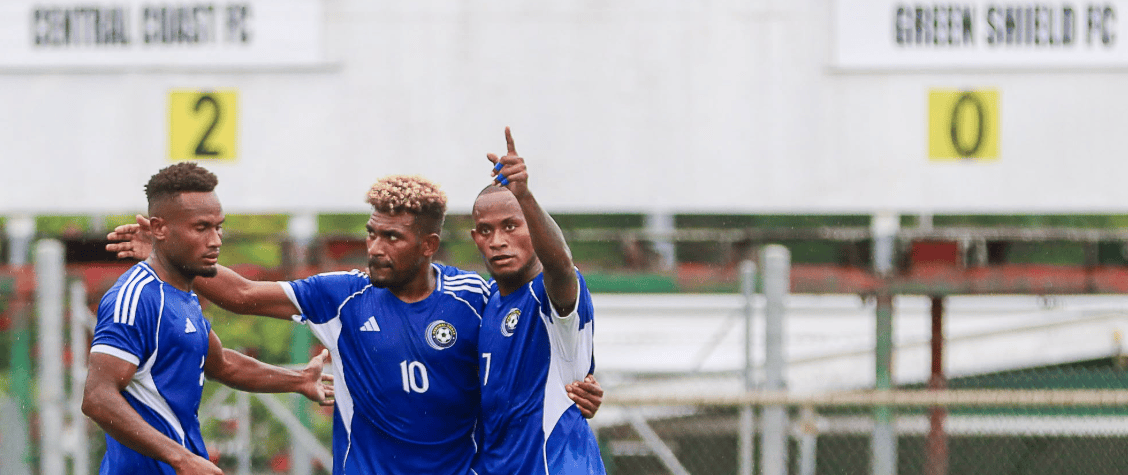
Central Coast FC delivered a major statement in the Solomon Islands S-League title race on Saturday, defeating leaders Green Shield FC 5-1 in a remarkable day of football at Lawson Tama Stadium that produced 22 goals across three matches.

Fresh from their campaign in the OFC Men’s Champions League, Central Coast showed no signs of slowing down domestically. Raphael Lea’i struck twice against Green Shield, while Barrie Limoki, Bobby Leslie and Hudyn Irodao also found the net as the Honiara side comfortably overcame the team that had established itself at the top of the standings.

The result carries considerably more weight than another heavy Central Coast victory. Green Shield had built their advantage while Central Coast were occupied by their continental commitments and consequently had several domestic fixtures postponed. With the OFC campaign now completed, Central Coast have begun the process of catching up — and their performances suggest the title race could quickly take a very different shape.

Their latest victory comes only days after a 9-0 demolition of SOSA, meaning Central Coast have scored 14 goals across their last two league matches. The attacking players who played such an important role during their run to the OFC Champions League final have immediately transferred that form back into the domestic competition, with Lea’i once again among the goals.

Green Shield, meanwhile, were handed a significant reality check. Their strong start to the season remains valuable, but Saturday’s meeting demonstrated the challenge they will face as Central Coast begin working through their matches in hand. The 5-1 scoreline was particularly striking considering Green Shield entered the fixture as the competition leaders.

Central Coast’s victory was only part of an extraordinary afternoon at Lawson Tama. SOSA produced an immediate and emphatic response to their 9-0 defeat against Central Coast by putting nine goals past Laugu United in a 9-2 victory. The turnaround was one of the most eye-catching results of the season, with SOSA going from conceding nine in one match to scoring nine themselves only a few days later.

The result added further difficulty to Laugu’s campaign and also illustrated the unpredictable nature of this S-League season. With teams having played different numbers of matches because of postponements and continental commitments, individual results continue to have a major influence on the constantly changing picture of the competition.

The day’s closest contest came between KOSSA and Marist FC, with KOSSA eventually securing a 3-2 victory. The three points keep KOSSA firmly involved among the teams chasing the leading positions and add another important result to what has been a competitive start to their campaign. Marist, on the other hand, were left without reward despite pushing their opponents throughout the encounter.

Across the three matches, supporters at Lawson Tama witnessed an extraordinary 22 goals: SOSA’s 9-2 win over Laugu, KOSSA’s 3-2 victory against Marist and Central Coast’s 5-1 demolition of Green Shield.

Yet it was the final result that could prove the most significant for the championship. Green Shield may still have the advantage accumulated from playing more matches, but Central Coast are now beginning to recover their postponed fixtures after competing against Oceania’s best clubs. Their immediate response has been emphatic.

Fourteen goals in two domestic matches, including five against the league leaders, is a clear indication that the OFC Champions League finalists have returned to the S-League ready to make up lost ground — and the battle for the Solomon Islands title could be about to change considerably.

Fiji FA allows players with pending drug cases to play as BOG testing produces two new positives

The Fiji Football Association has allowed players with unresolved drug-related disciplinary cases to return to competition, a decision that has already affected the ongoing Battle of the Giants in Ba and comes while the association continues conducting drug tests throughout the tournament.

Fiji FA chief executive Mohammed Yusuf confirmed that the association’s disciplinary committee decided that players whose cases remain pending could resume playing while the relevant proceedings are finalised.

The clearest example came with Labasa forward France Catarogo, who received clearance at around 1pm on the opening day of the BOG, only two hours before the defending champions faced Nasinu.

Catarogo had been suspended after failing a drug test during the 2026 Fiji FACT in Labasa in June. His availability for the BOG had remained uncertain enough that Labasa initially left the number nine position vacant when submitting their tournament squad, awaiting the outcome of the disciplinary process.

The late decision allowed Catarogo to return immediately and feature in Labasa’s 1-0 opening victory over Nasinu.

His case is not the only one affected.

Lautoka players Veleni Rasorewa and Epeli Leiroti had already been cleared to play while their respective cases remained pending, and both are operating under the same broader situation in which footballers have been permitted to compete before final judgments have been delivered.

Yusuf explained that the players were released in order to avoid what he described as “procedural harm” while the disciplinary committee completes its work, including consideration of a legal submission involving Lautoka.

Final judgments in the outstanding cases are expected to follow in the coming weeks.

The distinction is important: the players have been cleared to play while their cases are pending, rather than cleared of the matters themselves.

The situation has become particularly notable during the Battle of the Giants because Fiji FA has simultaneously continued its drug-testing programme at the tournament.

After the first two days of competition, 48 players had been tested, with two positive results recorded during the opening day. All 24 tests conducted on the second day returned negative results.

Fiji FA also confirmed that one of the associations connected to a positive result from the opening day is appealing the outcome.

The identities of the players involved in those two new positive tests have not been publicly disclosed.

The latest cases come only a few months after the Fiji FACT, where drug testing became one of the major off-field issues of the tournament.

A total of 72 players were tested during that competition, with four positive results for prohibited drugs recorded. Three involved marijuana, while another involved methamphetamine.

Fiji FA described the methamphetamine case at the time as particularly serious and reiterated its zero-tolerance position on prohibited substances. Three of the cases were also reported to involve repeat offenders, potentially exposing those involved to significantly longer suspensions.

Two additional players returned positive alcohol results during the same testing programme, although one was associated with medication that had been declared beforehand.

The association has increasingly expanded drug and alcohol testing across its major competitions and domestic leagues, presenting the programme as part of its efforts to protect players and maintain the integrity of football in Fiji.

However, the situation at the current BOG has created an unusual overlap between that policy and the disciplinary process.

Players previously suspended following positive tests have now been permitted to return while their appeals or disciplinary matters remain unresolved, while at the same tournament new positive results are continuing to be recorded.

For Catarogo, the decision provided an immediate route back into one of Fiji football’s biggest competitions. For Lautoka, the earlier clearances of Rasorewa and Leiroti similarly strengthened their available squad during the BOG.

For Fiji FA, however, the wider issue is likely to remain relevant beyond the tournament itself.

With appeals still being heard, final judgments yet to be delivered and two additional positive tests already recorded during the current BOG, the association’s disciplinary procedures and the way provisional suspensions are handled will continue to be closely watched as the competition moves towards its knockout stage.

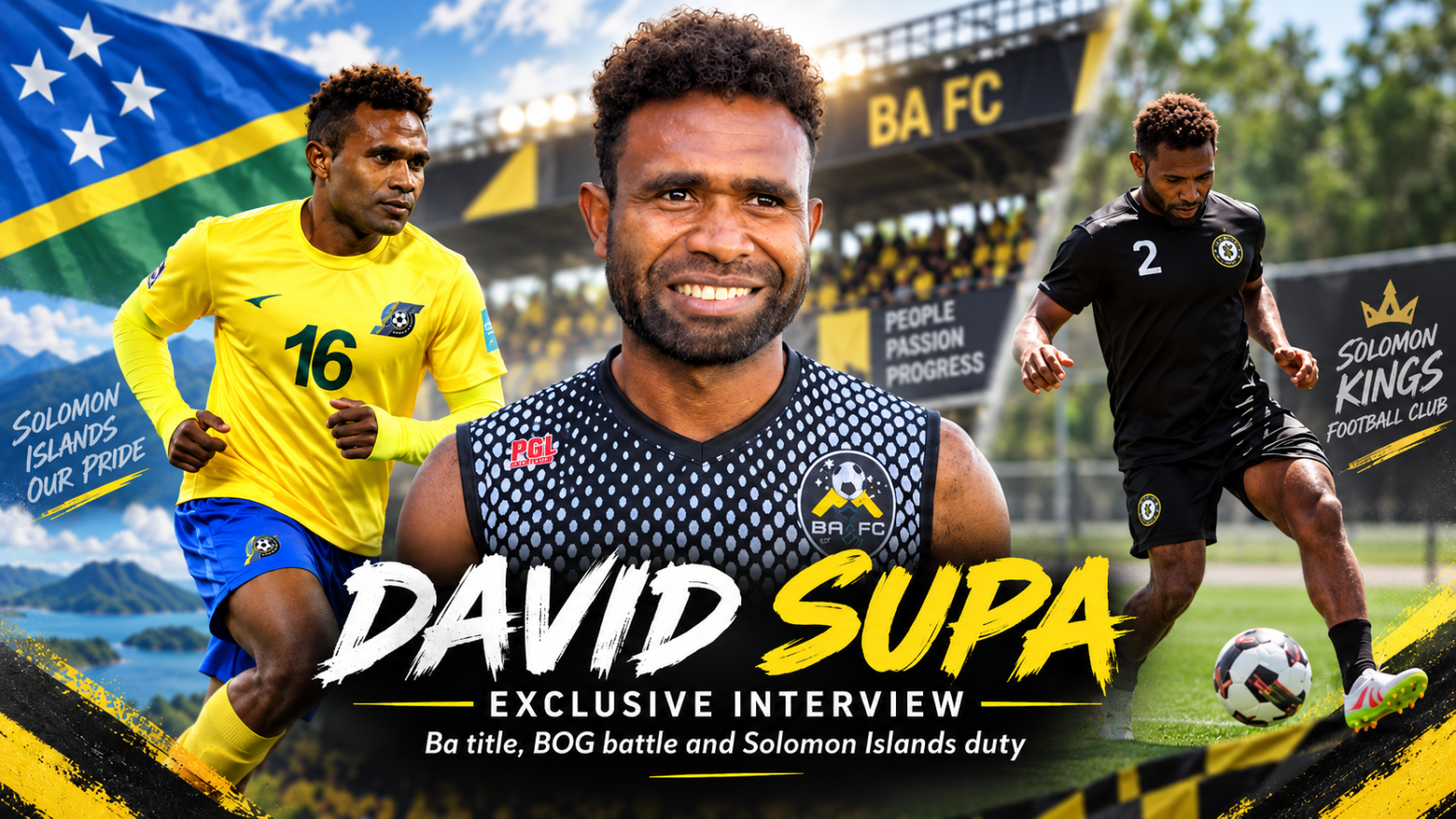
“If Solomon Islands call, I have to go”: David Supa on Ba title, BOG pressure and MSG return

David Supa’s first experience of Fijian football has already brought silverware, a new challenge outside the Solomon Islands and another important chapter in a season that began in the inaugural OFC Professional League. Now, with Ba fighting to keep their Battle of the Giants campaign alive, the Solomon Islands international is looking to finish his club commitments strongly before turning his attention back to national-team football.

The defender joined Ba during the second part of the 2026 season after representing Solomon Kings in the OFC Pro League. His arrival formed part of a significant mid-season strengthening by the Men in Black, who went on to complete an excellent domestic campaign by winning both the Fiji FACT and the Extra Premier League.

For Supa, the league championship carried particular meaning. It was his first season playing club football in Fiji and his first opportunity to experience one of the Pacific’s most competitive domestic environments.

“I am very happy to be with Ba,” Supa told Oceania Football Center. “This is my first time playing in Fiji and then winning the Premier League in Fiji.”

Ba eventually finished the league season with 42 points from 18 matches, securing a record-extending 22nd national championship and ending a seven-year wait for the title. Supa was among the overseas additions who helped strengthen the squad for the decisive stages of the campaign, alongside fellow Solomon Islander John Orobulu.

The move also offered Supa the chance to compare football in Fiji with what he had experienced for several seasons in the Telekom S-League. While he sees similarities in the intensity of the two competitions, the defender believes there is a noticeable difference in how that intensity is expressed.

“Fiji football is more physical, high intensity. S-League was more on speed and high intensity. It does not really have big differences,” he explained.

His route to Ba also reflects one of the opportunities created by the inaugural OFC Pro League. Supa spent the opening part of 2026 with Solomon Kings and was regularly involved in their defensive line during the competition, facing clubs from across Oceania in a fully professional environment.

For the defender, that experience represented more than simply another tournament. Supa believes the professional league provided players from the Solomon Islands with an opportunity to demonstrate whether they could perform at a different level and potentially attract interest elsewhere in the region.

“I was privileged to participate. It was a different level of football for me and it was an opportunity for me to show my best, how I could perform, to be selected to play in teams outside Solomon Islands — for example, Ba in Fiji,” he said.

Supa was also impressed by the environment surrounding the competition. “For the Pro League, I would say everything was organised professionally. It was good.”

His attention, however, is currently firmly on Ba and the Battle of the Giants. Speaking before the tournament began, Supa said the Men in Black had prepared well and that he was personally ready to contribute.

“Preparation was going good and the boys were ready for this tournament, BOG. For me, I am ready for this tournament to give my best for Ba,” he said.

Those words now carry additional significance after an eventful opening two days for the hosts. Ba began the BOG with a 1-0 victory over Nadi, with Orobulu scoring the decisive goal, but suffered a heavy setback in their second Pool B match as Rewa won 3-0 through goals from Lucas Santos, Merrill Nand and Ivan Kumar.

The results have left Ba with no margin for error in their final pool encounter against Lautoka. Rewa lead the group with six points, while Ba and Lautoka have three each. Lautoka currently hold the superior goal difference after beating Nadi 2-0, meaning the Men in Black need victory in their final group match to move ahead of the Blues and secure a place in the semi-finals.

Beyond the BOG, another important assignment could soon follow for Supa. The Solomon Islands are preparing for the MSG Prime Minister’s Cup in Fiji, and the defender made clear that he expects his focus to switch quickly from club football to representing his country.

“After BOG, I am going to play MSG,” Supa said. Asked about the importance of the tournament and the national team, his answer was straightforward: “This tournament is important to me, but if Solomon national team call, I have to go play for my country.”

Supa already knows the MSG competition well. He represented the Solomon Islands in the 2025 edition in Papua New Guinea and scored their goal in the 2-1 semifinal defeat to Vanuatu, one of the few international goals of his career as a defender.

That possible national-team return would complete another demanding sequence for Supa. From professional football with Solomon Kings, to winning trophies during his first spell in Fiji and potentially representing the Solomon Islands again, 2026 has given the defender opportunities in several different environments.

Before that next chapter can begin, however, there is still unfinished business with Ba. The Men in Black entered the BOG hoping to add another trophy to an already successful season. After the defeat to Rewa, their equation is now simple: beat Lautoka and remain in the competition.

For Supa, it is another important test in a year in which opportunities at professional, club and international level have continued to arrive.

Fencibles make history in Christchurch with first-ever Chatham Cup title

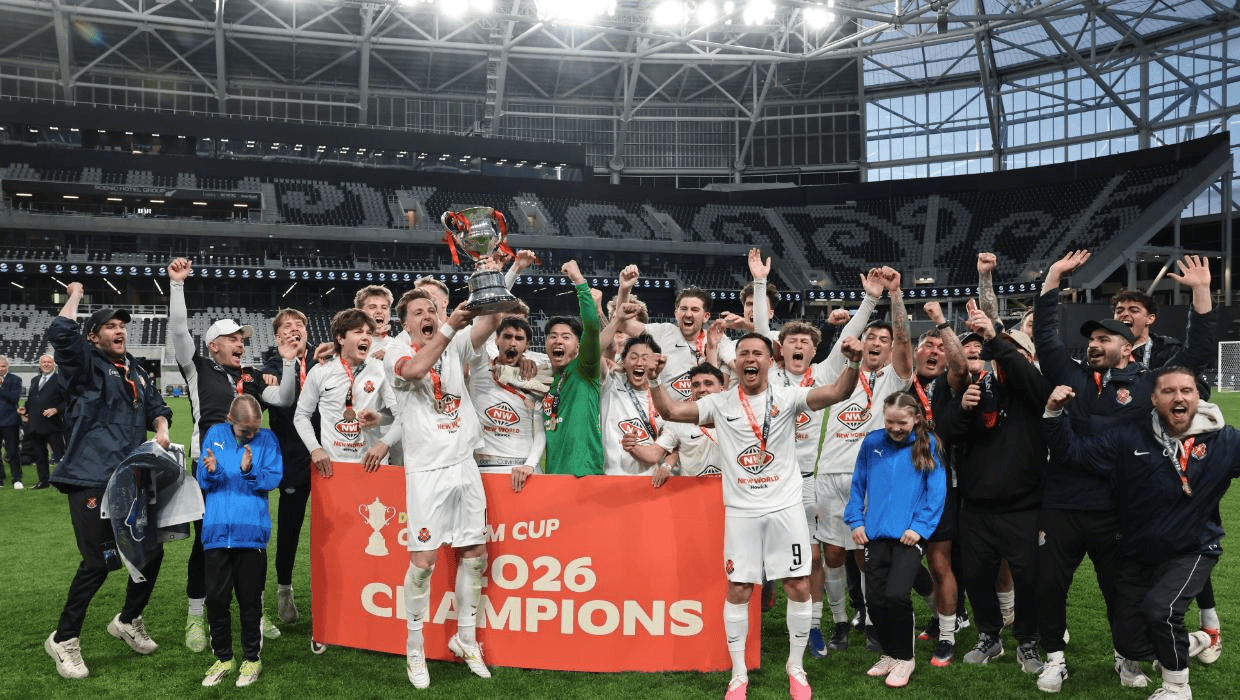
Fencibles United have written a new chapter in their history after defeating Cashmere Technical 2-1 in Christchurch to lift the Chatham Cup for the first time.

The Auckland side entered Saturday’s final having never previously progressed beyond the quarter-finals of New Zealand’s premier knockout competition, but goals from Ronaldo Lopez Munoz and substitute Kodie Nicol completed a memorable campaign and sent the trophy back to Pakuranga.

A crowd of 11,267 watched the final at One New Zealand Stadium, with Cashmere Technical carrying considerable home support as Christchurch hosted a Chatham Cup decider for the first time since 2013.

The occasion also marked the first men’s football match played at the new stadium.

Cashmere arrived as Southern League champions and with one of the most productive attacks in the country, but Fencibles showed little sign of being overwhelmed by either the setting or their first appearance on the national stage.

The opening half-hour was cautious, with both teams struggling to create clear opportunities. The breakthrough eventually came in the 33rd minute.

Liam Wessels reacted quickest to a loose ball and found Ronaldo Lopez Munoz on the edge of the penalty area. Munoz controlled under pressure, worked his way beyond a defender and calmly finished into the bottom corner to put Fencibles ahead.

The goal changed the rhythm of the contest, and the Aucklanders finished the opening half with greater confidence as they protected their 1-0 advantage.

Cashmere Technical responded strongly after the interval.

The Christchurch side increased the pressure around the Fencibles penalty area and appeared to have equalised when prolific striker Garbhan Coughlan dispossessed the goalkeeper and rolled the ball into an empty net. The goal, however, was ruled out after the referee judged Coughlan to have committed a foul.

Cashmere did not have to wait much longer.

In the 61st minute, Nicholas Murphy produced a powerful strike from well outside the penalty area, beating the Fencibles goalkeeper to bring the hosts level.

With the crowd behind them and momentum beginning to shift, Cashmere pushed forward looking to complete the turnaround.

Instead, Fencibles found the decisive moment.

With ten minutes remaining, captain Connor Probert delivered a deep cross towards the far side of the penalty area. Substitute Riwai Rangihuna-Stanton stretched to reach it, directing the ball against the inside of the post.

As the ball travelled across the face of goal, fellow substitute Kodie Nicol reacted first and turned it home, restoring Fencibles’ lead at 2-1.

Cashmere continued searching for another equaliser during the closing stages, but Fencibles held firm to complete the biggest achievement in the club’s history.

The victory represents the end of an impressive cup run for a team that had never previously reached the last four.

Fencibles began their campaign with a 6-1 victory over Papamoa before eliminating Birkenhead United 3-1. They then defeated South Auckland Rangers 3-0 to reach the quarter-finals, where they produced one of the defining results of their run by overcoming Auckland City 3-2.

A 3-0 semi-final victory over Nelson Suburbs earned the club its first Chatham Cup final appearance, before Cashmere became the final obstacle between Fencibles and the trophy.

While Munoz and Nicol provided the goals in Christchurch, Liam Wessels was awarded the Jack Batty Trophy as the player of the final, recognition for his contribution throughout the contest and his involvement in the opening goal.

For Cashmere Technical, defeat brought a disappointing conclusion to a strong domestic campaign. The Christchurch side had comfortably won the Southern League and entered the final seeking another Chatham Cup title after previous triumphs in 2013, 2014 and 2021.

Fencibles, however, ensured that a new name would be engraved on the trophy.

From never advancing beyond the quarter-finals to defeating Auckland City on the way and eventually lifting the cup in front of more than 11,000 spectators, the 2026 campaign will remain a landmark season for the Pakuranga club.

New Zealand seal semi-final place as Tahiti deny Vanuatu late at OFC U-19 Championship

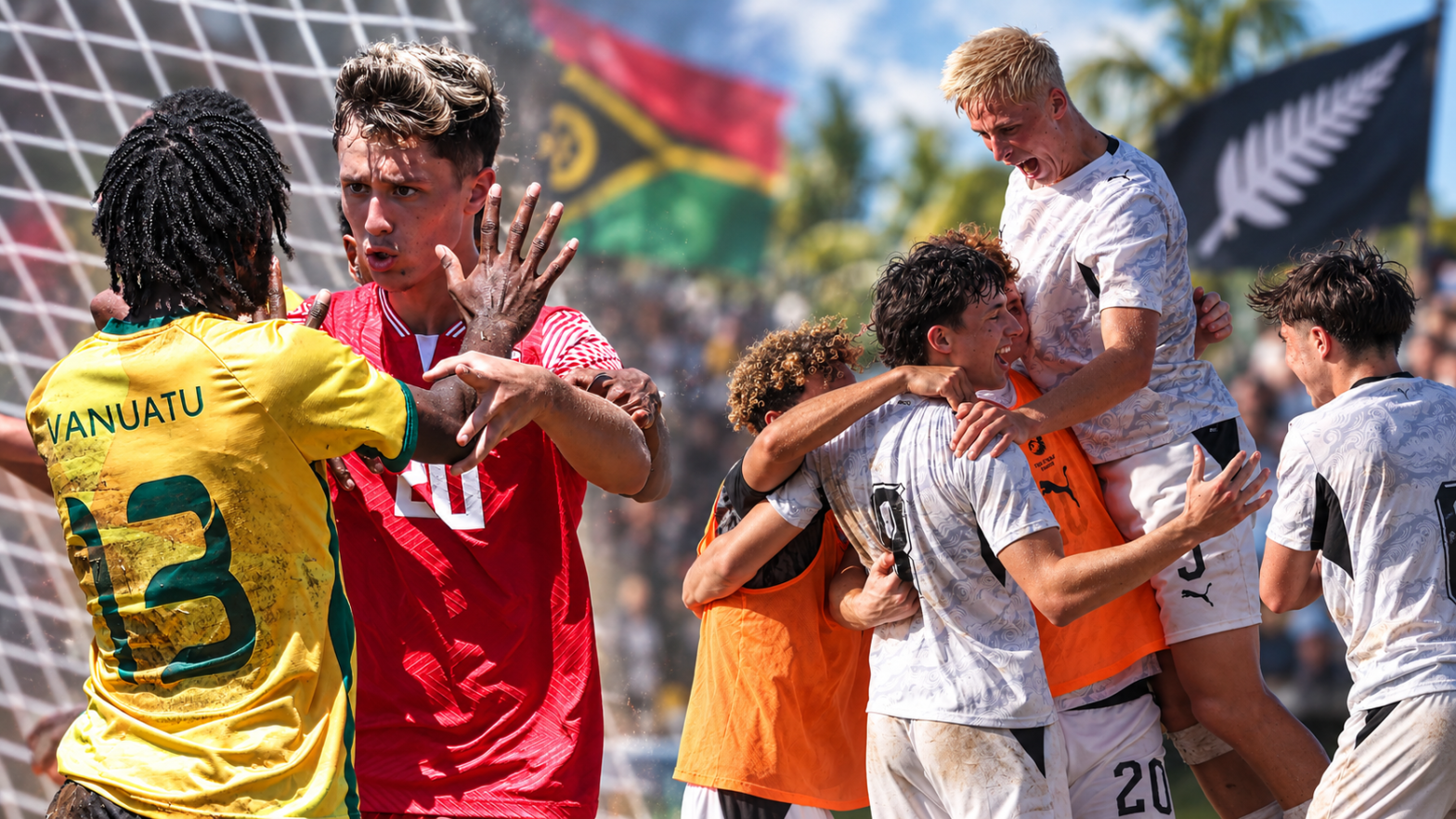
New Zealand became the second nation to secure a place in the semi-finals of the 2026 OFC U-19 Men’s Championship after defeating Fiji 2-0 in Apia, while Tahiti kept their own campaign alive with a late equaliser against Vanuatu in Saturday’s Group B action.

The Junior All Whites joined Solomon Islands in the last four after collecting their second victory from two matches. Fiji remain second in Group B on three points, while Vanuatu and Tahiti both have one, leaving the second qualification place open heading into the final round.

Vanuatu and Tahiti opened the day knowing that another defeat would leave their semi-final hopes hanging by a thread following heavy losses in the opening round.

Neither side managed to find a breakthrough during the first half, although the balance of the contest changed shortly before the interval when Tahiti midfielder Kahi Morgant was shown two yellow cards in quick succession and sent off.

The dismissal appeared to give Vanuatu the opportunity they needed.

Eleven minutes after the restart, Vanuatu won possession high up the pitch and worked the ball towards Bule Hariri, who cut inside from the right before directing an effort towards the far corner. A slight deflection off Tauhiki Bohl helped the ball beyond the Tahitian goalkeeper and gave Vanuatu a 1-0 advantage in the 56th minute.

Vanuatu briefly believed they had doubled their lead when Rohan Masauvakalo found the net, but the goal was ruled out for offside.

Despite playing with ten men, Tahiti gradually began to create the greater threat as the match entered its closing stages.

Their persistence was finally rewarded in the 89th minute. Substitute Elias Jamet saw his initial effort saved, but recovered the loose ball and sent it back across goal for Nathan Scavazza to finish from close range.

The late equaliser secured Tahiti’s first point of the tournament and denied Vanuatu what would have been a valuable first victory.

The 1-1 draw means both nations remain alive heading into the final group fixtures, although each now requires a victory — and potentially help from the other match — to reach the semi-finals.

The second match of the day brought together the two sides that had dominated the opening round.

Fiji entered after an impressive 7-2 victory over Vanuatu, while defending champions New Zealand had begun their campaign by defeating Tahiti 8-0.

This time, however, the difference between the teams was considerably smaller.

New Zealand controlled much of the possession and territory during the first half but were unable to break down a disciplined Fiji defensive structure.

Fiji captain Delon Shankar came close from a direct free-kick, sending his attempt narrowly over the crossbar, while New Zealand repeatedly pushed forward without finding the final touch.

The breakthrough eventually came nine minutes after half-time — and from the New Zealand bench.

Half-time substitute Bailey Ferguson reacted quickest inside the penalty area after Harley Hill’s effort from a corner was blocked, firing the rebound home in the 54th minute.

Fiji continued to look for a way back into the contest, with Abdullah Khairati going close with an effort that travelled just wide of the bottom corner.

New Zealand coach José Figueira again received an important contribution from his substitutes as the defending champions secured the result in the 79th minute.

Aaron Cartwright, who was later named Player of the Match, produced a strong run down the right before supplying Oliver Grosso, who finished from close range for his second goal of the tournament.

The 2-0 victory takes New Zealand to six points from two matches, with ten goals scored and none conceded.

More importantly, it guarantees the Junior All Whites a place in the semi-finals with one match still remaining.

For Fiji, the defeat does not significantly damage their qualification prospects. The Junior Bula Boys remain second on three points and still control their own destiny ahead of their final group match against Tahiti.

The final round on Tuesday will therefore decide who accompanies New Zealand into the knockout stage.

Fiji face Tahiti knowing victory will guarantee progression, while Vanuatu have the difficult task of facing New Zealand and will likely need all three points to remain in contention.

After two rounds, the Group B table has New Zealand leading with six points, Fiji on three, and Vanuatu and Tahiti on one each. New Zealand also hold a commanding +10 goal difference, having scored ten times without conceding.

The semi-final race therefore remains open behind the defending champions, with Fiji holding the advantage but both Tahiti and Vanuatu still carrying hopes into the final matchday.

With places at the 2027 FIFA U-20 World Cup in Azerbaijan and Uzbekistan awaiting the two finalists in Samoa, Tuesday’s final Group B fixtures will determine which side remains two victories away from reaching the world stage.

Rewa through, Suva in control as Pacific stars shape opening two days of BOG 2026

The first two matchdays of the 2026 Battle of the Giants have already reshaped the tournament in Ba, with Rewa securing an early place in the semi-finals, Suva taking control of Group A and players from across the Pacific playing decisive roles throughout the opening rounds.

Rewa emerged as the first team to guarantee progression after following a 2-0 opening victory over Lautoka with an emphatic 3-0 win over hosts Ba. Suva have also collected six points from six after victories over Navua and defending champions Labasa, putting themselves in a commanding position ahead of the final round of group matches.

The tournament opened with one of its strongest individual performances so far as Solomon Islands international Gagame Feni struck a hat-trick in Suva’s 3-1 comeback victory over Navua.

Vanuatu international Walter Leoru had given Navua an early lead in the 12th minute and Suva entered half-time behind. Feni levelled shortly after the restart before Navua captain Thomas Dunn was sent off, leaving Suva with the numerical advantage.

From there, the Solomon Islands forward took control. Two further goals completed his hat-trick and gave Suva the perfect start to the competition.

Defending champions Labasa were also made to work for their opening victory, edging Nasinu 1-0.

Papua New Guinea international Joseph Joe scored the decisive goal, continuing his impact with the Babasiga Lions following his return to Fiji football. Nasinu remained competitive throughout the contest, with goalkeeper Emori Ragata producing a strong performance despite the defeat.

Group B began with Rewa immediately showing their intentions.

Merrill Nand opened the scoring against Lautoka in the first half before Josaia Sela converted a penalty after the break, sealing a 2-0 victory for the Delta Tigers. Rewa’s defensive organisation was equally important, with Sitiveni Rakai recognised for his performance in helping his side begin the tournament with a clean sheet.

The opening day ended with hosts Ba taking three points against Nadi, and once again an Oceanian import proved decisive.

Solomon Islands striker John Orobulu scored the only goal of the match, capitalising on a defensive error to hand Ba a 1-0 victory in front of their home supporters at Govind Park.

Orobulu’s goal continued an impressive season in Fiji for the Solomon Islands international, who has established himself as one of Ba’s main attacking threats.

The second matchday then significantly changed the qualification picture.

Nasinu recovered from their opening defeat by beating Navua 1-0, with another Solomon Islands player making the difference. Billy Afi scored the winner in the 15th minute, before Nasinu successfully protected their advantage for the remainder of the match.

The result kept Nasinu firmly in contention in Group A while leaving Navua facing an increasingly difficult route to the semi-finals.

Lautoka also responded strongly after losing their opener, defeating Nadi 2-0.

Young Argentine attacker Luciano Orzo scored both goals for the Blues, giving Lautoka their first points of the tournament and setting up a decisive final group match against Ba.

Suva then produced one of the most convincing performances of the opening two rounds.

Facing defending BOG champions Labasa, Suva recorded a 3-0 victory to maintain their perfect start.

Sakaraia Naisua opened the scoring before half-time, Siotame Kubu doubled the advantage after the restart and Solomon Islands midfielder Molis Gagame completed the victory late in the contest.

After Feni’s hat-trick on the opening day, Gagame’s contribution against Labasa further highlighted the influence of Solomon Islands players throughout the competition.

The biggest statement of the second round, however, came from Rewa.

Only days after losing 1-0 to Ba in the Fiji Premier League, the Delta Tigers returned to Govind Park and produced a completely different performance, defeating the hosts 3-0.

Brazilian midfielder Lucas Santos opened the scoring shortly before half-time, before Merrill Nand found the net for the second consecutive BOG match. Ivan Kumar then added a third to complete an impressive victory.

The result moved Rewa to six points with two clean sheets and five goals scored, securing their place in the semi-finals with one group match still remaining.

For Ba, meanwhile, the defeat erased the advantage gained from their opening victory over Nadi and increased the importance of their final group fixture against Lautoka.

Beyond the qualification race, the opening two days have again demonstrated how strongly Fiji’s major domestic competitions are connected to the wider Pacific football landscape.

Solomon Islands players Gagame Feni, John Orobulu, Billy Afi and Molis Gagame have all found the net, while Papua New Guinea international Joseph Joe delivered Labasa’s opening victory. Vanuatu international Walter Leoru also scored for Navua, while foreign additions such as Lucas Santos and Luciano Orzo have made important contributions for Rewa and Lautoka.

After two rounds, Rewa are already assured of knockout football, while Suva have placed themselves in an excellent position in Group A.

The remaining places, however, are still there to be decided.

Labasa and Nasinu remain involved in the Group A battle, while Group B is set for a particularly important conclusion as Ba and Lautoka fight for the remaining semi-final position behind Rewa.

With the group stage approaching its conclusion, the opening two days have already delivered individual brilliance, significant upsets and a strong Pacific influence — leaving the 2026 Battle of the Giants finely positioned heading into its decisive matches.

Solomon Islands seal semi-final place as Papua New Guinea revive hopes in OFC U-19 Championship

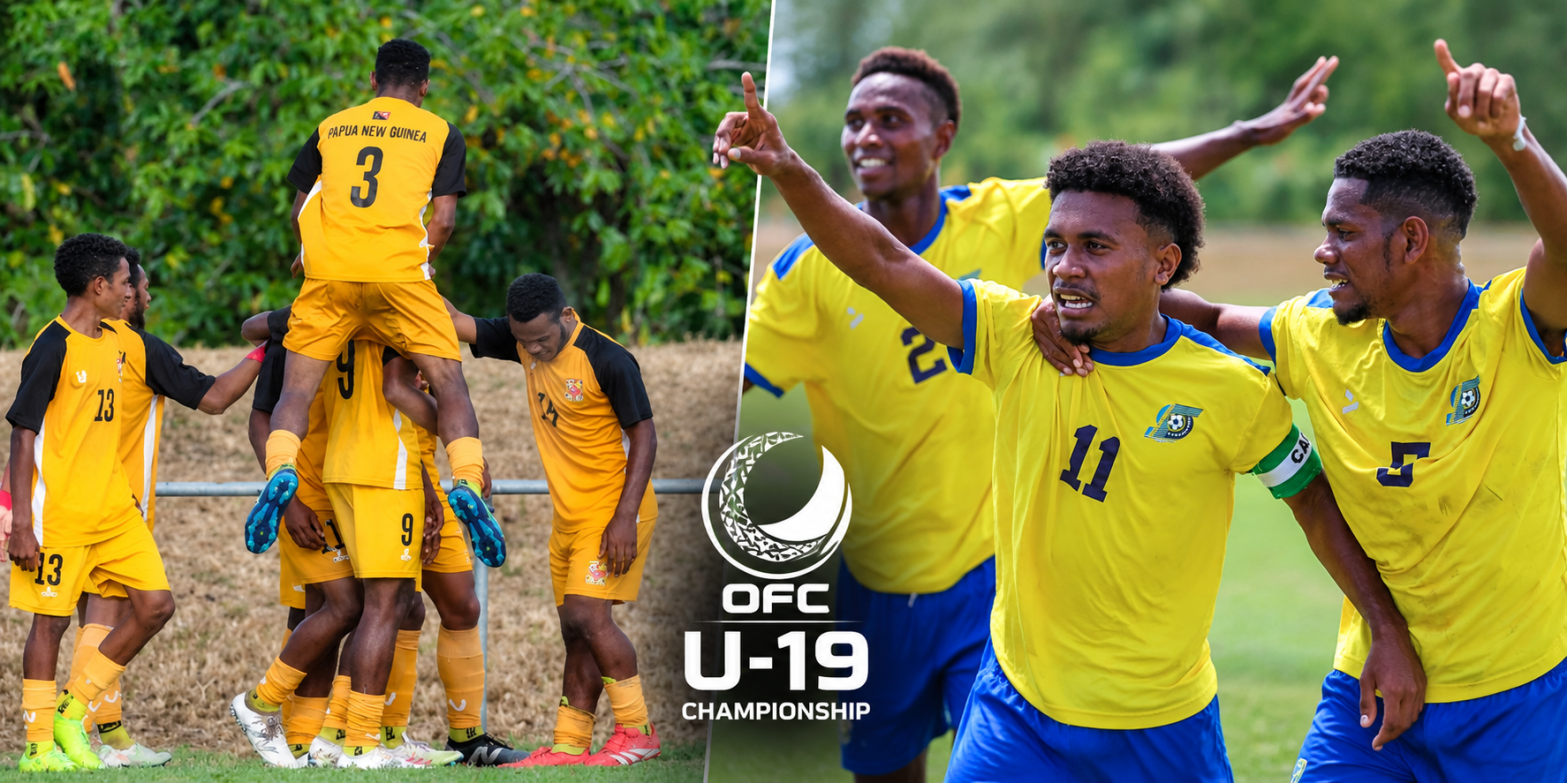
Solomon Islands became the first team from Group A to secure their place in the semi-finals of the OFC U-19 Men’s Championship after another strong performance in Samoa, while Papua New Guinea kept their own campaign alive with a six-goal victory over the hosts.

The second round of Group A matches produced wins for the two Melanesian sides, with Solomon Islands overcoming New Caledonia 3–1 before Papua New Guinea defeated Samoa 4–2 at the Samoa Football Headquarters in Apia.

Solomon Islands entered their clash with New Caledonia knowing that victory would put them in complete control of the group after their opening 1–0 win over Papua New Guinea.

Their task became easier inside the opening 20 minutes when New Caledonia’s Kyllian Wiako was sent off following a retaliation incident. Despite the numerical advantage, Solomon Islands had to remain patient before captain Jayroll Patty broke the deadlock in the 36th minute after capitalising on an error as New Caledonia attempted to play out from defence.

New Caledonia responded despite playing with ten men. Jemmanuel Siwoine headed home from a Maurice Katrawa corner in the 43rd minute to restore parity, but the response was short-lived.

Patty struck again in first-half stoppage time, this time finding the bottom corner from outside the penalty area to send Solomon Islands into the break 2–1 ahead.

The Solomon Islands captain completed his hat-trick in the 74th minute. Patty beat his defender on the left, drove into the box and powered an effort beyond goalkeeper Raphael Genton to complete the 3–1 victory and send the Hapi Isles into the semi-finals with a match to spare.

It was another significant performance from a player already familiar to the wider Oceania football audience through his involvement with Solomon Kings, but the result was just as important collectively. Solomon Islands now have six points from two games and have conceded only once.

The second match of the day was far more open.

Samoa, looking for their first points after losing 4–2 to New Caledonia in the opening round, took the lead in the 17th minute. Isikeli Brown’s header was saved by PNG goalkeeper Ricky Hulana, but Isaiah Afamasaga reacted quickest to turn home the rebound and score his second goal of the tournament.

Papua New Guinea recovered before halftime. Captain Nalau Moses found Albhan Rani with a precise pass, and Rani equalised in the 39th minute before David Tita took advantage of a favourable ricochet five minutes later to send PNG into the interval 2–1 ahead.

Samoa immediately responded after the break. Half-time substitute Lomitusi Scanlan struck a superb first-time effort in the 47th minute after PNG failed to deal with a long throw.

The game turned again almost immediately. Moses produced another decisive pass, this time releasing Harrison Ima, who restored PNG’s lead in the 49th minute.

Moses then went from creator to scorer six minutes later, breaking beyond the Samoa defence and finishing to make it 4–2.

PNG finished with ten men after Rani received a second yellow card in stoppage time, but the result was already secure.

The victory moves Papua New Guinea onto three points alongside New Caledonia and sets up a decisive meeting between the two teams in the final round of Group A. Solomon Islands, meanwhile, have already secured qualification ahead of their final group match against Samoa.

The picture in Group A is therefore considerably clearer: Solomon Islands are through, Papua New Guinea and New Caledonia will effectively contest the remaining semi-final berth, while Samoa’s hopes have suffered another major blow.

Raphael Lea’i explodes for six goals in Central Coast’s huge S-League win

Raphael Lea’i produced one of the standout individual performances of the Solomon Islands S-League season, scoring six times as Central Coast FC defeated SOSA FC 9-0 at Lawson Tama.

The Solomon Islands international was at the centre of Central Coast’s dominant display, registering a double hat-trick as his side returned to domestic action with an emphatic victory. Irodao, Oreinima and Fordney also found the net, but the afternoon clearly belonged to Lea’i.

The performance continues what has become a significant goalscoring resurgence for the 22-year-old. Only recently, Lea’i had played a decisive role in Central Coast’s historic OFC Champions League campaign, scoring a hat-trick in the dramatic 3-2 extra-time semifinal win over Galaxy FC.

That performance sent Central Coast into the continental final and again showed the level Lea’i can reach when operating with confidence in the final third. His six goals against SOSA now add further weight to the idea that the forward is rediscovering the prolific form that first established him as one of the most highly regarded attacking players in Solomon Islands football.

Lea’i’s career has already taken him beyond the domestic game. After emerging as a major talent with Henderson Eels, he later moved overseas and gained professional experience in Bosnia and Herzegovina and Australia. His return to Solomon Islands football has therefore carried a different level of expectation, particularly for a player who was once routinely producing remarkable scoring numbers at S-League level.

Recent months have shown increasingly positive signs. His decisive contribution during Central Coast’s Champions League run already represented an important statement, but scoring six goals in a single league match provides another indication that his confidence in front of goal is returning.

For Central Coast, Lea’i’s form could prove crucial as the club turns its attention fully back to the domestic season following its continental campaign. The Honiara side already possesses one of the strongest squads in the competition, and having Lea’i regularly producing goals considerably increases their attacking threat.

For the player himself, there is also a wider significance. Lea’i remains relatively young despite already experiencing several different stages in his career, from dominating domestic football to moving abroad and then returning home. A sustained run of performances at this level could again open discussions about what his next step might be.

What is already clear is that the goals are coming again. After his Champions League hat-trick, Lea’i has now followed it with an extraordinary six-goal performance at Lawson Tama.

Central Coast may have scored nine against SOSA, but Raphael Lea’i was once again the central figure.

“I was not playing in my right position”: John Orobulu explains Hekari struggles as goals return in Fiji

John Orobulu has quickly rediscovered his scoring touch in Fiji after a difficult spell in the inaugural OFC Professional League, with the Solomon Islands striker telling Oceania Football Center that being used away from his natural position was one of the factors behind his limited goal return with PNG Hekari.

The 26-year-old has been one of the most productive forwards in Fijian football over the past two seasons. After scoring 19 goals in 18 Fiji Premier League matches for Rewa in 2025, helping the Delta Tigers to the national title, Orobulu moved to PNG Hekari for the first edition of the OFC Pro League. His scoring numbers, however, dropped considerably during his time with the Papua New Guinean side.

Speaking directly to OFCe about his experience with Hekari, Orobulu first highlighted the higher intensity he encountered in the new regional competition. When asked about his reduced scoring output, however, the Solomon Islander pointed both to the collective functioning of the team and to the role he was asked to perform.

“For myself, I see it’s all about working together. The team needs to work together or help each other to score,” Orobulu told OFCe. “For worst, I’m not playing in my right position as I used to. I only play forward, not right midfielder or left midfielder, so I try my best to get to score, but it’s hard for me to score.”

His comments provide important context to a period that stands out from the rest of his recent career. Orobulu is primarily a centre-forward, and his most prolific spells have come when operating closer to goal. National Football Teams lists him as a centre-forward and records 22 league goals in 24 appearances across his two seasons with Rewa: three in six matches in 2024 before a remarkable 19 in 18 during the 2025 championship-winning campaign.

The change after leaving Hekari has been immediate. Orobulu joined Ba during the 2026 season and has already scored seven times in the Fiji Premier League despite arriving after the campaign had begun. His return to regular goals has played a major role in Ba’s successful season and further reinforces his reputation as one of the most reliable Solomon Islands goalscorers playing in the Pacific.

His success in Fiji is also not an isolated chapter. Before moving abroad, Orobulu established himself as one of the leading attacking players in the Solomon Islands domestic competition with Southern United. That form eventually opened the door to the national team and, in late 2023, he produced the most prolific international tournament of his career.

At the Pacific Games in Honiara, Orobulu finished as the competition’s top scorer with eight goals as Solomon Islands reached the final. He scored once against Samoa, five times in the 11-0 victory over American Samoa and twice against New Caledonia in the gold-medal match. The final ended 2-2 before New Caledonia prevailed on penalties, but Orobulu finished the tournament with the Golden Boot.

Those remain his eight recognised international goals for Solomon Islands. Current records credit the striker with 16 FIFA-recognised appearances and eight goals for his country, making his scoring record at international level another important part of a career largely defined by his ability inside the penalty area.

His current form also comes at an interesting moment for the national team. Orobulu was not involved in Solomon Islands’ most recent international squad, but the MSG Prime Minister’s Cup is approaching and his performances with Ba inevitably put his name back into the conversation for a potential return.

There would also be added significance to such a comeback. The striker has built a considerable part of his reputation outside Solomon Islands in Fiji, first with Rewa and now with Ba, and another national-team opportunity would come while he is once again producing goals consistently at club level.

For Orobulu, the contrast between the past several months is striking. At Hekari, he experienced the intensity of the new professional competition but was asked to operate in wider midfield roles that, by his own assessment, did not suit the game that had made him so prolific. Back in Fiji and closer to his natural position, the goals have returned.

And with Ba fighting for trophies and Solomon Islands approaching another regional tournament, Orobulu’s response to that difficult spell may ultimately be measured not by what happened in the OFC Pro League, but by what he does next.

Port Moresby Soccer Association suspended for two years by PNGFA

The Papua New Guinea Football Association has handed the Port Moresby Soccer Association a two-year suspension after accusing one of the country’s most prominent regional football bodies of repeatedly failing to comply with national regulations.

The suspension took immediate effect after formal notice was issued to PMSA on Monday, with PNGFA citing Article 17 of its statutes, which allows its executive committee to temporarily suspend a member that seriously or repeatedly violates its obligations.

According to PNGFA, the decision follows what it described as a pattern of continued non-compliance with national directives and competition requirements.

Among the breaches cited by the federation are violations of restrictions governing the movement of Premier Soccer League players during both the 2025 and 2026 seasons, disregard of suspensions imposed by PNGFA on several match officials and unpaid invoices related to player movement offences.

PNGFA also accused PMSA of repeatedly failing to endorse and provide affiliated clubs for national competitions, including the Women’s Conference Soccer League and National Youth Soccer League.

The national body said PMSA’s conduct indicated an intention to operate outside PNGFA’s governance framework while continuing to enjoy the rights associated with membership.

The suspension means PMSA will lose the rights, privileges and benefits afforded to PNGFA Member Associations and will not be able to participate in the federation’s governance processes unless specifically authorised.

PNGFA has also reserved the right to impose further administrative, disciplinary or financial measures if deemed necessary.

However, the sanctions do not apply directly to players registered with Port Moresby clubs.

PNGFA general secretary Ahmjad Tekwie confirmed that players who have already been selected for Papua New Guinea national teams will remain eligible for representative duties.

“The players are okay, they will still be considered for national teams,” Tekwie told The National, while explaining that the suspension is directed at the Member Association itself.

He added that PMSA players currently involved with national teams would remain in those squads.

The distinction is significant given Port Moresby’s importance as one of Papua New Guinea’s principal football centres and its contribution to the country’s national-team player pool.

PMSA had only recently completed its 2026 domestic season, with its grand finals programme featuring competitions ranging from U-19 level to the men’s and women’s premier divisions.

The latest action therefore creates an unusual situation in which local football can exist around PMSA while the association itself is cut off from the national federation’s membership structure.

PMSA has not yet issued a detailed public response to the allegations. The association declined to comment immediately and is expected to discuss the suspension during a special meeting scheduled for Sunday.

The dispute also comes during a period in which PMSA had publicly spoken about improving its administration.

President Paul Komboi, who took the role in 2024, said last year that strengthening governance, financial management, record keeping and administrative structures were among his priorities for the organisation.

The latest suspension is not the first major rupture between PMSA and the national federation.

Port Moresby was suspended from PNGFA in November 2008 and remained outside the national structure for several years. In May 2013, the association was eventually granted provisional membership again after almost five years away from the federation.

That return required PMSA to reform its constitution, organise elections and meet a series of administrative requirements before full membership could be restored.

More than a decade later, the country’s capital football association once again finds itself facing a serious institutional dispute with PNGFA.

The immediate sporting impact may be limited by the decision to protect national-team players, but the longer-term consequences could be considerably wider if PMSA remains unable to participate normally in PNGFA competitions, development programmes and governance for the full two-year period.

Much will now depend on the outcome of Sunday’s PMSA meeting and whether the association challenges the decision, seeks reconciliation with PNGFA or begins working toward compliance with the requirements imposed by the national body.