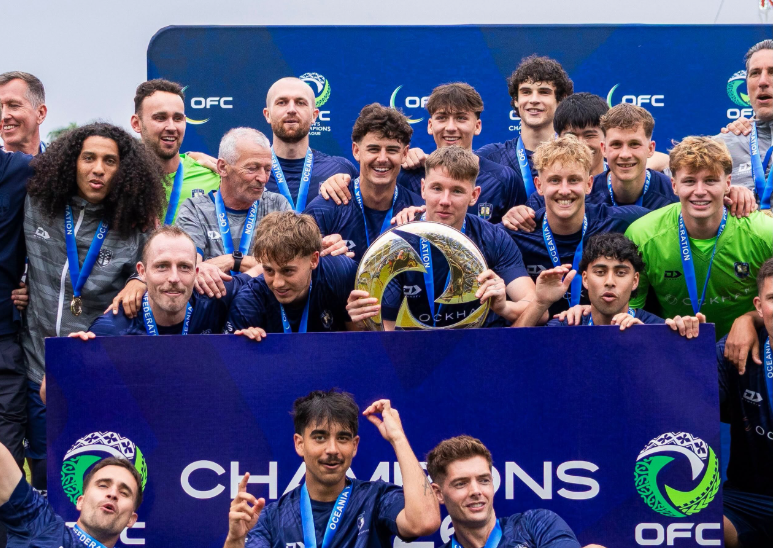
All Whites defender Tyler Bindon joins Charlton Athletic for new Championship challenge

New Zealand international Tyler Bindon will continue his development in the English Championship after completing a season-long loan move to Charlton Athletic from Premier League side Nottingham Forest.

The 21-year-old centre-back was officially announced by the Addicks on Sunday and becomes the club’s ninth signing of the summer as manager Nathan Jones strengthens his squad for the 2026/27 campaign. Bindon arrives at The Valley following a full season at Sheffield United, where he made 26 appearances in all competitions during his first year playing at Championship level.

For Bindon, the move provides another opportunity to secure regular football in one of Europe’s most demanding second divisions while remaining under contract with Nottingham Forest. His parent club signed him from Reading in February 2025 after the young defender established himself as one of the standout emerging players in the English Football League.

“It’s a privilege to be here, and I’m excited to get started,” Bindon said after completing the move. “The way the gaffer talked aligned with what I want to do, and I like the vision of the club. Hopefully I can be a part of that in a positive way.”

Charlton manager Nathan Jones revealed that he had followed Bindon for some time and had previously attempted to sign the New Zealand defender. Injuries within the Addicks squad accelerated the club’s need to reinforce the position, but Jones made clear that Bindon was far from being simply a short-term solution.

“He had a fantastic time at Reading and then got the move to Nottingham Forest,” Jones said. “He’s a player that will add to us and improve our squad, so we’re looking forward to working with him.”

Bindon’s progress in England has been rapid. Born in Auckland, he began playing with East Coast Bays before moving with his family to California at the age of 12. He later developed through the Los Angeles FC academy before returning to the other side of the Atlantic to join Reading in 2023.

It was at Reading that Bindon began attracting wider attention. He quickly established himself at first-team level and was named the club’s Player of the Season for 2024/25, while also receiving a nomination for the EFL League One Young Player of the Season award. Nottingham Forest subsequently moved to secure his services, with loan spells becoming an important part of his pathway towards eventually challenging for Premier League football.

His development has occurred alongside an increasingly important role with New Zealand. Bindon made his senior international debut against DR Congo in October 2023 and has already accumulated 28 appearances for the All Whites despite being only 21. He was also part of New Zealand’s squad at the 2026 FIFA World Cup, adding experience at the highest international level to an already significant amount of senior club football for a player of his age.

That combination makes Bindon one of the most interesting members of the current New Zealand generation. While Chris Wood remains the most prominent Kiwi presence in English football, several younger All Whites are now attempting to establish themselves across strong European leagues. Bindon’s continued presence in the Championship gives him another season of regular high-level competition and keeps open the possibility of eventually breaking into Nottingham Forest’s Premier League plans.

Charlton, meanwhile, are strengthening considerably ahead of the new campaign. Bindon joins a summer recruitment class that also includes Ivan Mesík, Billy Koumetio, Karlan Grant, Danny McNamara, Millenic Alli, Nathaniel Chalobah, Timothy Ouma and Arthur Okonkwo.

His first opportunity to feature could come when Charlton host Queens Park Rangers at The Valley on 9 September.

For New Zealand, another season of meaningful minutes in England would be particularly valuable. At only 21, Bindon has already travelled from Auckland to California, Reading, Nottingham, Sheffield and now south London. The next stage of that journey begins at Charlton, with the All Whites defender continuing to build a career that increasingly places him among New Zealand’s most significant young players abroad.

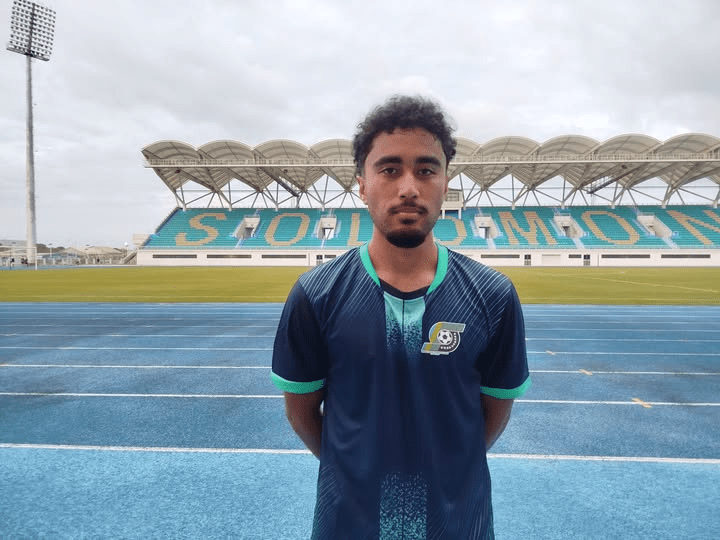
Born in New Zealand, carrying the Totori-Feni legacy: Ona Sabetian ready to make Solomon Islands proud

For Ona Sabetian, wearing the Solomon Islands shirt will mean much more than simply representing another country on the football pitch.

Born in New Zealand to a Solomon Islands mother and an Iranian father, the 19-year-old attacker is preparing to embrace one of the most important moments of his young career after being selected for Solomon Islands at the OFC U-19 Men’s Championship in Samoa.

Yet Sabetian’s connection to Solomon Islands football runs considerably deeper than his eligibility. He is the nephew of Benjamin Totori, Gagame Feni and Matson Feni — three names closely associated with the country’s football scene — and now has the opportunity to begin writing his own chapter in that family history.

Speaking to Solomon Star’s Star Sports ahead of the tournament, Sabetian made clear what the call-up means to him.

“I’m so proud and honoured to represent Solomon Islands and proud of my Solomon Islands heritage,” he told Star Sports.

“I’m looking forward to the competition and will do my best for this team in any way I can.”

Born on 10 April 2007, Sabetian has developed as a footballer in New Zealand. He currently represents Waitemata FC in Auckland and has previously spent time within the youth systems of Waitākere United and Auckland City FC, giving him experience in some of the country’s established development environments.

His pathway has therefore been largely shaped by New Zealand football, but the possibility of representing Solomon Islands has always carried a strong personal meaning.

Much of that comes from the footballers he grew up watching within his own family.

Benjamin Totori became one of the most recognisable Solomon Islands players of his generation, representing the national team and playing at a high level across Oceania, including spells in New Zealand and with Wellington Phoenix. Gagame Feni has also been an important figure for Solomon Islands internationally, while Matson Feni has been involved at national level and has had his own long career in domestic football.

For Sabetian, their careers provided something tangible to follow.

“Seeing a lot of my uncles playing for the national team in the past and now, and being big names here, I also want to follow in their footsteps and make them and the nation proud,” he told Star Sports.

That family connection gives his arrival an unusual significance.

Sabetian is not simply a New Zealand-born player discovered through eligibility rules. His Solomon Islands identity has remained part of his life away from football as well, and he has previously appeared in New Zealand initiatives promoting Solomon Islands culture and Pijin language within the Pacific community.

Now football provides him with another way of strengthening that connection.

He arrives in the Solomon Islands U-19 setup as the only overseas-based player selected in the squad and offers coach Franco Ne’e a different background from most of his teammates. Described by Star Sports as a pacey attacker, Sabetian has spent his formative years playing in Auckland’s competitive football environment before joining a squad largely composed of locally based players.

Any concerns about adapting to a new group, however, appear to have disappeared quickly.

“I now have a great bond with the team. They are very welcoming and I’m proud to be with the squad. I hope we can go a long way into the competition,” Sabetian said.

His ambitions extend beyond simply making an appearance at the continental championship.

The OFC U-19 Men’s Championship carries major consequences for Solomon Islands. Two places at the next FIFA U-20 World Cup are available to Oceania, meaning a successful campaign would put this generation of Solomon Islands players on the world stage.

Sabetian believes that possibility should not be considered unrealistic.

“I have a strong belief that this squad can make history for the country,” he told Star Sports. “We have great boys, and I think we can match the other teams and really have a shot.”

Solomon Islands will face hosts Samoa, New Caledonia and Papua New Guinea in Group A, with every match carrying significant weight in the battle to reach the knockout stages and remain in contention for World Cup qualification.

For Sabetian individually, however, the tournament carries another layer of meaning.

He represents an increasingly common reality within Oceanian football: a player developed abroad who remains connected to his Pacific heritage and chooses to bring that experience back into the region’s international game.

His story is also distinctly his own. New Zealand-born, with Iranian roots through his father and Solomon Islands heritage through his mother, Sabetian arrives on the international stage carrying several identities — but one very recognisable football surname legacy.

Totori and the Feni brothers have already left their mark on Solomon Islands football.

Now their nephew has his opportunity.

And when Ona Sabetian finally pulls on the yellow shirt, he will not only be representing Solomon Islands.

He will be continuing a family story that began long before his own international career.

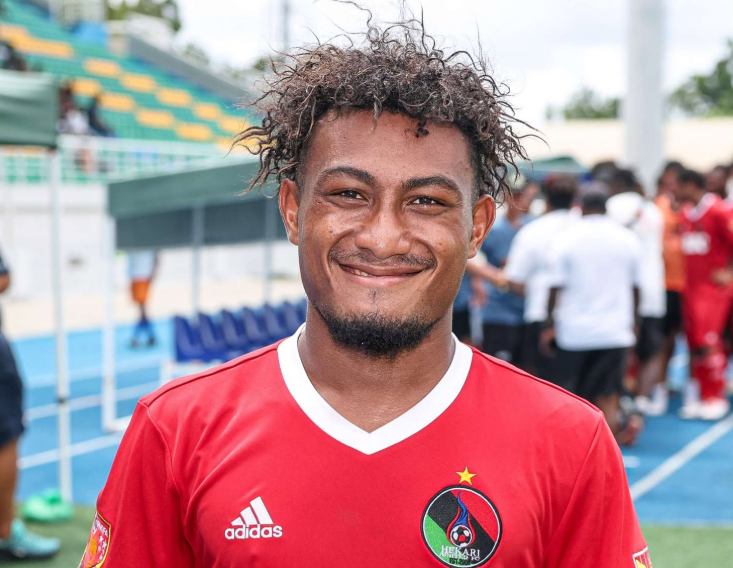
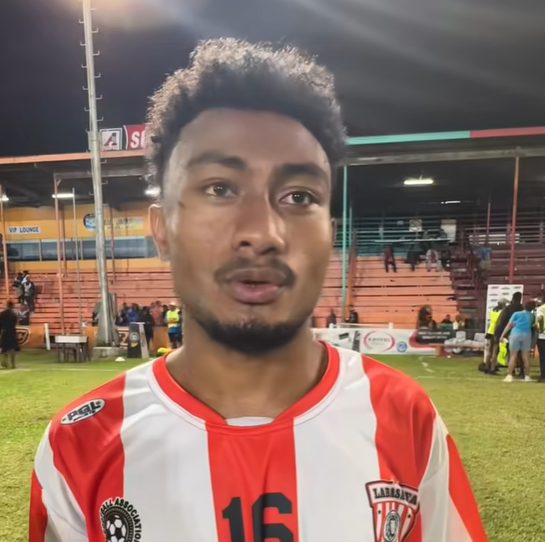
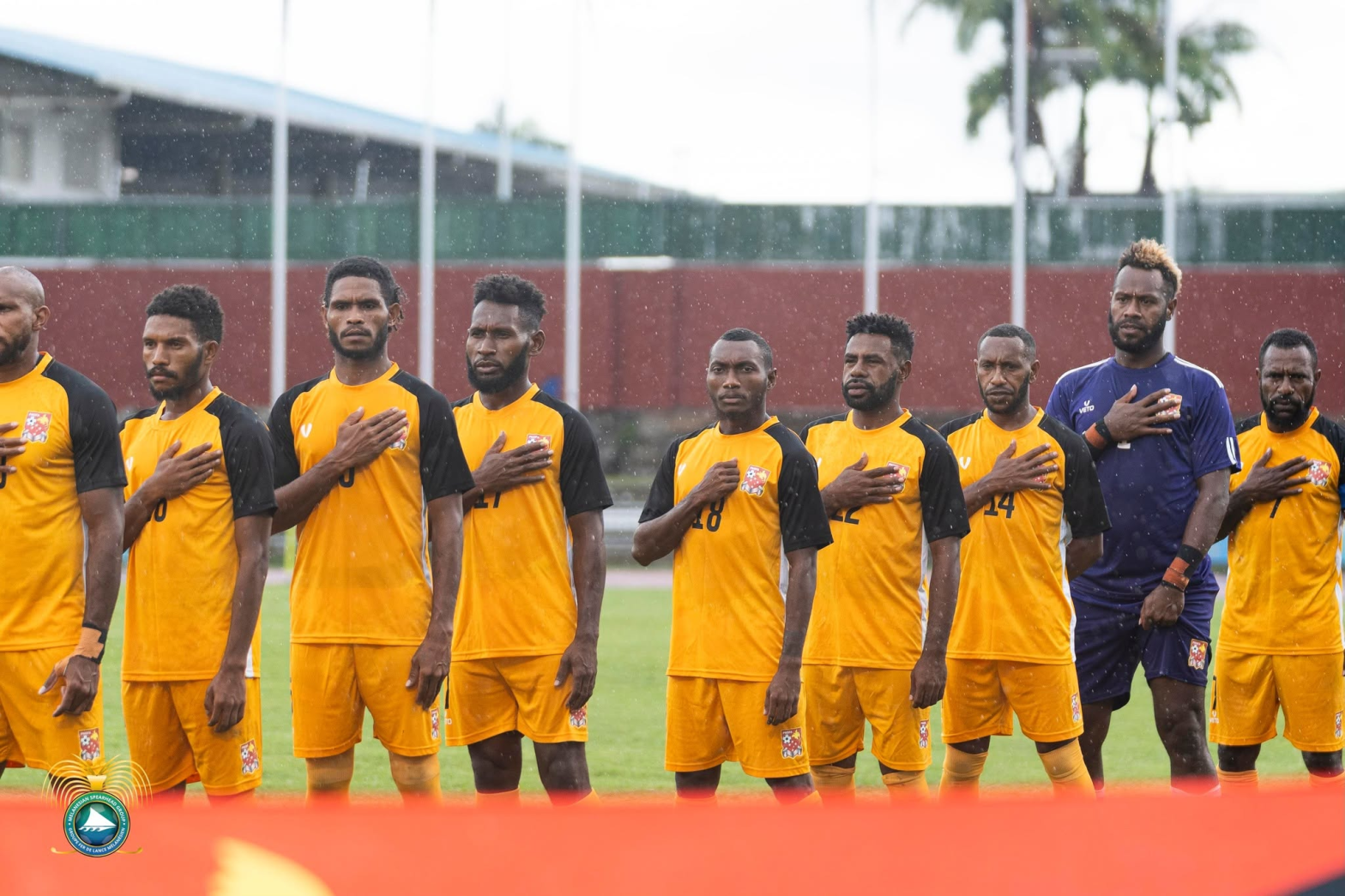
‘Hekari built me’: Rex Naime targets BOG glory with Labasa and sees Pro League as pathway overseas

Papua New Guinea international Rex Naime is preparing for another major challenge in Fiji as he targets the Battle of the Giants title with Labasa, while looking back at a period of his career that has taken him from a standout OFC Champions League campaign with Hekari United to the inaugural OFC Pro League and now to an important role with the Babasiga Lions.

The PNG attacker has quickly made his presence felt in Fijian football. Naime has scored three goals in the 2026 Fiji Premier League for Labasa, including an early goal against eventual champions Ba at Subrail Park, and was also involved in the club’s Fiji FACT campaign after arriving in the country.

Labasa finished the league campaign behind Ba, but Naime believes there is still an opportunity to finish this stage of the season with silverware. The defending Battle of the Giants champions will head to Ba looking to retain the trophy.

“The season was good. Our aim was to win the league, but unfortunately we came second,” Naime told Oceania Football Center. “My preparation is to win the BOG in Ba and prove that I am a champion.”

Rex Naime in Labasa colours – Source: Fijilive

The Battle of the Giants represents another chapter in what has been an eventful period for the Papua New Guinean. Labasa will face Nasinu, Suva and Navua in the group stage of the tournament, with Naime expected to be one of the attacking options available to coach Alvin Chand.

His move to Fiji followed an important season with PNG Hekari in the inaugural OFC Pro League. For Naime, playing regularly against some of the strongest clubs and players in the Pacific represented a significant step up.

“Firstly, I thank God for His blessing. It was good because it is the highest level in our region. I am so proud and I learned a lot playing against some big players,” he said.

Naime believes the competition demanded more than technical ability. With the quality of opposition increasing, he highlighted concentration and decision-making as areas where mistakes can quickly be punished.

“I experienced many things. You have to be mentally fit, make good decisions in games and stay focused because all the teams are at the top level. If you make one mistake, the team suffers.”

Hekari, however, endured a difficult inaugural Pro League campaign after entering the competition with significant expectations. Naime believes a lack of experience at that level among several members of the squad was one factor, while changes around the team during its preparation also affected the side.

According to the attacker, months of preparation were disrupted following the departure of the Brazilian coaching staff and players who had been working with the squad.

“I think many players were new to playing at that level of football. We also wasted three months of training because our coach from Brazil came and then left with two of his players. That was the main reason,” Naime explained.

The difficult Pro League season contrasted sharply with Hekari’s continental campaign one year earlier.

Naime was one of the outstanding performers of the 2025 OFC Champions League, scoring four goals as the Papua New Guinean giants reached the final of Oceania’s premier club competition for the first time in 15 years.

It remains one of the defining moments of his young career.

“That was the big moment for me and for Hekari, for people to remember my name, because after 15 years I helped take them to the final.”

But when asked about Hekari’s wider importance to his development, Naime went considerably further.

“Hekari is the foundation of my career. It gave me the chance to play at the top level in PNG, Oceania and now in the OFC Pro League. Because of Hekari, I got to play in the OFC Champions League, score four goals and help the team reach a final after 15 years.”

The attacker also credited the club for helping shape him away from the matches themselves.

“Most of all, I believe it is God’s plan. He opened the doors for me through Hekari. The club taught me discipline, hard work and faith. With God’s guidance and Hekari’s support, I am able to chase my dreams and represent my country.”

Naime summed up the relationship in even stronger terms.

“Hekari built me. Without Hekari, there is no Rex Naime at this level.”

He also thanked Hekari owner John Kapi Natto and Vonnie Kapi Natto for the support given to him during his development at the club.

Now, however, Naime is experiencing football outside Papua New Guinea.

He described Fijian football as having similarities to the game in PNG, and his first months with Labasa have already allowed him to experience the particular importance of district football and tournament competitions in Fiji.

There will also soon be another familiar Papua New Guinean face alongside him. Naime confirmed fellow PNG international Joseph Joe is returning to Labasa after previously representing the club during the Fiji FACT.

Beyond club football, Naime also expects to return to international duty.

With the MSG Prime Minister’s Cup approaching, the attacker said he expects to join the Papua New Guinea squad and is optimistic about what the Kapuls can produce, although he believes the changing standard of football across Oceania means results can no longer be taken for granted.

“Yes, I’ll be joining the team. I believe we are going to produce good results again, but we have to take one game at a time because the level of football in Oceania has changed after the Pro League.”

That change is something Naime has experienced personally.

Having faced international opposition with both Hekari and PNG before playing a full regional club competition, he believes the establishment of the OFC Pro League can have consequences extending beyond the tournament itself.

For players from Pacific nations where opportunities to enter professional football abroad remain limited, Naime sees the competition as a potential bridge to a bigger stage.

“It can change the level of football in Oceania, and I think the OFC Pro League is our way out as Oceania players to other countries overseas.”

That ambition gives additional context to Naime’s current spell in Fiji.

At Hekari, he developed into a player capable of deciding matches on the continental stage. The Pro League then exposed him to regular competition against some of the region’s strongest teams. With Labasa, he is now adapting to another football environment and contributing goals in one of the Pacific’s most competitive domestic leagues.

Naime identified game control, reading situations and finishing among the areas he continues to work on.

For now, however, the immediate objective is much simpler.

The next opportunity is the Battle of the Giants in Ba, where Naime will attempt to help Labasa defend one of Fiji football’s major trophies.

After helping Hekari return to an OFC Champions League final, testing himself in the new Pro League and establishing himself in Fiji, the PNG international has another chance to demonstrate why his name has increasingly become one to follow in Pacific football.

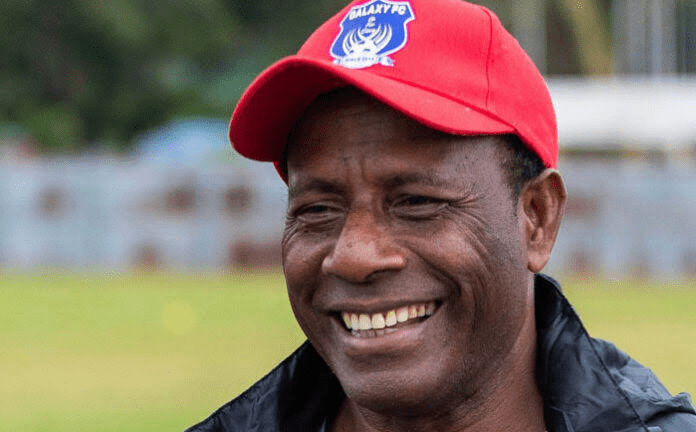
Batram Suri takes charge of Lautoka FC ahead of Battle of the Giants after Galaxy OCL campaign

Former Solomon Islands international Batram Suri has been appointed head coach of Lautoka FC, taking charge of one of Fiji’s leading football districts ahead of the 2026 Extra Battle of the Giants.

The appointment was confirmed by the Fiji Football Association, with Suri set to lead the Blues into the BOG, which will kick off next week at Four R Stadium at Govind Park in Ba.

The move comes shortly after Suri completed another important assignment in Oceania football, leading Vanuatu side Galaxy FC at the 2026 OFC Men’s Champions League in Fiji. His work with Galaxy now opens another chapter in a coaching career that has increasingly taken him beyond his native Solomon Islands.

Suri is already a familiar name in Fiji. During his playing career, the former Solomon Islands international represented Nadi FC, giving him previous experience of the local football environment before returning to the country in a coaching capacity.

After his playing days, Suri moved into coaching and has worked with Solomon Islands age-group national teams as well as clubs across the Pacific. His club experience includes spells with Ifira Black Bird and Galaxy FC in Vanuatu, with the latter becoming his most recent project before the Lautoka appointment.

His arrival represents an important move not only for Lautoka but also for Solomon Islands football, with one of the country’s most recognisable former internationals now being entrusted with a major coaching role in another of Oceania’s strongest domestic football environments.

Lautoka will also provide Suri with an immediate challenge. The Battle of the Giants remains one of the major tournaments on the Fijian football calendar, and the Blues will enter the competition looking to compete for silverware under their new coach.

The timing of the appointment means Suri will have little time to settle before competitive action begins. However, his recent experience in Fiji with Galaxy during the OFC Champions League should provide useful familiarity with local conditions and opposition.

The Fiji FA announcement did not specify the length of Suri’s agreement with Lautoka, with the appointment currently presented in the context of the upcoming Battle of the Giants.

For Suri, the move adds another important step to a career that has taken him through several different football environments in the Pacific — first as one of Solomon Islands’ prominent players and increasingly now as a coach working across the region.

PNG confirms MSG Cup participation despite K469,000 in unpaid allowances after government assurance

Papua New Guinea will take part in the 2026 MSG Prime Minister’s Cup in Fiji after the PNG Football Association received assurances from the Office of the Prime Minister that outstanding payments owed from previous editions of the tournament will be settled.

The confirmation represents a significant change from the position taken by PNGFA earlier in August, when president John Kapi Natto said the association would not assemble its national teams while allowances, reimbursements and other financial commitments from previous MSG tournaments remained unresolved.

PNGFA has now been instructed to assemble both the Kapuls and the Bilums and begin preparations for the fifth edition of the regional tournament, scheduled to be played in Fiji from September 17 to October 3.

General secretary Armjad Tekwie confirmed that discussions with the Office of the Prime Minister had produced the assurances required for the federation to move forward.

“We have been advised to assemble both teams and commence preparations,” Tekwie said.

However, the dispute is not yet financially resolved.

According to NBC PNG, around K469,000 in outstanding payments remained unpaid as of August 20. PNGFA has been assured that the money will be released before the national teams leave for Fiji, with their departure scheduled for September 14.

“We were assured that payments will be made before the teams leave for Fiji,” Tekwie said.

The outstanding commitments concern players who represented Papua New Guinea in both the 2024 and 2025 editions of the MSG Prime Minister’s Cup.

The 2024 case has been unresolved for more than a year. The Kapuls won the tournament in Honiara, Solomon Islands, but players subsequently complained that allowances promised for their participation had not been paid.

In May 2025, the Post-Courier reported that the PNG Sports Foundation had provided and paid player allowances during the first two editions of the competition but had still not fulfilled the equivalent commitment from the 2024 tournament despite previous assurances and budget provisions.

A separate K100,000 incentive provided by Prime Minister James Marape was distributed to players and officials following the triumph. That payment, however, was distinct from the outstanding allowances. Later in 2025, it was reported that a commitment of K4,000 per player connected to the MSG campaign was still outstanding.

The issue then extended into the 2025 competition, hosted by Papua New Guinea in Port Moresby.

That edition saw the Bilums make history by winning the inaugural women’s MSG Prime Minister’s Cup, while the Kapuls reached the men’s final before losing to Vanuatu on penalties. Despite the sporting success, financial commitments arising from the tournament were again left unresolved.

PNGFA has also claimed reimbursements remain outstanding to the association and other stakeholders who contributed money or support to the staging of the 2025 tournament.

It was this accumulation of obligations that prompted Kapi Natto to take the unusual step of putting Papua New Guinea’s 2026 participation on hold.

“Our players and officials have represented Papua New Guinea with pride, discipline and commitment,” Natto said when announcing the federation’s position.

The PNGFA president argued that the association could not continue asking players to represent the country while financial commitments made to them during previous tournaments remained unsettled.

The latest episode is therefore not simply a dispute between players and PNGFA. The MSG Prime Minister’s Cup is government-supported, and much of the current disagreement centres on obligations involving the PNG Sports Foundation and other state structures rather than money directly controlled by the football association.

Nevertheless, delayed payments are not an unfamiliar subject in Papua New Guinea football.

In 2019, K200,000 in National Soccer League prize money remained unpaid to the competition’s top four clubs after the season had finished. Officials blamed unpaid affiliation fees from participating clubs for the delay.

Financial complaints resurfaced in 2023, when match officials publicly claimed that referees across PNGFA-sanctioned competitions were owed more than K20,000, while further outstanding payments reportedly remained from the previous season.

In January 2024, PNGFA again acknowledged that prize money owed to leading clubs from its men’s and women’s national competitions had not yet been paid. The federation said financial difficulties, including a lack of government and commercial support, had contributed to the delay.

An even more serious precedent involved former Kapuls coach Flemming Serritslev. The Danish coach, who led PNG to the historic 2016 OFC Nations Cup final, pursued PNGFA for unpaid salary, contractual payments and a Nations Cup performance bonus. Documents later presented in proceedings before the Court of Arbitration for Sport showed that PNGFA had acknowledged a substantial outstanding debt under a 2017 settlement.

There have also been attempts to change that record. PNGFA described the 2025 Premier Soccer League season as a significant administrative improvement after prize money was deposited directly into the winners’ accounts on the day of the final.

The MSG situation, however, demonstrates that player welfare remains vulnerable when financial responsibilities are divided between football authorities, government institutions and tournament organisers.

For Papua New Guinea, the immediate sporting question has at least been answered.

The Kapuls are scheduled to open their campaign against Vanuatu on September 17 before facing New Caledonia, Fiji and Solomon Islands. The Bilums will also travel to Fiji to defend the women’s title they won in Port Moresby.

But the more important question remains unresolved until the money reaches the players.

Papua New Guinea is going to the MSG Prime Minister’s Cup. The commitments that almost kept the country out of it still have to be honoured.

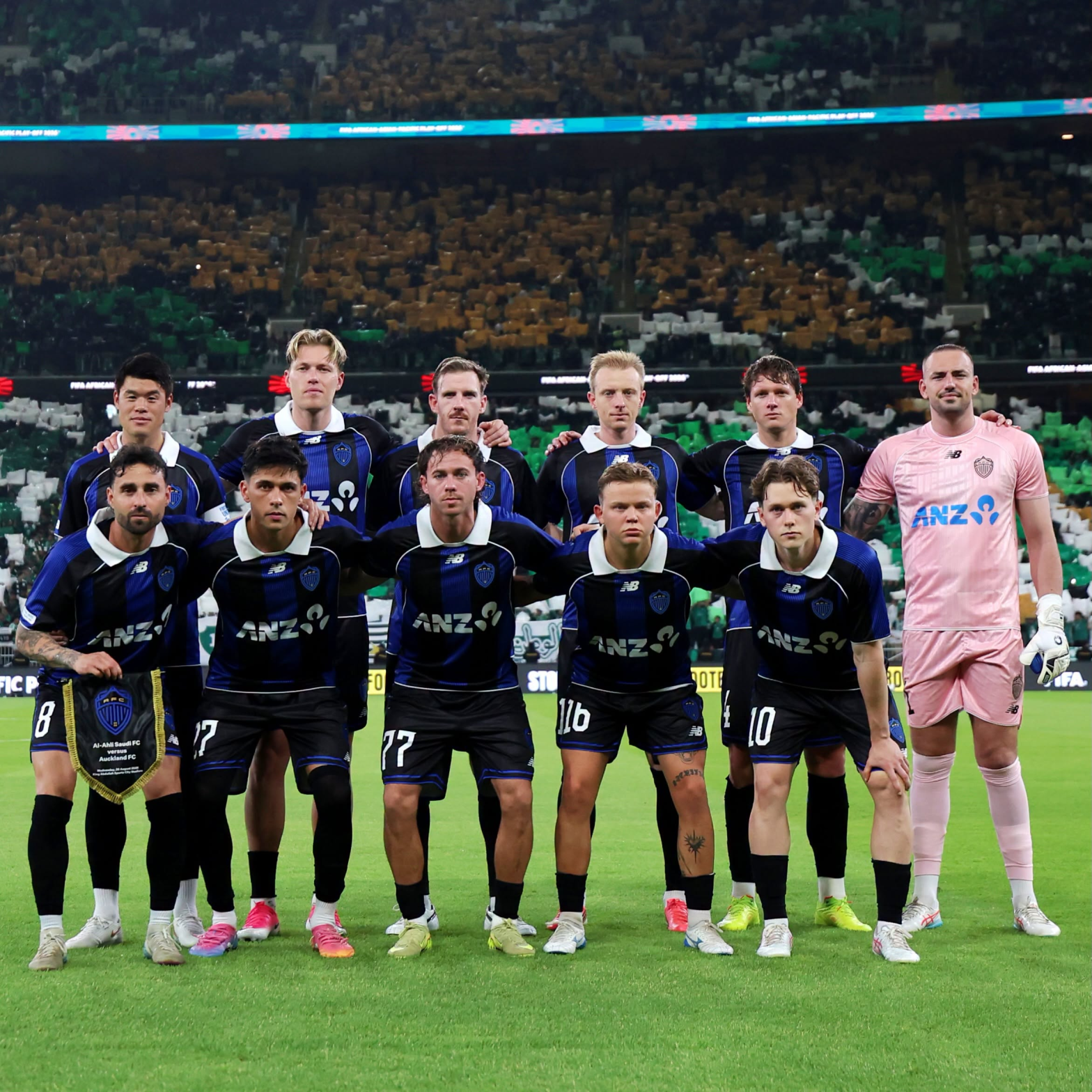
Auckland FC’s A-League champions take Oceania to FIFA stage but fall narrowly to Al-Ahli

Auckland FC’s first appearance on the FIFA stage ended in defeat, but the New Zealand professional side produced a competitive performance against the champions of Asia, falling only 1-0 to Al-Ahli in the opening match of the 2026 FIFA Intercontinental Cup in Jeddah.

Saleh Abu Al-Shamat scored the only goal of the night in the 63rd minute at King Abdullah Sports City, while Auckland finished the match with ten men following a late red card to Sam Cosgrove.

The result brought an immediate end to Auckland FC’s first FIFA campaign, but the context behind the team that represented Oceania in Saudi Arabia is particularly significant.

Auckland qualified for the Intercontinental Cup by winning the inaugural OFC Pro League earlier this year. However, the side that faced Al-Ahli was substantially different from the one that had spent the first half of 2026 competing across the Pacific.

Instead, Auckland arrived in Jeddah with essentially the strength of their senior A-League operation.

The distinction matters.

During the OFC Pro League season, Auckland FC operated a separate squad under Luke Casserly while the club’s senior team simultaneously competed in Australia’s A-League. The arrangement proved remarkably successful: Auckland’s A-League side won the championship before its Pro League squad defeated South Melbourne 2-1 at Eden Park the following day to complete an extraordinary double for the club.

The Pro League title provided Auckland with the ticket to the FIFA Intercontinental Cup. When the time came to use it, however, the club was able to turn primarily to the squad that had competed at the higher weekly level of the A-League.

Of the 22 players selected to travel to Saudi Arabia, only seven had been members of Auckland’s OFC Pro League-winning group. Just three of those players eventually appeared against Al-Ahli.

Daniel Normann provided the most direct connection between the two campaigns.

One of the outstanding performers of the inaugural OFC Pro League, the Norwegian midfielder made 14 appearances, won Auckland FC’s Players’ Player of the Season award and was awarded the OFC Pro League Golden Ball. His performances earned him promotion into the club’s A-League squad alongside defender Ronan Wynne.

Normann was the only regular member of Auckland’s Pro League championship side to start against Al-Ahli.

Wynne, who made 12 appearances during the Pro League campaign and was named Auckland’s MVP for that competition, joined the action in the 53rd minute. Van Fitzharris was introduced in the 76th minute.

They were the only three players to take the field in Jeddah who had also played a direct role in Auckland’s OFC Pro League campaign.

The rest of the team reflected the strength available to the club through its A-League operation, with names such as Michael Woud, Hiroki Sakai, Nando Pijnaker, Francis de Vries, Felipe Gallegos, Logan Rogerson and Sam Cosgrove involved from the start.

That made Auckland’s FIFA debut a particularly interesting test.

The Black Knights were no longer facing Pacific opposition with the largely separate group assembled for the OFC Pro League. They were taking the core of a team capable of winning the A-League into a match against the reigning AFC Champions League Elite winners.

And the difference between the two continental environments could hardly have been more striking.

Al-Ahli lined up with a squad packed with players accustomed to elite European and international football, including former Chelsea goalkeeper Édouard Mendy, Brazilian international Galeno, Portuguese attacker Francisco Trincão, Brazilian defender Roger Ibañez and England striker Ivan Toney.

Auckland were also entering the match in difficult circumstances. It was their first competitive fixture since winning the A-League Championship in May, with the New Zealanders still effectively in pre-season under new head coach Pedro Moreira.

In front of an estimated crowd of 45,000 and in demanding heat and humidity, Auckland nevertheless refused to simply retreat and survive.

Al-Ahli controlled more of the ball and produced the greater volume of attacks, but Auckland had opportunities of their own during an encouraging opening half.

Michael Woud was required to make an important save from Galeno after 17 minutes, but Auckland responded through Logan Rogerson.

The New Zealand international caused problems for the Saudi defence and forced Mendy into action, most notably with a looping header that required an acrobatic save from the Senegalese goalkeeper.

Woud was again decisive before half-time, denying Eduard Spertsyan to ensure Auckland reached the interval at 0-0.

For a side playing its first competitive match in three months, away from home against the champions of Asia, Auckland had done considerably more than merely remain alive in the contest.

Al-Ahli continued to push after the restart and finally found their breakthrough shortly after turning to the bench.

Abu Al-Shamat entered the match in the 62nd minute and made an almost immediate impact. Spertsyan broke forward down the left and created the opportunity for the substitute, who finished past Woud in the 63rd minute.

The goal ultimately separated the sides.

Auckland remained in the match and Al-Ahli were unable to turn their territorial superiority into a comfortable victory. Cosgrove’s straight red card with three minutes of normal time remaining made the prospect of a late equaliser considerably more difficult, and the Asian champions eventually closed out the 1-0 win.

Moreira was proud of his side after the match and highlighted the circumstances surrounding Auckland’s first competitive appearance of the new season.

“We did an amazing job. We cannot forget that we are in pre-season,” he said.

“This is the first time these players played a full 90 minutes. With this weather, with this humidity, with this crowd… amazing, I am very proud of this team.”

Auckland’s elimination continues Oceania’s difficult record in the opening stages of the new Intercontinental Cup format, but the margin was considerably narrower than in the region’s previous two appearances.

Auckland City, then qualifying as OFC Champions League winners, were beaten 6-2 by Asian champions Al Ain in the inaugural 2024 edition. The Navy Blues returned in 2025 and suffered a 3-0 defeat against African champions Pyramids FC in Cairo.

This time it was Auckland FC representing the region, following the OFC’s decision to award Oceania’s Intercontinental Cup place through its new professional competition.

A 1-0 defeat against the Asian champions therefore provides an encouraging result for Oceanian football, but it also requires some context.

It would be premature to interpret the performance in Jeddah simply as proof that the OFC Pro League has already closed the gap between Oceania and the stronger continental competitions.

The team that won the Pro League and the team that faced Al-Ahli were largely different.

Auckland effectively won Oceania’s new professional championship with a second squad while its strongest players were focused on the A-League. Once qualification for FIFA competition had been secured, the club was able to bring those two structures together and send predominantly its senior A-League group to Saudi Arabia.

That advantage cannot be ignored when comparing Auckland with the other clubs competing in the OFC Pro League.

At the same time, the pathway created by the competition was visible.

Normann is perhaps its clearest example. He entered the year as part of Auckland’s Pro League squad, emerged as the competition’s best player, earned promotion to the A-League group and, months later, started against the champions of Asia on the FIFA stage. Wynne followed a similar route from the Pro League into Auckland’s senior squad.

In that sense, the Intercontinental Cup highlighted two different strengths of the Auckland FC project: the considerable depth created by having access to both an A-League-level first team and a competitive Pro League squad, and the possibility of using the Oceanian competition to develop players capable of making the step into the senior professional environment.

For the rest of the region, however, Auckland’s performance also provides food for thought.

Most OFC Pro League clubs do not possess another first team competing every week in a competition of the A-League’s standard. Auckland FC do. Their route to Jeddah may have come through the Pro League, but the team that represented Oceania once they arrived there was predominantly the A-League champion rather than the side seen throughout the Pacific competition.

That makes the 1-0 result both encouraging and difficult to use as a direct measurement of the OFC Pro League itself.

What can be measured is Auckland FC.

Less than two years after entering professional football, the club has already won the A-League Championship, captured the first OFC Pro League title and made its debut on the FIFA stage.

In Jeddah, facing a team containing players who have competed at some of the highest levels of world football, Auckland were beaten — but they were not overwhelmed.

Al-Ahli advance to meet African champions Mamelodi Sundowns in Pretoria on 19 September for the FIFA African-Asian-Pacific Cup.

Auckland FC return home with their first Intercontinental Cup campaign over after only one game, but also with a valuable reference point.

The ticket to Jeddah was earned by their OFC Pro League team. The performance in Jeddah was delivered largely by their A-League champions.

Understanding that distinction is essential when assessing what Auckland FC’s narrow defeat really tells us about the club — and about the new era of professional football that Oceania has only just begun.

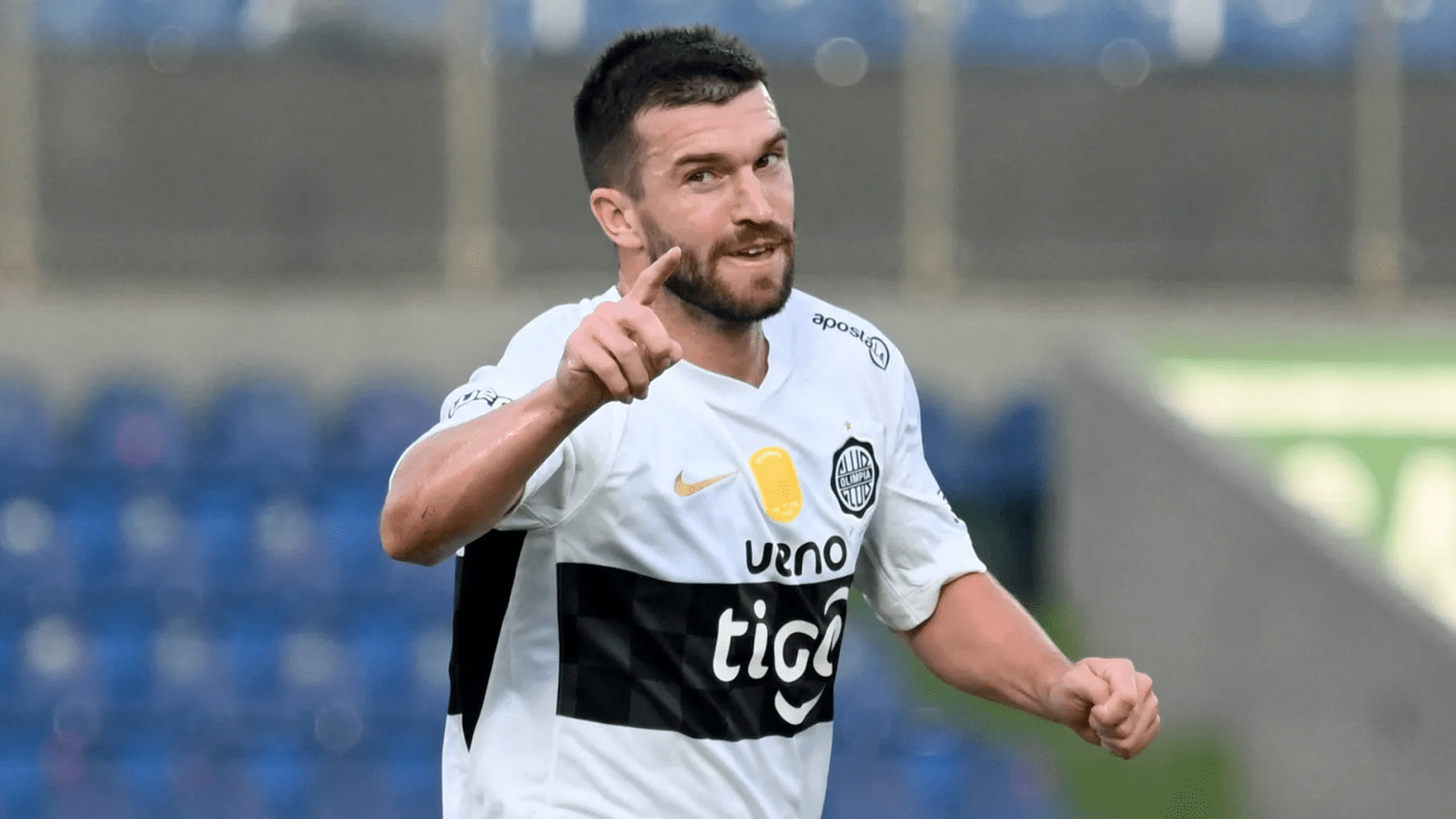
From World Cup viral sensation to Superclásico winner: Tim Payne is already making his mark in Paraguay

What began as one of the most unlikely stories of the 2026 FIFA World Cup is rapidly developing into something far more substantial for Tim Payne.

The New Zealand international arrived in Paraguay carrying an extraordinary level of attention after going from one of the least-followed players heading into the World Cup to a social media phenomenon with millions of followers. His move from Wellington Phoenix to Olimpia inevitably attracted curiosity well beyond New Zealand and Paraguay.

A few weeks into his South American adventure, however, Payne is beginning to give people a footballing reason to continue following him.

The 32-year-old completed the full 90 minutes as Olimpia defeated arch-rivals Cerro Porteño 2-1 in the Paraguayan Superclásico on Sunday, another important step in a remarkably positive start to life with one of South America’s historic clubs.

It was Payne’s third appearance in the Paraguayan Clausura — and Olimpia have won all three matches in which the All White has taken the field.

His introduction to Paraguayan football could hardly have gone better. After entering from the bench against Rubio Ñu on August 2, Payne marked his official debut with a spectacular goal in a 5-0 victory. He later earned a place in the starting XI for the 2-1 win over Sportivo Ameliano before retaining his position for the biggest domestic fixture on Olimpia’s calendar.

Against Cerro Porteño, Payne was no longer a novelty signing waiting to be introduced to Paraguayan football. He was Olimpia’s starting right-back in front of a packed Defensores del Chaco, playing the entire Superclásico as the Decano recovered from a goal down to claim a 2-1 victory.

That distinction matters.

Payne’s transfer was inevitably accompanied by discussion over its commercial potential. His extraordinary rise on social media during the World Cup gave Olimpia access to an international audience vastly larger than the one normally surrounding a Paraguayan domestic signing.

But the first weeks of his spell have begun shifting the conversation from marketing towards football.

His popularity has also started to become visible among Olimpia supporters themselves.

When the club released its squad for the Copa Paraguay round-of-32 meeting with Cristóbal Colón of J. Augusto Saldívar, Payne was among the regular starters left out as coach Pablo Sánchez prepared to rotate his team following a demanding sequence of matches. The decision quickly generated reactions from supporters on social media asking why the New Zealander was absent and when they would see him again.

Some fans pointed to the obvious explanation — that Payne was being rested and preserved for the Clausura — but the reaction itself was revealing. Only weeks after arriving in Paraguay, supporters were already asking to see the All White every time Olimpia took the field.

There have been other signs of that growing connection.

The match-worn and signed shirt from Payne’s goalscoring debut attracted extraordinary interest when it was put up for auction, with bidding reaching more than 20 million Paraguayan guaraníes. For a player who had never represented Olimpia before August, the attention surrounding his first shirt provided another indication that his World Cup fame had successfully travelled with him to Asunción.

The important difference now is that the relationship is beginning to work both ways. The global following brought attention to Olimpia, while Olimpia supporters are increasingly embracing Payne because of what he has actually done in their colours.

His South American spell has already brought him close to another significant milestone.

Payne was registered by Olimpia for the knockout stages of the Copa Sudamericana and was among the substitutes for both legs of the round-of-16 tie against Brazilian giants Vasco da Gama. He did not enter either match, with the Paraguayan side eventually eliminated after a 4-1 defeat in Asunción following a goalless first leg at São Januário.

That means Payne is still waiting for his first appearance in a CONMEBOL club competition.

The route he has taken remains extremely unusual for a New Zealand footballer.

Former All White Michael Wilson had a spell with Ecuadorian side Aucas in 2009, while Marco Rojas later represented Chilean giants Colo-Colo and went one step further by appearing in the Copa Libertadores. Payne has now added Paraguay to that very short history of New Zealand internationals establishing themselves in South American club football.

His case is particularly striking because of the environment into which he has arrived.

Olimpia are not merely another destination abroad. The club are three-time Copa Libertadores champions and one half of Paraguay’s defining football rivalry. Within weeks of leaving Wellington, Payne has gone from A-League football to playing 90 minutes in a Superclásico and being part of a Copa Sudamericana knockout squad.

The story also remains closely connected to the All Whites.

New Zealand will return to international action later this year, giving Payne another opportunity to carry his Paraguayan experience back into Darren Bazeley’s national team. The All Whites are scheduled to compete in Japan’s Kirin Cup in October before returning home for two matches against India in November.

For Payne, regular minutes at Olimpia would provide a very different preparation for those international windows from anything he had experienced before the World Cup.

And that may ultimately become the most interesting part of the story.

During the World Cup, millions began following Tim Payne because an internet campaign turned an almost unknown New Zealand defender into an unlikely global celebrity.

Olimpia recognised the opportunity and brought that audience to Paraguay.

But football has a way of deciding whether those stories last.

A goal on debut, three league appearances followed by three victories, a full 90 minutes in a winning Superclásico and Olimpia supporters already asking why he is not involved when his name disappears from a matchday squad suggest that Payne is beginning to accomplish something much more difficult than becoming viral.

He is becoming relevant for what happens on the pitch.

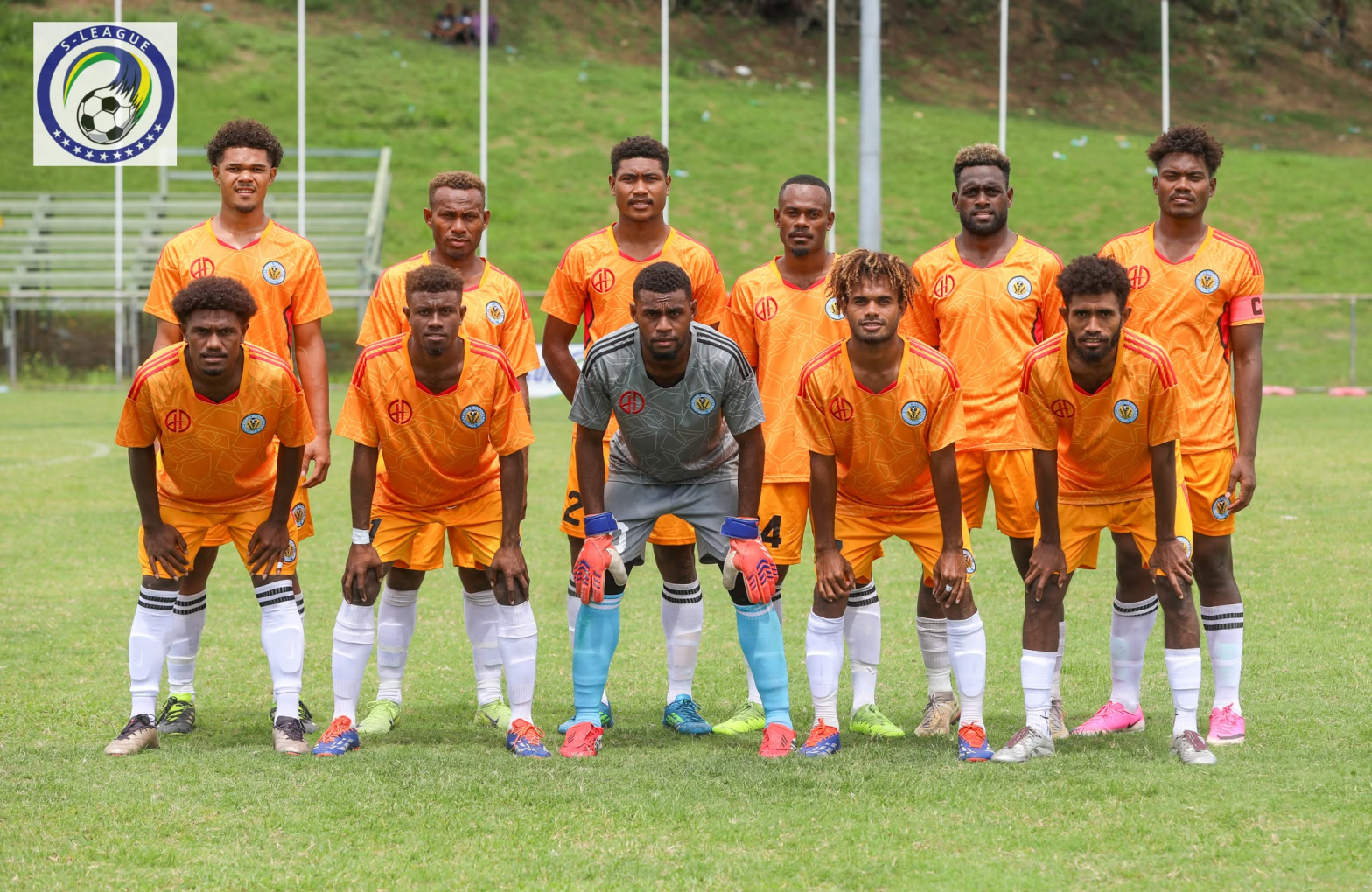
Ghupo answer critics on the pitch as Green Shield keep marching in S-League

Ghupo FC produced one of the main talking points of the S-League weekend in Solomon Islands, defeating Laugu United 3-2 in a dramatic contest and giving fresh substance to the defence mounted by their supporters after recent criticism of the club.

Wilfred Mani opened the scoring for Ghupo in the 24th minute before Steve Morris equalised for Laugu in first-half stoppage time. Nathanaiel Eddie restored Ghupo’s advantage shortly after the restart, but Joel Karani brought Laugu level again in the 62nd minute.

The decisive moment came deep into stoppage time, when Kevin Samia struck in the 96th minute to secure a 3-2 victory for Ghupo.

The result carries particular significance considering the discussion around the club in recent weeks. Ghupo’s difficult start and the wider questions surrounding the project led to considerable debate, including a strong reaction from supporters who argued that the team’s performances deserved more credit than the results suggested.

This time, Ghupo provided the strongest possible response: three points on the pitch.

The victory does not erase the wider questions surrounding the club or automatically transform its season, but it does add another important result to a campaign that is beginning to look more competitive than its opening weeks suggested.

Elsewhere, Green Shield continued their impressive form with a convincing 3-0 victory over Marist FC.

Bobby Kennedy Leslie gave Green Shield an early advantage in the fifth minute before Kiren Israel doubled the lead in the 69th. Colman Makasi completed the scoring in the 90th minute as Green Shield maintained their momentum near the top end of the competition.

Saturday’s action produced the most spectacular scoreline of the round as KOSSA defeated Southern United 5-4.

Southern United’s Spensor Vaevo scored a hat-trick, finding the net in the 13th, 55th and 63rd minutes, while an own goal from Besa Zopoa also contributed to their tally.

KOSSA, however, found five goals of their own. Lestra Lili scored an own goal in their favour before Bryan Feni, Felix Bello, Phillimon Talisa and Milton Taolo all found the net to secure another valuable victory.

The opening fixture of the round saw SOSA FC and Malaita Kingz share the points in a 2-2 draw.

Atkin Kaua gave Malaita Kingz the lead in the 14th minute, but Ronald Kivolyn struck twice, in the 35th and 40th minutes, to turn the match around before half-time. Ben Fox then scored deep into stoppage time to rescue a point for Malaita Kingz.

One scheduled fixture was absent from the weekend programme, with Honiara City against Central Coast FC postponed because of Central Coast’s participation in the OFC Champions League.

The postponement is an important factor when looking at the current S-League picture. Central Coast’s continental commitments mean they have played fewer domestic matches than several rivals, making the standings less straightforward than the points totals alone suggest.

For Green Shield, however, the task has been simple: keep winning while the opportunity is there.

For Ghupo, the weekend carried a different significance.

The club has been one of the most discussed sides in the league, both because of its results and because of the attention surrounding its project. Its supporters strongly defended the team when criticism arrived.

Against Laugu, Ghupo finally gave them the argument that matters most in football: a win.

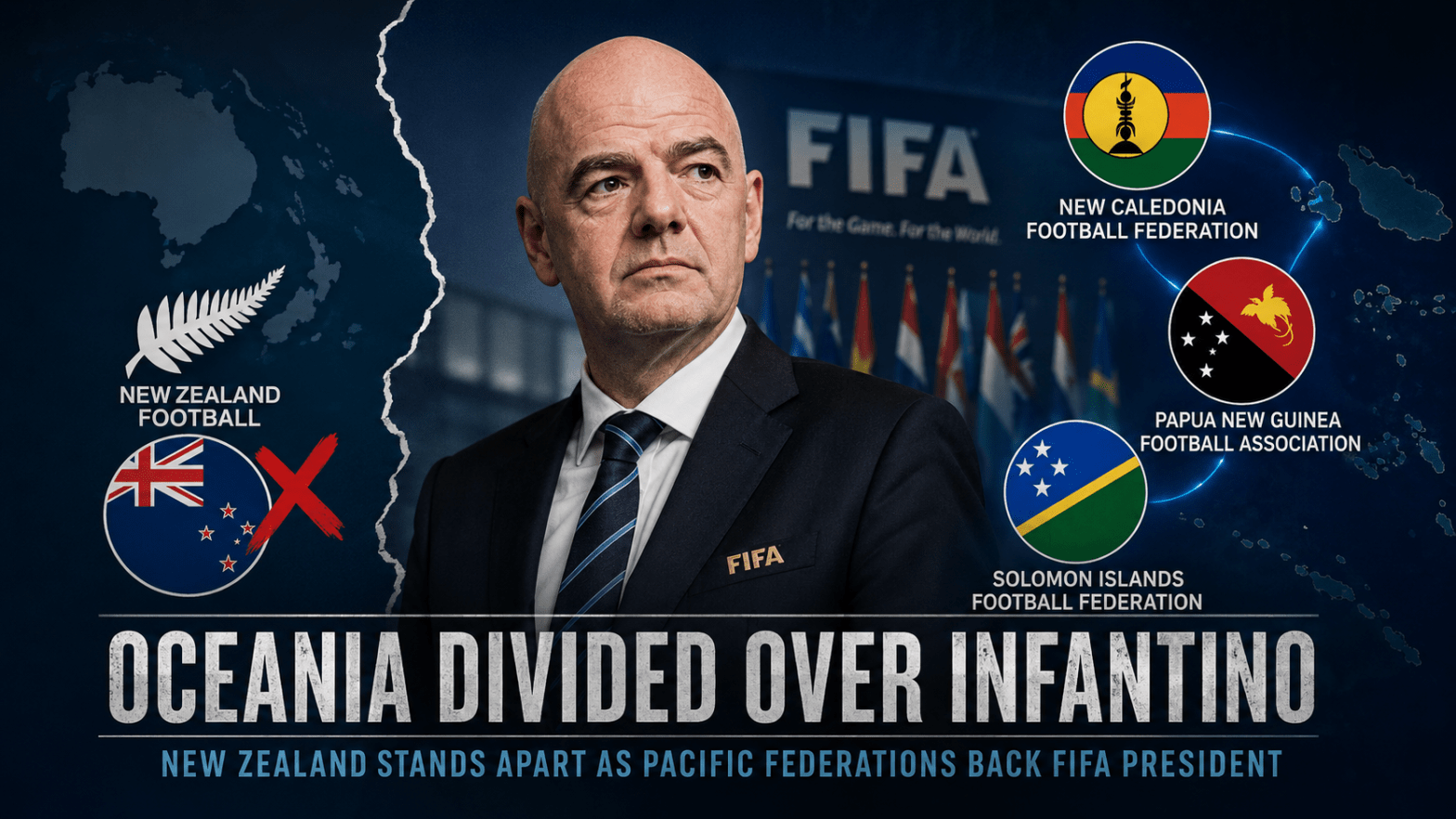
Infantino keeps his Pacific bloc as New Zealand challenges Oceania’s FIFA consensus

Four years ago, Oceania presented a united front behind Gianni Infantino.

Ahead of the 2023 FIFA presidential election, all 11 members of the Oceania Football Confederation were publicly committed to the Swiss administrator. OFC president Lambert Maltock announced the region’s unanimous support, praising what FIFA had delivered for football across the Pacific.

That unity no longer exists.

As Infantino faces one of the most serious political crises of his presidency, New Zealand Football has withdrawn its support for his re-election and demanded greater accountability from FIFA.

Yet rather than triggering a wider rebellion inside Oceania, New Zealand’s decision has so far produced the opposite picture.

New Caledonia, Papua New Guinea, Solomon Islands, Tahiti and American Samoa have all subsequently expressed support for Infantino, with several of them explicitly declaring that they want him re-elected as FIFA president.

The emerging picture leaves New Zealand increasingly isolated among the OFC associations that have publicly stated their position.

The dispute began with the controversial FIFA Forward Enterprise proposal, which would have reorganised part of FIFA’s commercial operations and opened a stake in the governing body’s commercial rights to private investment.

The project generated strong opposition from some of world football’s most powerful organisations and eventually collapsed.

UEFA, the Asian Football Confederation and CONCACAF challenged FIFA’s handling of the proposal, while criticism increasingly focused on governance, consultation and the amount of authority concentrated around Infantino.

The controversy has since escalated well beyond the original proposal.

Several national associations have withdrawn their support for Infantino, questions over confidence in the FIFA leadership have intensified and the search for a possible challenger ahead of the 2027 presidential election has begun.

New Zealand became Oceania’s most significant dissenting voice.

NZ Football formally withdrew its support for Infantino’s candidature and called for an independent review into how the FIFA Forward Enterprise proposal was developed.

The federation said recent decisions within FIFA had contributed to a breakdown in trust and greater division within international football.

For New Zealand, the issue became one of governance, accountability and transparency.

Its stance was particularly significant because OFC had been one of Infantino’s most reliable regions.

In October 2022, Maltock had announced that all 11 Oceania associations supported Infantino’s nomination for another term.

New Zealand was part of that unanimous endorsement.

Less than four years later, it has become the first OFC member to openly break from the FIFA president.

However, the reaction elsewhere in the Pacific has been markedly different.

New Caledonia was among the first associations to make its position clear.

The Fédération Calédonienne de Football publicly and unambiguously reaffirmed its support for Infantino.

FCF president Steeve Laigle acknowledged that the handling of the controversial proposal represented a political mistake, but argued that Infantino’s wider record could not be ignored.

For New Caledonia, the central issue is what the current FIFA administration has delivered to smaller football countries.

The federation pointed to greater access to resources, development opportunities and a more equitable place for smaller associations within world football.

Laigle subsequently made New Caledonia’s electoral position explicit: the federation intends to vote for Infantino in the 2027 FIFA presidential election.

Papua New Guinea followed with an even stronger declaration.

The Papua New Guinea Football Association welcomed Infantino’s decision to withdraw the FIFA Forward Enterprise initiative and described the move as demonstrating his commitment to unity, solidarity and mutual respect within FIFA.

PNGFA said it valued his leadership, vision and commitment to football development during the past decade.

It then went beyond a general statement of support.

The federation explicitly declared that it backs Infantino’s re-election at the next FIFA Elective Congress in Morocco.

For PNGFA, continued leadership under Infantino would help strengthen the game globally while continuing to advance the interests of football throughout Oceania.

Solomon Islands also entered the discussion.

The Solomon Islands Football Federation released an official statement declaring its support for Infantino and expressing continued confidence in his leadership.

SIFF similarly focused on development.

The federation highlighted what it described as significant progress during Infantino’s decade in charge of FIFA and the benefits experienced by football both across Oceania and within Solomon Islands.

While the SIFF statement did not make its future vote as explicit as PNG’s declaration, there was little ambiguity regarding its current political position: the Solomon Islands federation remains behind Infantino.

Tahiti then added another influential Pacific voice.

The Fédération Tahitienne de Football reaffirmed its confidence in the FIFA president despite recognising that the Forward Enterprise controversy had created legitimate questions around governance, transparency and consultation.

Tahiti nevertheless argued that the dispute should not erase what has been achieved under Infantino.

The federation highlighted increased opportunities for Oceania, development assistance, greater equality between FIFA members and progress within Tahitian football itself.

FTF also backed the continuation of Infantino’s leadership and his candidature for another term.

American Samoa has now provided one of the clearest endorsements of all.

In a letter published by the Football Federation American Samoa and signed by president Alexander T. Godinet, FFAS praised Infantino’s leadership and the attention given to smaller member associations.

American Samoa said it had benefited greatly from his vision, dedication and efforts to develop football globally.

The federation then offered what it described as its “full and unequivocal support” for Infantino’s re-election as FIFA president.

FFAS said it was confident his continued leadership would strengthen football and advance FIFA’s mission for all member associations.

The statement also produced a visibly critical reaction among some followers on the federation’s Facebook page, with several comments questioning the decision and the motivations behind it.

The federation itself, however, could hardly have expressed its institutional position more clearly.

OFC has been more restrained in its language than several of its members, but the confederation has also stopped well short of following New Zealand.

After the collapse of the Forward Enterprise proposal, OFC supported a review of the process and acknowledged the need to identify changes that may be required.

At the same time, it emphasised the progress made in Oceania during the past decade under FIFA’s current leadership.

That distinction is important.

OFC has not issued the same direct electoral commitment as Papua New Guinea or American Samoa, but its assessment of the Infantino era remains overwhelmingly centred on the development achieved across the region.

And development is the common thread running through almost every Pacific statement supporting the FIFA president.

For many OFC members, FIFA is not a distant organisation primarily associated with the World Cup.

Its programmes directly affect football infrastructure, national academies, domestic competitions, administration and opportunities for national teams.

FIFA Forward investment has had a particularly large impact on countries whose football federations operate with limited domestic commercial revenue.

The expansion of the FIFA World Cup has also transformed Oceania’s position within international football.

OFC now has a guaranteed direct place at the tournament, ending the long-standing situation in which the region’s champion still had to survive an intercontinental play-off simply to reach the World Cup.

FIFA has also backed the development of the OFC Professional League and increased the opportunities available to Pacific nations through international competitions and development structures.

Infantino has repeatedly used these changes as evidence that Oceania has been transformed during his presidency.

The federations supporting him are now making much the same argument.

Their statements do not necessarily deny that mistakes were made surrounding FIFA Forward Enterprise.

Instead, they argue that the controversy must be weighed against a decade in which smaller nations received greater funding, access and representation.

New Zealand has reached a different conclusion.

Although NZ Football has itself benefited from developments during the Infantino era — including co-hosting the 2023 FIFA Women’s World Cup and securing direct World Cup qualification through Oceania’s expanded allocation — it has decided that concerns over FIFA’s governance are serious enough to withdraw its political support.

That creates a striking divide.

The strongest football nation in Oceania is currently the region’s clearest opponent of Infantino, while several of the smaller Pacific associations have become some of his most vocal defenders.

The positions of the remaining OFC members are still important.

Fiji has responded to aspects of the Forward Enterprise controversy but has not, so far, issued a similarly explicit declaration regarding Infantino himself.

No comparable public statement has yet been identified from Vanuatu, Samoa, Tonga or Cook Islands.

Vanuatu is particularly notable because VFF president Lambert Maltock also serves as president of OFC and as a FIFA vice-president.

Any separate declaration from Vanuatu would therefore carry additional political significance.

But even without those remaining positions, the regional picture is already very different from 2022.

Then, Oceania spoke with one voice.

Now, New Zealand has withdrawn its support while five Pacific associations — New Caledonia, Papua New Guinea, Solomon Islands, Tahiti and American Samoa — have publicly lined up behind Infantino.

Some have gone further by explicitly committing themselves to his re-election.

The split is developing while Infantino’s position becomes increasingly contested elsewhere.

Opposition has grown among European associations, Denmark has joined those calling for an alternative candidate and FIFA general secretary Mattias Grafström has reportedly been approached over the possibility of challenging Infantino.

The 2027 FIFA election is therefore beginning to look substantially less predictable than it once did.

For Oceania, however, one trend is already apparent.

The unanimous regional support Infantino enjoyed four years ago is gone.

But so far, New Zealand has not inspired a Pacific revolt.

Instead, as the pressure on the FIFA president has increased, several of Oceania’s smaller football nations have chosen to publicly rally around him.

The unanswered question is whether any of the remaining OFC associations will eventually join New Zealand — or whether New Zealand will remain the lone regional federation willing to break with a FIFA president who continues to enjoy deep support across the Pacific.

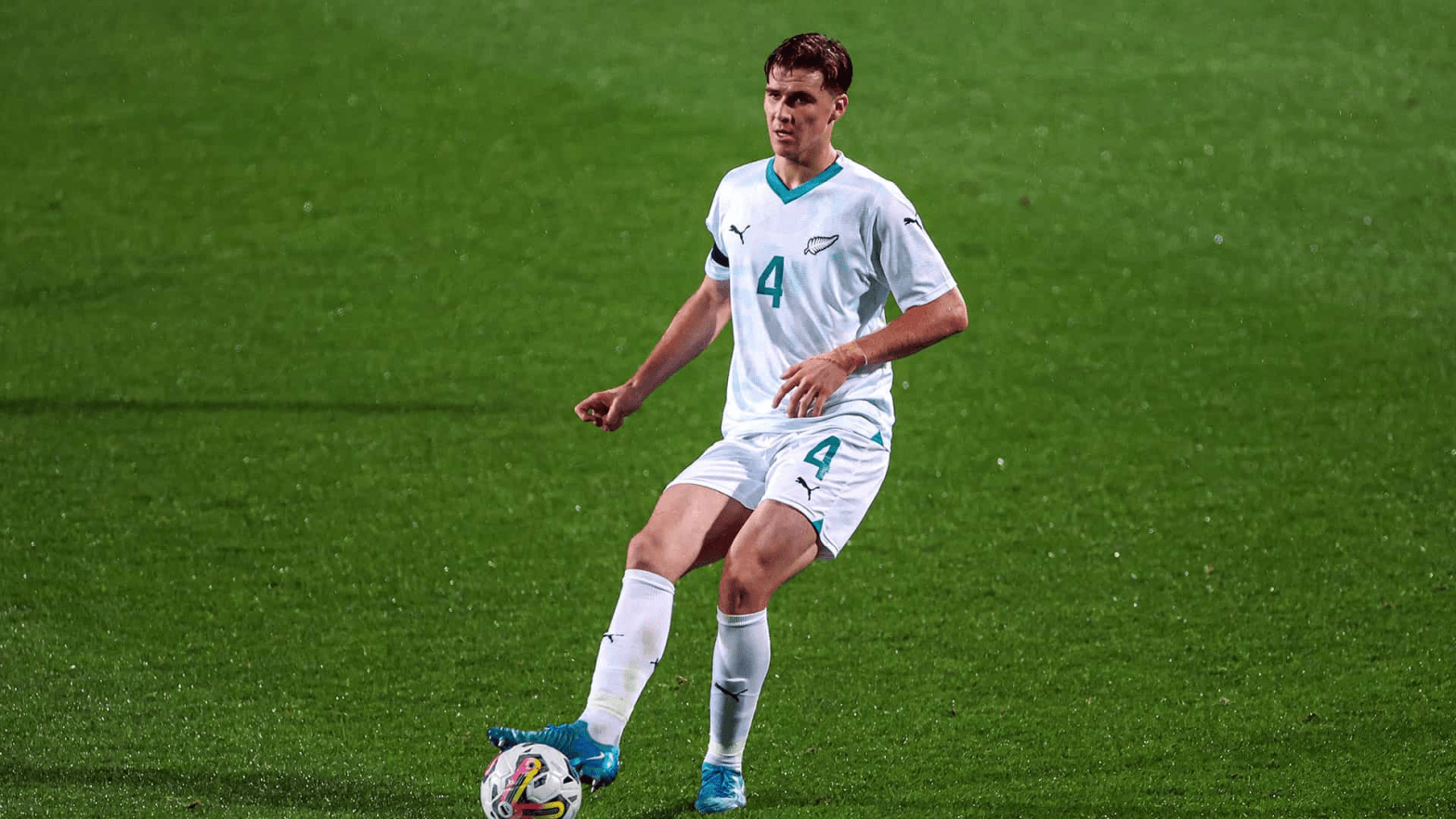
Auckland City reign again: 14th OFC Champions League crown ends Central Coast’s historic run

Auckland City FC have been crowned champions of Oceania for a record-extending 14th time after defeating Central Coast FC 2-0 in the 2026 OFC Men’s Champions League final at Four R Govind Park in Ba, Fiji.

Second-half goals from Ryan De Vries and Matt Ellis proved decisive as the New Zealand giants secured a fifth consecutive continental title, while Central Coast’s historic run ended one victory short of bringing the trophy back to Solomon Islands.

Central Coast showed from the opening minutes that they were prepared to challenge the defending champions. Barrie Limoki produced the first attempt of the final with a shot from distance, while Raphael Lea’i, fresh from his semi-final hat-trick against Galaxy FC, repeatedly troubled Auckland’s defensive line with his acceleration and close control.

Auckland gradually began to create opportunities of their own. Ellis found the net during the opening half but saw his effort ruled out for a marginal offside, while Ryan De Vries was denied at the near post by Central Coast goalkeeper Erick Wanega.

Despite the attacking quality on both sides, clear chances remained limited and the teams went into half-time level at 0-0.

The same balance continued after the restart, with neither side immediately able to take control of the match.

Auckland finally found the breakthrough in the 69th minute.

Michael De Heijer recovered possession before Auckland worked the ball towards Michal Doudera on the right. Doudera’s low effort was parried by Wanega, but De Vries reacted quickest to the rebound and converted from close range to put the defending champions ahead.

Central Coast were then forced to take greater risks as they searched for an equaliser, and Auckland punished them nine minutes later.

Ryan Watson made progress down the right side and delivered across the face of goal, where Ellis arrived to turn the ball into the net and make it 2-0.

The task became even more difficult for Central Coast in the 83rd minute when Prince Tahunipue was shown a straight red card following a confrontation near the halfway line.

Auckland managed the closing stages without further trouble and eventually celebrated another continental crown, extending a period of dominance that has now seen them win the OFC Men’s Champions League in five successive editions.

For Central Coast, however, the defeat does not diminish a remarkable tournament.

The Solomon Islands champions recovered from an opening-round defeat to Auckland City, defeated AS Vénus and AS Tiga Sport to progress from Group A, and then produced one of the matches of the competition by eliminating previously unbeaten Galaxy FC 3-2 after extra time in the semi-final.

Rafa Lea’i’s hat-trick in that victory sent Central Coast into the continental decider and made them only the third Solomon Islands club to reach an OFC Champions League final.

Their appearance also ended a 17-year wait since Koloale FC represented Solomon Islands in the 2009 final, following Kossa FC’s run to the decider one year earlier.

Central Coast therefore leave Fiji without the trophy, but with one of the most significant international campaigns by a Solomon Islands club in recent history.

Auckland City, meanwhile, once again finish at the summit of Oceanian club football. Their 2-0 victory secures a 14th OFC Champions League title and reinforces a remarkable continental record that no other club in the region comes close to matching.