Vanuatu stun defending champions PNG on penalties to win first Women’s MSG Prime Minister’s Cup title

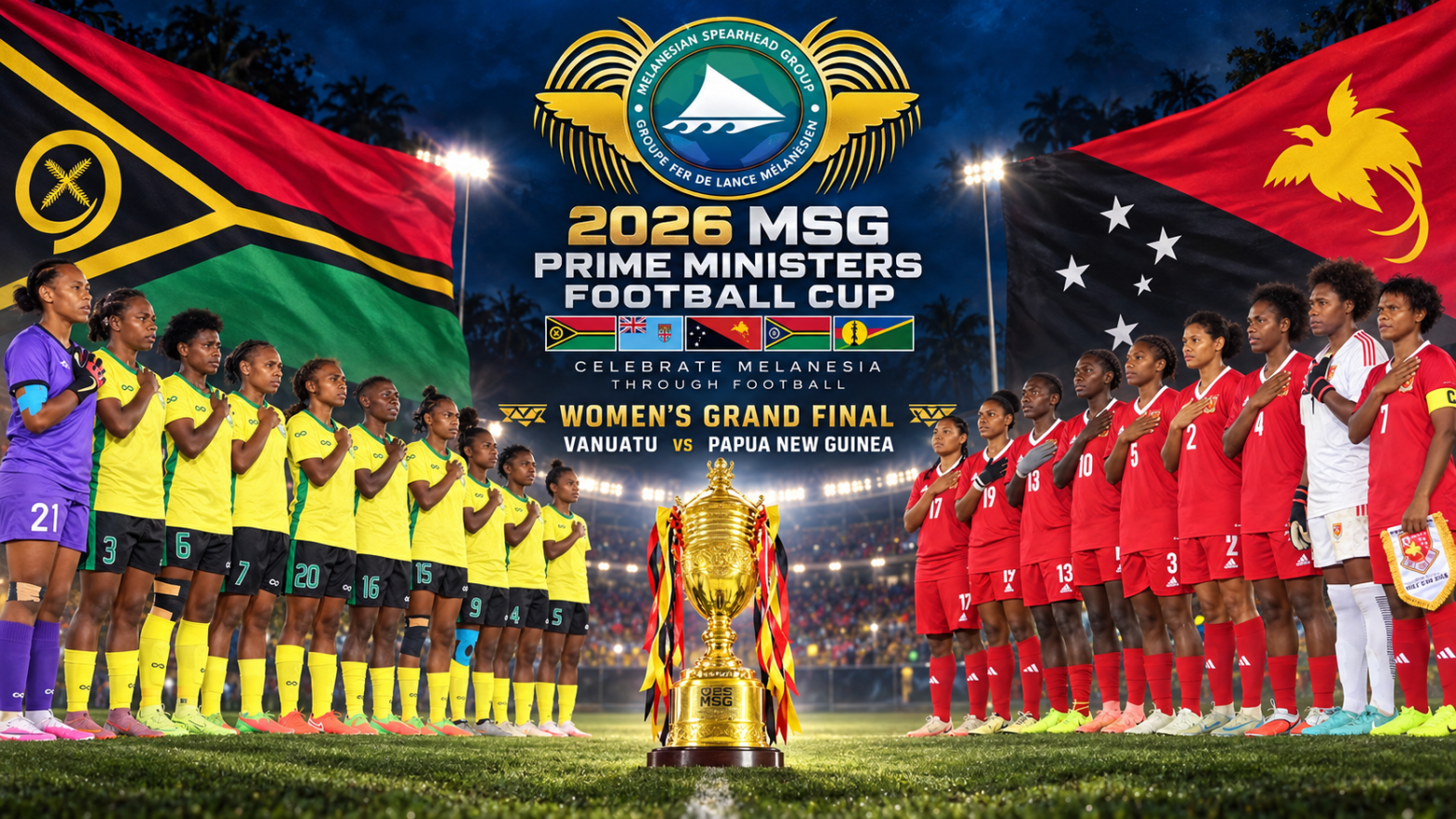
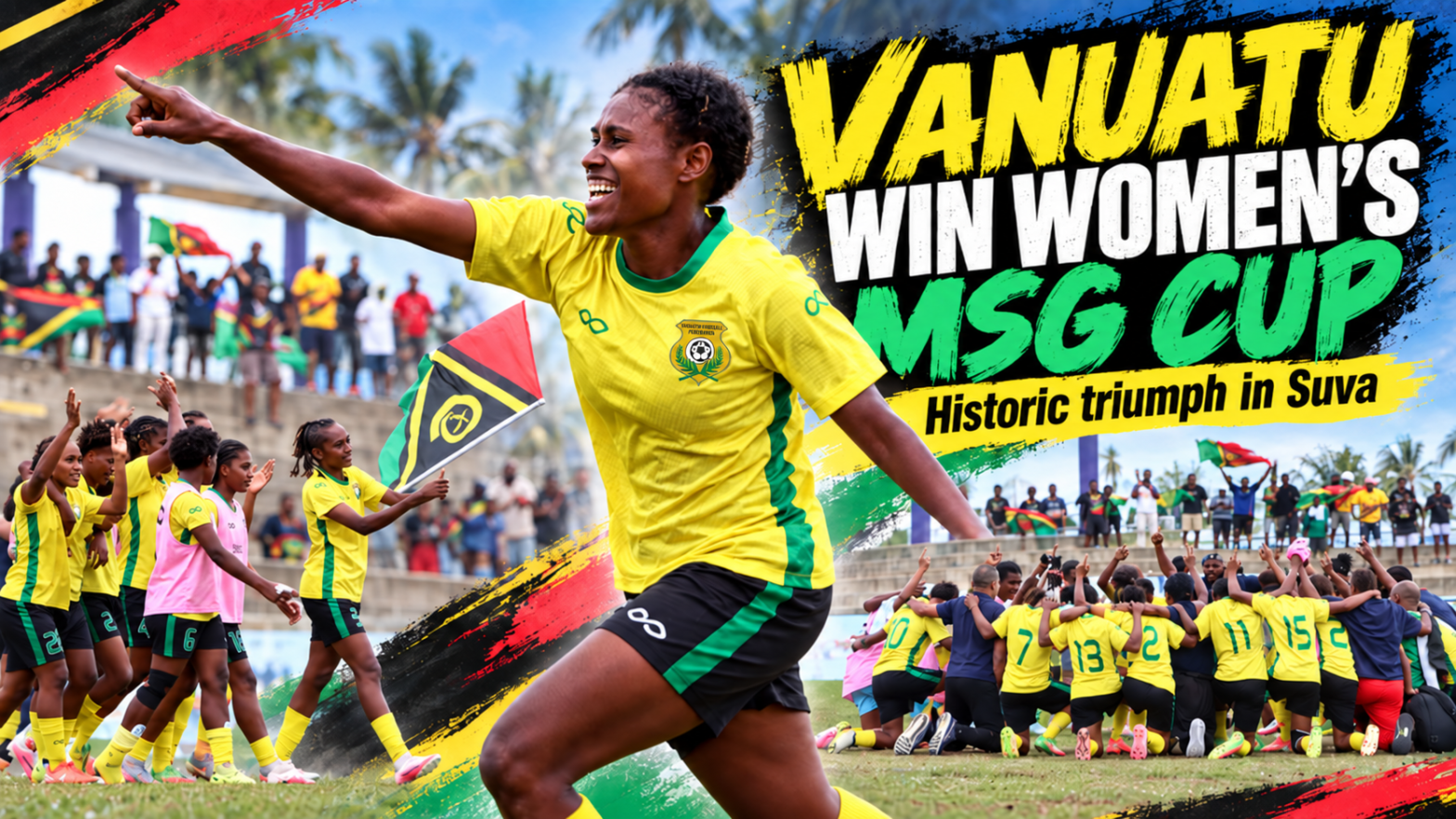
Vanuatu have produced the biggest result in their recent women’s football history, defeating defending champions Papua New Guinea on penalties to lift the 2026 Women’s MSG Prime Minister’s Cup at HFC Bank Stadium in Suva.

The final finished 1–1 after regulation time before Vanuatu held their nerve in the decisive shootout to take the trophy. The final scoreboard finished 6–4 in Vanuatu’s favour when the penalties were included, completing a remarkable turnaround against a Papua New Guinea team that had dominated the competition until the final.

PNG entered the decider having won every match of the round-robin stage. Ericson Komeng’s side defeated Fiji 4–0, New Caledonia 4–1, Vanuatu 2–0 and Solomon Islands 5–1, scoring 15 goals while conceding only once. Their earlier victory against Vanuatu appeared to underline the gap between the two finalists, with Phylis Pala and Keren Kalapai scoring in that meeting.

The final proved completely different.

Papua New Guinea struck first in the 23rd minute and appeared to be moving towards another controlled performance. Vanuatu, however, refused to allow the defending champions to establish the same authority they had shown throughout the group stage. Their response arrived before half-time, with the Ni-Vanuatu side equalising in the 42nd minute to send the teams into the break level at 1–1.

That goal changed the complexion of the match. PNG had spent much of the tournament playing from positions of strength, but Vanuatu forced them into a much tighter contest in which the margins became increasingly small. The Bilums still carried considerable attacking experience through players such as Keren Kalapai, Meagen Gunemba, Ramona Padio and Calista Maneo, but this time Vanuatu were able to prevent the defending champions from finding the decisive second goal.

The second half therefore developed into a battle of patience and concentration. Vanuatu had already demonstrated during the competition that they could compete in close matches, drawing 1–1 with Solomon Islands and beating Fiji 1–0 before their emphatic 5–0 victory over New Caledonia. Against PNG in the final, that resilience became even more important as they remained level through the closing stages and forced the title to be decided from the penalty spot.

The shootout provided the decisive reversal of the tournament. Papua New Guinea had arrived in the final with a perfect record and had already beaten Vanuatu convincingly during the round-robin phase, but the Ni-Vanuatu players converted when the pressure was at its highest and capitalised on PNG’s misses to take the title.

For Vanuatu, the triumph represents their first Women’s MSG Prime Minister’s Cup crown. They had finished behind PNG during the group phase and only secured their place in the final after Solomon Islands were beaten 5–1 by the Bilums in their last match, leaving Vanuatu ahead in the race for second place.

From that position, they went on to defeat the tournament’s outstanding team when it mattered most.

The result also ends Papua New Guinea’s hold on the trophy. The Bilums won the inaugural women’s competition in Port Moresby in 2025, beating Fiji 3–0 in the final, and arrived in Suva appearing well placed to defend the title after four consecutive victories.

Instead, the 2026 competition finishes with a new champion.

For Vanuatu women’s football, the title carries great significance. Their pathway through the tournament was far less dominant than PNG’s, but they survived the difficult moments, reached the final and then produced their strongest result against the opponent that had already beaten them earlier in the competition.

Papua New Guinea leave Suva having been the most prolific team across the tournament, but Vanuatu leave with the trophy — completing a memorable comeback from their 2–0 group-stage defeat and becoming the second champions in the short history of the Women’s MSG Prime Minister’s Cup.

Kosta Barbarouses joins South Melbourne as All Whites veteran prepares for new chapter in Australia and Oceania

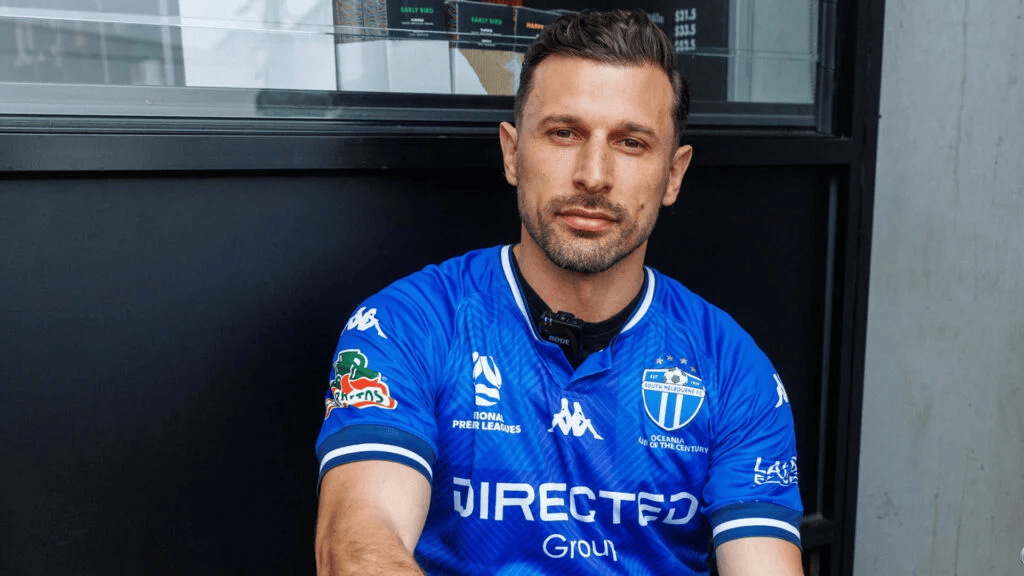
New Zealand international Kosta Barbarouses has joined South Melbourne FC, bringing one of the most experienced careers in Australasian football to a club preparing to compete on several fronts over the coming months.

The 36-year-old forward moves to Lakeside Stadium following the end of his spell with Western Sydney Wanderers. Barbarouses spent one season with the A-League side, making 28 appearances and scoring 11 goals across all competitions before departing at the conclusion of his contract.

His arrival gives South Melbourne another major piece for a particularly demanding period. The Victorian club are the defending Australian Championship winners, will feature again in the OFC Pro League in 2027 and continue to compete in NPL Victoria. Barbarouses is expected to be available across those competitions during the next 12 months.

There is also an immediate target ahead. South Melbourne are preparing for the Australia Cup final against Melbourne Victory at AAMI Park on October 10, another significant occasion for a club that has continued to strengthen its position within the Australian game.

For Oceania football, the signing carries particular interest because Barbarouses arrives at one of the leading teams in the region’s new professional competition. South Melbourne reached the inaugural OFC Pro League final earlier this year, eventually losing 2-1 to Auckland FC at Eden Park. The club has since received approval for its 2027 licence and is already building towards another campaign.

Barbarouses brings an extensive winning background. The Wellington-born attacker has collected four A-League championships during a career that included Brisbane Roar, Melbourne Victory and Sydney FC. He was part of Brisbane’s 2011 championship side, won with Victory in 2015 and 2018 and added another title with Sydney in 2020.

His contribution in major matches has also been significant. Barbarouses scored in Melbourne Victory’s 3-0 Grand Final win over Sydney FC in 2015 and later produced the decisive goal against Newcastle Jets in the 2018 final.

South Melbourne football director Peter Kokotis highlighted both the footballing quality and the experience the New Zealander can bring to the squad.

“He has won championships at some of the biggest clubs in the country and knows what it takes to perform when the stakes are highest,” Kokotis said.

“His quality, movement and ability to create and finish chances will give us another dimension in attack. Just as valuable is the experience he brings to the dressing room and the example he can set for our younger players.”

Barbarouses also remains closely connected to the international game. Having made his senior debut for New Zealand in 2008 after representing the country at youth level, he was part of the All Whites squad at the 2026 FIFA World Cup.

The move therefore extends a senior career that has already taken him through New Zealand, Australia, Russia and Greece. Instead of marking a quiet final stage, his switch to South Melbourne places him within a club pursuing domestic silverware while remaining directly involved in Oceania’s expanding professional football structure.

South Melbourne will begin their Australian Championship title defence against Sutherland Sharks on October 17, with Barbarouses now adding another proven attacking option ahead of what is shaping up to be another busy year for the club.

Vanuatu defend their Melanesian crown against hosts Fiji in MSG Prime Minister’s Cup final

Vanuatu arrived in Fiji carrying the title of Melanesian champions. On Saturday, they will have to defeat the host nation in its own stadium to take it home again.

The defending champions face Fiji in the men’s MSG Prime Minister’s Cup final at HFC Bank Stadium in Suva, bringing together two teams that finished level on seven points after very different journeys through the round-robin stage.

For Fiji, the final represents an opportunity to end a remarkable wait. The country that dominated the old Melanesian Cup has not lifted the regional men’s title since 2000. Vanuatu, meanwhile, are attempting to defend the crown they won in Port Moresby last year.

There is also an immediate history between Saturday’s finalists. They have already met once in this tournament, with Vanuatu winning 1–0 through Bill Kaltack’s second-half goal.

That defeat left Fiji with only one point from their opening two games and placed the hosts under considerable pressure. Their response ultimately transformed their tournament.

Fiji had started with a dramatic 3–3 draw against Solomon Islands before the setback against Vanuatu. Stéphane Auvray’s team then defeated Papua New Guinea 2–0 and entered its final group match against New Caledonia still needing a result to reach the decider.

Even then, the route was not straightforward.

New Caledonia led 1–0 at half-time, putting Fiji’s qualification hopes in danger. Scott Wara equalised five minutes after the restart before Maikah Dau completed the comeback in the 66th minute, securing a 2–1 victory and a place in Saturday’s final.

Dau’s emergence has been one of the positive developments of the tournament for a Fiji squad combining established internationals with players trying to strengthen their position in the national team. At the other end of the experience scale stands captain Roy Krishna, whose presence gives the hosts a player accustomed to carrying expectations in major international matches.

Vanuatu’s path has been equally eventful.

Their title defence began badly when they conceded twice in the closing minutes to lose 2–1 against Papua New Guinea. Tony Kaltack had given Vanuatu the lead in the 77th minute, only for Nalau Moses and Ezekiel Vela to turn the match around.

Rather than allowing the defeat to define their tournament, Vanuatu responded immediately against Fiji. Bill Kaltack finished a well-constructed move inside the penalty area to secure the 1–0 victory that changed the direction of their campaign.

A remarkable 3–3 draw with Solomon Islands followed. Andrew Malakai and Tony Kaltack were among Vanuatu’s scorers in a match where neither side managed to establish lasting control, before the defending champions produced their most convincing result of the competition by defeating New Caledonia 4–1.

That left Vanuatu on seven points, the same total eventually reached by Fiji, but with the superior goal difference required to finish top of the standings.

Saturday therefore offers a second meeting between two sides that already know each other extremely well. Fiji have direct evidence of the difficulty Vanuatu can cause them, while the hosts have improved considerably since that defeat and have won their last two matches.

The final also carries a wider significance for both national teams.

Fiji have used the competition under Auvray to continue assessing a new generation around experienced figures such as Krishna, while Vanuatu entered the tournament with a reshaped squad and without several important names from the team that won the title in 2025. Yet both have reached the same destination.

For Vanuatu, victory would confirm that last year’s triumph was not an isolated achievement and would give them consecutive Melanesian titles.

For Fiji, the opportunity is different: a home final, in front of their own supporters, with the possibility of lifting the Melanesian crown for the first time in 26 years.

Vanuatu won the first battle between them in Suva.

This time, there is a trophy waiting at the end.

MSG Prime Minister’s Cup Final
Vanuatu v Fiji
HFC Bank Stadium, Suva
Saturday, 3 October — 4pm

PNG stand one win away from another Melanesian crown as Vanuatu prepare for second chance in MSG women’s tournament final

Papua New Guinea have been the dominant force of the 2026 Women’s MSG Prime Minister’s Cup, but one final challenge remains as the defending champions prepare to face Vanuatu for the title at HFC Bank Stadium in Suva on Saturday.

The final brings together the top two teams from the round-robin stage, although their routes to the decider could hardly have been more different. PNG arrive with a perfect record of four victories from four matches, while Vanuatu had to wait until the final matchday to discover that their seven points would be enough to finish second.

For the Bilums, the numbers tell much of the story. They scored 15 goals and conceded only once during the group stage, defeating every other team in the competition. Their campaign began with a commanding 4–0 victory over hosts Fiji before another 4–1 success against New Caledonia.

Vanuatu then provided a considerably tighter examination. The match remained goalless through the first half before Phylis Pala broke the resistance shortly after the restart and Keren Kalapai added the second in a 2–0 PNG victory.

If that performance demonstrated that the Bilums could find a way through a difficult match, their final group fixture showed the other side of their game. Solomon Islands entered needing only a draw to qualify for the final ahead of Vanuatu, but PNG refused to ease off despite already having secured first place.

Kalapai scored twice, Meagen Gunemba added another brace and Calista Maneo was also on target as PNG dismantled Solomon Islands 5–1. The result completed a perfect round-robin campaign and, indirectly, opened the door for Vanuatu to return to the competition.

Kalapai has been at the centre of PNG’s attacking success. Her first-half hat-trick against Fiji immediately established her as one of the tournament’s standout performers, and she has continued scoring throughout the competition. Gunemba’s experience and Maneo’s contribution have given PNG several different attacking routes rather than leaving the defending champions dependent on a single player.

That depth will be one of Vanuatu’s major problems on Saturday.

Their own tournament has been considerably tighter. Vanuatu opened with a 1–1 draw against Solomon Islands, with Jane Alatoa scoring their goal, before recording the narrow victories they needed to remain in contention. They defeated Fiji 1–0 and produced a convincing 5–0 result against New Caledonia before losing 2–0 to PNG.

Seven points left Vanuatu level with Solomon Islands, but with a superior goal difference. Their place in the final was therefore only confirmed when PNG defeated the Solomon Islands in the final round.

It creates an unusual opportunity. Vanuatu have already experienced what it takes to contain PNG for a significant period of a match, having held them scoreless for the entire first half of their previous meeting. The challenge now is to sustain that resistance while also finding a way to threaten a defence that has conceded just once in four games.

For PNG, Saturday is about completing what has so far been an almost flawless tournament.

The Bilums won the inaugural Women’s MSG Prime Minister’s Cup in Port Moresby last year and arrived in Fiji as the team to beat. Their performances have only reinforced that position, while the tournament also serves as valuable international preparation ahead of their next major challenges on the road towards the 2027 FIFA Women’s World Cup.

Vanuatu, however, enter the final with very little to lose. They have already survived the qualification race and now receive the opportunity every finalist wants: another match against the team that beat them.

The first encounter belonged to Papua New Guinea. Saturday determines whether the tournament does as well.

Women’s MSG Prime Minister’s Cup Final
Papua New Guinea v Vanuatu
HFC Bank Stadium, Suva
Saturday, 3 October

Fiji FA suspends Delon Shankar and Melvin Mani indefinitely as camp breaches rule both players out of IDC

Fiji Football Association has taken major disciplinary action against two national-team players, suspending Rewa’s Delon Shankar and Labasa’s Melvin Mani from all football until further notice following separate breaches connected to Fiji’s national-team camp.

The decision immediately rules both players out of the upcoming FMF Inter-District Championship and creates an important setback for Rewa and Labasa only days before one of the biggest tournaments in the Fijian domestic calendar.

The two cases are different, but both concern players failing to meet obligations while involved with the national setup. Shankar had been part of Fiji’s preparations for the MSG Prime Minister’s Cup before being released from camp for rehabilitation. Fiji FA CEO Mohammed Yusuf said the young Rewa player subsequently travelled to New Zealand.

According to FBC Sports, Fiji FA and the national-team coaching staff later discovered that Shankar had played in the Sanatan IDC tournament in New Zealand without their knowledge.

The situation is particularly significant for Shankar because it interrupts the progress of one of Fiji’s promising young players. Still only 19, he has risen rapidly through Rewa’s youth structure into senior domestic and regional football and has increasingly entered the Fiji national-team picture.

Shankar made his OFC Champions League debut for Rewa as a 17-year-old in 2024 and later attracted overseas attention, including a trial with A-League side Sydney FC in 2025. He has since continued featuring for Rewa and Fiji, with the national association identifying him this year among the young players forming part of a new generation around the senior national team.

His suspension therefore comes at an important stage of his development rather than at the established end of an international career.

The circumstances surrounding Mani are different. The Labasa midfielder had also been selected for national-team duties but failed to return to camp following the Battle of the Giants and did not report as required.

Yusuf said Mani did not properly notify Fiji FA about his absence. There appears, however, to be additional context surrounding the communication failure, with Mani’s manager reportedly resigning and accepting responsibility for not properly informing the relevant authorities.

That has not prevented Fiji FA from imposing the suspension while the matter is considered. The severity of the current measures is important.

Shankar and Mani have not simply been removed from the Fiji national team or excluded from an individual competition. Their suspensions apply to football generally and remain in force until Fiji FA makes another decision. That means two important players will be unavailable to Rewa and Labasa at the IDC unless there is a change before the tournament.

For Rewa, Shankar’s absence removes one of the club’s emerging young players who has already accumulated senior experience domestically and in the OFC Champions League despite his age. His versatility has also allowed him to operate in several roles across defence and midfield during his progression through the club.

Labasa, meanwhile, will have to prepare without Mani as the Babasiga Lions enter a tournament in which squad depth becomes especially important because of the condensed schedule.

The episode also brings national-team discipline into focus. Fiji have recently been involved in the MSG Prime Minister’s Cup while domestic clubs simultaneously prepare for the IDC, creating a demanding period in which communication between players, clubs and the national setup becomes particularly important.

Fiji FA has not, however, presented the current suspensions as final punishments.

Yusuf said the Fiji FA Board of Control will ultimately consider the two cases and determine what happens next. Both players therefore remain suspended indefinitely while the disciplinary process continues.The eventual decisions will be important for Shankar and Mani individually, but also for Rewa and Labasa. For Shankar in particular, the case arrives during a formative period in a career that had been moving steadily upward through youth football, the OFC Champions League, overseas opportunities and the Fiji senior national-team environment.

For now, however, both players will miss the IDC unless Fiji FA changes their status before the tournament.

From senior debut to historic Tahiti win: Emmett Connolly part of promising new Cook Islands generation

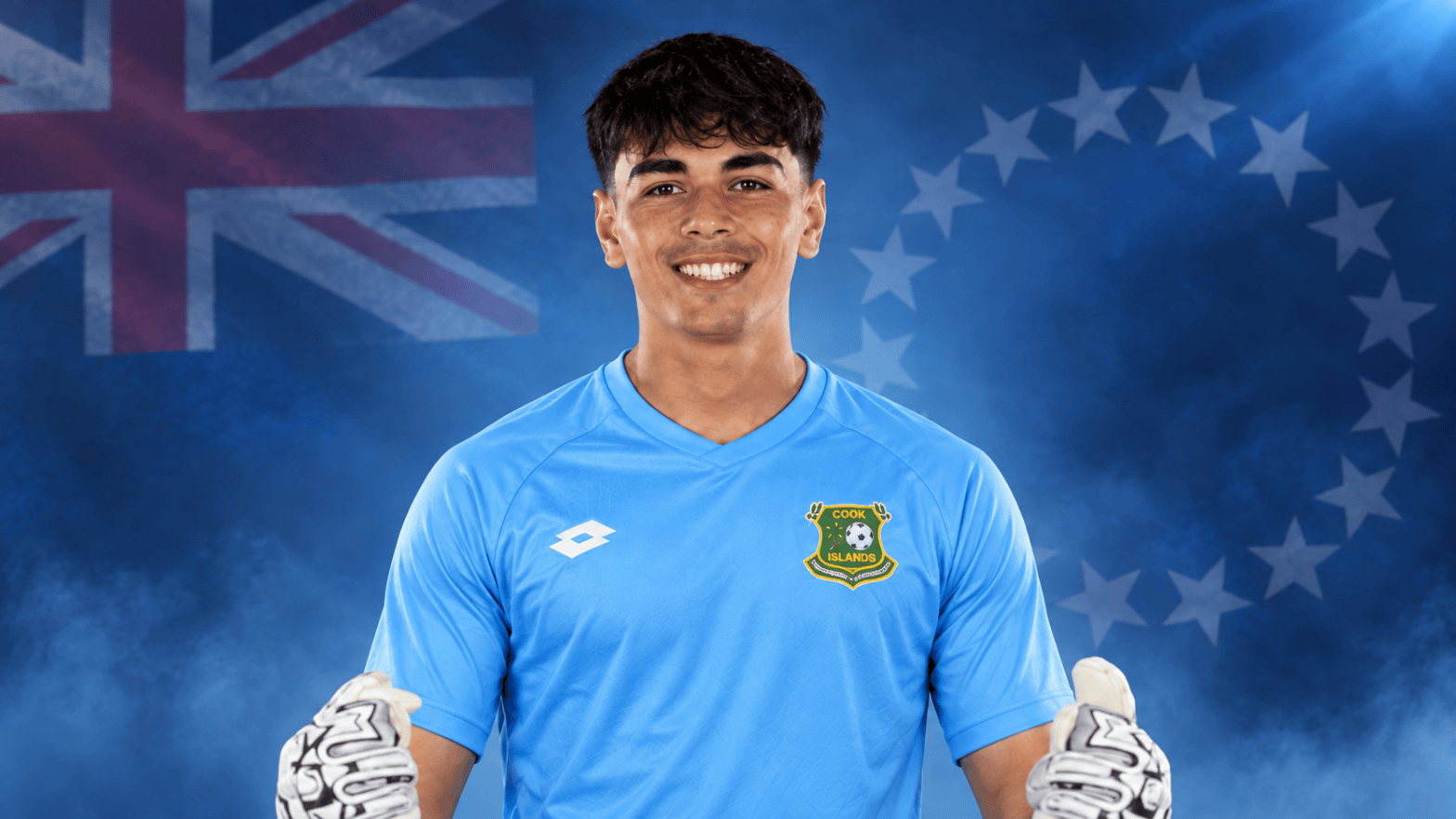
At only 19, Emmett Connolly has already experienced international youth football, development at one of Southeast Asia’s leading clubs and senior competition in New Zealand. His latest step has come with the Cook Islands national team — and within days of making his senior international debut, the young goalkeeper became part of one of the country’s most encouraging results in recent years.

Connolly made his senior debut in the Cook Islands’ opening friendly against Tahiti at the CIFA Complex in Rarotonga, a match carrying particular significance as senior men’s international football returned to the country for the first time in 28 years.

Tahiti won that first encounter 3-1, taking control early through two quick goals from Maitere Tanerii before Honoura Maraetefau added another in the second half. Yet the Cook Islands showed enough during the match to leave Connolly believing there was something to build upon.

“It was great to make my debut for the Cook Islands, something that I’ve wanted to do for a while. To do it on home soil, in front of our people for the first time in 28 years, was an unbelievable experience,” Connolly told Oceania Football Center.

Despite the defeat, his assessment of the performance was notably positive.

“Obviously, it was disappointing not to get a result in the match, but there were a lot of promising moments throughout the game, which is something we should look to build on.”

Only a few days later, those promising moments turned into a result.

Cook Islands defeated Tahiti 3-2 in the second friendly in Rarotonga, responding immediately to the opening defeat and finishing the two-match series with one victory each. Benjamin Mata scored twice for the hosts, while Tremaine Rimene-Albrett added the other goal in a result that provided an early statement for the new cycle under head coach Rhys Ruka.

The significance goes beyond a single friendly victory. Tahiti have traditionally occupied a considerably stronger position within Oceania football, while Cook Islands have spent much of their recent history fighting for opportunities simply to reach the main stages of regional competitions. Responding to a 3-1 defeat by beating the same opposition days later therefore offered tangible evidence of the progress Connolly had spoken about after his debut.

The senior breakthrough is the latest step in a development process that began well before Connolly entered the full national team. In 2024, while still eligible for U-17 football, he captained the Cook Islands at the OFC U-19 Men’s Championship qualifying tournament in Vanuatu.

His progression then took him beyond the Pacific after he joined Singaporean giants Lion City Sailors. Connolly worked within the club’s U-21 structure and was also exposed to the professional first-team environment, an experience he considers one of the most important periods of his young career.

“Signing with the Sailors has to be up there as one of my proudest moments. I was in the academy with the U-21 side, the reserves, and worked under some top coaches, where I made some of the biggest developments in my game. The club gave me opportunities within the first team, where I was able to train alongside quality players and gain valuable experience. Overall, the experience was very positive, and to play a small role in the club’s ambition of developing football in the country is something I’m proud of.”

Connolly later returned to New Zealand and joined Western Springs, continuing his transition into senior football. The goalkeeper described the season as another useful stage in his development, particularly through the minutes he received early in the campaign.

“The season was good. It was good to get minutes in at the start of the year, then move into a support role going into the National League playoff.”

His pathway is also representative of one of the opportunities available to the Cook Islands. With a small domestic population but a much larger diaspora, particularly in New Zealand and Australia, the national team has access to players developing in stronger football environments abroad.

Ruka’s arrival has added another element to that process. Connolly believes the coaching appointment itself demonstrates where the Cook Islands Football Association wants the national programme to go.

“The appointment of Rhys has been great. I think it’s a clear statement from the federation of the direction we want to go in as a nation.”

The first two matches of the new period have already provided contrasting but useful evidence. Cook Islands were punished for a difficult opening against Tahiti in the first match, but rather than allowing the series to drift away, they responded by scoring three times and winning the return fixture.

Ruka himself described the squad as young and still learning to play together following the victory, while stressing the potential within the group. Two further friendlies against Tahiti are expected to follow in November, giving the team another opportunity to measure whether the progress seen in Rarotonga can be sustained. Cook Islands Football

Connolly is similarly cautious about projecting too far ahead. Asked whether Cook Islands can eventually move closer to Oceania’s stronger national teams, his focus remained firmly on gradual development.

“I think there’s talent all over the Pacific, including in the Cooks. At the moment, we’re just taking it game by game.”

That answer now carries a little more weight. One of those games has already produced a 3-2 victory over Tahiti.

At 1.76m, Connolly is shorter than the profile increasingly associated with goalkeepers at the highest level, but the 19-year-old is not particularly concerned by conventional expectations surrounding the position.

“I’m just looking to have fun, enjoy my football and see where it takes me. I’m not too fussed about what others have to say.”

There remains a long way to go for both Connolly and this Cook Islands team, but the past week has provided an unusually concentrated glimpse of what the new cycle could offer: senior international football returning to Rarotonga after 28 years, a 19-year-old goalkeeper making his debut, and a young national side responding to defeat by beating Tahiti only days later.

For Connolly, the senior journey has only just begun. For Cook Islands football, the 3-2 victory offered an early indication that this new generation may be capable of producing more significant nights.

Paulsen the hero as New Zealand beat Panama on penalties to reach Kirin Cup final

New Zealand booked their place in the Kirin Cup final after overcoming Panama in a penalty shootout in Yokohama, with Alex Paulsen producing the decisive save before Michael Boxall converted the winning kick. The All Whites and Panama finished level at 1-1 after 90 minutes before Darren Bazeley’s side prevailed 5-3 from the spot.

Panama made a bright start and attempted to put New Zealand under pressure early, but the All Whites gradually settled into the contest. Chris Wood provided a strong reference point up front and was involved in an early penalty appeal that was waved away before New Zealand began finding spaces behind the Panamanian pressure.

The breakthrough arrived in the 13th minute through an excellent team move. Callan Elliot drove forward and found Elijah Just around the edge of the area, with the winger feeding Ben Waine inside the box. Waine controlled the ball on his chest before laying it across goal, allowing Marko Stamenić to arrive and finish from close range for the 1-0 lead.

Panama responded strongly and gradually took more control of possession. José Luis Rodríguez briefly appeared to have found an equaliser, but the goal was disallowed for offside. New Zealand nevertheless remained dangerous whenever Panama committed players forward and came close to doubling their advantage in the 38th minute. Just released Elliot into the area, but the defender dragged his attempt wide.

That missed opportunity became more significant shortly before half-time. Rodríguez beat Elliot on the left and pulled the ball back towards Giovany Herbert, who finished beyond Paulsen to make it 1-1 in first-half stoppage time.

The second half developed into a tighter and increasingly physical contest, with neither side able to establish sustained control. Bazeley turned to his bench as New Zealand searched for another goal, and the changes almost produced the breakthrough around the 70th minute. Logan Rogerson attacked down the right before cutting the ball back for Lachie Bayliss, whose first touch created space for a curling effort that went narrowly wide of the left post.

Panama also continued to threaten during the closing stages, but New Zealand’s defensive structure held firm and Paulsen remained assured behind the back line. With neither side able to break the 1-1 deadlock, the match went directly to penalties.

New Zealand were flawless from the spot. Tyler Bindon converted the opening penalty before Stamenić, Moses Dyer and Bayliss also found the net. Paulsen then produced the defining moment of the shootout, reading Mijahir Jiménez’s effort and making the save that gave the All Whites control of the contest.

It left Boxall with the opportunity to finish the job. The veteran defender emphatically converted New Zealand’s fifth penalty and completed the 5-3 shootout victory.

Boxall’s role carried an additional story of its own. The 38-year-old Minnesota United defender had not been included in New Zealand’s original squad for the international window and was only brought into the group in Japan as an injury replacement for Finn Surman. The Portland Timbers defender was forced to withdraw after suffering a medial collateral ligament sprain in training with his club, opening the door for Boxall’s late return to the All Whites squad.

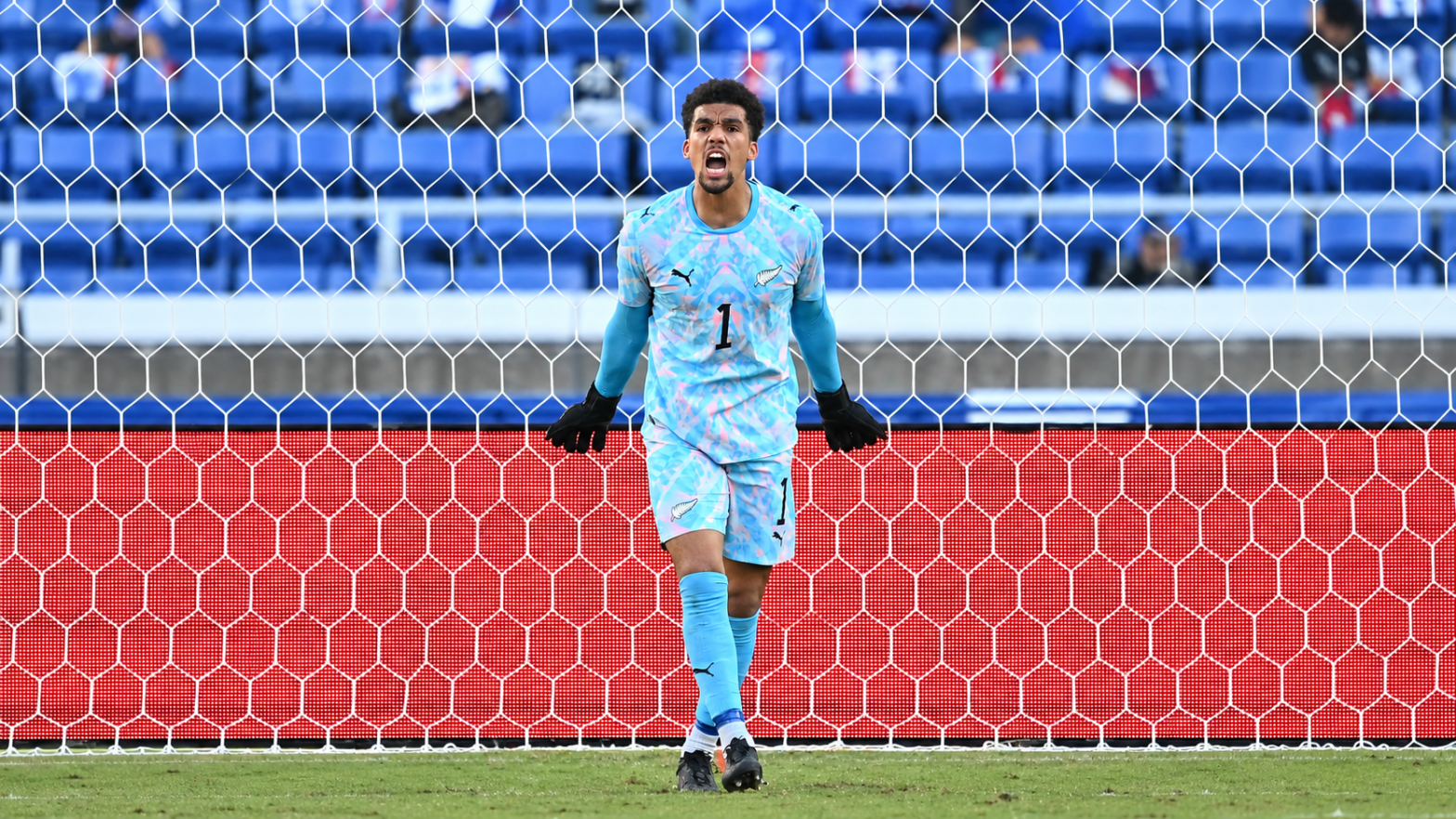
The decisive intervention, however, belonged to Paulsen. After a demanding 90 minutes in which Panama repeatedly tested New Zealand’s defensive resistance, the Motherwell goalkeeper delivered when the margin for error disappeared. His penalty save created the advantage New Zealand needed, with Boxall immediately converting it into a place in the final.

New Zealand will now move from Yokohama to Tokyo for Monday’s Kirin Cup final at the National Stadium, where they will face the winner of Japan and Ecuador. Panama will instead contest the third-place play-off.

New Zealand 1-1 Panama — New Zealand win 5-3 on penalties
Goals: Marko Stamenić 13’; Giovany Herbert 45+1’.
New Zealand penalties: Tyler Bindon, Marko Stamenić, Moses Dyer, Lachie Bayliss and Michael Boxall all scored.
Key moment: Alex Paulsen saved Mijahir Jiménez’s penalty.

Unbeaten but out: Solomon Islands miss MSG Cup final while new Bonitos project shows signs of progress

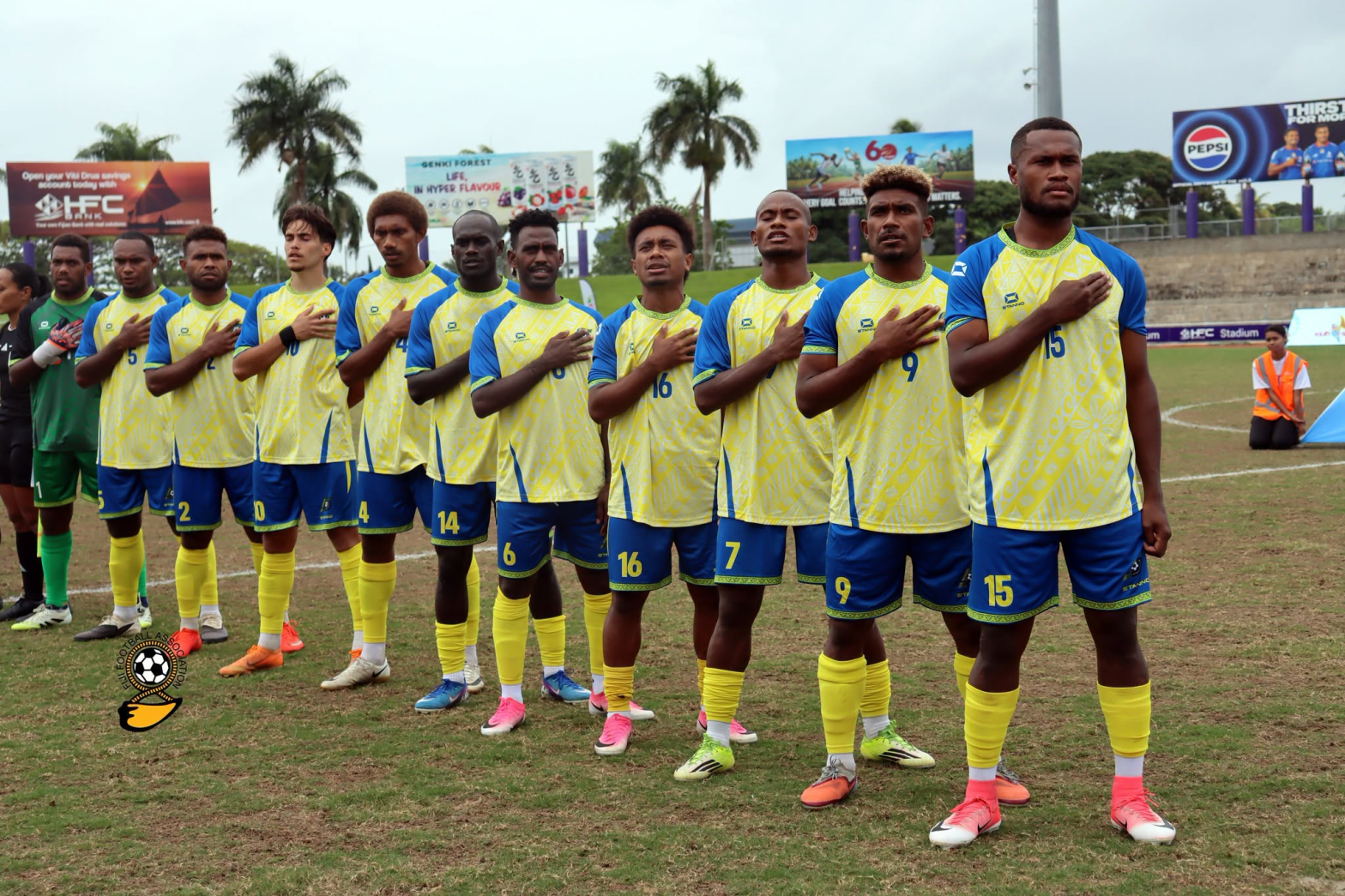
Solomon Islands will not play in the final of the 2026 MSG Prime Minister’s Cup, but their elimination tells only part of the story of a tournament that offered several encouraging signs for Ben Cahn’s developing national-team project.

The Bonitos completed the round-robin stage unbeaten, collecting six points from four matches and finishing only one point behind Vanuatu and Fiji, who both reached the final with seven. Solomon Islands recorded one victory and three draws, scored nine goals and finished with the same +2 goal difference as Fiji.

In a competition decided by extremely small margins, one additional goal against Papua New Guinea in their final match would have completely changed the outcome.

Raphael Lea’i gave Solomon Islands the ideal start from the penalty spot in the fourth minute, but Ati Kepo equalised for PNG after the break and the 1-1 draw left the Bonitos dependent on the result between Fiji and New Caledonia. Fiji eventually came from behind to win 2-1, taking the final place alongside defending champions Vanuatu.

For Solomon Islands, it was a frustrating conclusion. They were the only side to complete the group stage without defeat and had already shown that they could compete directly with both teams that eventually finished above them.

The Bonitos drew 3-3 with hosts Fiji after recovering from 3-1 down and later produced another 3-3 draw against Vanuatu, responding every time the defending champions moved ahead. Their only victory came in a 2-0 result against New Caledonia.

Three draws ultimately prevented them from reaching the final, but the tournament also provided evidence of the wider rebuilding process Cahn has been trying to establish around the national team.

One of the clearest examples came immediately against Fiji.

Rooney Riugaemai made his senior international debut and scored from the penalty spot, turning his first appearance for Solomon Islands into a goalscoring one. Having returned to the national-team picture after playing non-League football in England, the forward immediately added another option to a squad Cahn has been attempting to broaden.

Later in the same match, 19-year-old Jayroll Patty produced another important moment. Only days removed from captaining Solomon Islands at the OFC U-19 Men’s Championship, Patty came from the bench with his country trailing and scored his first senior international goal to reduce the deficit to 3-2.

Javin Wae then completed the comeback in stoppage time.

Patty’s involvement was particularly significant because it demonstrated how quickly players from the youth programme can now move into the senior environment. The young attacker did not merely receive a call-up to gain experience; he was trusted during a difficult international match and responded with a goal.

Danford Fiumae represented another part of that transition.

The 19-year-old midfielder had already been included in the senior squad for the FIFA Series earlier this year without making an appearance, after establishing himself with the Solomon Islands U-19s. In Fiji, he was finally introduced at senior level, making his international debut during the victory over New Caledonia.

For a national team looking beyond one tournament and towards the next World Cup cycle, the presence of Patty and Fiumae alongside more established internationals may prove as important as the immediate results.

Then there was Wae.

Few players enhanced their standing more during the tournament than the 23-year-old central defender. Wae scored against Fiji, New Caledonia and Vanuatu, finding the net in each of Solomon Islands’ first three matches despite operating primarily at the heart of the defence.

His goals were not insignificant additions to comfortable results either. The first rescued a point against Fiji deep into stoppage time. The second completed the victory over New Caledonia, again in added time. The third brought Solomon Islands level for the third time against Vanuatu.

By the end of the group stage, Wae had three goals — an extraordinary return for a defender and one that placed him among the tournament’s leading scorers.

Alongside him on three was a much more familiar name.

Raphael Lea’i did not score in the opening draw with Fiji, but from that point onwards he found the net in every Solomon Islands match: against New Caledonia, Vanuatu and finally Papua New Guinea.

It extended another productive period for a player who remains only 23 but has already carried considerable expectation for much of his career. Lea’i had scored twice against Bulgaria at the FIFA Series in March before going without a goal against St Kitts and Nevis. Including the MSG Cup, he has therefore scored in four of his last six senior internationals, with only the matches against St Kitts and Fiji interrupting that sequence.

Those three goals in Fiji also continued his movement up Solomon Islands’ historical scoring list. Lea’i now has 17 senior international goals according to updated records, placing him behind only Gagame Feni (19), Henry Fa’arodo (20), Benjamin Totori (29) and record holder Commins Menapi (34).

At 23, time remains firmly on his side.

The overall picture therefore looks more complicated than simply a third-place finish.

Solomon Islands did not achieve Cahn’s stated objective of winning the MSG Prime Minister’s Cup, and there are obvious areas requiring improvement. Conceding six goals across the draws with Fiji and Vanuatu repeatedly forced the Bonitos to chase matches, while the inability to turn one of three draws into a victory ultimately cost them a place in the final.

But they also completed the tournament without losing, scored nine times, matched both finalists directly and continued integrating younger players into the senior setup.

Riugaemai arrived and scored on debut. Patty moved almost immediately from the U-19 side into senior international football and scored. Fiumae made the next step in his development. Wae emerged as one of the competition’s standout performers, while Lea’i continued doing what Solomon Islands will increasingly expect from him: scoring goals consistently for his country.

The final table will show Solomon Islands in third place, one point short of Vanuatu and Fiji.

The broader assessment may be more encouraging.

The Bonitos leave Suva without the final they wanted, but also without a defeat — and with a clearer indication that the next version of the Solomon Islands national team is beginning to take shape.

Cook Islands rewrite 55 years of history with first-ever win over Tahiti in Rarotonga

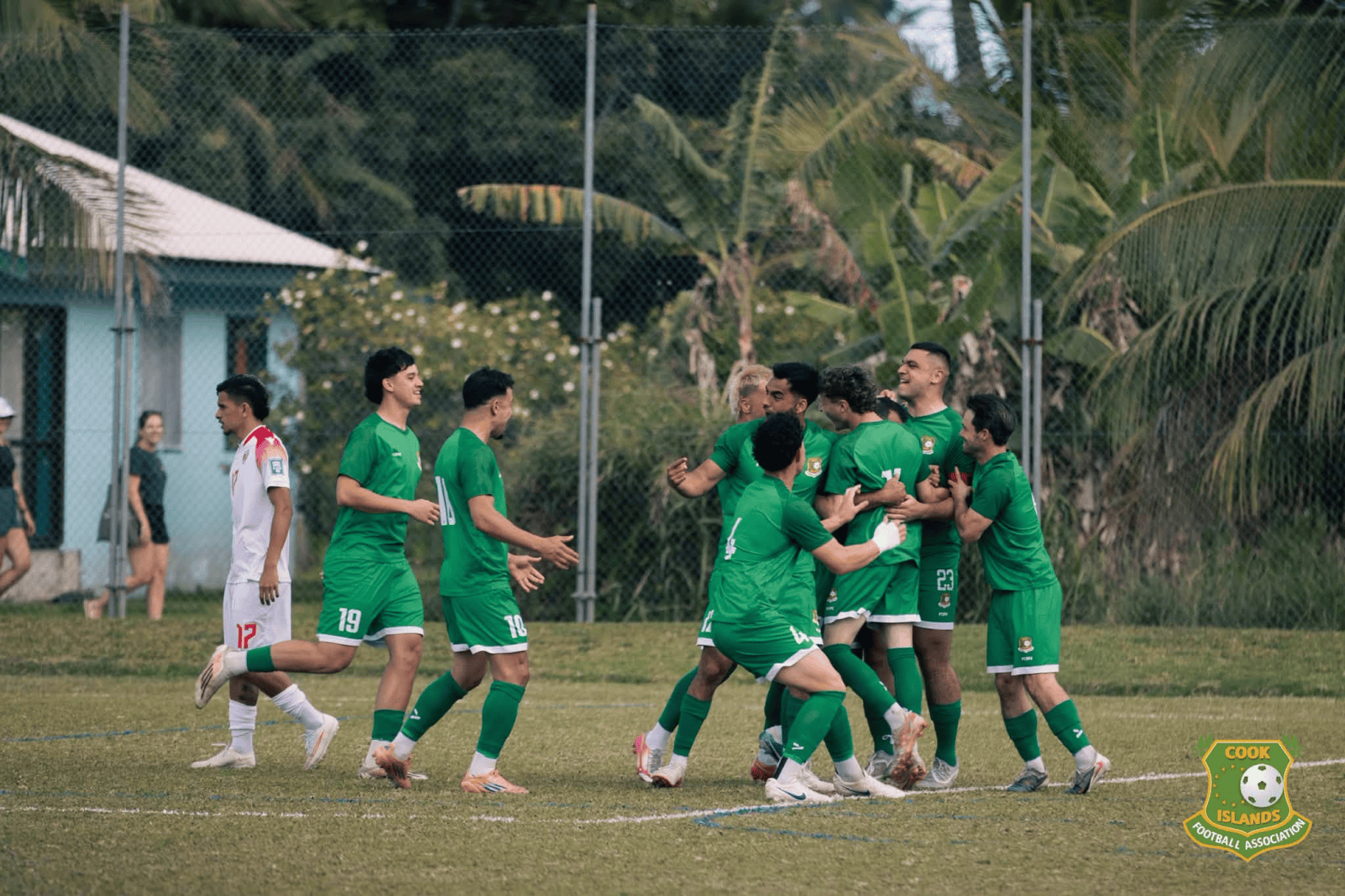
The Cook Islands produced one of the biggest results in their senior men’s football history on Wednesday, defeating Tahiti 3-2 at the CIFA Complex in Rarotonga to record their first-ever victory over the Toa Aito.

Benjamin Mata scored twice during an extraordinary opening nine minutes before Tremaine Rimene-Albrett struck the decisive third goal shortly after half-time. Tahiti recovered from 2-0 down through a first-half brace from Kamalani Bennett, but the Cook Islands refused to let another promising performance slip away and held on to complete a result more than five decades in the making.

The victory came only four days after Tahiti had beaten the Cook Islands 3-1 in the opening friendly of the series. On that occasion, Maitera Tanerii had scored twice inside eight minutes to put the visitors firmly in control. This time, the script was almost completely reversed.

Cook Islands came flying out of the blocks and were ahead after only three minutes. Mata, who had been an unused substitute in the first match, was the man to make the breakthrough. By the ninth minute he had scored again, suddenly leaving Tahiti 2-0 behind and forcing Joël Fréchet’s side to chase a match they had been widely expected to control.

Mata’s impact was particularly significant. The Wellington Olympic defender had returned to the Cook Islands national-team environment for this window after four years away. A former New Zealand youth international who played at FIFA U-17 World Cup level before committing his senior international career to the Cook Islands, Mata had made only one previous senior appearance for the country, captaining the side against Solomon Islands in 2022. His return has now produced two goals and a place at the centre of a historic night in Rarotonga.

Tahiti, however, showed why they remain one of the more established sides in the Pacific. After being caught by Cook Islands’ explosive start, the Toa Aito gradually took control of possession and found their way back into the contest. Bennett reduced the deficit around the quarter-hour mark and struck again only minutes later, wiping out the home side’s advantage before the match had even reached the midway point of the first half.

At 2-2, the momentum appeared to have swung decisively towards Tahiti. Instead, Cook Islands responded once again.

Only three minutes after the restart, Rimene-Albrett restored the lead. The Western Suburbs attacker, who had gained further continental experience with Tupapa Maraerenga during this year’s OFC Men’s Champions League, made it 3-2 in the 48th minute and gave the hosts another lead to protect.

This time there was no Tahitian comeback. Reports from French Polynesia described the Toa Aito as increasingly dependent on long aerial balls in behind the Cook Islands defence, with Fréchet’s team struggling to reproduce its combination play on the ground until late in the match. Cook Islands remained organised, absorbed the pressure and carried their one-goal advantage all the way to the final whistle.

The result becomes even more remarkable when placed alongside the history between the countries. Before Wednesday, Tahiti had won all 11 previous senior meetings with the Cook Islands. The first came at the 1971 South Pacific Games, when Tahiti recorded a 30-0 victory — still the heaviest defeat in Cook Islands history. More than half a century later, the same fixture has produced an entirely different landmark.

Even recent meetings had suggested a substantial gap. Tahiti beat the Cook Islands 9-1 and 3-0 during two matches in French Polynesia in 2023, before winning Saturday’s opening friendly 3-1. Across those 11 previous encounters there had not even been a Cook Islands draw. At the 12th attempt, they finally won.

The achievement also adds meaning to an already historic international window for Cook Islands football. Before this series, the men’s national team had not played a senior international at home since 1998. Twenty-eight years later, international football finally returned to Rarotonga, and the two-match series ended with each nation taking one victory.

For new head coach Rhys Ruka, the transformation between the two matches was perhaps the most encouraging aspect. Ruka had already assembled a significantly rebuilt squad featuring players from the Cook Islands, New Zealand and Australia, and strengthened his options further for the second encounter. Rather than allowing the 3-1 opening defeat to define the window, his team responded four days later by beating an opponent the country had never previously managed to hold even to a draw.

“I am happy with the boys’ performance tonight,” Ruka said after the match. “We are still a young squad and many of these players are still getting used to playing alongside each other. There is a lot of potential within this group, and we will continue building as we prepare for our next two friendly matches in Tahiti in November.”

Rimene-Albrett’s contribution also continues an increasingly important period in his Cook Islands career. The forward was one of Tupapa Maraerenga’s main attacking outlets during their OFC Champions League campaign and scored three times at the continental tournament. He has now carried that influence into the national team, delivering the goal that finally separated the Cook Islands from Tahiti.

For Tahiti, the result represents the first significant setback of Fréchet’s new cycle. The former Lyon professional was appointed earlier this year with the 2027 Pacific Games among the major targets for the Toa Aito, and his tenure had begun positively with Saturday’s 3-1 victory. Wednesday provided a considerably different test, particularly in Tahiti’s response to falling behind and in their difficulty breaking down a Cook Islands side protecting a second-half lead.

There will soon be another opportunity to measure how much both teams have learned. The Cook Islands are scheduled to travel to French Polynesia for two more friendlies in November, continuing what is becoming an unusually valuable four-match international series for two Pacific nations needing regular senior football.

But whatever happens in those next meetings, the result in Rarotonga will remain.

From a 30-0 defeat in their first encounter in 1971, through 11 consecutive losses and 55 years without so much as a draw, the Cook Islands have finally beaten Tahiti. A 3-2 friendly victory on paper; a far bigger moment for Cook Islands football.

Suva turn to New Zealand-based reinforcements in push for 15th IDC crown

Suva FC have added four New Zealand-based players to their squad for the 2026 FMF Inter-District Championship, strengthening the Capital City side ahead of a demanding tournament they will play on home soil.

Former Ba player Emosi Navaba has been included alongside James Hoyt, Andrew Naicker and Shiville Salesh Kumar in the 22-man squad submitted by Suva to the Fiji Football Association. Kumar carries a notable family connection to the domestic game as the son of former Ba representative Salesh Kumar.

The additions represent a significant late reinforcement for coach Pita Rabo, with Suva attempting to put together a stronger challenge after a Battle of the Giants campaign that increased expectations around the team without ultimately delivering the trophy.

Rabo has acknowledged the pressure on Suva heading into the IDC, particularly with the tournament taking place in the capital. The coach already knows what it takes to win the competition with the Whites and has described the IDC as the leading tournament in Fiji’s domestic football calendar.

There is also a clear trade-off involved in bringing the four New Zealand-based players into a squad restricted to 22 names. Peni Misipopi, Abraham Chand, Samuela Drudru and Mohammed Naizal have been left out of Suva’s IDC group as the club reshapes its options for the short tournament.

The arrival of overseas-based players is particularly important in the context of the IDC format. Unlike a league campaign, there is little time for teams to recover from a poor result. Suva have been placed in Group A with Labasa, Nasinu and defending champions Rewa, with only the top two teams advancing to the semi-finals.

It is a group with few straightforward matches. Rewa arrive as holders after defeating Ba 1-0 in the 2025 final, while Labasa remain one of Fiji’s traditional tournament forces. Nasinu, meanwhile, demonstrated at the recent Battle of the Giants that they cannot be treated as outsiders, reaching the semi-finals and pushing Rewa during the knockout stage.

Suva’s decision to bring players from New Zealand therefore gives Rabo additional alternatives as he prepares his team for three group matches in a very short period. How quickly the newcomers adapt to the existing squad could become just as important as the additional quality and depth they provide.

The Whites have already been active in strengthening during the 2026 season. In June, Suva brought Solomon Islands international Gagame Feni back to the club, while Vanuatu striker Keshly Joseph, Mitieli Naiviro and Jason Dau were also announced as mid-season additions. The arrival of another group for the IDC continues that effort to build a squad capable of competing for Fiji’s major tournament trophies.

There is considerable incentive for Suva to make their home tournament count. The Capital City side are chasing what would be their 15th IDC title, and doing so at HFC Bank Stadium would add another major chapter to the club’s history.

Their campaign begins with one of the biggest fixtures of the opening day. Suva face Labasa at HFC Bank Stadium at 8pm on Tuesday, October 6, immediately after the tournament’s official opening ceremony.

The group stage then continues on October 7 and 8 before the competition pauses on October 9. The top two sides from each Super Premier group advance to the semi-finals on Fiji Day, October 10, with the final scheduled for October 11.

For Suva, however, the immediate challenge is simply getting through a difficult Group A. Bringing Navaba, Hoyt, Naicker and Kumar across from New Zealand gives Rabo four additional options for that task — and adds another layer of interest to a Suva side carrying considerable expectations into an IDC being played in their own city.