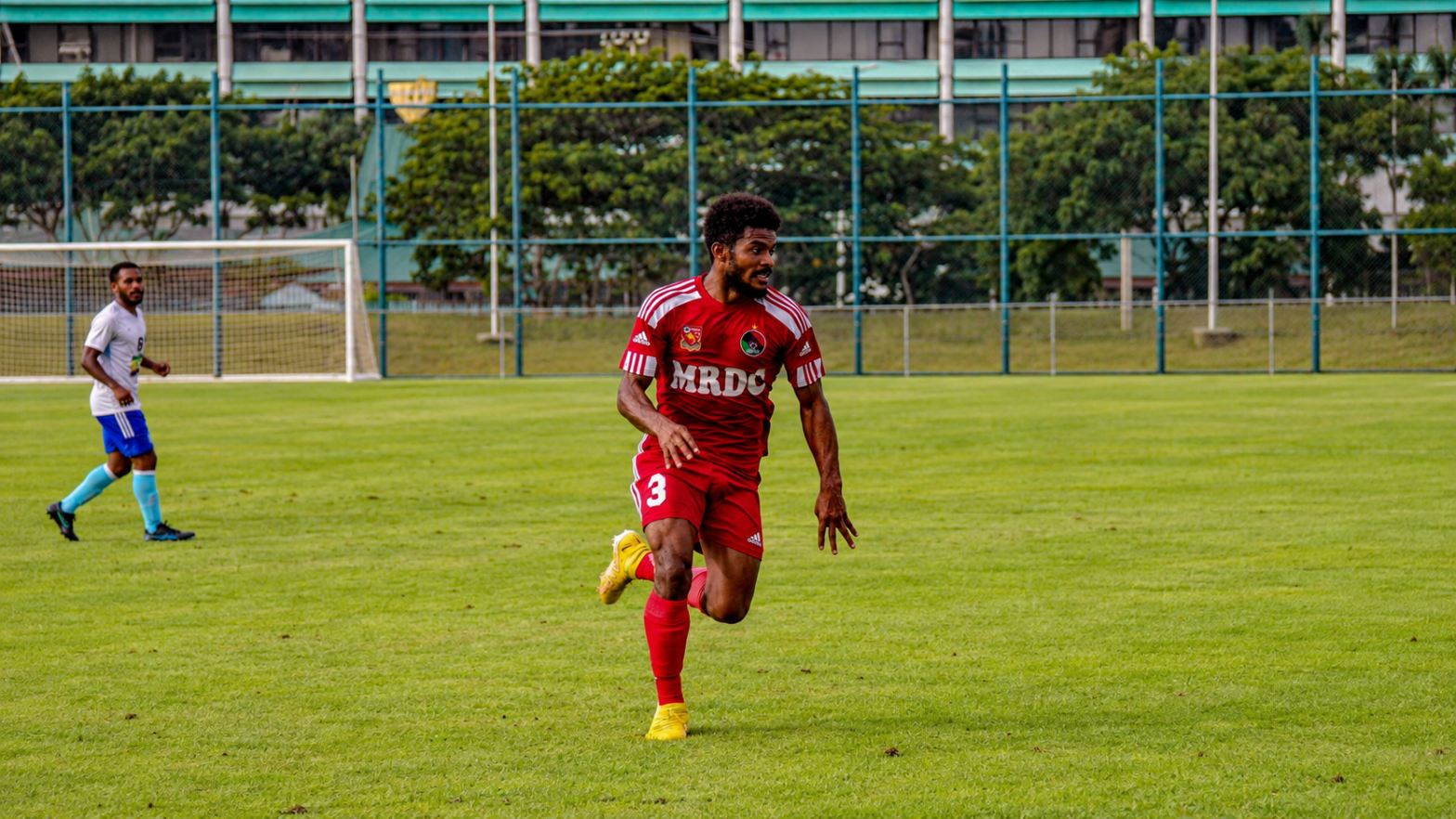
Brazilian midfielder Lucas Santos is on the verge of a unique place in Fijian football history, with the Rewa player set to become the first Brazilian ever recorded to play in the country’s famous Inter-District Championship. The 2026 FMF IDC begins in Suva on October 6, and research by Oceania Football Center through Fiji FA competition records, historical squad lists and contemporary newspaper coverage has so far found no previous Brazilian who actually took the field in the men’s senior competition.
The distinction is particularly significant because the IDC is not simply another tournament on Fiji’s domestic calendar. First contested in 1938, it is the oldest major national football competition in the country and one of the tournaments most deeply connected with Fijian football culture. The first edition was played in Suva, with Rewa defeating Ba 3-2 in the final. Almost nine decades later, it is again Rewa who could add another small chapter to the competition’s history — this time through a player born thousands of kilometres away in Brazil.
The historical claim requires an important qualification: “ever recorded.” Records from the earliest decades of Fijian football are naturally less complete than the detailed digital match sheets available today, making it difficult to prove an absolute negative covering almost 90 years. However, OFCe’s review of the surviving records, Fiji FA material and historical reporting has not uncovered a Brazilian who played in the IDC before Santos. That includes the period in which foreign players became increasingly common in Fiji’s major districts and, crucially, several earlier Brazilians who themselves represented Rewa.
The strongest comparison comes from 2017, when Rewa brought in three Brazilians — Diego Máximo Galvão, Marcelo Tannus and Elias Silva Júnior — after changes to regulations concerning foreign players. The trio were genuine Rewa players and featured in the OFC Champions League, with Marcelo also scoring during the continental campaign. But their presence in Fiji did not translate into an IDC appearance. Fiji FA’s official Rewa squad for the 2017 tournament contains none of the three, confirming that they were not part of the Delta Tigers’ IDC campaign later that year.
Marcelo Tannus later returned to Rewa and was again included by the club for the 2022 OFC Champions League, creating another possible historical lead. Yet the available 2022 IDC records and reporting do not record him appearing for Rewa in that competition either. Brazilian striker Matheus Medeiros de Souza was another name linked with the club in 2020, when Fiji FA reported that Rewa had sought his international transfer, but no IDC appearance has been found in his case. Earlier reporting also recorded interest from Nadi in bringing Brazilian players to Fiji, but again without evidence of a Brazilian subsequently taking the field in the IDC.
That background makes Santos’s situation different. The Brazilian midfielder is already an established member of the current Rewa side rather than a player simply being linked with a move ahead of the tournament. He entered Fijian football in 2026 after an important spell with Hekari United in Papua New Guinea, where he was one of the club’s Brazilian imports and played a role in Hekari reaching the 2025 OFC Men’s Champions League final.
Santos has since become a regular option for Rewa. He featured during the Fiji FACT and has remained part of the Delta Tigers’ domestic campaign. His most eye-catching moment in Fiji so far came during the Battle of the Giants against Ba, when the Brazilian found the net as Rewa recorded a convincing 3-0 victory at Govind Park. His performances across Fiji’s major competitions have now put him in position to add the IDC to his growing list of experiences in Pacific football.
His potential historical appearance will come with Rewa carrying another significant storyline into the tournament. The Delta Tigers are the defending IDC champions, having defeated Ba 1-0 in the 2025 final, and will now attempt to retain the trophy in Suva. Rewa have been drawn in Group A alongside Labasa, Suva and Nasinu, with their campaign beginning on October 6.
There is a fitting symmetry to the occasion. Rewa won the first IDC in 1938, and 88 years later the same district could provide the competition with its first recorded Brazilian player. Santos still has to take the field for the historical mark to become official — registration or a place on the bench alone would not constitute an appearance — but everything is now in place for him to reach a milestone that none of Rewa’s previous Brazilian imports managed.
For a tournament whose history stretches across generations of Fijian football, the presence of a Brazilian midfielder may appear only a small detail in the battle for the trophy. Yet it also reflects how much the football landscape of the Pacific has changed. Santos arrived in Fiji after playing in Papua New Guinea and competing at continental level, and he now stands on the verge of connecting Brazilian football with one of the Pacific’s oldest surviving domestic traditions.
If Lucas Santos takes the field for Rewa at the 2026 IDC, he will become the first Brazilian ever recorded to play in Fiji’s Inter-District Championship.
The final major trophy of the Fijian domestic season is on the line as the 2026 FMF Inter-District Championship brings eight Super Premier districts to Suva for five days of tournament football between October 6 and 11.
Few editions in recent years have arrived with such a clearly defined team to beat. Ba have already won the Extra Premier League, Fiji FACT and Battle of the Giants in 2026 and now have an opportunity to complete an extraordinary sweep of Fiji’s four principal domestic competitions. Standing in their way are defending IDC champions Rewa, league runners-up Labasa, hosts Suva and a group of sides that have already shown this season how dangerous short tournaments can become.
There is also an unusual factor surrounding the competition. Fiji defeated Vanuatu 1-0 in the MSG Prime Minister’s Cup final only days before the IDC, with several players now going directly from international duty back to their districts. Thomas Dunn, Tevita Waranaivalu, Isikeli Sevanaia, Sterling Vasconcellos, Sitiveni Cavuilagi, Isimeli Gavidi and Gabiriele Matanisiga were all involved in the final. Dunn arrives in particularly remarkable form after scoring Fiji’s winning goal and being named the tournament’s Golden Ball winner.
The margins will be small. Each Super Premier side plays only three group matches. Two teams from each pool advance to the semi-finals, meaning one poor afternoon can completely change a campaign.
The format
Group A contains defending champions Rewa alongside Labasa, Suva and Nasinu. On paper, it is the more difficult group to predict: three genuine title contenders are competing for only two places, while Nasinu showed by reaching the Battle of the Giants semi-finals that they cannot be treated as an automatic three points.
Group B includes Ba, Lautoka, Navua and Nadi. Ba are clear favourites to win it, but second place is much less certain. Lautoka have the strongest season-long record of the remaining three, Navua reached the Fiji FACT final and Nadi have reinforced their squad while possessing one of the league’s most productive forwards.
The pool stage runs from October 6 to 8. October 9 provides a break before the Super Premier semi-finals at HFC Bank Stadium on Fiji Day, October 10, at 2.30pm and 5pm. The Super Premier final is scheduled for 3pm on Sunday, October 11.
HFC Bank Stadium is the centre of the tournament, while matches from the Premier and Senior competitions are also being staged at Buckhurst Park and the Fiji FA Academy Ground.
Group A: three contenders fighting for two places
Rewa — the champions have changed, but remain one of the teams to beat
Rewa return as defending champions after ending a 15-year IDC drought in 2025 with a 1-0 victory over Ba in the final. Yet the team attempting to retain the trophy is not exactly the one that won it.
Two of the leading figures in that triumph now wear black. John Orobulu, the 2025 IDC Golden Boot winner, and Patrick Joseph, who scored the winning penalty against Ba in last year’s final, both moved to Ba during 2026. Defender Delon Shankar appears on Rewa’s submitted IDC squad graphic but has subsequently been suspended by the Fiji FA and is not expected to participate unless his status changes.
Rewa nevertheless remain extremely difficult to dismiss. They finished third in the league with 39 goals scored and only 17 conceded, reached the BOG final and have added Scott Wara to an already experienced defensive unit. Coach-player Tevita Waranaivalu has openly identified defensive organisation as the foundation of Rewa’s IDC challenge.
Josaia Sela, who scored six times in the league, provides a threat in the final third, while Gabiriele Matanisiga, Lucas Santos, Epeli Valevou and Waranaivalu give the side a strong core. Wara adds another player accustomed to a higher level of football.
Rewa may no longer possess Orobulu’s goals or Joseph’s presence, but tournament football rarely rewards the prettiest team. Their structure, experience and ability to survive difficult matches make them Ba’s strongest challenger.
Player to watch: Josaia Sela. Rewa need someone to compensate for the attacking production lost since last year, and Sela has increasingly become that player.
Labasa — the best team in Fiji without a major 2026 trophy
Labasa’s season deserves more respect than their trophy cabinet suggests. The Babasiga Lions finished second in the Premier League with 38 points, scoring 44 goals, and were the only club to remain within genuine reach of Ba through much of the league campaign.
Their problem has been converting that consistency into tournament silverware.
Labasa qualified for the Fiji FACT semi-finals but lost to Ba and then had a disappointing Battle of the Giants. The IDC therefore represents their final opportunity to turn a generally strong 2026 into a season with a major trophy.
There is significant quality in Jerry Sam’s squad. Christopher Wasasala remains one of Fiji’s most experienced attacking players, while Papua New Guinea international Rex Naime gives Labasa another creative and technical option. Jone Lalagavesi and Lekima Gonerau return from Fiji’s MSG campaign, with Peniasi Rotodara, Jovesa Uqe and the experienced Simione Tamanisau also included.
The major issue is Melvin Mani. The league’s joint-third highest scorer with nine goals is named in the published squad but has been suspended by Fiji FA and is currently expected to miss the tournament unless that ruling changes. Losing nine league goals from midfield is a major blow in a group where chances may be limited.
Player to watch: Christopher Wasasala. Labasa have several attacking options, but Wasasala’s experience and ability to influence tournament matches could become even more important without Mani.
Suva — the most dangerous dark horse in the tournament
Sixth place in the league does not accurately describe the threat Suva carry into the IDC.
They scored 38 league goals, more than every Super Premier side except Ba, Labasa and Rewa, and possess the league’s leading scorer in Siotame Kubu. His 15 goals put him five clear of the next-best scorer in the competition.
Then there is Gagame Feni. The Solomon Islands veteran remains one of the most technically dangerous forwards in Fiji and reminded everyone of it during the BOG, where he scored four goals during the group stage. Keshly Joseph, Jason Dau and Malakai Lavecake provide further attacking options.
Suva have also strengthened specifically for the IDC by including four New Zealand-based players: Emosi Navaba, James Hoyt, Andrew Naicker and Shiville Salesh Kumar.
Home advantage matters as well. Every Super Premier match is being played in Suva, and Pita Rabo’s side showed at the BOG that their league position should not be used as the only measurement of their ceiling.
Their weakness has been consistency. Suva have looked capable of beating almost anyone on one day and dropping points unexpectedly on another. In a three-match group, that volatility can either eliminate them or carry them deep into the tournament.
Player to watch: Siotame Kubu. Fifteen league goals make the case by themselves. If the season’s most productive domestic scorer carries that form into the IDC, Suva can win Group A.
Nasinu — the underdog nobody should dismiss
Nasinu finished eighth in the league and enter the strongest group, but their Battle of the Giants campaign changed the way they should be viewed.
They reached the BOG semi-finals after important wins over Navua and Suva and only went out after a competitive 3-2 defeat against Rewa. Billy Afi was central to that run and remains one of the most important players in Abunesh Kapoor’s team.
There is, however, a major difference between the BOG side and the IDC squad. Bruce Hughes, who scored eight league goals for Nasinu, and Solomon Islands attacker Paul Francis are not listed in the final 22-player squad provided for the tournament. That removes considerable attacking production.
Much will therefore fall on Afi, Emmanuel Etim and teenage Fiji international Maikah Dau. Dau arrives directly from Fiji’s MSG triumph and gives Nasinu pace and unpredictability around the penalty area.
Nasinu have not won the IDC since 1990. Ending a 36-year drought from this group would require one of the tournament’s great underdog runs, but their BOG campaign provides enough evidence to say it is not impossible.
Player to watch: Billy Afi. He was one of Nasinu’s defining players at the BOG and will carry even greater responsibility with some of their previous attacking weapons absent.
Group B: everyone is chasing Ba
Ba — the clear favourite
There is no credible way to frame the 2026 IDC without beginning the title conversation with Ba.
The Men in Black won the league with 42 points, scored 54 goals and conceded only 14. They then combined that championship with the Fiji FACT and Battle of the Giants, becoming the dominant side of the domestic season.
Their squad helps explain why.
John Orobulu gives Ba one of the best penalty-box forwards in Pacific domestic football. After winning the 2025 Fiji league Golden Boot with Rewa and starring in last year’s IDC, the Solomon Islands striker moved to Ba during the 2026 season and still scored seven league goals despite arriving midway through the campaign. He also produced another hat-trick during Ba’s Fiji FACT run.
Beside him is one of the most fascinating figures of this IDC: Patrick Joseph. Twelve months ago he scored the goal that denied Ba the trophy. Now he is trying to win it for them.
Nabil Begg, Ryan Naresh, Faazil Ali, Etonia Dogalau, Penisoni Tirau and Rusiate Doidoi offer further options, while Solomon Islands defender David Supa and Vanuatu international John Alick add Pacific experience. Isikeli Sevanaia enters the tournament immediately after winning the MSG Cup Golden Glove with Fiji.
Ba also have something to settle. Rewa defeated them in the 2025 IDC final, and the IDC is the only major domestic trophy missing from their 2026 collection.
They have won this competition 25 times. A 26th would complete an exceptional season.
Player to watch: John Orobulu. Few players in the competition have a stronger recent IDC record, and he enters this edition surrounded by considerably more attacking support than most opposing forwards.
Lautoka — enough quality to punish anyone
Lautoka finished fourth in the league and are the most logical candidates to follow Ba out of Group B, but their season has been marked by sharp swings in performance.
They defeated Ba 2-0 during the Fiji FACT group stage, yet later lost 4-1 to them in the league and 3-1 at the BOG. They have shown both the ability to trouble Fiji’s best team and the vulnerability that keeps them below the first tier of favourites.
Rusiate Matarerega is the major reason to believe in an IDC run. His ten league goals were second only to Kubu, and he gives Lautoka a reliable central attacking reference. Luciano Orzo and Luis Ortega Castro also made an impact during the BOG, while Sterling Vasconcellos and Sitiveni Cavuilagi return from Fiji’s MSG triumph.
With 18 IDC titles, only Ba have won the competition more often. Lautoka know this tournament and have enough quality to reach the semi-finals. Whether they can beat two elite opponents in consecutive knockout matches is the larger question.
Player to watch: Rusiate Matarerega. Ten league goals and a physical presence that becomes particularly useful in tight tournament matches.
Nadi — overseas additions and one of the league’s best forwards
Nadi finished seventh in the league but should not be confused with a side lacking attacking quality.
Jimson Abana scored nine league goals, joint-third in the competition, and is the clearest route towards an upset. Nadi also strengthened their IDC squad with Australia-based Aabid Mohammed, goalkeeper Aadil Mohammed and Mohammed Solayman, together with New Zealand-based Aron Arif Mohammed.
Joela Biuvanua, Mohammed Ayman, Brian Charitar, Tuiba Batiratu and Eneriko Matau provide a familiar domestic core. Veteran defender Ilimotama Jese, however, was left out of the final squad after missing training.
There is one result that should particularly interest supporters before the opening match: Nadi defeated Navua 1-0 in both league meetings this season. They also managed a BOG victory over Rewa. The evidence is therefore there that Nadi can frustrate stronger opponents.
Their first match against Navua could effectively become an early elimination game.
Player to watch: Jimson Abana. Nine goals for a team that scored only 25 in the league means he was responsible for more than a third of Nadi’s league output.
Navua — Thomas Dunn returns as Fiji’s new tournament hero
No player arrives at the IDC with more immediate momentum than Thomas Dunn.
The Navua captain scored the goal that defeated Vanuatu in the MSG Prime Minister’s Cup final and was subsequently named the best player of the men’s tournament. Two days later, he returns to district football trying to lead Navua through one of the most demanding schedules of the season.
Navua’s fifth-place league finish does not tell the whole story. Rodeck Singh’s team reached the Fiji FACT final, held Ba scoreless for 120 minutes and were eventually beaten only in the penalty shootout. That performance showed how difficult they can be to break down in knockout football.
Usaia Tilivarua scored five league goals, Walter Leoru remains dangerous from wider areas and Peniame Drova gives the team experience. The final IDC squad, however, does not include Jack Junior Ani, an important part of their earlier tournament campaign, while the short turnaround for Dunn adds another physical concern.
Navua need a result immediately. After losing both league games against Nadi, they face them first before meeting Ba and Lautoka.
Player to watch: Thomas Dunn. Four league goals do not fully describe his influence. He now returns as an MSG champion, final goalscorer and Golden Ball winner.
The complete Super Premier schedule — and OFCe predictions
These are projections rather than expected certainties. IDC football is especially volatile because three matches in three days magnify fatigue, suspensions, injuries and individual mistakes.
Date
Match
Kick-off
OFCe prediction
October 6
Navua vs Nadi
1.30pm
Navua 0–1 Nadi
October 6
Nasinu vs Rewa
3.30pm
Nasinu 1–2 Rewa
October 6
Ba vs Lautoka
5.30pm
Ba 2–1 Lautoka
October 6
Labasa vs Suva
8.00pm
Labasa 1–2 Suva
October 7
Lautoka vs Nadi
1.30pm
Lautoka 2–0 Nadi
October 7
Nasinu vs Suva
3.30pm
Nasinu 1–2 Suva
October 7
Navua vs Ba
5.30pm
Navua 0–1 Ba
October 7
Rewa vs Labasa
7.30pm
Rewa 1–1 Labasa
October 8
Navua vs Lautoka
1.30pm
Navua 1–1 Lautoka
October 8
Nasinu vs Labasa
3.30pm
Nasinu 1–2 Labasa
October 8
Nadi vs Ba
5.30pm
Nadi 0–1 Ba
October 8
Rewa vs Suva
7.30pm
Rewa 2–1 Suva
That forecast would leave Rewa first and Suva second in Group A, with Labasa narrowly eliminated despite a strong season. In Group B, Ba would finish first ahead of Lautoka, with Nadi, Navua and Lautoka’s battle for second potentially remaining open until the last afternoon.
Labasa missing the semi-finals is the boldest part of that prediction. Their league season suggests they are good enough to qualify, but the combination of Mani’s suspension, Suva’s attacking reinforcements and Rewa’s tournament structure makes Group A exceptionally difficult to call. A Labasa victory over Suva on the opening night would immediately turn the projection upside down.
Who are the favourites?
Ba stand alone in the first tier. No other team enters with their combination of form, depth and results. The league champions have already proved they can win both sustained competitions and short tournaments, and their mid-season recruitment has made an already strong group deeper.
Rewa and Labasa form the next tier. Rewa have the better tournament profile and are defending champions; Labasa have the stronger league campaign. Either is capable of beating Ba in one match.
Suva are the major dark horse. They are too inconsistent to be placed alongside Ba, but Kubu, Feni, the New Zealand reinforcements and home advantage give them perhaps the highest attacking ceiling outside the favourites.
Lautoka sit just behind that group. They should expect to fight for a semi-final place and possess enough quality to create an upset once there.
Nadi, Navua and Nasinu need the tournament to break in their favour. All three have produced results this season proving they can beat or trouble stronger opposition, but winning the IDC would require them to reproduce those performances several times within six days.
The overall OFCe pick is Ba to win the 2026 IDC, with Rewa the most likely opponent in the final. If that happens, it would provide a perfect reversal of the 2025 decider: Rewa defending the title they won against Ba, but facing a Men in Black side that has since taken Orobulu and Joseph from that championship team and swept the other three major trophies in Fiji.
Players who could define the tournament
Orobulu and Joseph make Ba particularly compelling, but this IDC is not short of individual stories. Siotame Kubu enters as the league’s 15-goal Golden Boot winner. Rusiate Matarerega scored ten for Lautoka. Jimson Abana produced nine for Nadi despite their seventh-place finish. Josaia Sela has become increasingly important to Rewa, while Christopher Wasasala and Rex Naime give Labasa experienced attacking quality.
The Pacific angle is especially strong. Solomon Islands internationals John Orobulu and Gagame Feni, PNG international Rex Naime, and Vanuatu’s John Alick and Keshly Joseph are among the regional players involved.
Then there is the new generation. Maikah Dau returns to Nasinu after lifting the MSG Cup with Fiji, while Thomas Dunn, still only at the beginning of what could become a major international career, enters the IDC having just decided an international final.
Fatigue may consequently become as important as form. Players involved in the MSG final have gone almost directly from national-team football into three consecutive days of district matches. Coaches with stronger benches could benefit substantially by October 8.
How to attend and follow the tournament
Fiji FA has advertised three ticket categories at HFC Bank Stadium. Stadium seating is FJD20 for adults and FJD10 for children under ten; cement embankment tickets are FJD15 and FJD8; grass embankment entry is FJD10 for adults and FJD5 for children. Children under two are admitted free. Tickets are also being sold online through TicketMate.
For supporters unable to attend, Radio Fiji 2 is providing live commentary of the Super Premier matches. MaiTV has also listed an FMF IDC 2026 pay-per-view package through TicketMax, advertised from FJD100.
The official opening takes place at 7.30pm on October 6, immediately before the opening-night feature match between Suva and Labasa at 8pm.
More than the Super Premier: Kiribati make IDC history
The 2026 IDC also carries a story that reaches beyond Fiji’s domestic game.
Fiji’s U-17 national team will also make its IDC debut, competing in Premier Group B against Tailevu Naitasiri and Tavua. For the young Fijian squad, the tournament provides senior opposition as part of preparations for the FIFA U-17 World Cup.
The Senior Division has Lami, North Tailevu, Bua and Dreketi in Group A, with Rakiraki, Savusavu, Nadogo and Taveuni in Group B.
Those additions make this IDC more than another conclusion to Fiji’s domestic season. It brings together the country’s strongest districts, developing players and, for the first time, another Pacific national team.
But when the Super Premier final kicks off at HFC Bank Stadium at 3pm on October 11, the central question will remain the one that has followed Fiji football through almost the entire second half of 2026:
After five seasons with Hekari, Papua New Guinea defender Godfrey Haro has experienced almost every level of the club’s recent journey. From domestic football in PNG to repeated appearances in the OFC Champions League, a continental final and now the first season of the OFC Pro League, the 28-year-old has been part of a period of major change for one of the Pacific’s most established clubs.
Speaking exclusively to Oceania Football Center, Haro reflected on how the demands of the new professional competition have differed from anything he had previously experienced in his career, while also addressing his absence from Papua New Guinea’s squad for the recent MSG Prime Minister’s Cup.
Haro’s pathway with Hekari has gradually taken him beyond the domestic game. In 2025, he was part of the side that reached the OFC Champions League final in Honiara, where Hekari faced Auckland City after returning to the continental decider for the first time in 15 years.
“For me, I would say it has been a great journey. Being able to play in our local league and then step onto another level of football has been a great experience. It was my third year playing in the Champions League with the club, with the most recent one being in Solomon Islands, where we made it all the way to the final against Auckland City in 2025,” Haro told OFCe.
That experience, however, was still different from what followed with PNG Hekari’s entry into the inaugural OFC Pro League. Instead of playing a short continental tournament, Haro and his teammates had to adjust to a longer professional environment involving regular travel, short recovery periods and opponents from across Oceania.
For Haro, the creation of a professional competition in the region represented something many Pacific players had been waiting for.
“For the OFC Pro League, it has been a dream for many football players in the world, and we in Oceania are lucky enough to have professional football introduced. It is another stepping stone for Oceania as a whole, giving us a better idea of what a professional league is like in other countries.”
The defender said some of the changes were completely new to him. One was the use of Video Assistant Referee technology. Another was the physical and mental demand created by the competition schedule.
“There are so many things that I had never come across before in my football journey. Things like the introduction of VAR, which I had sometimes only seen while watching EPL matches. Time is also very important, especially when you have games with only two days of break and recovery.”
The travelling nature of the competition was another significant adjustment. Rather than remaining in Papua New Guinea for the majority of the season and travelling only for occasional continental tournaments, Hekari had to operate within an international professional structure.
“The other thing is travelling to and from different venues and countries, and getting to play against bigger clubs in Australia and New Zealand,” Haro added.
Haro was not merely observing the change from the outside. He featured throughout Hekari’s Pro League campaign and produced important moments, including a decisive goal-line clearance in the club’s historic first victory in the competition, a 3-1 win over Vanuatu United in Melbourne.
For the defender, Hekari’s challenge was also about adapting its squad to professional football. The team entered the new competition with experienced figures alongside younger players who had never previously experienced an environment of this kind.
“For us at Hekari, we had a mixture of senior players and some junior players in our first tournament early this year,” he explained.
That transition did not prevent Haro from highlighting another element he considers central to Hekari’s history. He credited the club’s achievements to its strong Christian identity and faith.
“The most important thing that has brought this club to where it is now is our Heavenly Father, God Almighty, who has been behind the success of this Hekari football team.”
After the Pro League, Haro returned to domestic football with Hekari and continued to have an important role during the 2026 Premier Soccer League campaign. Hekari remained in the title race until the closing stages, eventually completing the season with 48 points from 22 matches. Haro himself contributed at the other end of the pitch as well, including a stoppage-time equaliser in a key match against Gulf Komara and another goal during Hekari’s late-season comeback against Lae City Dwellers.
Asked by OFCe how he viewed his domestic season, Haro kept his assessment simple.
“It’s been great.”
One issue has nevertheless remained outside his control.
Despite his experience with Hekari and previous involvement with the Papua New Guinea national team, Haro was not selected for the Kapuls squad that contested the 2026 MSG Prime Minister’s Cup.
Rather than criticising the decision, Haro admitted he had not been given an explanation and accepted that selection ultimately belonged to the coaching staff.
“To be honest, I have no idea why I wasn’t selected for the MSG team. It was the coach’s call.”
It is a notable position for a defender who has remained active at one of PNG’s leading clubs while accumulating experience across domestic, continental and professional football. At 28, Haro is also still at an age where a return to the national setup remains very much possible.
His last few seasons illustrate how quickly the environment around Papua New Guinea football has changed. Hekari went from competing domestically and chasing another OFC Champions League run to reaching the 2025 continental final and then becoming Papua New Guinea’s representative in Oceania’s first professional league.
For Haro, that progression has brought VAR, international travel, demanding recovery schedules and a different standard of preparation. Whether it eventually brings him back into the Kapuls squad will depend on decisions beyond his control, but his place in Hekari’s transition into the professional era has already given him an experience few Papua New Guinean players before this generation have had.
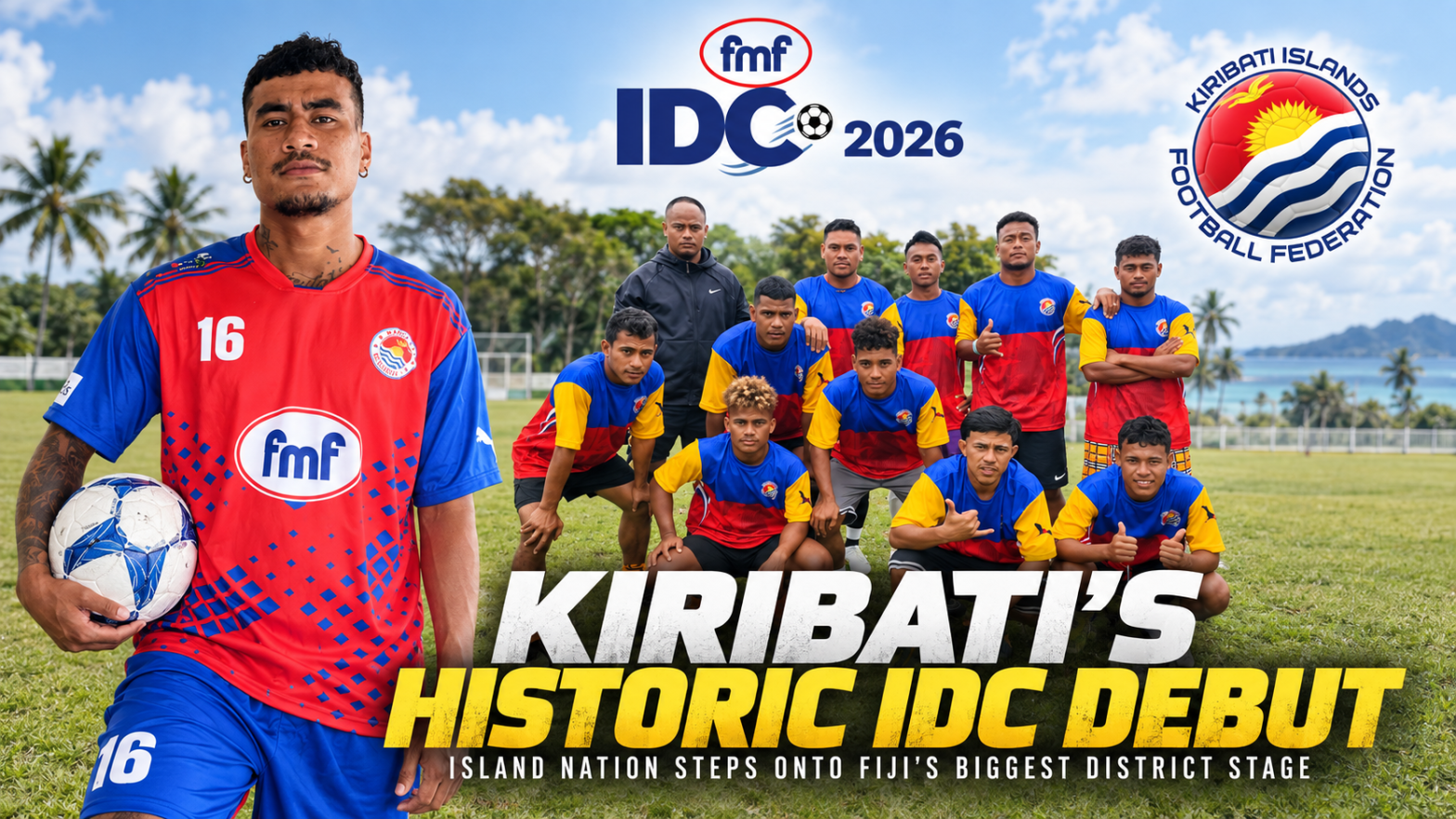
Kiribati’s participation in the 2026 FMF Inter-District Championship is about much more than entering another football tournament. When the national team walks onto the HFC Bank Stadium pitch in Suva, it will be taking part in one of the most important competitive tests available to a country still fighting for a permanent place within Oceania’s international football structure.
The 19-player Kiribati squad will make its historic IDC debut against Seaqaqa at 11am on October 6, competing in the Premier Division alongside Seaqaqa and Nadroga in Pool A. It is the first time Kiribati have entered the traditional Fijian tournament, and the opportunity arrives at a significant point in the development of football in the island nation.
Kiribati remain an associate member of the Oceania Football Confederation rather than a full member and are outside FIFA. That status severely limits the competitive opportunities available to the national team: there are no World Cup qualifiers and no regular senior OFC pathway comparable to those enjoyed by most of their Pacific neighbours. KIFF has openly identified full OFC and FIFA membership as one of its major long-term objectives.
Speaking directly to Oceania Football Center ahead of the IDC, Kiribati head coach Pine George Holomoana Iosefa made clear that the trip to Fiji is connected to that larger ambition.
“One of our main expectations for our football movement is to become a full member of OFC and FIFA,” Iosefa told OFCe.
For the coach, however, institutional recognition is only one part of what this tournament can provide. The IDC also gives Kiribati something much more immediate: an opportunity to discover where their football currently stands when placed against organised Fijian opposition.
“We hope to participate in the IDC competition to see our players’ standard against Fiji,” he added.
That may be the most important sporting question Kiribati will answer during their stay in Suva.
Unlike nations that can assess themselves through regular FIFA windows, qualifiers and regional championships, Kiribati have comparatively few opportunities to put their best players into a sustained competitive environment outside the country. The IDC therefore provides something that isolated friendly matches cannot: consecutive matches, tournament pressure and opponents accustomed to a demanding domestic football structure.
Kiribati have at least arrived with confidence. Their final preparations included a friendly against KISA on October 3, with the national selection — Te Itei — recording a 9-2 victory before turning its attention towards the IDC.
The squad itself also provides an important picture of where Kiribati football currently comes from.
Kiribati media and marketing officer Kamaraia Namina told OFCe that the travelling delegation consists of 19 players and five officials — two coaches, a team manager, medical assistant and media officer. The playing group has been assembled primarily from three of the country’s leading clubs: SB Rainbow FC and Dijron FC from Tarawa, and Tekinati FC from Butaritari.
The presence of Tekinati is particularly significant. It means the national side is not simply a Tarawa-based selection but includes representation from football outside the capital, an important consideration for a federation trying to develop a game spread across a geographically fragmented island nation.
Asked by OFCe about individual players who could attract attention during the tournament, Namina highlighted young midfielder Tekaai Tekaai.
“Tekaai is one of them. He is the youngest and a rising star,” Namina said.
Tekaai, wearing number 13 in Kiribati’s IDC squad, will therefore be one of the players worth following as the tournament progresses. Namina also pointed to midfielder Sakensa Vulitemo as another player capable of standing out.
Their performances will matter beyond Kiribati’s results.
For players accustomed largely to domestic football, facing experienced Fijian district teams offers a rare comparison with another Pacific football environment. Seaqaqa will provide the first measure before Kiribati also face Nadroga, a district with extensive experience in Fiji’s national competitions.
There is little reason to place unrealistic expectations on Kiribati in terms of winning the Premier Division. Their opponents operate within a deeper and more regularly competitive football structure, while the visitors are entering unfamiliar territory. But judging Kiribati only through wins and losses would miss much of the significance of their participation.
How well they organise defensively, how comfortable the players are under pressure, whether they can maintain the intensity required across consecutive tournament matches and which individuals prove capable of competing at this level may ultimately tell KIFF much more than the final standings.
There is also a remarkable historical connection between Kiribati and their hosts.
Kiribati’s first recorded men’s international was played against Fiji on 30 August 1979. Almost five decades later, Fiji is again providing an important reference point for the development of the Kiribati national team — this time by opening one of its most established domestic competitions to them.
The relationship has now moved beyond a single invitation. Kiribati officials have described their participation as the product of cooperation between KIFF and Fiji Football Association, while the IDC places the country before a Fijian audience and gives its players visibility they rarely receive elsewhere in the region.
For a federation whose stated ambitions include progressing from associate status towards full OFC membership and ultimately FIFA, those opportunities matter.
Kiribati cannot reach that objective through one tournament, and strong performances in Suva will not by themselves change their international status. What the IDC can do is give their football something essential to any development project: evidence.
For the first time, Kiribati can take a locally developed national squad into one of Fiji’s major football environments, measure its players against established opposition and leave the tournament with a clearer understanding of what has already been built — and how far there is still to go.
The results will be recorded in the IDC tables. For Kiribati, the real value of the week in Suva could be considerably bigger.
The 2026 MSG Prime Minister’s Cup closed with the major individual awards recognising decisive performances across both the men’s and women’s tournaments in Suva.
Fiji’s men completed a memorable home campaign by defeating Vanuatu 1-0 in the final, while Vanuatu won the women’s title after a dramatic penalty-shootout victory over Papua New Guinea. The tournament’s award list reflected both title-winning squads, but also recognised the players who consistently delivered throughout the group stage and finals.
Thomas Dunn claims Men’s Golden Ball
Fiji midfielder Thomas Dunn was named the Men’s Golden Ball winner after a strong tournament for the Bula Boys.
Dunn’s most important contribution came in the final against Vanuatu, when he scored the only goal after ten minutes. Fiji then defended their advantage through a difficult and physical contest to lift the MSG Prime Minister’s Cup for the first time in its modern format.
The Golden Ball award capped a significant tournament for Dunn, whose influence went beyond the final goal. Fiji recovered from an uneven start in the group stage, finishing with consecutive victories over Papua New Guinea and New Caledonia before defeating defending champions Vanuatu in the decider.
Sevanaia takes the Men’s Golden Glove
Fiji goalkeeper Isikeli Sevanaia received the Men’s Golden Glove award.
Sevanaia finished the competition with another clean sheet in the final, helping Fiji protect Dunn’s early goal against a Vanuatu side that applied sustained pressure in the second half. His reliability gave the Bula Boys a foundation during their decisive late run through the tournament.
Fiji kept clean sheets against Papua New Guinea and Vanuatu in their final two matches, a major turnaround after conceding in each of their first three games. Sevanaia’s award underlined how important the defensive improvement was to the hosts’ title-winning campaign.
Three-way tie for the Men’s Golden Boot
The Men’s Golden Boot was shared by three players, all of whom finished the tournament on three goals:
Raphael Lea’i — Solomon Islands
Javin Wae — Solomon Islands
Tony Kaltack — Vanuatu
Lea’i and Wae were central to Solomon Islands’ attacking threat. The Bonitos remained unbeaten in three of their four group matches, including a dramatic 3-3 draw with Fiji and another 3-3 match against Vanuatu, but eventually missed the final by one point.
Vanuatu captain Tony Kaltack also ended on three goals as the defending champions reached the final after finishing first in the round-robin standings. Although Vanuatu fell narrowly to Fiji in the final, Kaltack’s goals were crucial to their route to the decider.
New Caledonia received the Men’s Fair Play Award.
Kalapai dominates the women’s scoring race
Papua New Guinea forward Keren Kalapai won the Women’s Golden Boot after an outstanding tournament in front of goal. She finished with seven goals.
Kalapai set the tone early, scoring a hat-trick in PNG’s 4-0 opening win over Fiji. She continued to find the net against New Caledonia, Vanuatu and Solomon Islands as PNG reached the final with a perfect group-stage record.
Although PNG were beaten by Vanuatu on penalties after the women’s final finished 1-1, Kalapai’s seven goals made her the clear leading scorer of the competition and one of its standout performers.
Reddy and Kaltack recognised after Vanuatu triumph
Vanuatu goalkeeper Amelia Reddy received the Women’s Golden Glove following her team’s title-winning campaign.
Vanuatu had to work for the trophy. They reached the final after a strong group stage and then defeated PNG 5-4 on penalties after the match ended level following extra time. Reddy’s award recognised her importance in a side that handled pressure well throughout the tournament.
Vanuatu’s Kelly Kaltack was named the Women’s Golden Ball winner. Her performances helped drive the women’s team to the title and ensured that Vanuatu finished the tournament with individual recognition as well as silverware.
The final list of principal award winners was:
Category
Winner
Men’s Golden Ball
Thomas Dunn — Fiji
Men’s Golden Glove
Isikeli Sevanaia — Fiji
Men’s Golden Boot
Raphael Lea’i — Solomon Islands; Javin Wae — Solomon Islands; Tony Kaltack — Vanuatu — 3 goals each
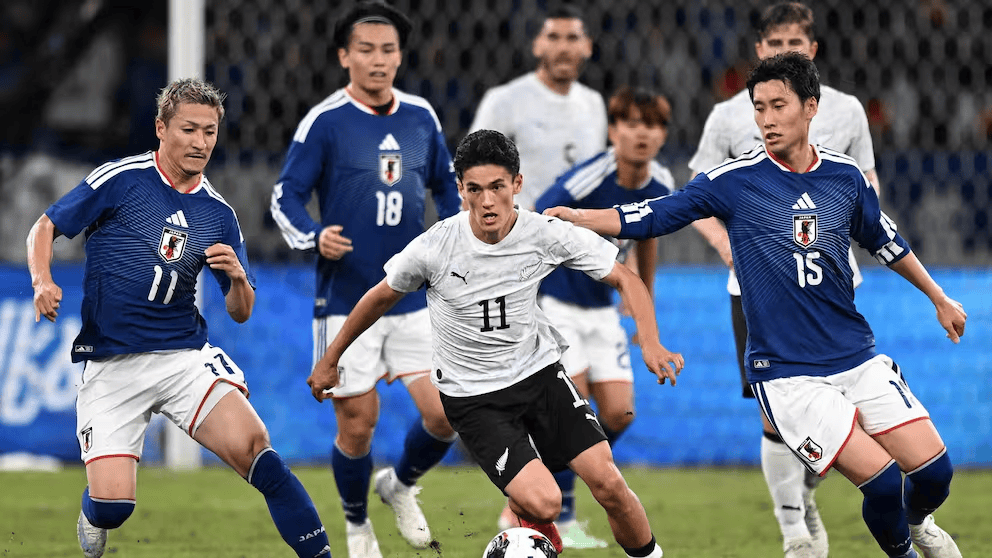
New Zealand came within 20 minutes of taking one of Asia’s strongest national teams into another tense finish, but Ritsu Doan’s second-half goal gave Japan a 2-1 victory over the All Whites in the Kirin Cup final in Tokyo.
Playing in front of more than 60,000 supporters at the National Stadium, Darren Bazeley’s side spent long periods without the ball but remained competitive through a disciplined defensive performance, the goalkeeping of Alex Paulsen and their ability to threaten Japan on the counterattack. Ben Old scored New Zealand’s goal after Ayase Ueda had opened the scoring, before Doan decided the final in the 71st minute.
Japan immediately established control of possession and forced New Zealand into a deeper shape. Bazeley effectively used five players across the defensive line, with Tyler Bindon, Michael Boxall and George Stanger protecting the centre while Dane Ingham and Old operated on the outside. Marko Stamenić, Alex Rufer and Lachlan Bayliss had to cover considerable ground in midfield as Japan circulated the ball around the All Whites’ defensive block.
The hosts eventually broke through in the 28th minute. Japan worked the ball down the right before Shuto Nakano’s delivery took a deflection inside the penalty area, leaving Ueda with the opportunity to attack the loose ball. The striker reacted first and finished powerfully from close range to put the Samurai Blue ahead.
New Zealand’s response, however, was almost immediate and illustrated exactly where Bazeley’s side could hurt Japan.
Only four minutes later, the All Whites recovered the ball and broke quickly. Captain Chris Wood carried possession towards the Japanese defence, drawing attention before releasing Old, who had made an intelligent run inside from the left. The Saint-Étienne player met the pass first time and produced a composed right-footed finish beyond Zion Suzuki to make it 1-1.
It was a particularly impressive moment from Old. New Zealand had been forced to defend for much of the opening half, but when the opportunity arrived, the 24-year-old turned a transition into a goal against a Japanese side containing several players established in major European leagues.
The equaliser allowed New Zealand to reach half-time level, although the balance of the game did not substantially change after the break. Japan continued to dominate possession and progressively increased the pressure around the All Whites’ penalty area.
Ueda came close to restoring the lead shortly after the restart, rising at the far post and sending a header against the crossbar. When Japan did find the target, Paulsen repeatedly stood in their way.
The Motherwell goalkeeper made nine saves over the course of the match and was arguably New Zealand’s outstanding performer. One of his best moments came in the 66th minute when Ao Tanaka fired towards goal and Paulsen reacted sharply to tip the effort over the crossbar.
Japan finished the match with around 78 per cent of possession and 11 shots on target, numbers that underline how much pressure New Zealand were required to absorb. Yet the All Whites remained level until Japan’s depth began to make a decisive difference.
Hajime Moriyasu introduced Keito Nakamura, Junya Ito and Ao Tanaka during the second half, and Nakamura was directly involved in the winning goal. In the 71st minute, he drove down the left and carried the ball into the penalty area before sending a low delivery across goal. Captain Ritsu Doan arrived free at the far post and converted from close range, restoring Japan’s lead.
Ueda appeared to add another shortly afterwards, but the goal was ruled out for offside, keeping New Zealand within one goal of forcing another shootout.
Bazeley had already begun refreshing his side, introducing Callan Elliot, Jesse Randall and Ben Waine for Ingham, Bayliss and Wood. Stipe Ukich and Dalton Wilkins followed later as New Zealand attempted to find a route back into the contest, but Japan managed the final stages well enough to protect their advantage.
The defeat brought an end to an encouraging international window for the All Whites. New Zealand had opened with a 2-2 draw against Palestine, followed that with an impressive 3-0 victory over China, and then reached the Kirin Cup final by beating Panama on penalties following a 1-1 draw, with Stamenić scoring in regulation time.
The final represented a considerable step up. Japan, ranked 17th in the world, controlled most of the contest and ultimately deserved the trophy on the balance of chances and possession. Yet New Zealand avoided being overwhelmed, found a way to score against sustained pressure and remained only one goal behind until the final whistle.
For Bazeley, there were positives despite the defeat. Paulsen once again demonstrated his ability at international level, Old produced a high-quality goal, and a defence containing Bindon, Boxall and Stanger survived prolonged periods against a technically gifted Japanese attack.
There was no trophy at the end of the night, but taking Japan to a 2-1 final in Tokyo provided another demanding test for an All Whites side continuing to measure itself against stronger international opposition.
Vanuatu United have officially moved on from Lars Hopp, confirming the German coach will not continue with the club for the second season of the OFC Pro League and appointing former Auckland City boss Albert Riera as part of a new technical direction for 2027.
The decision brings a formal end to Hopp’s time with the first professional club from Vanuatu after an inaugural campaign in which the Chiefs emerged as one of the strongest Pacific Island sides in the new competition. Vanuatu United reached the semi-finals before eventually falling 4-0 to South Melbourne, completing an encouraging first year in professional football.
In announcing the change, Vanuatu United explained that the decision followed planning between the club and the Vanuatu Football Federation, with the intention of ensuring “full alignment across the national pathway.” The wording is significant, with the structure of Vanuatu United increasingly being connected to the wider development of football in the country rather than operating only as an independent professional club.
Hopp leaves with a considerable legacy from his relatively short period in Vanuatu. Initially appointed to lead both Vanuatu United and the national team, he guided the national side to the 2025 MSG Prime Minister’s Cup, defeating Papua New Guinea on penalties in the final and delivering Vanuatu its first Melanesian title since 1990. He then took many of the same players into the professional environment with Vanuatu United and eventually led the club into the OFC Pro League semi-finals.
However, signs that the relationship was approaching its end had already appeared. Hopp was still in charge of the national team for the June international series against Fiji, but Richard Iwai replaced him ahead of Vanuatu’s 2026 MSG Prime Minister’s Cup campaign. His absence was also noticeable when Vanuatu United finally played on home soil against Central Coast Mariners in September, with goalkeeper Matthew Acton taking charge from the technical area instead. The club had not publicly explained Hopp’s absence at the time.
It was another unusual chapter in a relationship that had already come close to ending much earlier. Hopp initially announced his intention to resign in January, alongside then-general manager Christian Happel, because of differences over the future direction of the club. He later withdrew that resignation and remained in charge throughout the inaugural OFC Pro League season.
The man selected to lead the next phase is one of the most decorated coaches in modern Oceania club football.
Albert Riera arrives with a remarkable record at Auckland City. The Barcelona-born coach led the Navy Blues to three consecutive OFC Champions League titles in 2022, 2023 and 2024, while also winning New Zealand national honours and the Chatham Cup during his time in charge. His connection with Auckland City goes considerably deeper: as a midfielder, Riera spent much of his playing career at Kiwitea Street and won four OFC Champions League titles with the club, either side of a spell in the A-League with Wellington Phoenix.
Importantly for Vanuatu United, this will not be Riera’s first experience of football in the country. After leaving Auckland City in early 2025, he took charge of Galaxy FC and immediately delivered the 2024–25 VFF Champions League title, with Galaxy defeating M3 United 2-1 after extra time in the final. That period gave him direct experience with Ni-Vanuatu players, local football structures and the particular environment the country’s new professional club is trying to build upon.
Riera subsequently returned to New Zealand to coach Christchurch United in 2026, although that spell ended in August following a difficult Southern League campaign. His appointment by Vanuatu United therefore represents both a return to the Pacific nation and an opportunity to re-establish himself at professional level in a competition he knows well from the opposite side of Oceania football.
Riera will work alongside VFF Technical Director Emerson Alcântara, another important element of the new structure. Vanuatu United say the pair will help establish a more unified pathway between the professional club and Vanuatu football as a whole, describing the objective as a “new, united direction for the national pathway” with a clearer Vanuatu identity.
That may ultimately be the most important element of the change. Hopp helped establish Vanuatu United and demonstrated during the inaugural season that a predominantly Ni-Vanuatu squad could compete deep into the OFC Pro League. Riera now inherits that foundation with considerably more experience of winning Oceania’s major club competition — and with previous knowledge of the domestic game in Vanuatu itself.
For Vanuatu United, the second OFC Pro League season will therefore begin with a different coach but an even stronger emphasis on connecting the country’s professional project with its wider football pathway.
The Hopp era produced Vanuatu’s first regional national-team title in 25 years and an OFC Pro League semi-final. The task for Riera will be to turn that promising beginning into the next stage of Vanuatu United’s development.
Fiji captain Roy Krishna described the Bula Boys’ MSG Prime Minister’s Cup success as a long-awaited moment for the country after Fiji defeated defending champions Vanuatu 1-0 in the final in Suva, ending a 26-year wait for a senior Melanesian title.
Thomas Dunn scored the decisive goal after only ten minutes at HFC Bank Stadium, completing a remarkable tournament turnaround for a Fiji side that had started the competition with a 3-3 draw against Solomon Islands and then suffered a 1-0 defeat to the same Vanuatu team they would eventually meet again in the final.
For Krishna, however, the significance of the night extended beyond simply reversing that earlier result.
“It was long overdue to win a trophy at home,” the Fiji captain said after the final.
The victory gave Fiji their first Melanesian senior men’s crown since the 2000 Melanesia Cup and their first since the regional competition was revived under the MSG Prime Minister’s Cup name. For one of the most experienced players in Pacific football, lifting the trophy in front of a home crowd carried particular importance.
Krishna also used the moment to recognise those around him rather than place the focus on his own contribution. He paid tribute to his teammates, acknowledged the work of fellow senior player Tevita Waranaivalu and highlighted the role of head coach Stéphane Auvray in building the current side.
The captain also thanked the supporters who followed Fiji throughout the competition and called on them to remain behind a team that is still going through a generational transition. Krishna’s message after the final was that winning the MSG Cup should not be seen as the end of the process, but as an early reward for a group being built with the future in mind.
That point is particularly significant given the composition of Auvray’s squad. Fiji combined experienced figures such as Krishna and Waranaivalu with a younger group that included players being given increasing responsibility at senior international level. Dunn, who scored the winner in the final and was later named the tournament’s Golden Ball winner, became one of the clearest examples of that transition.
Krishna himself had an important role in the decisive moment. His diagonal pass opened the Vanuatu defence before Dunn attacked the space and finished the move to put Fiji ahead. From there, the Bula Boys were required to defend for long periods as Vanuatu attempted to find a way back into the contest.
The result also completed Fiji’s recovery from a difficult beginning to the tournament. After surrendering a two-goal advantage in the 3-3 draw with Solomon Islands, they were beaten by Vanuatu in their second match. Consecutive victories over Papua New Guinea and New Caledonia then carried Fiji into the final, where they overturned the earlier defeat and denied Vanuatu successive MSG titles.
Krishna’s post-match comments therefore reflected both relief and perspective. Fiji finally had a trophy again, and this one had been won at home, but the veteran captain was already directing attention towards what comes next.
For a national side increasingly focused on constructing a team capable of competing through the next World Cup cycle, the MSG Prime Minister’s Cup has provided something that development projects also need: tangible success.
After 26 years without a Melanesian senior title, Fiji have one again.
And according to their captain, the achievement should be viewed as a beginning rather than a destination.
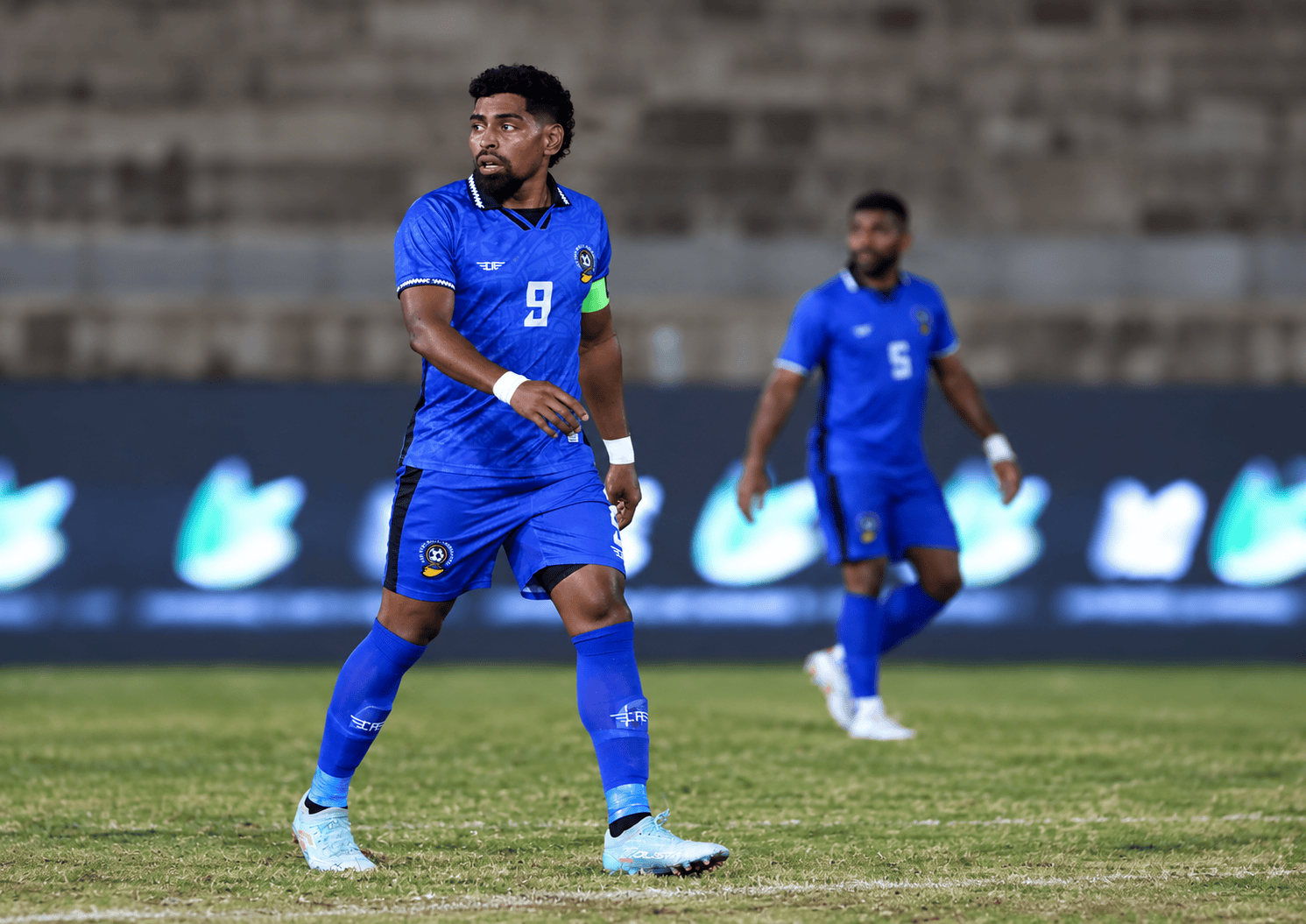
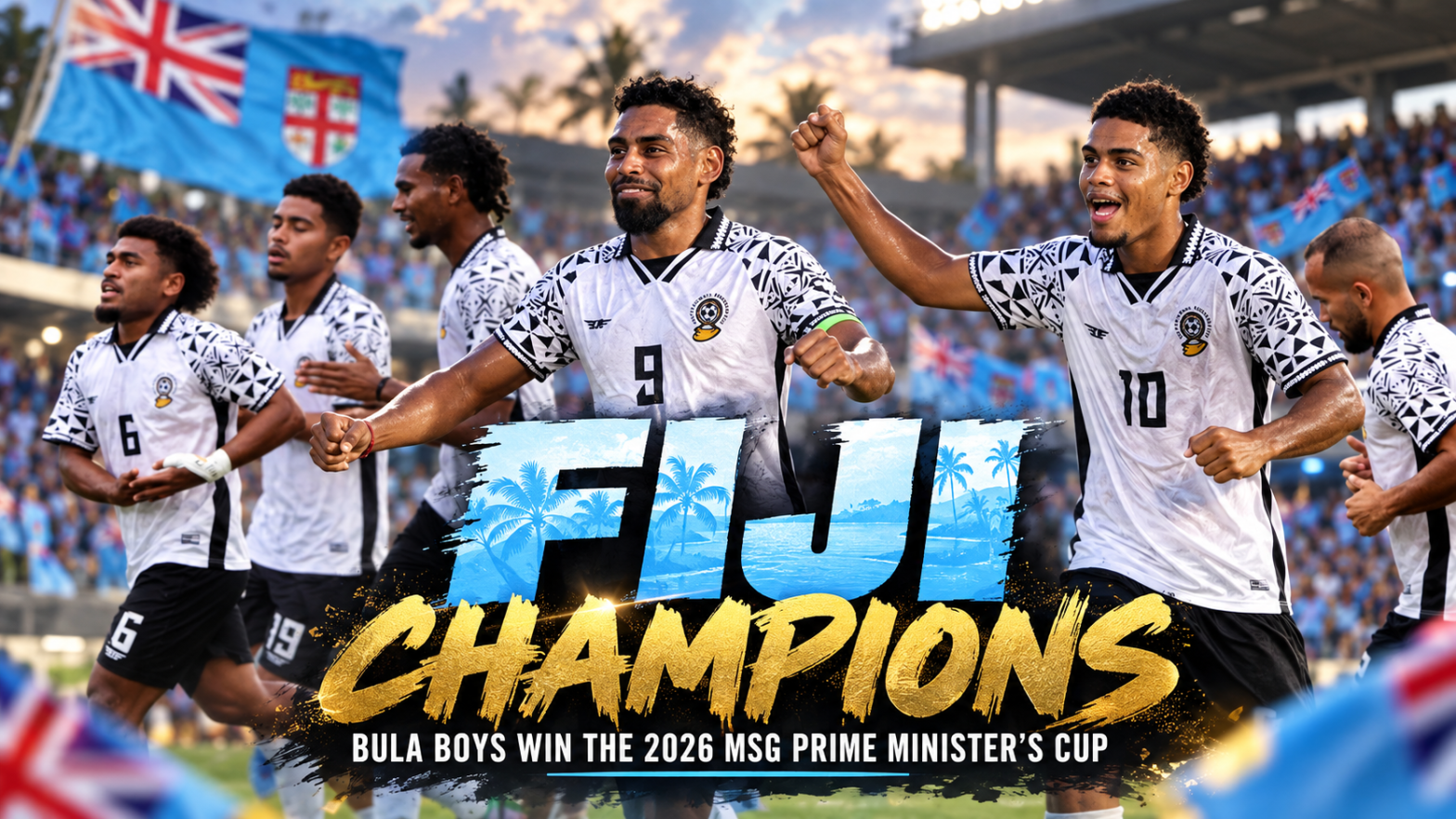
Fiji are champions of the 2026 MSG Prime Minister’s Cup after defeating defending champions Vanuatu 1-0 in the men’s final at HFC Bank Stadium in Suva, completing a remarkable recovery from a difficult start to the tournament and lifting a Melanesian senior men’s title for the first time since 2000.
Thomas Dunn scored the goal that decided the final after only 10 minutes, with captain Roy Krishna playing a decisive role in creating the breakthrough. Krishna picked out Dunn with an excellent diagonal pass that opened the Vanuatu defence and left the forward with space to attack the goalkeeper. Dunn kept his finish low and the ball went through the goalkeeper as he attempted to make the save, crossing the line to give the Bula Boys an early 1-0 advantage.
The combination between Krishna and Dunn was particularly fitting for Fiji. Krishna had been one of the central figures throughout the tournament, while Dunn had already found the net in Fiji’s dramatic 3-3 opening draw against Solomon Islands. In the final, the experienced captain supplied the pass and Dunn delivered the finish that ultimately separated the two sides.
The early goal also changed the nature of a final between teams that knew each other extremely well. Vanuatu had defeated Fiji 1-0 during the round-robin stage, with Bill Kaltfer Kaltack scoring the winner in the 70th minute of that encounter. This time, however, Fiji struck first and were able to force the defending champions to chase the match.
Vanuatu remained competitive and continued searching for a route back into the contest. Richard Iwai’s team had already shown considerable resilience during the tournament, recovering from an opening 2-1 defeat against Papua New Guinea to collect seven points and finish at the top of the round-robin standings on goal difference. Against Fiji in the final, though, the breakthrough never arrived.
The Bula Boys carried their 1-0 advantage into halftime and were required to defend it under increasing pressure during the second period. Vanuatu pushed forward looking for the equaliser, but Fiji remained organised and disciplined at the back, protecting the narrow advantage through to the final whistle.
For Fiji, the victory completed an impressive turnaround. Stéphane Auvray’s side had taken only one point from their opening two matches, surrendering a 3-1 advantage in a 3-3 draw with Solomon Islands before losing 1-0 to Vanuatu. At that stage, even reaching the final had become uncertain.
Their response transformed the campaign. Fiji defeated Papua New Guinea 2-0 before coming from behind to beat New Caledonia 2-1 in their final round-robin match, with Scott Wara equalising and teenage striker Maikah Dau scoring the winner. Those six points lifted Fiji to seven, enough to finish second behind Vanuatu and earn a rematch with the defending champions.
The final therefore became an opportunity for Fiji not only to win the competition but also to reverse the result that had placed their tournament in danger less than two weeks earlier. Dunn’s early goal provided exactly that, and the hosts then showed a defensive control they had not always possessed during the opening stages of the competition.
The triumph carries considerable historical significance. Fiji were the dominant nation during the original Melanesian Cup era, winning the regional competition five times between 1988 and 2000, but had not lifted the Melanesian men’s crown since their last title 26 years ago. Since the tournament was revived as the MSG Prime Minister’s Cup, Papua New Guinea, Solomon Islands and Vanuatu had all won the trophy before Fiji finally reclaimed the regional crown on home soil.
It is also Fiji’s first men’s title of the modern MSG Prime Minister’s Cup era and provides an early success for Auvray as he continues reshaping the national team with an eye towards the next World Cup cycle. The tournament featured established figures such as Krishna alongside a younger generation including Dunn and Dau, giving Fiji both an immediate trophy and further encouragement for the years ahead.
For Vanuatu, the defeat ends their attempt to successfully defend the title they won in 2025. They had entered the final having already beaten Fiji once and finished above the hosts in the group standings, but this time one moment proved decisive.
Krishna found the opening. Dunn supplied the finish. Fiji protected it for the remaining 80 minutes.
Twenty-six years after their previous Melanesian title, the Bula Boys are champions again.
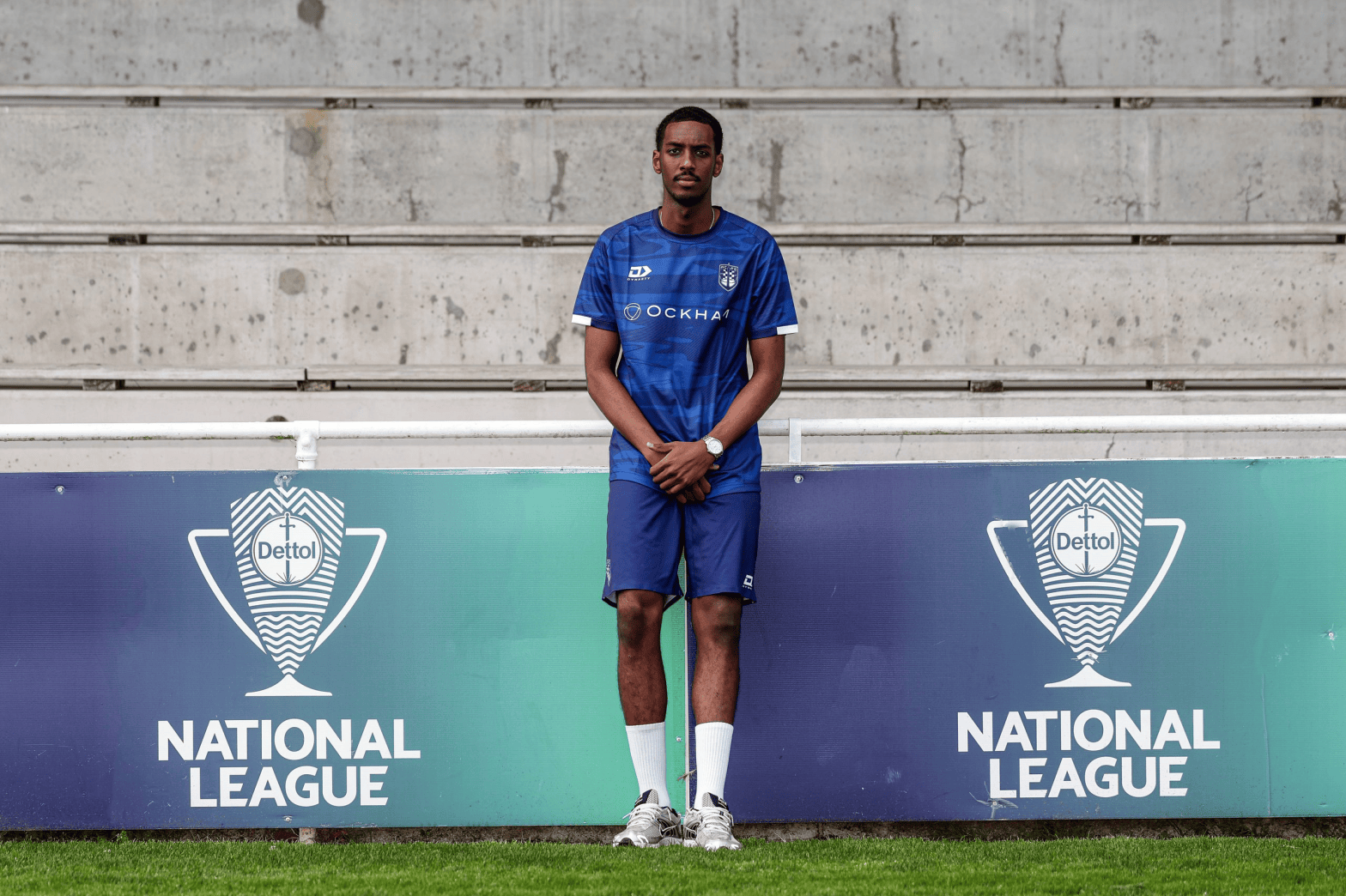
Auckland City FC have added international experience to their attacking options with the signing of Somalia international Bilal Habib ahead of the Navy Blues’ 2026 New Zealand National League campaign.
The 25-year-old joins Auckland City from NPL Victoria side Green Gully SC and is expected to be available when the defending champions begin their National League season against Eastern Suburbs at Madills Farm on Sunday.
Australian-born Habib stands at 191cm and has primarily operated as a winger and forward. He arrives in New Zealand after building considerable experience within Victoria’s competitive state football system, having represented South Melbourne, Heidelberg United and Altona Magic before joining Green Gully for the 2026 season.
His international career adds another dimension to the signing. Habib has made six senior appearances for Somalia, all coming during the country’s 2026 FIFA World Cup qualifying campaign. His international debut came against Guinea in March 2025.
The forward also showed his ability to make an impact during a difficult 2026 NPL Victoria campaign for Green Gully. He scored as the Cavaliers recorded an important victory over South Melbourne and later found the net in a 3-1 win against Dandenong Thunder. Habib was also on target in a 2-2 draw with Preston Lions and contributed creatively during Green Gully’s improved performances in the second half of the season.
Auckland City will now look to transfer those qualities into the New Zealand game.
Habib has already trained with his new teammates and said the standards he encountered at Kiwitea Street immediately reinforced the reputation of the club.
“I’ve heard nothing but good things,” he said. “My first impression of the club in terms of the training sessions and the standards has been really good. I’ve heard nothing but good things about the National League as well and what’s to come from it.”
Although the Australian season has finished, Habib said he has continued training independently and believes he is ready to contribute immediately.
“The season’s finished in Australia but I’ve been doing my own training, staying on top of my fitness and making sure I’m ready,” he said. “In terms of being able to start games or impact games, I’m more than ready for that.”
His objective at Auckland City is equally clear. Asked by the club what he wanted to achieve during the campaign, Habib gave a one-word answer: “Silverware.”
He joins a club accustomed to exactly that. Auckland City enter the competition as back-to-back National League champions after retaining the title in dramatic fashion against Wellington Olympic in December 2025. The final finished 2-2 after extra time before City prevailed 7-6 in the penalty shootout.
The Navy Blues had a bye during the opening round of the 2026 championship, meaning Sunday’s meeting with Eastern Suburbs will be their first National League fixture of the season. It also comes after another demanding year in which Auckland City continued to compete domestically and internationally.
For Habib, the move represents a first opportunity in New Zealand football after several years in Victoria. For Auckland City, it adds a physically imposing and internationally experienced attacker to a squad attempting to extend one of the strongest winning records in Oceania football.