Scott Hales replaces Rob Sherman as South Island United prepare for second OFC Pro League season

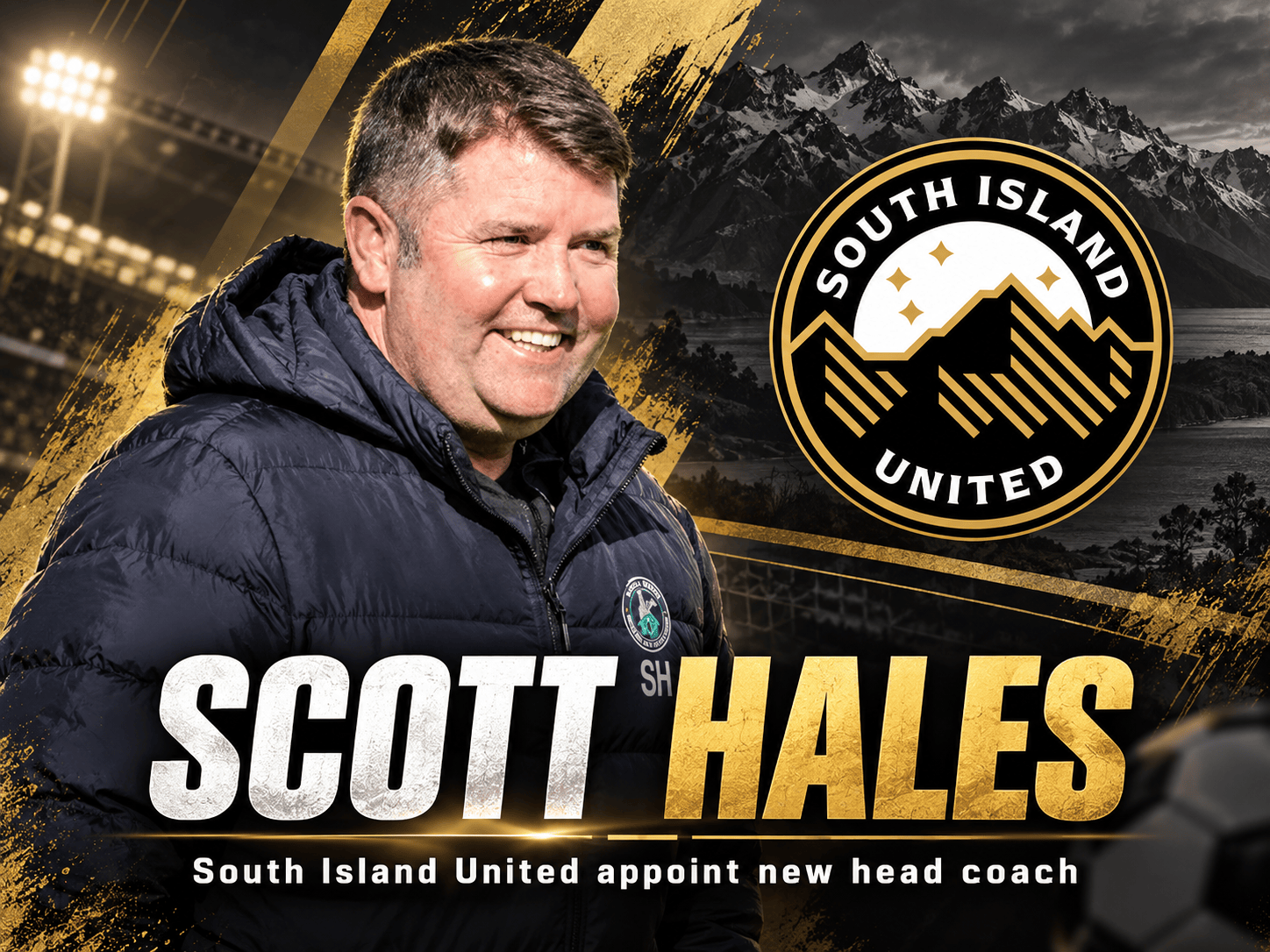
South Island United have appointed Scott Hales as their new head coach for the 2027 OFC Pro League, turning to a proven figure in New Zealand football as the Christchurch-based club prepares for its second professional season. The 44-year-old Englishman replaces Rob Sherman, who guided the team to the semi-finals of the inaugural competition before his departure was announced earlier this year.

Hales arrives with experience across several levels of New Zealand football, including a national championship with Team Wellington and a Northern League title with Western Springs. His appointment signals South Island United’s intention to build on their promising debut campaign while establishing a stronger identity both on the pitch and within the communities the club represents.

The new coach takes charge of a team that exceeded expectations in its first year. South Island United finished fourth in the regular-season standings with 20 points from 14 matches, securing a place among the competition’s leading contenders. They eventually reached the semi-finals before losing 1-0 to fellow New Zealand side Auckland FC, the eventual champions.

Sherman had overseen the considerable challenge of assembling a professional squad and preparing the South Island’s first professional football club for competition across Oceania. Although his tenure lasted only one season, his work provided a foundation that Hales will now be expected to develop further.

Hales has built much of his reputation through his ability to improve teams over successive seasons, rather than relying exclusively on immediate results. His most recent coaching role at Western Springs offers an example of that progression.

After joining the Auckland club in 2023, he helped guide them to third place in the 2024 National League Championship before winning the Northern League in 2025, the first such title in Western Springs’ history.

His earlier achievements at Team Wellington are equally significant. Hales was part of the coaching staff when the club won the OFC Champions League in 2018, earning a place at the FIFA Club World Cup. He later led Team Wellington to the New Zealand national title in 2021, demonstrating his ability to succeed in domestic competition as well as his familiarity with football at continental level.

His coaching background also includes positions with Central Football, New Zealand Football, the Wellington Phoenix academy and Miramar Rangers. These roles have provided experience in player development and senior football, two areas that will be particularly relevant to a relatively new professional organisation attempting to establish itself over the longer term.

South Island United chief executive Ryan Edwards pointed to Hales’ record of building successful teams as an important factor behind the appointment.

“Scott has shown he can build on the success of an established team and develop a club over several seasons into a title winner. That combination, alongside the positive feedback from players who have worked with him, gave us real confidence he was the right person to lead our next chapter,” Edwards said.

Vanuatu football mourns Nicol Tari as former Tafea FC striker and youth international dies aged 31

Vanuatu football is mourning the passing of former Tafea FC striker and youth international Nicol Tari, who has died at the age of 31. His death has prompted emotional tributes from former teammates, friends and members of the country’s football community, including former Vanuatu national team coach Moise Poida, who worked closely with Tari during an important period of his career.

Born on 29 November 1994, Tari emerged through the Vanuatu Football Academy and established himself as part of a talented generation of footballers who represented the country at youth level before making their mark in domestic competitions. His development brought him into the Tafea FC squad at a time when the Port Vila club was rebuilding its position among Vanuatu’s leading sides. Alongside players such as Seloni Iaruel, Bong Kalo and Lucien Hinge, Tari formed part of a group that helped Tafea return to prominence under Poida’s guidance.

One of the most significant moments of his international career came during the 2013 OFC U-20 Championship in Fiji, where he represented Vanuatu under Poida. On 29 March, in the team’s final tournament appearance against New Caledonia at Govind Park in Ba, Tari entered the match in the 63rd minute, replacing Dalong Damalip. Ten minutes later, he scored Vanuatu’s fourth goal, restoring a three-goal advantage after New Caledonia had attempted to fight back. Captain Jean Kaltack had already scored a hat-trick, and Tari’s contribution helped secure a 4-2 victory as Vanuatu finished third in the competition.

His achievements at club level were equally meaningful. In 2013, Tari was part of the Tafea side that won the Vanuatu National Super League, overcoming Amicale 1-0 in the final and securing qualification for the following season’s OFC Champions League. Earlier in that campaign, Tari had also scored in a victory over Erakor Golden Star, with Tafea progressing through the competition under Poida’s management.

Perhaps his most memorable domestic achievement came in January 2014, when he scored the winning goal in the Port Vila Shield final. After netting the only goal against Erakor Golden Star in the semi-finals, Tari repeated the feat against Amicale in the decisive match at Port Vila Stadium on 25 January. His goal in the 45th minute secured another 1-0 victory and delivered the trophy to Tafea. Scoring the decisive goals in successive knockout matches remains one of the clearest examples of his importance to the club during those years.

Tari also experienced continental competition with Tafea, being included in the club’s squad for the 2014 OFC Champions League in Fiji. He remained involved in the following year’s edition, starting against New Zealand side Team Wellington on 17 April 2015. The encounter ended in a narrow 3-2 defeat for the Vanuatu representatives, with Tari featuring in the starting eleven before being replaced by Robert Tasso in the closing stages. His appearances in Oceania’s premier club competition added another chapter to a career that had already included international football and domestic silverware.

Following the news of his passing, Moise Poida shared a particularly emotional tribute on Facebook, remembering a player with whom he had worked at both youth international and club level. Writing in Bislama, Poida expressed his disbelief at losing Tari so early, asking why he had been in such a hurry to leave while the people close to him were still here.

“You have broken our hearts,” Poida wrote in a message addressed to Tari, referring to the sorrow felt by his brothers, friends, former academy colleagues, Tafea FC teammates and, especially, his family.

The former coach concluded by describing Tari as his brother and expressing his belief that Tafea supporters and players would always remember him. His words carried particular significance given their shared history, stretching from Vanuatu’s youth national team to the domestic and continental competitions in which Tafea represented the country.

Other members of the Vanuatu football community have also expressed their shock and sadness, with messages of condolence reflecting the personal connections Tari maintained beyond his achievements on the pitch. His passing has brought renewed attention to a generation of academy graduates who helped shape Vanuatu football during the 2010s.

For Tafea supporters, Tari will be remembered for his contribution during an important period in the club’s history, especially the decisive goals he scored against Erakor Golden Star and Amicale in the 2014 Port Vila Shield. For Vanuatu football, his goal against New Caledonia in the 2013 OFC U-20 Championship remains part of the country’s international record.

Nicol Tari leaves behind memories of domestic success, continental appearances and the opportunity to represent his country. The tributes from those who knew him also reflect the friendships and bonds formed throughout his football career.

Oceania Football Center extends its condolences to his family, friends, former teammates and everyone at Tafea FC.

Kiribati stun World Cup-bound Fiji U17 to reach historic IDC final

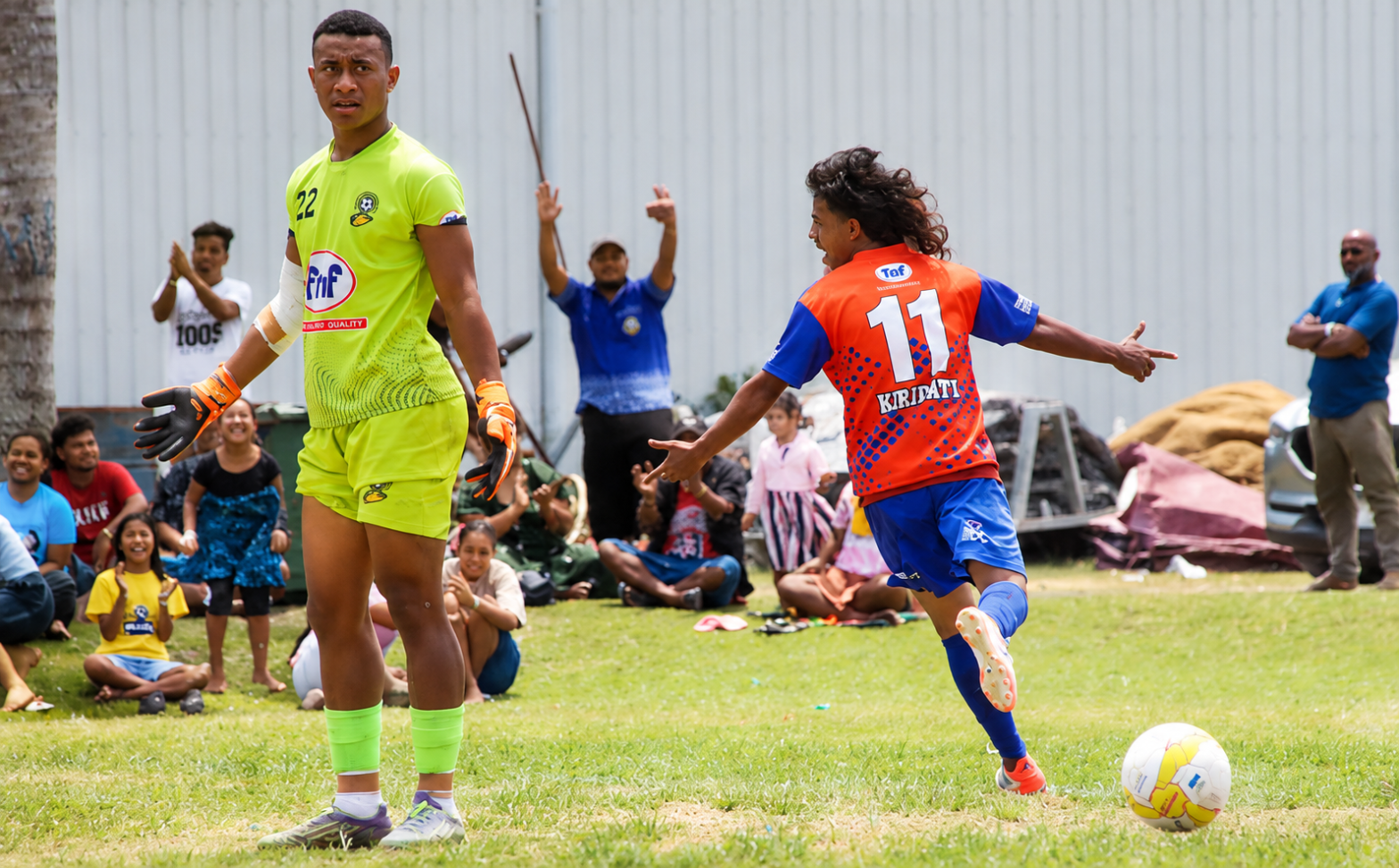
Kiribati have produced another remarkable result at the 2026 FMF Inter-District Championship, defeating Fiji’s World Cup-bound Under-17 national team 3-1 in the Premier Division semi-finals to reach Sunday’s final against Seaqaqa. Just two days after recording the first victory in the history of their senior national team, the Pacific islanders have now eliminated one of Fiji’s most promising youth squads, continuing an extraordinary campaign in their first appearance at the tournament.

Goals from Peter Diehm, Bauro Martin Jr and Nabetari Itiata secured the victory at Buckhurst Park in Suva, where Kiribati established a two-goal advantage before half-time and demonstrated considerable composure to withstand Fiji’s second-half response.

The achievement carries additional significance because of the opposition. Fiji’s Under-17 programme has secured qualification for the FIFA U-17 World Cup in Qatar in 2026 and has become increasingly competitive at regional level, qualifying for three consecutive editions of the tournament.

The squad competing at the IDC also includes players developing their football in New Zealand. Five New Zealand-based players are participating in the tournament with the young Fijian national side: Ryan Achari of Hamilton Wanderers, Ryan Swami of Fencibles United, Ayush Naidu of Auckland United, and Auckland City FC duo Mustafeez Khan and Somit Maharaj.

Their inclusion illustrates Fiji’s growing ability to draw upon players from established football environments outside the country. Swami and Maharaj were also involved in Fiji’s successful 2026 OFC U-16 Championship campaign, which secured qualification for the 2027 FIFA U-17 World Cup.

Khan had already demonstrated his contribution during the IDC group stage, scoring Fiji’s second goal in a 2-0 victory over Tailevu Naitasiri. The result helped the young national team progress towards the knockout stages and offered another example of the depth available within Fiji’s youth football structure.

Kiribati, therefore, were not simply facing an inexperienced local youth team. Their opponents were part of a national development programme with international ambitions, overseas-based players and recent success in Oceania.

Yet it was Kiribati who took control of the semi-final.

Peter Diehm opened the scoring before Bauro Martin Jr doubled the advantage, giving Kiribati a commanding 2-0 lead at half-time. The goals rewarded a confident performance from a team that had already demonstrated its attacking capabilities in previous matches.

Martin, in particular, has emerged as one of Kiribati’s outstanding players throughout the competition. The forward had scored in the opening 4-2 defeat against Seaqaqa before producing a hat-trick in the historic 6-0 victory over Nadroga.

Against Fiji U17, he again delivered when his team needed him.

However, the young Fijians refused to accept defeat without a response.

Fiji pulled a goal back after the interval and began pushing forward with greater urgency, searching for the equaliser that would bring them back into contention. Their increased attacking commitment placed Kiribati under pressure, but it also created opportunities for the islanders to exploit the spaces left behind.

Rather than abandoning their approach, Kiribati maintained their defensive organisation and looked to control possession whenever possible. They were prepared to sit deeper when necessary, avoiding unnecessary risks while remaining dangerous on the counterattack.

One of the most decisive incidents came during a rapid Kiribati break.

Martin chased a long ball beyond the Fijian defensive line and lifted it over the advancing goalkeeper. Attempting to prevent the attack, the Fiji U17 goalkeeper handled the ball outside his penalty area and was shown a red card.

The dismissal left Fiji with ten players at a moment when they were already committing considerable energy to finding an equaliser.

Kiribati made their advantage count.

Nabetari Itiata added the third goal, restoring the two-goal cushion and effectively ending Fiji’s hopes of completing a comeback.

It was another example of Kiribati’s effectiveness in transition. While Fiji attempted to recover the match through attacking pressure, the visitors remained alert to counterattacking opportunities and showed the composure required to protect their advantage.

Their performance was particularly notable for the balance between attacking ambition and defensive responsibility. Kiribati did not simply retreat and hope to survive. They managed periods of possession, slowed the tempo when appropriate and ensured that Fiji’s pursuit of another goal continued to expose spaces behind their defence.

The final whistle confirmed another milestone in what has already become the most successful week in Kiribati’s football history.

The country’s IDC campaign began on October 6 with a 4-2 defeat against Seaqaqa. Despite conceding four goals, Kiribati found the net through Teweia Butibara and Martin, demonstrating that they could compete against opponents accustomed to the intensity of Fijian district football.

Their next match produced a result that attracted attention throughout Oceania.

Kiribati overwhelmed Nadroga 6-0, with Martin scoring three times and Nabetari Itiata, Booia Maitina and Kiniole Filiki also finding the net. It was the first recorded victory achieved by Kiribati’s senior men’s national team since the country began participating in international football in 1979.

The distinction is important: because Nadroga are a Fijian district club rather than a national team, that result does not qualify as an official senior international victory. Nevertheless, it represented a genuine sporting breakthrough for a country that had spent decades without experiencing a win at senior national-team level.

Now Kiribati have followed that historic achievement with another victory, this time against a side associated with one of Oceania’s most successful recent youth development programmes.

The results are even more impressive considering the difficulties Kiribati face in developing football domestically.

The country is not a FIFA member and has limited access to regular international fixtures, organised high-level competition and suitable playing facilities. During the tournament, Kiribati players have highlighted the challenges created by the lack of grass pitches at home and the limited opportunities available to prepare under conditions comparable to those encountered in Fiji.

Participation in the IDC has offered a rare chance to overcome some of those obstacles.

Instead of being restricted to occasional international tournaments, Kiribati have been able to face experienced Fijian district teams and a national youth selection in competitive matches over several days. Their progress has been visible, from the defensive mistakes that contributed to their opening defeat to the more disciplined and composed performance that secured their place in the final.

The challenge ahead will bring the campaign back to where it started.

Kiribati will meet Seaqaqa in Sunday’s Premier Division final at HFC Bank Stadium, with kick-off scheduled for 12pm. The northern Fijian district qualified after recovering from a half-time deficit to defeat Tavua 3-1 in the other semi-final.

Seaqaqa were responsible for Kiribati’s opening defeat and will enter the championship decider knowing that they have already beaten their opponents. However, Kiribati have made substantial progress since that first encounter and will have the opportunity to demonstrate how much they have learned in a matter of days.

For a team that arrived in Fiji seeking competitive experience, reaching the final is already an exceptional achievement.

For a country that waited 47 years to celebrate its first senior national-team victory, the possibility of lifting a trophy only days later would have seemed almost unimaginable.

Kiribati now stand just one match away from completing an extraordinary chapter in Pacific football.

Solomon Kings keep faith in familiar faces as Keana, Mango and Leslie sign on for 2027

Solomon Kings FC have taken further steps towards shaping their squad for the 2027 OFC Pro League season, retaining three Solomon Islands internationals in goalkeeper Phillip Mango and forwards Don Keana and Bobby Leslie. The announcements follow the confirmation that head coach Ben Cahn will remain in charge for another campaign, suggesting the club intends to build upon its inaugural professional season rather than undertake a complete overhaul of its playing group.

The decisions come at an important moment for the Honiara-based club. Solomon Kings finished fifth in the inaugural OFC Pro League, collecting 18 points from 14 regular-season matches and narrowly missing out on a place in the semi-final play-off. Despite their elimination, the team demonstrated the potential of Solomon Islands footballers competing in a fully professional environment, particularly during the latter stages of the competition.

Among the three players retained, Phillip Mango represents perhaps the most significant figure in terms of leadership and experience. The 31-year-old goalkeeper captained Solomon Kings during their first campaign, starting 14 of the club’s 17 matches across the competition. A long-serving Solomon Islands international, Mango has established himself as one of the country’s most experienced goalkeepers, having previously represented clubs including Marist FC, Solomon Warriors and Central Coast.

His importance goes beyond his performances between the posts. As captain of the country’s first professional football club, Mango has been closely associated with the transition of Solomon Islands players into a new competitive environment. He has also contributed to the development of younger goalkeepers through his work in football development, making his continued presence valuable as Kings seek greater stability in their second season.

Don Keana, meanwhile, offers another established option in the club’s attacking department. The 26-year-old forward featured regularly during the inaugural campaign, making 13 appearances in the OFC Pro League. Although he did not register a goal, Keana remained involved in important attacking passages, including the Kings’ dramatic 3-2 victory over Vanuatu United in April and their final 3-0 win against PNG Hekari FC in May.

Keana’s experience also extends beyond Solomon Islands domestic football. Before joining Kings, he had spells with Marist FC and Waneagu United and represented Nasinu in Fiji. His continuation gives Cahn an attacking player already familiar with the professional league’s demands and the tactical approach introduced during the club’s first season.

Bobby Leslie’s renewal adds further experience and versatility to the forward line. The 26-year-old made an important contribution during the Kings’ closing matches in 2026, including the opening goal against PNG Hekari FC in their final Challengers Group fixture. That victory temporarily kept their qualification hopes alive, although results elsewhere eventually ended their campaign.

Leslie subsequently returned to Central Coast FC for the 2026 OFC Men’s Champions League, where he scored twice during the group stage as the Solomon Islands representatives produced an impressive run in the continental competition. His performances provided further evidence of his ability to contribute at a competitive regional level, making his retention another positive development for Kings’ attacking options.

The three renewals also carry significance because all three players have represented the Solomon Islands national team. Cahn, who combines his responsibilities at Solomon Kings with his role as national-team head coach, has previously emphasised the importance of regular professional competition for the development of Solomon Islands footballers. Retaining players already familiar with both environments offers an opportunity to continue that process while strengthening the club’s understanding of his playing philosophy.

However, maintaining a familiar group will not eliminate the challenges exposed during the inaugural campaign. Solomon Kings produced encouraging performances against several of the competition’s strongest teams but struggled to achieve the consistency required to remain among the leading contenders. Their season ended with five victories, three draws and six defeats during the regular phase, before they narrowly missed the opportunity to contest the semi-final play-off.

The importance of improving those results has increased following confirmation that Honiara’s National Stadium will host the 2027 OFC Pro League final on June 6. With the championship decider scheduled to take place in front of Solomon Islands supporters, Kings have an additional incentive to establish themselves among the competition’s strongest teams.

The second season will also introduce a revised finals format involving all eight participating clubs, presenting a different route towards the championship. Solomon Kings will begin their campaign against Vanuatu United on January 22 in Australia, giving Cahn just over three months to assemble and prepare his squad.

For now, the announcements involving Mango, Keana and Leslie indicate a preference for continuity at a club still establishing its professional identity. With its captain retained, two more experienced international players secured and its head coach committed to another season, Solomon Kings are beginning to establish the foundations of their 2027 squad.

The task ahead is to transform that continuity into greater consistency on the pitch. After coming so close to extending their inaugural campaign, Kings will enter their second season with a clearer understanding of the competition and the added motivation of knowing that Oceania’s professional football title will be decided in their own capital.

Back where it all began: Merrill Nand rediscovers scoring touch at Rewa as IDC title defence intensifies

Merrill Abel Nand’s return to Rewa FC has brought the Fiji international back to the club where his footballing journey began, and the move is already producing results. After spending several seasons with Suva, the 26-year-old forward has established himself as an important attacking figure for the Delta Tigers, scoring four goals in the opening two matches of the 2026 Inter-District Championship (IDC) as Rewa advanced to the semi-finals in their pursuit of another title.

The defending champions opened their campaign with a convincing 5-0 victory over Nasinu, with Nand scoring twice, before he added another brace in a 3-0 win against Labasa. A 1-1 draw with Suva completed an unbeaten group stage, leaving Rewa with seven points and nine goals scored. For Nand, the performances have reinforced the importance of returning to a familiar environment at a decisive stage of the domestic season.

Speaking exclusively to Oceania Football Center, Nand revealed that his decision to join Rewa midway through the campaign was motivated by more than simply changing clubs. His connection to the Delta Tigers stretches back to childhood, having started playing football in the club’s youth system.

“I spent a few good seasons at Suva before Rewa FC approached me to join them. What really motivated me was that Rewa is where I was born, and it’s where I started my career with the Rewa under-10 team,” Nand told OFCe.

His transition into the squad has also benefited from an existing relationship with several Rewa players through their involvement with the Fiji national team. According to Nand, those connections allowed him to settle quickly and develop an understanding with his teammates without facing significant difficulties.

“The adaptation wasn’t hard at all. I’ve played with a number of the players in the national team, and we already had a good relationship before I joined Rewa,” he explained.

Nand’s recent performances have highlighted an improvement in his goalscoring productivity. The forward has registered nine confirmed competitive goals in 2026 across different competitions, including one in the Fiji Premier League, one in the OFC Champions League, three during the Battle of the Giants and four in the ongoing IDC.

His contribution in continental football was particularly significant. While still representing Suva, Nand scored the decisive goal in a 2-1 victory over Papua New Guinea’s Lae City during the OFC Champions League, helping the Fijian side qualify for the semi-finals. He later continued finding the net during September’s Battle of the Giants, including Rewa’s goal in the 2-1 final defeat against Ba.

Although he acknowledges that the previous season was not particularly productive in front of goal, Nand believes the improvement in his performances is closely connected to the quality of the players surrounding him. Rather than presenting his recent goalscoring record as an individual achievement, he emphasised the collective contribution of Rewa’s attacking unit.

“Scoring goals isn’t something new to me, but last season wasn’t a very good scoring year for me. What I believe has helped me recently is the players I’m surrounded by. It’s all a team effort, and they have made it easier for me to score goals and help the team in whichever way I can,” he said.

His return to form could also strengthen his ambitions beyond domestic football. Nand has previously represented Fiji at international level, including during the 2026 FIFA World Cup qualifying campaign. In November 2024, he scored a dramatic stoppage-time equaliser against Papua New Guinea in Port Moresby, securing a 3-3 draw for the Bula Boys in an important regional qualifying encounter.

Despite already having international experience, Nand remains determined to earn another opportunity with the national team. He believes his ability to operate across different attacking positions, combined with his goalscoring qualities, could provide valuable options for Fiji’s forward line.

“Representing the country has always been an honour for me. I’ll be doing my best on the field for my club, and hopefully I can get a call-up. I think I can provide versatility in the forward positions and also offer a goalscoring threat up front. In God’s timing, it will happen!” Nand told OFCe.

For now, however, his immediate attention remains on the concluding stages of the Inter-District Championship. Rewa will face Navua in Saturday’s semi-final at HFC Bank Stadium in Suva, with the opportunity to reach another major domestic final. The Delta Tigers entered the competition as defending champions and have demonstrated their attacking potential during the group stage, although the knockout rounds will present a different challenge.

Rewa’s ambition to retain the IDC trophy carries additional significance following their disappointment in the Battle of the Giants final last month. Having come close to another title, the club now has an opportunity to finish the IDC campaign successfully, with Nand among the players expected to make a difference in the decisive matches.

“The team has a lot of expectations, especially being the defending champions. We’ll do our best to defend the IDC trophy,” he said.

For Nand, the final weekend of the IDC represents another opportunity to contribute to Rewa’s success while continuing to build his case for a return to international football. His decision to return to the club where he first played as a child has coincided with one of his most productive goalscoring periods in recent seasons, and another strong performance could bring the Delta Tigers closer to retaining their title.

IDC 2026 semi-finals: Ba chase historic clean sweep as Rewa, Navua and Labasa fight for final places

The 2026 FMF Inter-District Championship has reached its decisive stage, with four of Fiji’s leading football districts preparing for a dramatic Super Premier semi-final day at HFC Bank Stadium in Suva. Defending champions Rewa will meet Navua in Saturday’s opening contest, while Ba and Labasa renew their traditional rivalry in the second semi-final, with places in Sunday’s grand final at stake.

The four teams have taken contrasting routes through the group stage. Rewa emerged as the most convincing side in Group A, Ba maintained their pursuit of a historic fourth major trophy in the same season, Navua demonstrated their ability to compete against stronger opponents, and Labasa relied on experienced players to survive a difficult qualification campaign.

With the semi-finals taking place on October 10, Fiji Day, the occasion carries additional significance. The eventual winners will have less than 24 hours to prepare for the championship decider, scheduled for Sunday afternoon at the same venue.

Rewa vs Navua: defending champions face a dangerous challenger

Rewa enter the first semi-final at 2:30pm as the only Super Premier team to complete the group stage without defeat. The Delta Tigers collected seven points from three matches, scoring nine goals and conceding just once.

Their title defence began with an emphatic 5-0 demolition of Nasinu, followed by a convincing 3-0 victory over Labasa. Those performances secured qualification before their final group match, a 1-1 draw against Suva.

One of Rewa’s outstanding performers has been Merrill Nand, who scored twice against Nasinu and added another brace against Labasa. His four goals place him among the tournament’s leading scorers, while Josaia Sela has also contributed two goals to Rewa’s impressive attacking campaign.

Perhaps even more important has been the balance between their attack and defence. Rewa kept clean sheets in their opening two matches and showed that they could overcome both a struggling Nasinu side and a more experienced Labasa team without conceding.

However, their final group fixture also demonstrated that they are not untouchable. Suva took the lead through James Hoyt before Rewa recovered to secure a draw, offering Navua encouragement ahead of Saturday’s encounter.

Navua’s qualification was built on a very different set of circumstances. Rodeck Singh’s side started the tournament brilliantly, defeating Nadi 3-0 through a hat-trick from Vanuatu international Walter Leoru.

The forward struck twice before half-time and completed his treble in stoppage time, producing one of the standout individual performances of the competition. His pace, movement and finishing ability give Navua an important attacking weapon against Rewa.

Navua then demonstrated resilience in their second match, recovering from a two-goal deficit to draw 2-2 against Ba. Simione Damuni began the comeback before captain Peniame Drova scored a dramatic late equaliser, rescuing a valuable point against the reigning league champions.

A goalless draw against Lautoka in their final group fixture was enough to secure second place in Group B with five points.

Unlike Rewa, who have frequently controlled matches through their attacking superiority, Navua have needed to adapt to different situations. Their victory against Nadi demonstrated their ability to finish chances, their comeback against Ba showed determination, and the draw against Lautoka required defensive discipline.

The first semi-final will therefore test whether Rewa can maintain their attacking efficiency against an opponent capable of frustrating stronger teams.

For Navua, the challenge will be containing Nand and Sela while creating opportunities for Leoru. If they can prevent Rewa from establishing an early advantage, the contest could become considerably more complicated for the defending champions.

Ba vs Labasa: the Men in Black’s historic ambitions face another major test

The second semi-final, scheduled for 5pm, carries an entirely different narrative.

Ba arrived at the IDC having already won the 2026 Extra Premier League, Fiji FACT and Battle of the Giants. Winning the IDC would complete an extraordinary sweep of Fiji’s four principal domestic competitions, underlining the Men in Black’s dominance throughout the season.

Ravinesh Kumar’s side have remained unbeaten in Suva, beginning with a 2-1 victory over traditional rivals Lautoka before drawing 2-2 against Navua. A commanding 3-0 win over Nadi in their final group match secured first place in Group B with seven points.

Solomon Islands international John Orobulu has once again emerged as an important figure in Ba’s attacking organisation.

The striker, who helped Rewa win the IDC in 2025, now has an opportunity to pursue the same trophy with their rivals. He scored against Navua and struck twice against Nadi, taking his total to three goals in the group stage.

Orobulu’s contribution is particularly significant given his familiarity with the competition. He was one of the leading players in last year’s tournament and now finds himself representing the team that lost the 2025 final to Rewa.

Ba’s attacking options extend beyond the Solomon Islander. Nabil Begg has also found the net during the competition, while the team’s established domestic core provides the experience required to negotiate demanding knockout encounters.

Yet their unbeaten record should not disguise the difficulties they have experienced. Against Navua, Ba surrendered a 2-0 advantage and eventually conceded an 89th-minute equaliser. The result demonstrated that even Fiji’s dominant team can be vulnerable when opponents maintain pressure.

Labasa will hope to exploit those weaknesses.

The Babasiga Lions qualified with six points from Group A despite entering the tournament with significant squad changes, including the absence of Papua New Guinea players Rex Naime and Joseph Joe.

Their opening victory over Suva was secured through a spectacular late goal from Christopher Wasasala, whose long-range finish gave Labasa a dramatic 2-1 success.

However, their momentum was interrupted by a heavy 3-0 defeat against Rewa, leaving them needing a result against Nasinu in their final group match.

Labasa again found themselves under pressure, falling behind before recovering to win 2-1. Their decisive goal came from 43-year-old defender Taniela Waqa, who headed home in the 56th minute to complete the comeback and secure qualification.

The contributions of Wasasala and Waqa underline an important characteristic of Labasa’s campaign: despite the challenges surrounding their squad, experienced players have continued to deliver in decisive moments.

Coach Jerry Sam has acknowledged the difficult task facing his team and the need to address weaknesses before meeting Ba. Their preparations will focus on recovery and improving the aspects of their performance that were exposed during the group stage.

The semi-final also renews a rivalry that produced a closely contested Fiji FACT encounter earlier this year. Ba defeated Labasa 1-0 after extra time in June, with Etonia Dogalau scoring the winner.

That result gives Labasa another reason to approach Saturday’s meeting with determination.

For Ba, victory would mean moving one match away from an unprecedented achievement in their already impressive campaign. For Labasa, eliminating the Men in Black would not only secure a place in the IDC final but also end their rivals’ ambition of sweeping the season’s major domestic titles.

Four contenders, two places in the final

The Super Premier semi-finals offer an intriguing contrast between the teams that have dominated the season and those hoping to disrupt the established order.

Rewa have arguably produced the strongest performances of the IDC so far, combining attacking efficiency with defensive solidity. Ba, meanwhile, carry the weight of an outstanding domestic campaign and the possibility of adding another trophy to their collection.

Navua and Labasa have followed less straightforward paths but have demonstrated qualities that become especially important in knockout football. Navua have already recovered from a difficult position against Ba, while Labasa have twice relied on decisive contributions from experienced players to secure victories.

The tournament’s schedule will also test the finalists. After three group matches in as many days and a single rest day, Saturday’s winners must return to HFC Bank Stadium for Sunday’s 3pm championship match.

Beyond the Super Premier competition, the IDC will also stage semi-finals in the Premier and Senior divisions on Saturday, with Kiribati’s national team among those competing for a place in the Premier Division final.

However, the greatest attention will fall on the four Super Premier contenders.

Ba are chasing history, Rewa are defending their crown, and both Labasa and Navua are determined to prevent the favourites from reaching the final.

After three intense days of group-stage football, the 2026 IDC is now two matches away from discovering which districts will contest its biggest prize.

Vaipuna extend dominance in Samoa with fourth consecutive national league title

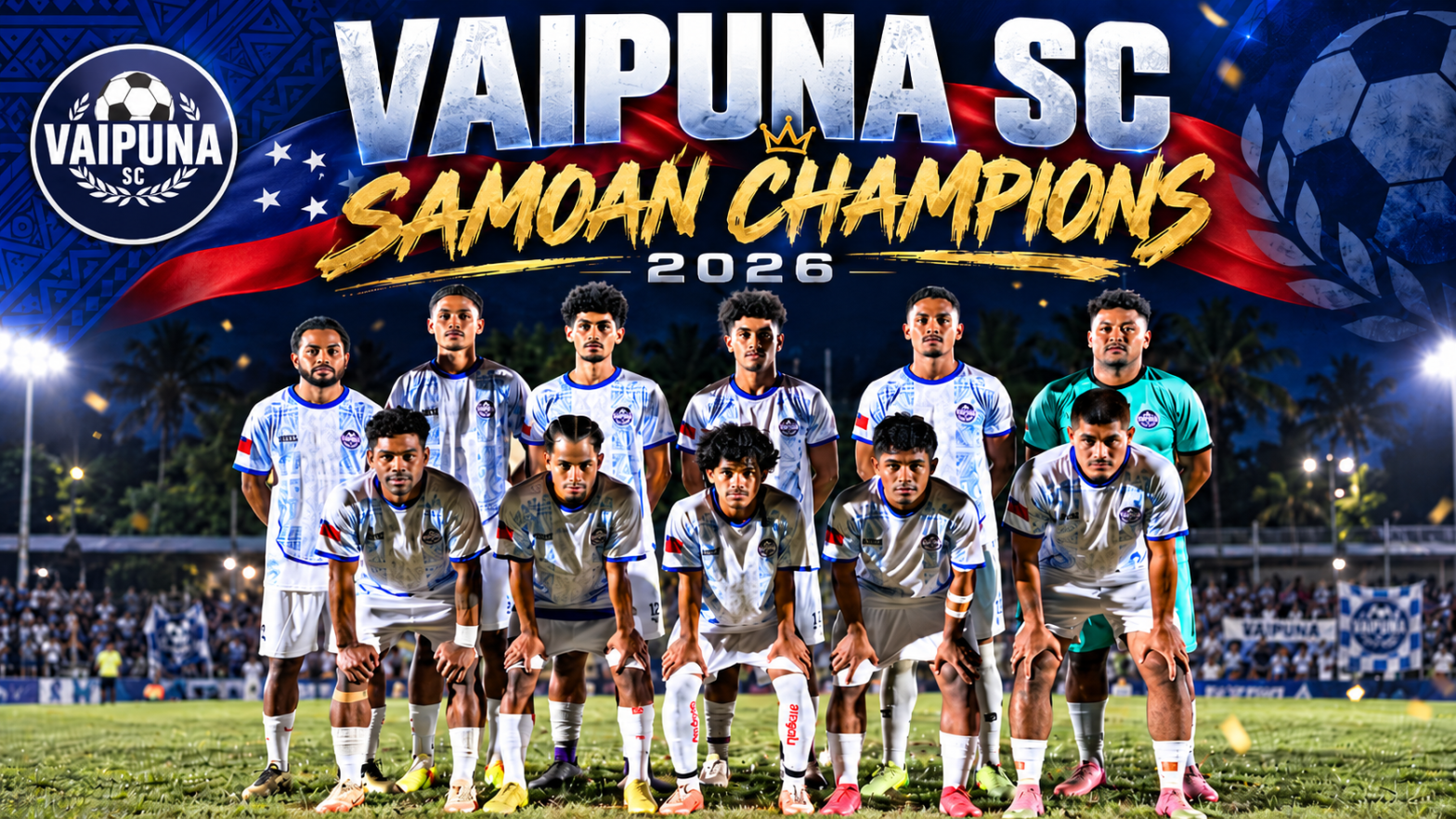
Vaipuna SC have reinforced their position as one of Samoa’s leading football clubs, claiming the 2026 National Premier League championship following a convincing victory over Vaivase-Tai FC in their final match of the season. The achievement continues a remarkable period of domestic success for the club, which has now been recognised as national champion in four consecutive seasons, from 2023 to 2026.

The club celebrated its latest triumph after defeating Vaivase-Tai, one of the country’s most established football teams. The result brought a successful campaign to a close and underlined Vaipuna’s continued consistency at the highest level of Samoan domestic football.

Vaipuna’s performances throughout 2026 reflected a particularly impressive attacking record. The latest available league standings before the concluding fixtures showed the team unbeaten after 15 matches, with 13 victories and two draws. More remarkably, Vaipuna had already scored 112 goals while conceding only ten, demonstrating the substantial difference they established against much of the domestic opposition.

Their strongest challenge came from Lupe o le Soaga, another traditional force in Samoan football. With both clubs remaining unbeaten in the available standings, Vaipuna’s superior record of victories gave them the advantage in the championship race.

The club’s recent history also reflects its ambitions beyond domestic competition. Vaipuna represented Samoa in the qualifying stage of the 2025 OFC Men’s Champions League, defeating American Samoa’s Royal Puma FC 4-0 before suffering a decisive 2-1 defeat against Tupapa Maraerenga FC of the Cook Islands. The result prevented the Samoan champions from reaching the main tournament despite a promising start to their qualifying campaign.

Vaivase-Tai subsequently represented Samoa in the 2026 continental qualifiers, making the latest domestic triumph another opportunity for Vaipuna to strengthen its credentials for future OFC competitions. Any participation in the 2027 edition will depend on the applicable domestic nomination and eligibility procedures.

For Vaipuna, the latest championship adds another chapter to a period of sustained success. After years of competition with established clubs such as Vaivase-Tai and Lupe o le Soaga, the team has developed into a dominant presence in Samoan football, with its domestic achievements providing a platform for further ambitions in Oceania.

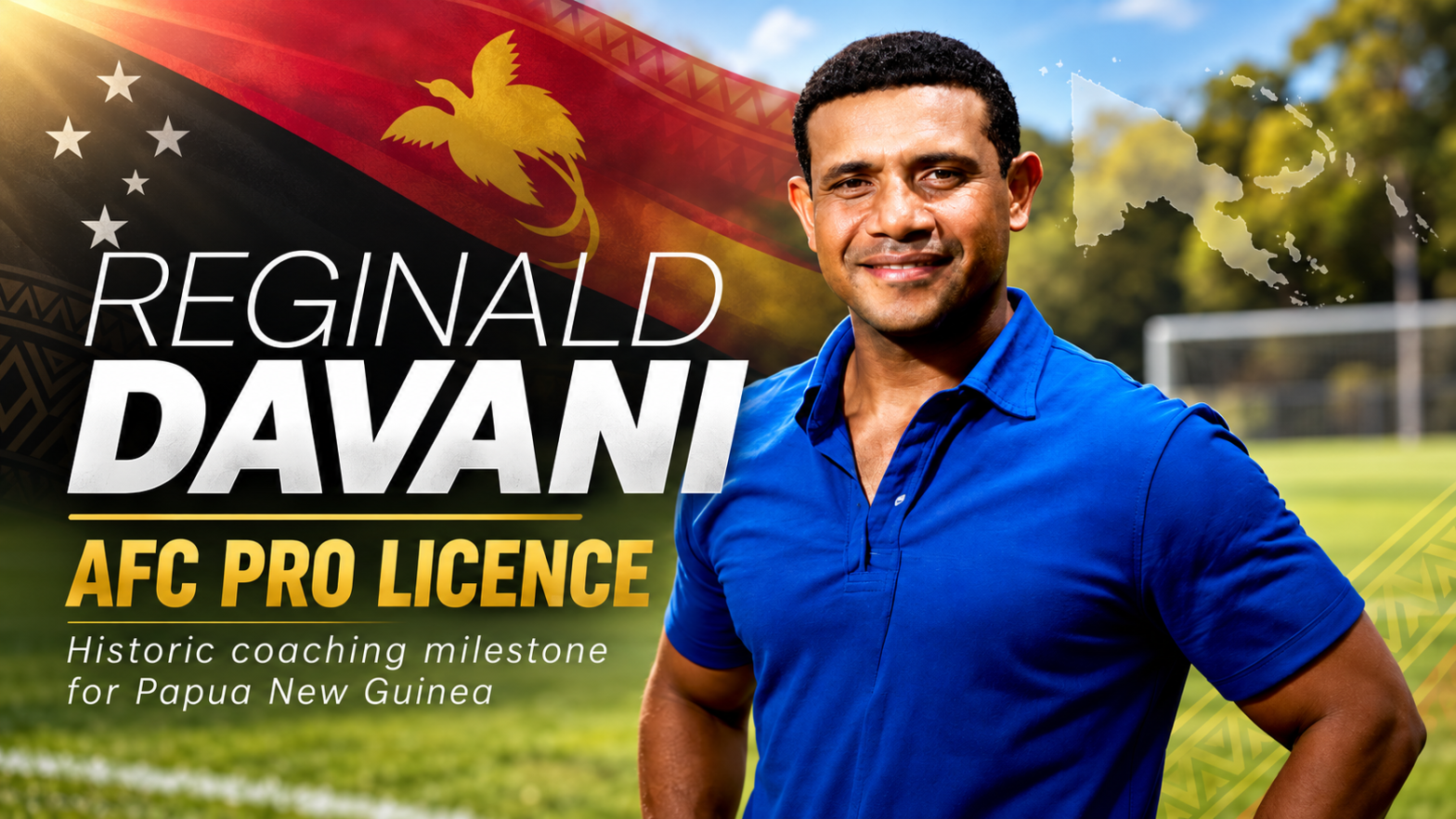
Reginald Davani makes PNG history by earning AFC Pro Licence after 13-year coaching journey

Former Papua New Guinea international Reginald Davani has reached another major milestone in his football career, becoming the first Papua New Guinean to obtain an AFC/Football Australia Pro Licence.

Davani confirmed that he has completed and received the Asian Football Confederation (AFC)/Football Australia Pro Diploma, the highest level of coaching qualification within the AFC pathway. The achievement represents the culmination of a development process that has taken him through different levels of Australian and Oceanian football since moving from his playing career into coaching.

The 46-year-old described receiving the qualification as a “deeply humbling honor”, explaining that while the Pro Diploma itself was completed over approximately 12 months, the milestone represents a “13-year pursuit of growth, learning and dedication to the game.”

That final year of study also came during a period of considerable professional movement. Davani went from his work on the Central Coast to an opportunity with Wellington Phoenix before later returning to Brisbane, completing the demanding course alongside his responsibilities within professional football.

Davani acknowledged the PNG Sports Ministry, PNG Sports Foundation and Papua New Guinea Football Association for providing support during the earlier stages of his development. He also highlighted the role of UEFA in helping enable his enrolment in the Pro Licence programme, alongside the support received from Football Australia, Football Queensland, the course instructors and his fellow coaches.

The significance of the achievement goes well beyond another certificate on Davani’s coaching résumé. The AFC Pro Diploma is the confederation’s highest coaching qualification and is designed for coaches preparing to work at the highest professional and international levels. In Australia, the AFC or UEFA Pro Diploma is also the qualification benchmark for head coaches in the A-League Men, placing Davani educationally among coaches qualified for senior roles at the top level of the professional game.

It continues a transition into coaching that has steadily gathered experience across different environments. Davani worked in coach and player development in Queensland before becoming Boys Academy Technical Director at Central Coast Mariners, where he was involved in the development structure of one of Australia’s leading professional clubs. In 2025, he took another important step when Wellington Phoenix appointed him as head analyst and second assistant coach for their A-League Men setup.

That appointment was itself significant for Pacific football, with Wellington Phoenix stating at the time that Davani was believed to be the first Papua New Guinean and Pacific Islander to coach professionally in the A-League.

His coaching career has also remained closely connected to Papua New Guinea. Davani was assistant to Flemming Serritslev during the Kapuls’ historic 2016 OFC Nations Cup campaign, when PNG reached the continental final on home soil and were eventually beaten by New Zealand on penalties. He continued working with the national setup during the subsequent World Cup qualifying campaign and returned to the Kapuls coaching staff under Warren Moon for the 2024 OFC Nations Cup.

Before becoming a coach, Davani had already established himself as one of Papua New Guinea’s most accomplished footballers. The Port Moresby-born attacker spent significant parts of his career in Australia and New Zealand, including spells with Auckland City, North Shore United and Bay Olympic, while also representing Kossa in Solomon Islands. His time with Auckland City included domestic and Oceania success, giving him experience at some of the highest levels available to Pacific players during his generation.

His ambitions in coaching have also never been hidden. Speaking exclusively to Oceania Football Center in 2020, Davani discussed the need for stronger coach-development structures in Papua New Guinea and made clear that leading his country remained one of his long-term objectives.

“It’s no secret that I would love to coach the national team one day,” he told OFCe at the time.

Six years later, Davani is considerably closer to having all the credentials required for such an opportunity. His experience now includes national-team football, youth development, academy management, analysis and coaching inside an A-League environment, while the Pro Licence adds the highest formal coaching qualification available through the Asian pathway.

For Papua New Guinea, the achievement also carries a wider significance. Davani has frequently spoken about the importance of developing not only players but also coaches if PNG football is to fulfil its potential. By becoming the country’s first AFC/Football Australia Pro Licence holder, he has now established a new benchmark for Papua New Guinean coaches looking to progress through the professional game.

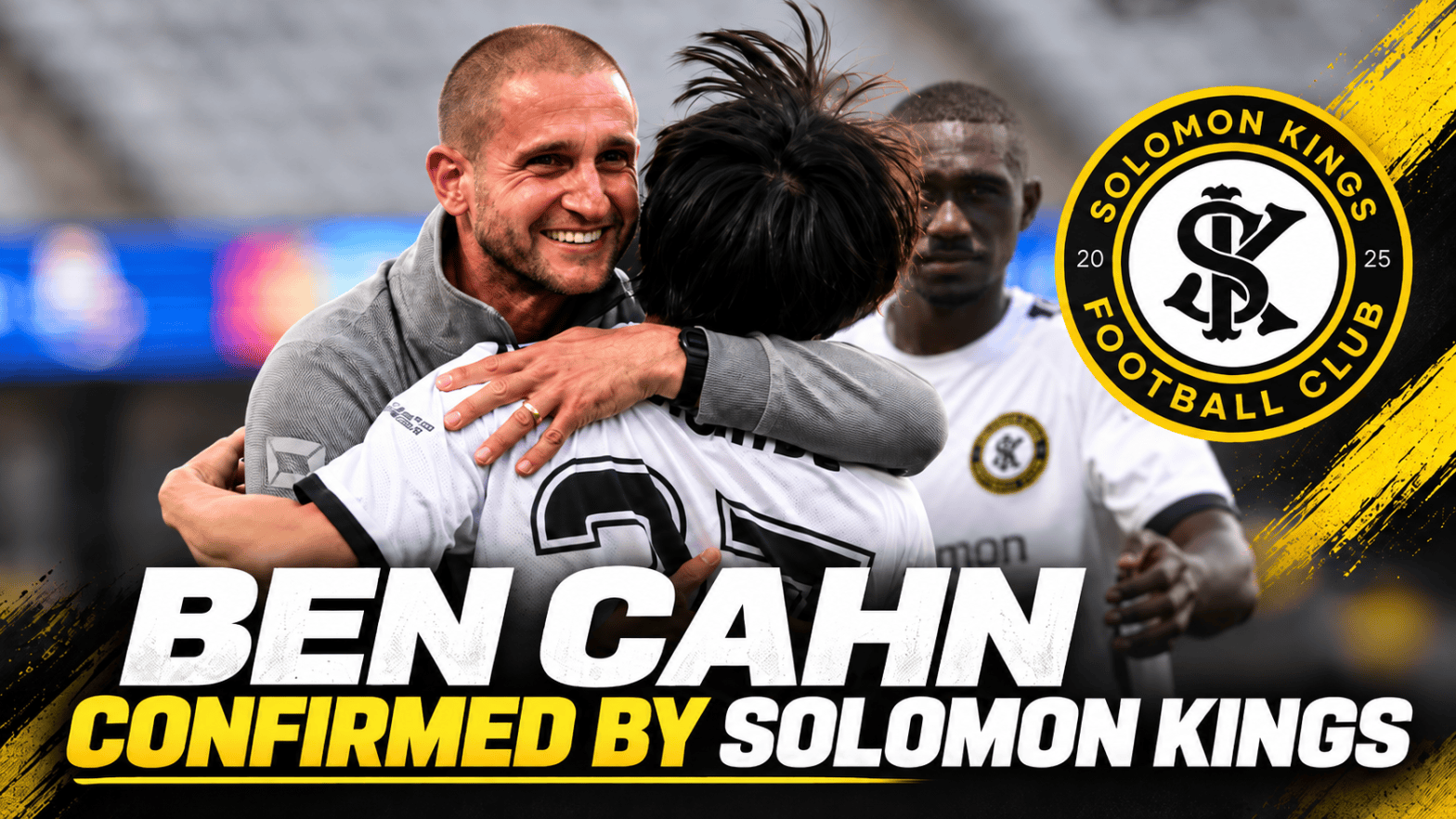
Ben Cahn stays at Solomon Kings for 2027 as long-term Solomon Islands football project continues

Solomon Kings FC have confirmed that Ben Cahn will remain as head coach for the 2027 OFC Pro League season, securing continuity for the club as it prepares for its second campaign in Oceania’s professional football competition. The decision follows an encouraging but challenging inaugural season and comes as Cahn continues to lead the Solomon Islands national team, strengthening the connection between the country’s professional football project and its international ambitions.

The Australian-based coach guided Solomon Kings to fifth place in the regular season of the inaugural OFC Pro League, collecting 18 points from 14 matches, with five victories, three draws and six defeats. Although the team narrowly missed out on the semi-final playoff, the campaign demonstrated that Solomon Islands players could compete in a professional environment against clubs from across the region. The Kings ended their season with a convincing 3-0 victory over PNG Hekari FC, but Vanuatu United’s result elsewhere prevented them from advancing.

Cahn’s appointment for another season represents an opportunity to build on the foundations established during 2026. His team showed promising technical qualities and an ambition to control matches through possession, although inconsistency and difficulties in managing decisive moments frequently prevented strong performances from producing better results. Those challenges are among the areas the coach has identified as priorities for the development of Solomon Islands football.

In an exclusive interview with Oceania Football Center published in September, Cahn discussed his football philosophy and the progress achieved during his first season with Solomon Kings. He challenged the perception that Pacific Island footballers were better suited to a direct style of play rather than a possession-oriented approach.

“When I took the job, people told me you can’t play possession-based football with islands players. We showed they are very capable,” Cahn told OFCe.

During the same interview, the coach emphasised that the main challenges involved improving game management, consistency and the ability to maintain high standards throughout demanding sequences of matches. He argued that regular exposure to professional football was essential for addressing those weaknesses, particularly for players who had previously experienced limited opportunities to compete at such a level.

His continuation at Solomon Kings is also significant because of his responsibilities with the Solomon Islands national team. Cahn has been working towards establishing a recognisable playing identity for the Bonitos, combining aggressive defending with technical confidence and greater control of possession. The professional structure offered by Solomon Kings provides an important environment in which many national-team players can train and compete regularly.

Speaking to OFCe, Cahn acknowledged that the two projects would inevitably be closely connected. However, he stressed that playing for Solomon Kings would not guarantee selection for the national team, with Solomon Islands footballers competing at other domestic and overseas clubs remaining under consideration. His approach places importance on current form, physical condition, professionalism and the quality of competition in which players are involved.

The coach has also highlighted the importance of developing younger footballers, identifying players such as Jayroll Patty and Danford Fiumae among those progressing towards greater involvement at senior level. With the 2030 FIFA World Cup representing a long-term ambition for Solomon Islands, Cahn believes that improvements must extend beyond tactical preparation to include professional standards, player support and the wider football environment.

Before arriving at Solomon Kings, Cahn developed extensive coaching experience in Australia and Japan, including spells with Olympic FC, Melbourne Knights, Brisbane Roar and FC Tiamo Hirakata. His experience at Brisbane Roar included a brief period as head coach in the A-League, while his work in Japanese football contributed to the technical philosophy he has sought to implement in the Pacific.

The 2027 campaign will provide another important opportunity for Cahn and Solomon Kings. The club is scheduled to face Vanuatu United in the opening match of the new OFC Pro League season on 22 January, while Honiara’s National Stadium has been confirmed as the venue for the competition’s final on 6 June. The prospect of competing for the title on home soil adds further significance to the club’s preparations.

For Solomon Kings, retaining Cahn provides stability and the possibility of developing a more competitive squad without abandoning the playing principles introduced during the inaugural season. For Solomon Islands football more broadly, his continued involvement ensures that the professional club and national team can benefit from a shared approach to player development, even while maintaining their separate competitive objectives.

After a first season that demonstrated both the potential and limitations of the country’s emerging professional football structure, 2027 will offer Cahn another opportunity to turn that progress into more consistent results.

Rewa finish IDC group stage unbeaten as hosts Suva bow out without a win

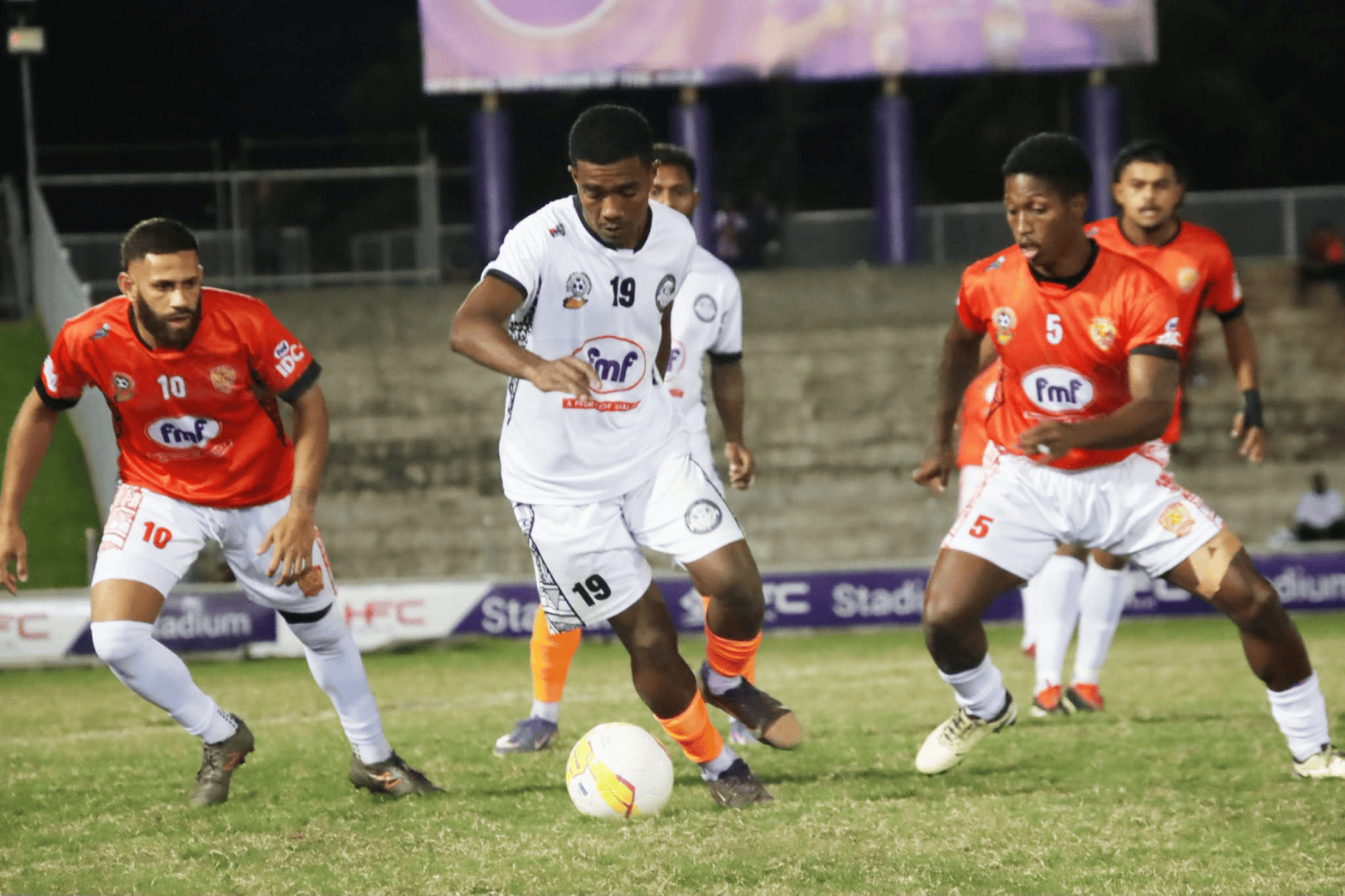
Defending champions Rewa FC completed an unbeaten group-stage campaign at the 2026 FMF Inter-District Championship following a 1-1 draw against hosts Suva FC at HFC Bank Stadium on Thursday evening. Goals from Semi Matalau for Rewa and New Zealand-based James Hoyt for Suva settled the final Super Premier fixture of the day, leaving the Delta Tigers at the top of Group A with seven points and confirming the hosts’ elimination.

The encounter brought together two teams experiencing contrasting campaigns. Rewa had already secured qualification following emphatic victories over Nasinu and Labasa, while Suva entered their final group match with their hopes of reaching the semi-finals already extinguished. Nevertheless, the Whites managed to produce a more competitive result against a Rewa side that had dominated its previous opponents, becoming the first team to score against the defending champions in this year’s tournament.

James Hoyt’s goal provided one of the few positive moments of Suva’s disappointing campaign. The New Zealand-based player was among four overseas reinforcements brought into Pita Rabo’s squad specifically for the IDC, alongside Emosi Navaba, Andrew Naicker and Shiville Salesh Kumar. His contribution against the defending champions demonstrated the potential value of those additions, although Suva ultimately could not transform their investment in the squad into a place in the knockout stage.

For Rewa, Semi Matalau ensured the Delta Tigers would finish their group campaign without defeat. The attacker, who scored three goals during the 2026 Fiji Premier League season, added his name to Rewa’s IDC goalscorers alongside Merrill Nand, Josaia Sela, Ramzan Khan and Epeli Valevou. His contribution helped preserve the team’s unbeaten record after their defence was breached for the first time in the competition.

The 1-1 result represented a considerably closer contest than Rewa’s previous two group matches. The defending champions began their campaign with a 5-0 demolition of Nasinu, with Merrill Nand scoring twice, before producing another convincing performance against Labasa on Wednesday. After a scoreless first half against the Babasiga Lions, Josaia Sela broke the deadlock and Nand added another two goals to complete a 3-0 victory that guaranteed Rewa’s progression.

Against Suva, however, the Delta Tigers were unable to reproduce the same attacking efficiency. Although both teams found the net, neither managed to secure the victory, and the points were shared at the final whistle. For Rewa, the result was sufficient to complete the group stage with two victories, one draw, nine goals scored and only one conceded.

Suva, meanwhile, concluded the competition with two points from three matches, having scored four goals and conceded five. Their campaign began with a frustrating 2-1 defeat against Labasa, when Christopher Wasasala scored a dramatic late winner after Andrew Naicker had brought the hosts level. On Wednesday, Solomon Islands international Gagame Feni scored twice against Nasinu, but Suva surrendered the lead on two occasions and eventually settled for a 2-2 draw.

Those results left the capital city side needing a combination of favourable outcomes to remain in contention. Labasa’s 2-1 victory over Nasinu earlier on Thursday ultimately settled the qualification race, leaving Suva’s final encounter against Rewa without any possibility of changing their position in the group.

The elimination represents another setback for a Suva side that entered the IDC hoping to challenge for a 15th championship title. Playing on home soil and strengthened by overseas-based footballers, the Whites had reasons for optimism, particularly after showing encouraging performances during September’s Battle of the Giants. However, their inability to protect leads and convert competitive performances into victories proved costly throughout the group stage.

Rewa’s attention now turns to Saturday’s semi-final against Navua, who finished second in Group B after drawing 0-0 with Lautoka. The Southerners also completed the group stage unbeaten, having defeated Nadi 3-0 and recovered from two goals down to earn a 2-2 draw against Ba.

The meeting will offer Rewa another opportunity to move closer to retaining the IDC title they captured in 2025, ending a 15-year wait for the trophy. Having lost the Fiji Premier League championship to Ba and suffered defeat against the Men in Black in September’s Battle of the Giants final, the Delta Tigers are determined to finish the domestic season with another major honour.

While Thursday’s draw ended Rewa’s perfect defensive record, their overall campaign has demonstrated the consistency required to compete for the championship. With seven points and nine goals from three matches, the defending champions enter the knockout stage unbeaten, while Suva must reflect on a tournament that ended without a single victory.