Nadi goalkeeping gamble backfires as Aadil Mohammed is punished for costly positioning errors

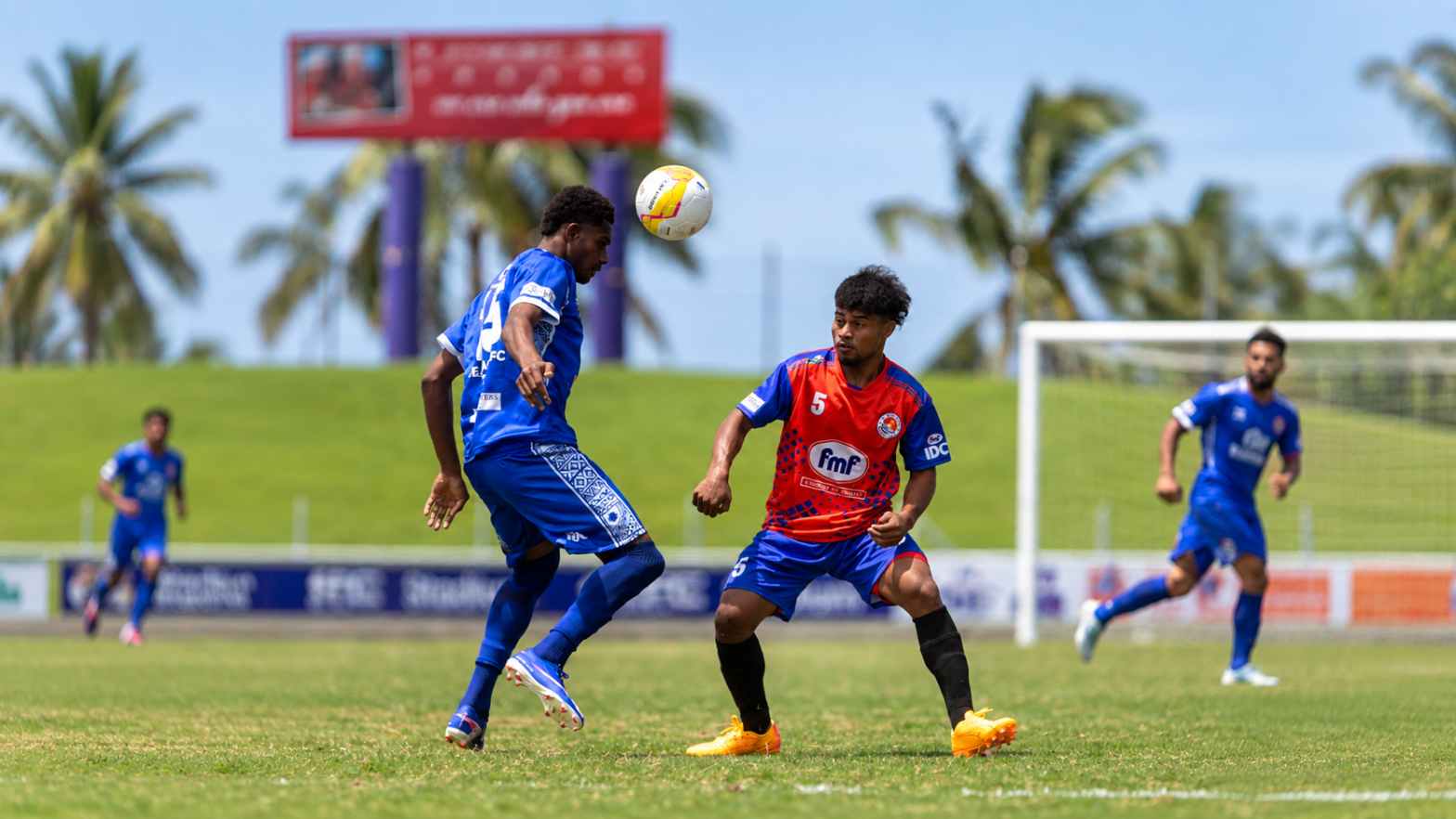
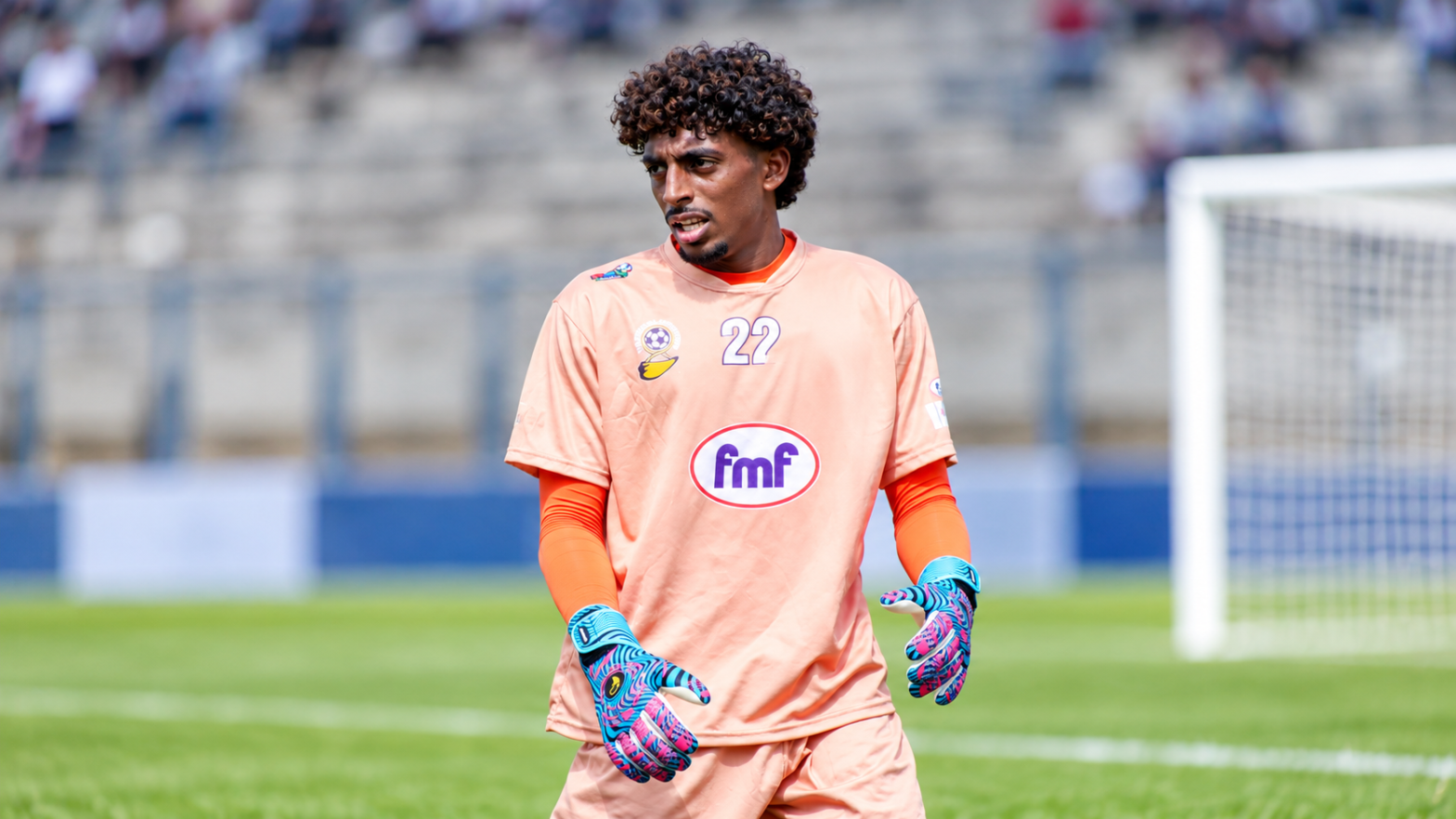
Nadi’s decision to change goalkeeper for the opening match of the 2026 FMF Inter-District Championship proved costly, with new addition Aadil Mohammed enduring a difficult afternoon in the 3-0 defeat to Navua at HFC Bank Stadium.

Walter Leoru took the headlines with a hat-trick, but a review of all three goals shows another clear feature of the match: Mohammed’s positioning repeatedly left him vulnerable to finishes from distance. The Vanuatu international still deserves considerable credit for recognising the situation and executing each attempt, but the same problem appeared throughout the three goals — Nadi’s goalkeeper was too far from the security of his line and Leoru recognised it.

The first warning became the opening goal in the 40th minute. As Navua attacked towards the Nadi penalty area, Mohammed maintained an advanced position with significant space behind him. Leoru did not need to beat the goalkeeper through power or a close-range combination; he identified the space available and sent his effort beyond a goalkeeper who was left with little possibility of recovering.

Only four minutes later, almost the same weakness was exposed again. Leoru received another opportunity around the edge of the area and Mohammed was once more positioned away from his line. The Navua attacker produced another high finish beyond him to make it 2-0. What might have been dismissed as a single misjudgement with the first goal had by then developed into a clear tactical and positional problem.

The third goal in stoppage time was perhaps the clearest example. With Leoru contesting a forward ball near the penalty area, Mohammed was again several metres away from his goal. Leoru immediately recognised the goalkeeper’s position and lifted the ball over him, leaving Mohammed watching as it travelled into an exposed net.

The recurring nature of the goals made the performance particularly difficult for Nadi. Leoru did not simply find himself in the right place three times; he repeatedly recognised the goalkeeper’s advanced positioning and punished it. At the same time, Mohammed never appeared to adjust sufficiently after the first warning, even after conceding a second goal in almost identical circumstances. You can watch the goals of the match by clicking here.

That has inevitably raised questions over Nadi’s selection. Regular goalkeeper Joela Biuvanua was named among the substitutes, while Mohammed was handed the starting position. Biuvanua has been Nadi’s established goalkeeper and was recently involved with the Fiji national team, making his absence from the starting eleven even more noticeable after the way the three goals were conceded.

Oceania Football Center spoke with some Nadi players after the match, but there was no attempt from his teammates to publicly blame Mohammed for the defeat. Those spoken to maintained that he is a good goalkeeper who needs to remain focused and correct the mistakes in his game, particularly the moments when his positioning leaves too much of the goal available behind him.

That response contrasted sharply with the reaction online.

As footage of Leoru’s goals circulated, Mohammed’s positioning quickly became one of the main talking points among Fiji football supporters. One commenter joked that “the keeper is waiting for Fiji Day holiday,” while another wrote, “Don’t blame the keeper. He’s just here to watch the game.” Others repeatedly described the goalkeeper as being in “dreamland”, while another reaction questioned why Nadi had a goalkeeper recently involved with the Fiji national team sitting on the bench.

There was also a more measured assessment among the reactions, with one supporter pointing specifically to a “lack of concentration” and suggesting that Mohammed needs time to adapt. That criticism is much closer to what the video itself suggests: the issue was not simply that three shots went past him, but that his starting positions repeatedly gave Leoru the opportunity to attempt finishes that would normally carry far greater risk.

Mohammed was one of Nadi’s Australia-based additions ahead of the IDC, and giving him an opportunity in the tournament was therefore understandable. What made the decision damaging was that it came at the expense of an established option in Biuvanua and immediately contributed to a defeat in a competition where teams have only three group matches.

It should also not take away from Leoru’s performance. Goalkeeper mistakes still have to be punished, and the Vanuatu international showed excellent awareness on all three occasions. Rather than forcing a conventional finish, he repeatedly looked at Mohammed’s position before exploiting the space available. That ability to recognise the same weakness and attack it again was a major part of why Navua turned the opening match into such a comfortable victory.

For Nadi, however, the more immediate issue is what happens next. The tournament format leaves almost no room for another defeat, and the goalkeeper position has suddenly become an important selection question. Mohammed may be given the opportunity to respond, but after an afternoon in which the same positional problem contributed heavily to three goals, the presence of Biuvanua on the bench will be much harder to ignore.

Labasa reshuffle IDC squad as PNG stars Rex Naime and Joseph Joe miss tournament

Labasa will begin their 2026 FMF Inter-District Championship campaign with a significantly altered squad after making four late changes to their final 22-player list.

Papua New Guinea international Rex Naime, Joseph Joe, Akeimi Ralulu and Melvin Mani have all been removed from the squad ahead of the tournament opener against Suva.

Naime’s absence is one of the most notable changes. The PNG international had been part of Labasa’s attacking group during the season but has now been replaced in the final IDC squad by young player Rapoama Dakai.

There has been no confirmation at this stage that Naime has left Labasa permanently, meaning his omission should currently be treated specifically as an IDC squad decision rather than the end of his time with the Babasiga Lions.

Joseph Joe is another significant name missing from the final selection, with youngster Meli Muasobu taking his place. As with Naime, no further details have yet been released regarding Joe’s situation beyond his removal from the IDC squad.

Labasa have also been forced into changes for two different reasons elsewhere in the team.

Akeimi Ralulu has been excused following a death in his family and has been replaced by Ilaisa Nayasi. However, Nayasi will not provide an immediate solution for Labasa, as he must serve a suspension during the opening two matches following a red card received at the Battle of the Giants.

Melvin Mani is also out of the final squad while remaining in New Zealand.

The midfielder was recently suspended from all football activities after travelling to New Zealand and participating in the Sanatan IDC without clearance while he had been expected to be involved with the Fiji national team.

His appeal was scheduled to be heard on Tuesday, but his continued stay in New Zealand means he will not be available for Labasa during the IDC pool stage. Timoci Naitini has replaced him in the final 22.

The reshuffle means three young players — Naitini, Muasobu and Dakai — have been brought into Labasa’s final squad at short notice.

It creates an additional challenge for the Babasiga Lions in what is arguably the most demanding group of the tournament.

Labasa have been drawn alongside defending champions Rewa, Suva and Nasinu in Pool A, with only two teams progressing to the semi-finals.

Their campaign begins against Suva at HFC Bank Stadium, with the Capital City side themselves strengthened by the arrival of several New Zealand-based players.

For Labasa, however, the immediate task will be adapting to a squad that looks considerably different from the one initially expected to contest the IDC.

The tournament will also provide an unexpected opportunity for some of the club’s younger players, particularly Dakai and Muasobu, following the late withdrawals of Naime and Joe.

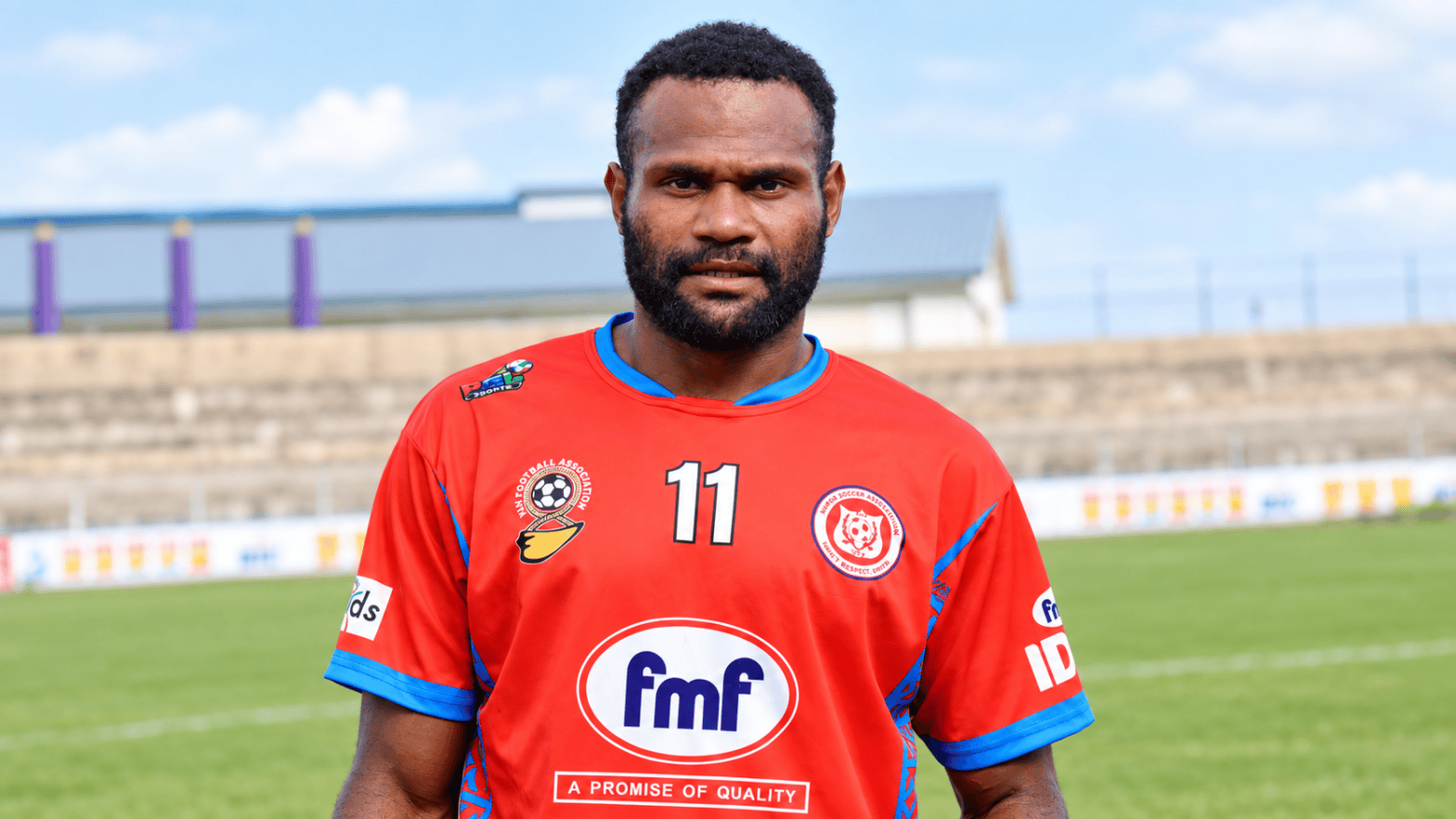
Vanuatu’s Walter Leoru hits hat-trick as Navua make perfect start to 2026 Fiji Inter-District Championship

Vanuatu international Walter Leoru produced one of the standout individual performances of the opening day of the 2026 FMF Inter-District Championship, scoring all three goals as Navua defeated Nadi 3-0 at HFC Bank Stadium in Suva.

Leoru broke open a match that had remained goalless for most of the first half, striking twice in the space of four minutes. The Ni-Vanuatu forward opened the scoring in the 40th minute before finding the net again in the 44th, giving Navua a commanding 2-0 advantage heading into the interval.

Nadi attempted to respond after the break and both teams continued to create opportunities, but Navua maintained control of their advantage. Nadi’s task became even more difficult late in the contest when midfielder Shaheel Valentine was shown a red card.

Leoru then completed a memorable afternoon in the 93rd minute. Released into space with Nadi stretched, he scored his third goal to complete the hat-trick and seal a 3-0 victory for Navua.

The result represents an important opening statement from Rodeck Singh’s side in a demanding Group B that also contains Ba and Lautoka. Navua entered the tournament knowing there was little margin for error, particularly after being drawn alongside three of Fiji’s traditionally strong football districts.

Their opening performance was also significant considering the problems Navua had faced before the tournament. Singh said after the match that injuries and player absences had affected his preparations, although the return of several members of the squad, including players coming back from Bula FC commitments, strengthened his options.

For Leoru, however, the afternoon provided another reminder of his growing influence in Fiji.

The Vanuatu international had already found the net for Navua during the Battle of the Giants in September, scoring the opening goal against Suva before Gagame Feni’s hat-trick eventually turned that match in Suva’s favour. His IDC treble now takes his recent contribution to another level, with the forward becoming increasingly important to Navua’s attacking threat.

That carries particular interest beyond Fiji. Pacific internationals continue to occupy important roles across Fiji’s district football, and Leoru’s performance adds another Vanuatu name to a growing list of players making a significant impact in the country’s leading domestic competitions.

Navua’s victory is also notable given how the two teams had performed against each other earlier in the season. Nadi had beaten Navua in both of their league meetings, but the tournament setting produced a very different outcome as Singh’s team delivered when the pressure of the IDC arrived.

Navua will have little time to enjoy the result. Their second Group B match comes against Ba on Wednesday at HFC Bank Stadium, before they complete the group stage against Lautoka on Thursday. With only the top two teams advancing to the semi-finals, the opening three points — and the sizeable goal difference provided by Leoru’s hat-trick — could prove particularly valuable.

For now, though, the first major individual story of the Super Premier competition belongs to Walter Leoru: three goals, three points for Navua and an emphatic beginning to his 2026 IDC campaign.

Leon Kofana set for S-League return with Malaita Kingz after spell away from the spotlight

Solomon Islands international defender Leon Kofana is set to return to the Telekom S-League with Malaita Kingz after completing his current futsal commitments with SALT Futsal Club.

SALT confirmed directly to Oceania Football Center that Kofana is currently focused on futsal but will return to the outdoor game once the club finishes its Top 8 Championship campaign. Asked which team he would represent, SALT identified Malaita Kingz as his destination.

The move brings a familiar name back into the domestic football picture. Kofana has been relatively quiet in recent months compared to earlier stages of his career, but at 24 he remains a player with considerable experience for his age and a profile that extends well beyond the S-League.

The centre-back emerged as one of the most highly regarded defenders of his generation in Solomon Islands football. As a youngster, he spent time in New Zealand alongside Raphael Lea’i after receiving a scholarship connected to Scots College and the Wellington Phoenix youth environment. He later established himself with Henderson Eels and became a regular at senior domestic level.

His international pathway developed just as quickly. Kofana captained Solomon Islands at youth level, represented the country at the 2019 FIFA U-17 World Cup and later progressed into the senior national team. He made his senior debut during the 2022 FIFA World Cup qualifying campaign and has subsequently remained part of the national-team picture, including appearances in major OFC competitions.

Kofana also gained experience in the inaugural OFC Professional League environment with PNG Hekari in 2026, adding another layer to a career that has already included domestic football, international competition and development experience abroad.

His return to the S-League therefore represents more than the arrival of another local defender. Malaita Kingz are adding a player who has experienced several different levels of football and who, when regularly involved, has previously been regarded among the more promising defensive players in the Solomon Islands.

For Kofana, the move could also provide an important opportunity to put himself back in the spotlight. His name has not featured as prominently in the domestic conversation recently, particularly while he has been involved with futsal, but consistent S-League football could quickly change that.

SALT told OFCe that Kofana will make the transition after the conclusion of their Top 8 campaign, meaning his return to eleven-a-side football is expected only after his current futsal commitments are completed.

Malaita Kingz will now be the next chapter for a player who has already represented Solomon Islands internationally and experienced the emerging professional game in Oceania, but who still has plenty of his career ahead of him.

Cashmere Technical hit 10 and Auckland United score seven as NZ National League explodes in extraordinary second round

If the opening weekend of the 2026 New Zealand Men’s National League Championship suggested that the competition could be tight and unpredictable, the second round delivered something completely different. Thirty goals were scored across only five matches, with Cashmere Technical destroying Wellington Phoenix Reserves 10-0, Auckland United putting seven past Napier City Rovers and defending champions Auckland City beginning their campaign with a 4-2 victory over Eastern Suburbs.

The scale of the weekend was remarkable. Round One had produced only 13 goals, with three of the five matches ending level. One week later, every game had a winner and the competition witnessed two of the heaviest scorelines of the National League Championship era.

Cashmere Technical were already the major winners of the first round. The Southern League champions travelled north and dismantled unbeaten Northern League champions Birkenhead United 4-0, with Garbhan Coughlan scoring twice alongside goals from Yuya Taguchi and Zander Edwards. Wellington Olympic were the only other opening-round winners, dramatically coming from behind to defeat Auckland FC Reserves 3-2 despite spending most of the match with ten men. Auckland United drew 1-1 with Wellington Phoenix Reserves, Napier City Rovers and Miramar Rangers also finished 1-1, while National League newcomers Ferrymead Bays earned their first point with a goalless draw against Eastern Suburbs.

Those results left questions about how much could really be read into one weekend. Cashmere answered theirs emphatically on Sunday.

The Christchurch side needed barely a minute to begin the demolition of Wellington Phoenix Reserves at Garrick Memorial Park. Coughlan opened the scoring and Lyle Matthysen made it 2-0 only a few minutes later. Coughlan struck again in the 14th minute before Finn Caughey added the fourth in the 26th.

There was still no relief for the Phoenix. Coughlan completed his hat-trick before the half-hour mark and Matthysen scored his second in first-half stoppage time, sending Cashmere into the break with an extraordinary 6-0 advantage.

The pattern continued after halftime. Taguchi added the seventh in the 52nd minute, Coughlan scored his fourth seven minutes later and Lachlan McIsaac made it 9-0 shortly afterwards. Caughey eventually completed the scoring with his second of the afternoon in the 87th minute.

Cashmere therefore leave the first two rounds with numbers that hardly look real: two victories, 14 goals scored and none conceded. Coughlan alone has six National League goals after scoring twice against Birkenhead and four against the Phoenix.

The 10-0 victory also represents a new benchmark for the National League Championship since the current national structure began its first full championship season in 2022. The previous largest winning margin was Western Suburbs’ 8-0 victory over Coastal Spirit in 2025. It is also a dramatic reversal of the teams’ recent history: Wellington Phoenix Reserves defeated Cashmere Technical 4-0 when the sides met in the 2024 championship.

For a Cashmere side that had already scored heavily throughout the Southern League season, the attacking power is hardly new. What is different is the way it has transferred immediately to the national stage against teams from outside the South Island. Birkenhead entered the championship after an unbeaten Northern League campaign and conceded four. The Phoenix followed and conceded ten.

Cashmere are now alone at the top with six points and a +14 goal difference.

Yet the leaders were not the only team producing extraordinary numbers on Sunday.

At Keith Hay Park, Napier City Rovers actually struck first against Auckland United. Sam Lack, who had also scored inside the opening minute against Miramar in Round One, put Rovers ahead in the eighth minute.

The response was devastating.

Will Mendoza equalised in the 16th minute and scored again seven minutes later. By the 34th minute he had completed his hat-trick from the penalty spot, turning an early 1-0 deficit into a 3-1 Auckland United advantage before halftime.

Julian Barrios Cristales added a fourth soon after the restart before Jack Beer made it 5-1 in the 65th minute. The closing moments then became particularly punishing for Napier. Beer scored his second in stoppage time and Mendoza followed almost immediately with his fourth of the match to complete a 7-1 victory.

Mendoza now has five goals across the opening two rounds, having also scored United’s goal in their 1-1 draw with Wellington Phoenix Reserves. Only Coughlan sits above him after two weekends.

For Auckland United, the result completely changed the appearance of their start. A relatively quiet opening-round draw has been followed by one of the competition’s biggest victories, taking United to four points with eight goals scored.

For Napier, the contrast is severe. Rovers began with a competitive 1-1 draw against Miramar and took the lead in both of their first two National League matches. They now sit on one point after conceding seven once Auckland United found their rhythm.

Auckland City, meanwhile, finally entered the championship after receiving the Round One bye and immediately showed why they remain the team everyone has to measure themselves against.

The defending champions faced Eastern Suburbs at Madills Farm and took the lead through Pavel Osmančík in the 26th minute. Michal Doudera played him through and the Czech forward finished to give City a 1-0 halftime advantage.

Ryan Watson doubled the lead early in the second half with a header from Dylan Manickum’s delivery, but Eastern Suburbs refused to allow the champions a comfortable afternoon. Héctor Echagüe reduced the deficit in the 64th minute.

City responded again. Doudera, who had created the opener, restored the two-goal margin with a free kick to make it 3-1.

Eastern Suburbs came back once more when Agustín Contratti headed in with around seven minutes remaining, setting up the possibility of a late 3-3 comeback. Instead, Auckland City again had the final answer. Mike den Heijer found Fergus Gillion in stoppage time and the substitute finished to secure a 4-2 victory.

It was an important opening statement from a City side trying to defend the national crown. They have played one match fewer than almost every team above them, meaning their three points keep them immediately within reach of the early leaders.

Perhaps the weekend’s most significant result outside the two huge scorelines came in Wellington.

Ferrymead Bays travelled to face Wellington Olympic having earned a 0-0 draw against Eastern Suburbs in their first-ever National League Championship match. Their second produced an even bigger milestone.

Olympic, runners-up in last season’s championship and dramatic 3-2 winners over Auckland FC Reserves in Round One, went ahead through Morgan Wellsbury in the 14th minute. At halftime, the expected hierarchy appeared to be holding.

Jacob Killick changed everything after the interval.

Killick equalised in the 53rd minute and struck again ten minutes later to put Ferrymead 2-1 ahead. Olympic, who had shown their capacity for late comebacks only six days earlier, could not produce another one.

Ferrymead held on for a historic first victory in the National League Championship. After two games against Eastern Suburbs and Wellington Olympic, the Southern League newcomers remain unbeaten with four points.

Their start is becoming one of the early stories of the competition. Ferrymead had never previously reached this stage, yet they have conceded only once through their first 180 minutes and have already taken points from two established national-level opponents.

Miramar Rangers also moved onto four points after coming from behind to beat Auckland FC Reserves 2-1.

The Auckland youngsters had impressed against Wellington Olympic in Round One, leading twice before eventually losing 3-2 to Jaylen Rodwell’s stoppage-time free kick. They again went ahead in Wellington when Harley Hill scored in the 27th minute.

Miramar levelled at an important moment. Lewis Thompson struck in first-half stoppage time to send the teams into the interval at 1-1, before Connor Gaul completed the turnaround in the 58th minute.

The victory gives Miramar four points following their opening draw at Napier. Auckland FC Reserves, despite competitive performances and having taken the lead in both matches, have now lost twice.

After two rounds, Cashmere Technical have established the clearest early advantage. Their six points are impressive enough, but the 14-0 aggregate score gives an indication of just how dominant their start has been. Auckland United, Miramar Rangers and Ferrymead Bays follow on four points, while Auckland City have three from their only match.

Wellington Olympic also remain on three but have now experienced both sides of the competition’s unpredictability: a dramatic late victory in the first round followed by a home defeat to National League newcomers. Eastern Suburbs, Napier City Rovers and Wellington Phoenix Reserves have one point, while Auckland FC Reserves remain without one. Birkenhead United, who had the Round Two bye, are also yet to collect a point after their opening defeat to Cashmere.

The opening weekend hinted that the 2026 championship might be difficult to predict. The second made the picture simultaneously clearer and more chaotic. Cashmere have emerged as the early team to catch, but Auckland United have suddenly announced themselves with seven goals, Auckland City have started their title defence with four, and Ferrymead have turned their National League debut into an unbeaten four-point start.

Above all, a weekend containing a 10-0, a 7-1 and 30 goals across five matches has ensured that the 2026 championship has already produced scorelines that will be difficult to forget.

Kiribati score twice but Seaqaqa punish costly errors in historic IDC debut

Kiribati’s first appearance at the FMF Inter-District Championship ended in defeat, but the island nation still found reasons for encouragement after scoring twice in a 4-2 loss to Seaqaqa at HFC Bank Stadium in Suva.

The result gave Seaqaqa all three points in their opening Premier Division Group A match, while Kiribati were immediately confronted with the level of competition they travelled to Fiji to experience. The final score also did not tell the entire story of a match in which Te Itei recovered from a difficult opening, found the net through Teweia Butibara and Bauro Martin Jr, and continued competing despite falling three goals behind before half-time.

Seaqaqa entered the tournament with considerable momentum. The northern district recently secured promotion for the 2027 season and were therefore expected to provide a demanding first opponent for a Kiribati side making its first appearance in the IDC. Fiji FA had already described Kiribati’s inclusion as an opportunity for the national team to measure itself against Fijian district football.

The first major setback came from the penalty spot. Seaqaqa were awarded an early penalty and the opportunity was confidently converted, leaving the Kiribati goalkeeper with little chance and putting the newcomers behind.

The second goal, however, was far more avoidable and illustrated exactly the type of mistake Kiribati will hope to eliminate as they gain experience at this level. The goalkeeper was unable to secure the ball cleanly and the error presented Seaqaqa with the opportunity to extend their advantage.

For a team whose stated purpose at the IDC is partly to discover its current standard against Fijian opposition, those moments will be particularly instructive. Kiribati were not simply being outplayed by an opponent with greater competitive experience; individual errors were also making their task significantly more difficult.

Yet the reaction was important.

Teweia Butibara scored Kiribati’s first-ever IDC goal, reducing the deficit and giving the team its first tangible reward on the Fijian stage. The midfielder arrived at the tournament as one of the more internationally experienced members of the squad, having previously played club football in New Zealand.

Seaqaqa restored their two-goal advantage before the interval, leaving Kiribati 3-1 down at half-time.

For a side entering an unfamiliar tournament against opponents accustomed to organised competition in Fiji, the match could easily have unravelled from that position. Instead, Kiribati remained in the contest and scored again after the break.

This time it was Bauro Martin Jr who found the net, adding his name to another important moment in Kiribati football history.

Seaqaqa ultimately found a fourth goal and closed out the match 4-2, securing a winning start and strengthening their position in a three-team group where there is little margin for error. Fiji FA described the northerners’ performance as enough to collect all three points while also recognising Kiribati’s determination throughout their historic debut.

There was another concern for Te Itei beyond the result. The Kiribati Islands Football Federation reported that two Kiribati players suffered injuries during the match, potentially complicating preparations for their decisive second group fixture. The federation had not identified the injured players in its initial post-match update.

For Kiribati, however, the significance of the afternoon should not be reduced to a 4-2 defeat.

This was precisely the type of test coach Pine George Holomoana wanted when the team travelled to Fiji. Before the competition, he told Oceania Football Center that Kiribati wanted to use the IDC to assess the standard of its players against football in Fiji, while the country continues pursuing the larger ambition of becoming a full OFC and eventually FIFA member.

The opening match provided a first answer. There are areas where the gap is evident, particularly in the punishment of defensive mistakes and the demands of managing matches against more experienced opposition. But Kiribati also demonstrated that they can create and convert opportunities at this level.

Scoring twice matters in that context – watch both Kiribati goals here.

Rather than leaving their historic first IDC match having simply endured the occasion, Kiribati made Seaqaqa work for the victory and placed two of their own players on the scoresheet. Butibara’s goal will remain the first Kiribati goal in IDC history, while Martin Jr ensured the country’s debut finished with evidence of attacking capability alongside the defensive lessons.

Their next examination will be even more important.

Kiribati face Nadroga in their remaining Group A match, with the second fixture offering another opportunity to measure themselves against a side with extensive experience in Fiji’s domestic football structure. With only three teams in the pool, the result will determine how far Kiribati’s first IDC campaign can go.

The first result was a defeat. The wider purpose of Kiribati’s trip to Fiji, however, was always to discover where they stand.

After 90 historic minutes in Suva, they already have considerably more information than they had before — two goals to remember, mistakes to correct and another opportunity still ahead.

Shankar cleared for IDC, but disciplinary case costs him Bula FC offer and OFC Auckland opportunity

Delon Shankar will be allowed to return to the field for Rewa at the FMF Inter-District Championship, but the consequences of his recent disciplinary case have extended well beyond the domestic tournament, with the 19-year-old losing both a Bula FC opportunity and a proposed placement with the Oceania Football Confederation in Auckland.

The Fiji Football Association Board has cleared Shankar to play again after placing him on a one-year good-behaviour bond. The decision ends the immediate suspension that had threatened to rule one of Rewa’s most promising young players out of the IDC, but Fiji FA has also made clear that his pathway towards professional football has been affected.

According to FijiVillage, Shankar’s nomination for a placement with OFC in Auckland has been withdrawn, while an offer from Bula FC has also been taken off the table. Fiji FA says the Bula FC coach will decide at a later stage whether Shankar should be given another opportunity with the professional club.

That is arguably the most significant element of the decision. Shankar is not simply a domestic player attempting to reach professional football for the first time. He was already part of Bula FC’s inaugural OFC Pro League squad in 2026, gaining experience in Oceania’s first professional league as the Fijian club progressed to the semi-final playoff.

The wording surrounding the withdrawn Bula FC offer is therefore important. Shankar has already represented the club, meaning the latest decision appears to concern a future or continuing opportunity rather than his original place in the 2026 squad. Fiji FA has not publicly clarified the contractual details, but the message regarding his professional future is unmistakable: earning another chance will now depend on more than his performances on the field.

Fiji FA specifically pointed towards behaviour and professionalism as areas Shankar must improve if he wants to pursue a professional career. The association highlighted the importance of informing the relevant parties and obtaining permission before leaving, issues at the centre of the case that led to his suspension.

Shankar had been involved in Fiji’s preparations for the MSG Prime Minister’s Cup when he was released from camp for rehabilitation. It was subsequently reported that he travelled to New Zealand and participated in the Sanatan IDC tournament without the knowledge of the national-team coaching staff and Fiji FA.

The episode brought a sudden interruption to what had otherwise been one of the more notable development stories among Fiji’s younger players.

Still only 19, Shankar had already established himself in senior football with Rewa before joining the professional environment at Bula FC. He made his OFC Champions League debut for Rewa at just 17 and later had an opportunity with A-League club Sydney FC in 2025. His progress also brought him increasingly close to the Fiji senior national-team setup.

His experience with Bula FC represented another major step. Shankar was one of several young Fijian players exposed to professional football during the inaugural OFC Pro League season, and OFC later included him among the Bula FC players carrying that professional experience into Fiji’s youth international setup.

For that reason, the latest decision creates an unusual contrast. Shankar has been cleared to return immediately to one of Fiji’s biggest domestic competitions, but the opportunities designed to take him beyond domestic football have been affected.

The good-behaviour bond effectively gives him another chance at home while leaving him with work to do to rebuild confidence at the professional level.

It also gives the case a wider significance as Fiji attempts to establish a stronger professional pathway through Bula FC. The club’s creation has given leading local players something that previously existed only by moving abroad: a direct route from Fiji’s domestic competitions into a professional football environment.

With that opportunity comes a different level of expectation. Talent and performances remain central, but availability, communication and professional conduct increasingly matter as well. Shankar’s case is an early and very visible example of how those standards can affect a young player’s career.

For Rewa, however, the immediate news is positive. Shankar is available again for the IDC and can rejoin a squad that enters the tournament with significant ambitions. The competition now offers him an early opportunity to respond on the pitch.

What happens beyond it may be considerably more important.

At 19, Shankar still has time firmly on his side, and Fiji FA has not closed the door on a return to Bula FC. But a pathway that only recently appeared to be opening rapidly — from Rewa to the OFC Champions League, overseas opportunities, Bula FC and the national team — has now encountered its first major setback.

The next stage will depend on whether he can turn the second chance granted domestically into the professionalism Fiji FA says will be required for another chance at the professional level.

Meanwhile, the disciplinary situation involving Labasa midfielder Melvin Mani remains unresolved. Fiji FA has asked Labasa to provide its position and relevant documentation before the Board decides whether Mani will also be cleared to participate in the FMF IDC.

OFC Pro League expands across Pacific for 2027 as Vanuatu joins host circuit and Solomon Islands land the final

The OFC Pro League will look considerably different in its second season. The full 2027 calendar has been released with a wider geographical footprint, a first opportunity for Vanuatu to stage league matches, the decisive stages moved to Solomon Islands and, perhaps most significantly, a completely reworked route from the regular season to the championship final.

Oceania’s first professional league will return on January 22, with the same eight clubs that contested the inaugural campaign. Defending champions Auckland FC, South Island United, South Melbourne FC, Bula FC, PNG Hekari FC, Solomon Kings FC, Tahiti United and Vanuatu United FC will again face each other twice, giving every club 14 regular-season matches across five circuit series.

What changes considerably is where those matches will be played. Instead of each circuit effectively belonging to a single host country, OFC will divide several stages between two nations, extending the league’s physical presence around the Pacific.

The opening circuit will be shared between Australia and Papua New Guinea, with six matches in each country. The season begins on Friday, January 22, and immediately produces one of its biggest fixtures as Auckland FC start their title defence against the team they defeated in the inaugural final, South Melbourne FC. Before that match, Vanuatu United and Solomon Kings will meet in the first fixture of the new campaign.

Australia will then retain the competition for the entire second circuit, with 12 matches scheduled between February 13 and 21. The league moves into another split round in March, when New Zealand and Solomon Islands share Circuit Series 3 from March 6 to 13, staging six matches each.

New Zealand will remain on the calendar for Circuit Series 4, an eight-match stage running from April 6 to 11, before the competition makes one of its most important moves of the season.

Circuit Series 5 will be divided between Fiji and Vanuatu from May 1 to 8, with six matches allocated to each country. It will be the first time Vanuatu hosts OFC Pro League fixtures.

That development is particularly significant for Vanuatu United. The Chiefs became one of the strongest stories of the inaugural competition, recovering from seventh place in the regular-season standings to reach the semi-finals, but they played the entire OFC Pro League campaign away from their own supporters. For a club created to represent Vanuatu in Oceania’s new professional era, finally bringing the competition to the country is an important next step.

Vanuatu has already demonstrated an ability to stage major matches involving professional opposition, including Vanuatu United’s September fixtures against Central Coast Mariners in Port Vila. The addition of Vanuatu to the 2027 Pro League circuit now means the club will experience something that Bula FC, PNG Hekari, Solomon Kings, South Melbourne and the New Zealand teams were all able to enjoy during the first season: genuine home matches within the competition itself.

The decision also expands the host map to six of the seven countries or territories represented by the eight clubs. Australia, Papua New Guinea, New Zealand, Solomon Islands, Fiji and Vanuatu are all scheduled to stage games. Tahiti, despite being represented by Tahiti United, remains the only Pro League market without a hosting assignment on the newly released 2027 calendar.

If Vanuatu’s inclusion represents geographical expansion, the biggest symbolic decision comes at the other end of the season. Solomon Islands will host the entire decisive phase, culminating with the OFC Pro League final on Sunday, June 6.

It is a major vote of confidence in Honiara after one of the standout moments of the inaugural campaign. When the competition visited Solomon Islands in March 2026, the National Stadium produced two sell-out matchdays involving Solomon Kings, with crowds of more than 9,000. They were the highest attendances recorded in the league at that stage and gave the competition one of its most recognisable atmospheres.

OFC has not yet confirmed the specific 2027 venues, but the success of that circuit was explicitly cited when announcing Solomon Islands as the destination for the final. The decision also represents an important shift from the inaugural season, when the decisive phase was concentrated in Auckland and the final was staged at Eden Park.

In 2027, the league champion will instead be crowned in one of Oceania’s most football-oriented markets.

The move to Solomon Islands accompanies an even larger competitive change.

During the inaugural season, the 14-match regular campaign was followed by the Leaders and Challengers groups. The top four entered the Leaders Group and the bottom four the Challengers Group, with their previous points erased. Each club then played another three matches. Three teams from the Leaders Group advanced directly to the semi-finals, while the fourth-placed Leaders side faced the winner of the Challengers Group for the remaining place.

That unusual structure produced one of the stories of the season. Vanuatu United finished only seventh after 14 matches, then won the Challengers Group, defeated Bula FC in the semi-final play-off and reached the final four.

That entire second group phase has now disappeared from the 2027 calendar.

Instead, OFC has announced a new finals format involving all eight clubs. The decisive stage begins in Solomon Islands with play-offs on May 25, followed by quarter-finals on May 29, semi-finals on June 2 and the final on June 6.

It is a substantial redesign. The competition retains its 56-match, double round-robin regular season, but rather than resetting the championship into Leaders and Challengers groups, it will transition into a more recognisable knockout-oriented finals series.

OFC has not yet detailed in its schedule announcement exactly how regular-season positions will determine the play-off and quarter-final pairings. That remains an important element still to be clarified, particularly because the confederation has stated that all eight clubs will be involved in the new finals format. What is already certain is that there will be no repeat of the Leaders-versus-Challengers phase used in 2026.

The regular-season schedule itself should also quickly renew some of the rivalries created during the inaugural campaign. Auckland FC’s January 22 meeting with South Melbourne is an immediate rematch of the 2026 final, which Auckland won 2-1 at Eden Park to become the first OFC Pro League champions.

South Melbourne and Vanuatu United, the other two clubs involved in the inaugural semi-final stage alongside Auckland and South Island United, meet on January 28. The first New Zealand derby arrives in Circuit Series 3, with South Island United facing Auckland FC on March 7.

There is also a clear change in the philosophy behind the circuit system. During the first season, New Zealand, Papua New Guinea, Australia, Solomon Islands and Fiji each received concentrated blocks of the league before all eight teams returned to Auckland for the final phase. In 2027, OFC is spreading several circuits across two countries at the same time, allowing the professional competition to reach more home markets during the same season.

The result is a schedule that feels less like a repeat of the experiment launched in 2026 and more like an attempt to develop it.

Australia and Papua New Guinea will open the season. New Zealand and Solomon Islands share the March circuit. Fiji and Vanuatu divide the final regular-season stage. Then, after more than two weeks between the conclusion of Circuit Series 5 and the start of the finals, every remaining championship match will be played in Solomon Islands.

For Vanuatu football, the calendar delivers the homecoming that was missing from the inaugural campaign. For Solomon Islands, it brings something even larger: the responsibility of deciding Oceania’s professional champion in front of a supporter base that gave the league some of its strongest crowds during its first year.

And for the OFC Pro League itself, the most important message may be that the competition is already willing to change.

The first season established the league. The second will expand its reach, abandon the Leaders and Challengers experiment and place the championship finale in Melanesia.

When the 2027 champion is finally crowned on June 6, the road to the trophy will have passed through Australia, Papua New Guinea, New Zealand, Solomon Islands, Fiji and, for the first time, Vanuatu.

That is a considerably more Pacific-wide OFC Pro League than the one that kicked off only a year earlier.

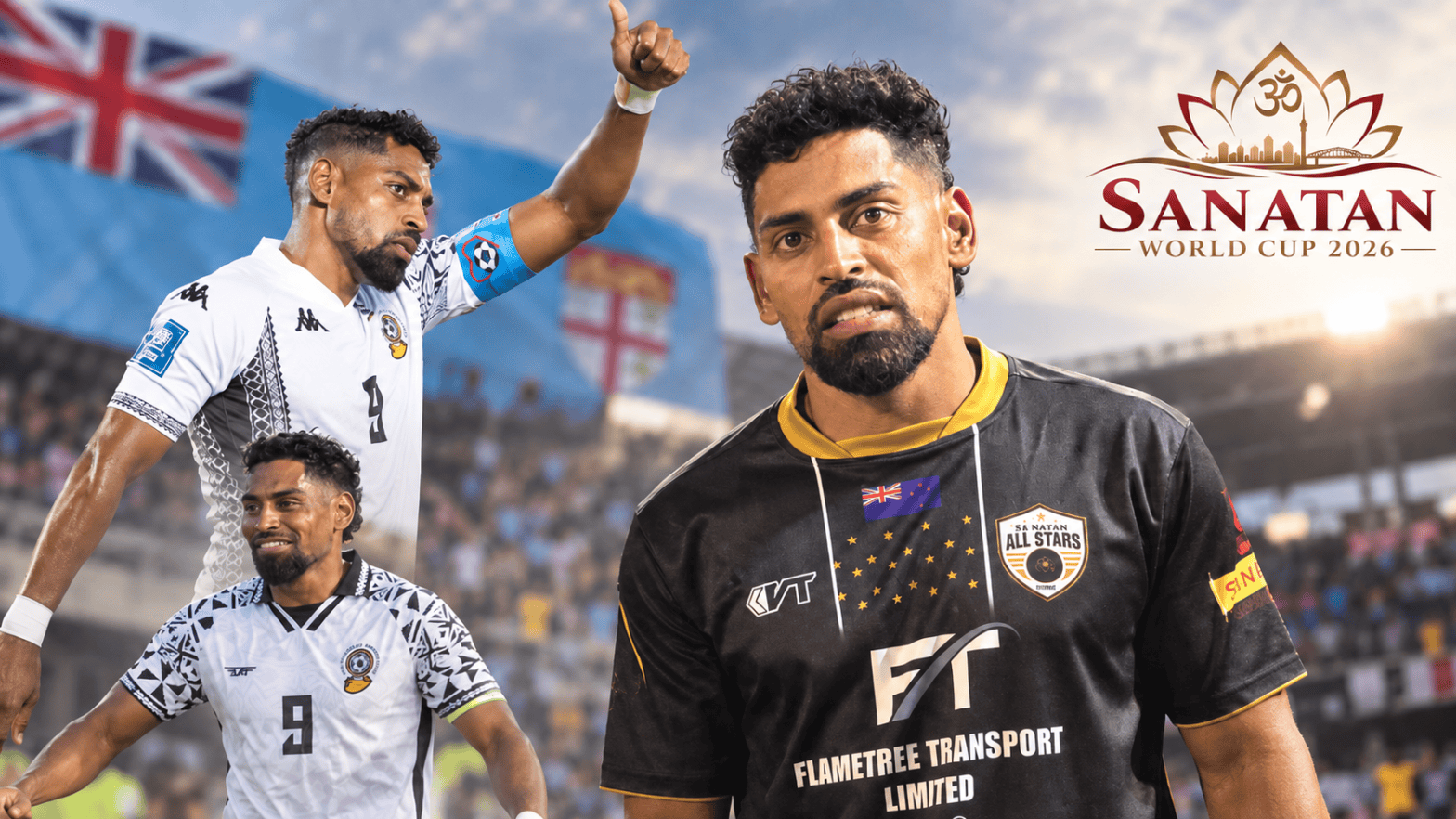
From MSG champion in Suva to Sanatan World Cup final in Auckland: Roy Krishna’s remarkable 24 hours

Roy Krishna had barely finished celebrating one of the most significant international triumphs of his career before he was back on a football pitch — in another country and in a completely different environment.

On Saturday, the Fiji captain lifted the MSG Prime Minister’s Cup at HFC Bank Stadium after the Bula Boys defeated Vanuatu 1-0, ending the country’s 26-year wait for a senior Melanesian title.

By Sunday evening, Krishna was in Auckland representing the New Zealand Sanatan All Stars in the final of the 2026 Sanatan World Cup.

It was a remarkable turnaround even by the standards of a player whose career has taken him across Oceania and Asia.

Krishna played a central role in Fiji’s victory over Vanuatu. His diagonal pass opened the opposition defence in the tenth minute and allowed Thomas Dunn to score what ultimately became the championship-winning goal. After 90 minutes, celebrations followed as Fiji finally reclaimed the Melanesian crown they had last won in 2000.

There was little time for the captain to rest.

Krishna travelled to New Zealand the following day, arriving in Auckland in time to join the NZ Sanatan All Stars for their Premier Cup final against Manukau Sanatan at Bill McKinlay Park.

His arrival immediately became one of the major attractions of the tournament. The All Stars had already reached the final without him, defeating Queensland 1-0 in the semi-final, before adding Fiji’s record international goalscorer for the decisive match.

For Krishna, however, there was no second trophy in as many days.

Manukau defeated the NZ Sanatan All Stars 2-0, with Shivam Nair converting a penalty before halftime and Rinal Prasad scoring from a counter-attack to secure the title. The All Stars also finished the match with ten men after Nicholas Prasad received a second yellow card.

The result hardly diminishes what made Krishna’s appearance particularly notable.

Less than 24 hours earlier, he had been leading his country in an international final. Instead of taking time away after the tournament, the veteran striker boarded a flight across the Pacific and returned almost immediately to the pitch.

There was also a cultural dimension to his appearance.

The Sanatan World Cup is not part of the professional or FIFA international calendar, but it occupies an important place within the Indo-Fijian sporting community. The tournament combines football with cultural and community activities and has developed into an international gathering involving Sanatan communities from Fiji and across the diaspora.

The 2026 edition was the tournament’s 11th staging, with Auckland hosting teams and supporters from several countries between September 30 and October 4.

For many supporters, seeing Fiji’s most recognisable footballer participate therefore carried a significance that went beyond the level of the competition itself.

Krishna has spent most of his professional career far from Fiji, becoming a champion in New Zealand, playing in Australia’s A-League and establishing himself as one of the leading foreign players in Indian football. Yet community tournaments remain another part of the football culture from which he emerged.

His weekend provided a particularly striking illustration of those different worlds.

On Saturday, Krishna was wearing the captain’s armband for Fiji as the Bula Boys ended a 26-year drought in front of their home supporters.

On Sunday, he was back in New Zealand, playing alongside the NZ Sanatan All Stars at Bill McKinlay Park.

Two finals. Two countries. Two very different stages of the Pacific game.

And barely a day separating them.

Jack Vira embraces new midfield role at Nadi as Vanuatu call-up remains his next ambition

Ni-Vanuatu footballer Jack Vira Tokaki has spent much of his career being recognised as an attacking player, but his first season with Nadi has required something different. Ahead of the 2026 FMF Inter-District Championship, the 25-year-old believes that adaptation has made him a more complete footballer — and could eventually help him earn an opportunity with the Vanuatu national team.

Vira joined Nadi for the 2026 season after representing Nadroga last year, remaining in Fiji’s top-flight environment but taking on a significantly different role. Instead of operating primarily as a winger or striker, the Ni-Vanuatu has been deployed in central midfield, including as a defensive midfielder.

“Last year I was with Nadroga, but this year I have played the full season for Nadi in central midfield, so I will play the IDC for Nadi,” Vira told Oceania Football Center.

The change represents a major adjustment for a player accustomed to influencing matches closer to goal. Vira says he scored six league goals while playing predominantly as a winger and striker for Nadroga last season, whereas his responsibilities at Nadi have moved him considerably deeper on the pitch.

That has affected his scoring output, but also forced him to understand different phases of the game.

“It’s my first year playing as a central midfielder throughout the season. Last year, playing as a winger and striker for Nadroga, I scored six goals in the league. It has been hard playing a new role throughout this season, but I have learned and experienced a lot in this new position,” he explained.

Rather than viewing the positional change negatively, Vira believes it has expanded his understanding of football.

“Yes, I like this position. It helps me understand the game a lot, and there is also the defensive role,” he said. “In this position, I have learned a lot both defensively and offensively, and I think I can do better for Nadi at this IDC.”

Vira’s official profile still lists him primarily as an attacker, reflecting the position in which he established himself before this season. Nadi’s use of him deeper therefore represents a significant tactical evolution in his career. The move to the Jetsetters came after a 2025 campaign with Nadroga, with his transfer to Nadi completed ahead of the new season. Public match records also show him regularly involved in Nadi’s league side during 2026.

The season itself has not been straightforward for the Jetsetters. Nadi finished seventh in the Extra Premier League and endured a difficult Battle of the Giants campaign, although they still produced competitive performances and some important results during the year.

Vira believes injuries and lapses in concentration contributed to the team’s difficulties at the BOG.

“We had some players injured and lacked concentration during the tournament. Otherwise, we could have done better,” he said. “But now we regroup, stay positive and focus on working very hard for the major tournament ahead, which is the IDC.”

The Inter-District Championship offers Nadi one final opportunity to turn an inconsistent domestic season into something memorable. The Jetsetters have been drawn alongside Ba, Lautoka and Navua in Group B, with the competition taking place at HFC Bank Stadium in Suva.

Nadi also arrive with significant history behind them. The six-time IDC champions have not lifted the trophy since 2002, meaning a successful campaign would end a 24-year wait for one of Fiji football’s traditional powers.

Vira believes the squad’s combination of younger players and experienced figures can give Nadi a chance.

“We have been training very hard with plenty of young boys and some senior players. We want to do better at this IDC,” he said.

There is also a personal target. After spending two seasons competing in Fiji — first with Nadroga and now Nadi — Vira is still waiting for an opportunity at senior international level with Vanuatu.

While several Ni-Vanuatu players based overseas or in the domestic game have been considered by the national team in recent years, Vira has yet to receive the call he wants. He does not see that as a reason for frustration, instead identifying areas of his own game that still need improvement.

“I hope that in the future I will get a chance to represent my country,” Vira said. “In my opinion, I need to work harder on my mistakes and weaknesses, both on and off the field. I also need to focus more on the attacking final third, especially scoring goals.”

That final point is particularly relevant after his positional change. Vira has been asked to contribute much more to Nadi’s build-up and defensive work this season, but he still wants to recover some of the attacking production that characterised his time with Nadroga.

The IDC now provides an immediate stage on which to demonstrate that balance.

For Nadi supporters, Vira promised full commitment as the Jetsetters attempt to extend their tournament beyond the group stage. For those following him from Vanuatu, his message was equally clear: he remains ready if an international opportunity eventually arrives.

“For the fans, we will give our best in this tournament and continue to work and play hard in every game to make our loyal fans happy and go as far as possible in the tournament,” he said. “To the national selectors, if the opportunity is given to me, I will certainly be ready to give my best to represent my country.”

For Vira, the 2026 season has therefore been less about maintaining the role in which he was already comfortable and more about adding another dimension to his game. The attacker who arrived in Fiji and scored from advanced positions is now learning how to defend, organise and influence matches from midfield.

The IDC offers his next examination — and perhaps another opportunity to make himself harder for Vanuatu’s national-team selectors to ignore.